IITA NEWS

Africa RISING partners kick off phase 2 with a science for impact event – Long version
February 3, 2017

Connecting the research-in-development dots and investing in dynamic scaling pathways – main themes of discussion as Africa RISING partners kick off phase2 with a science for impact event

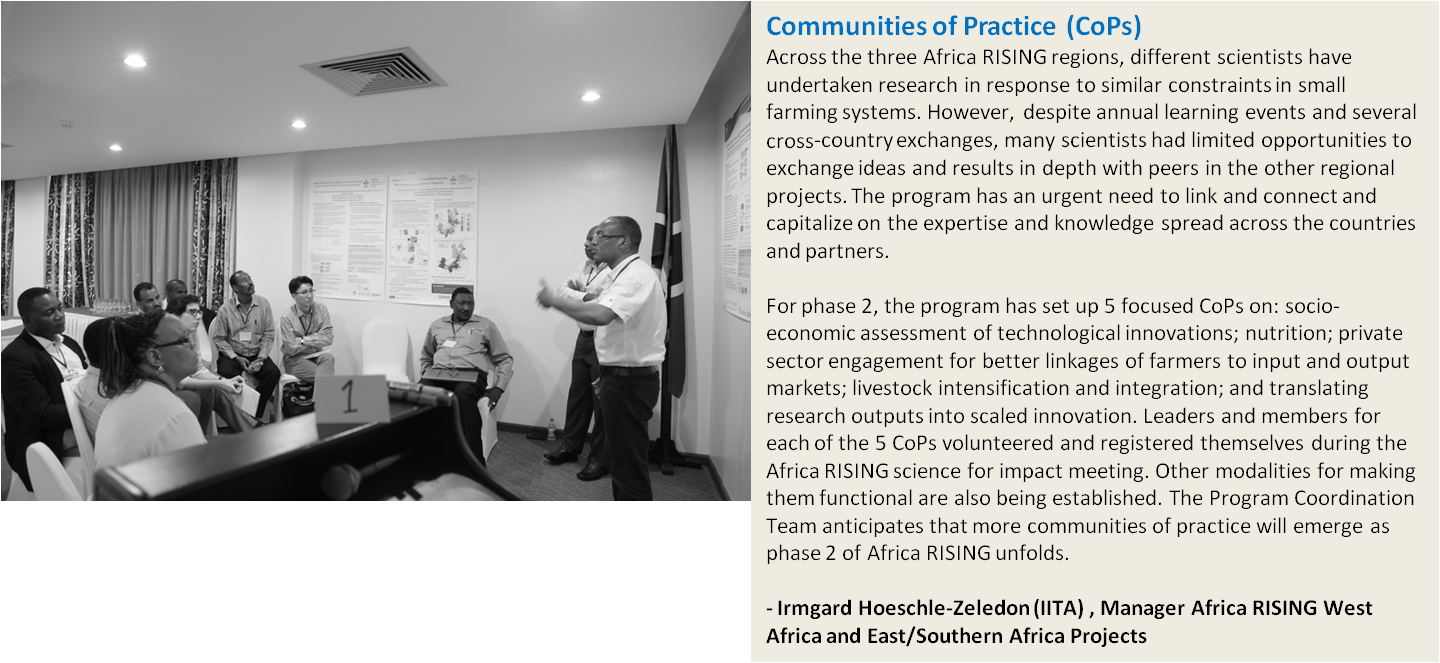
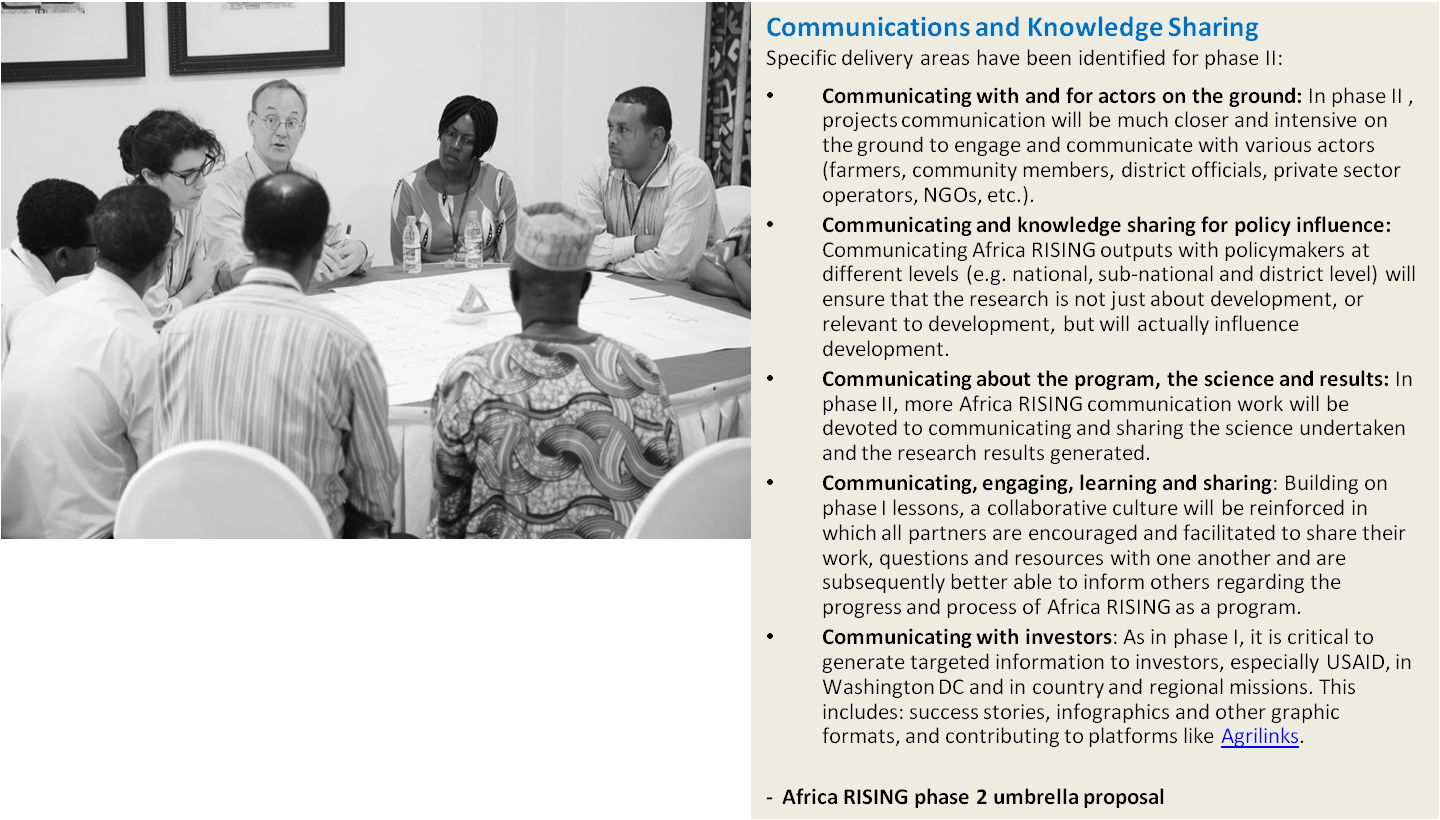
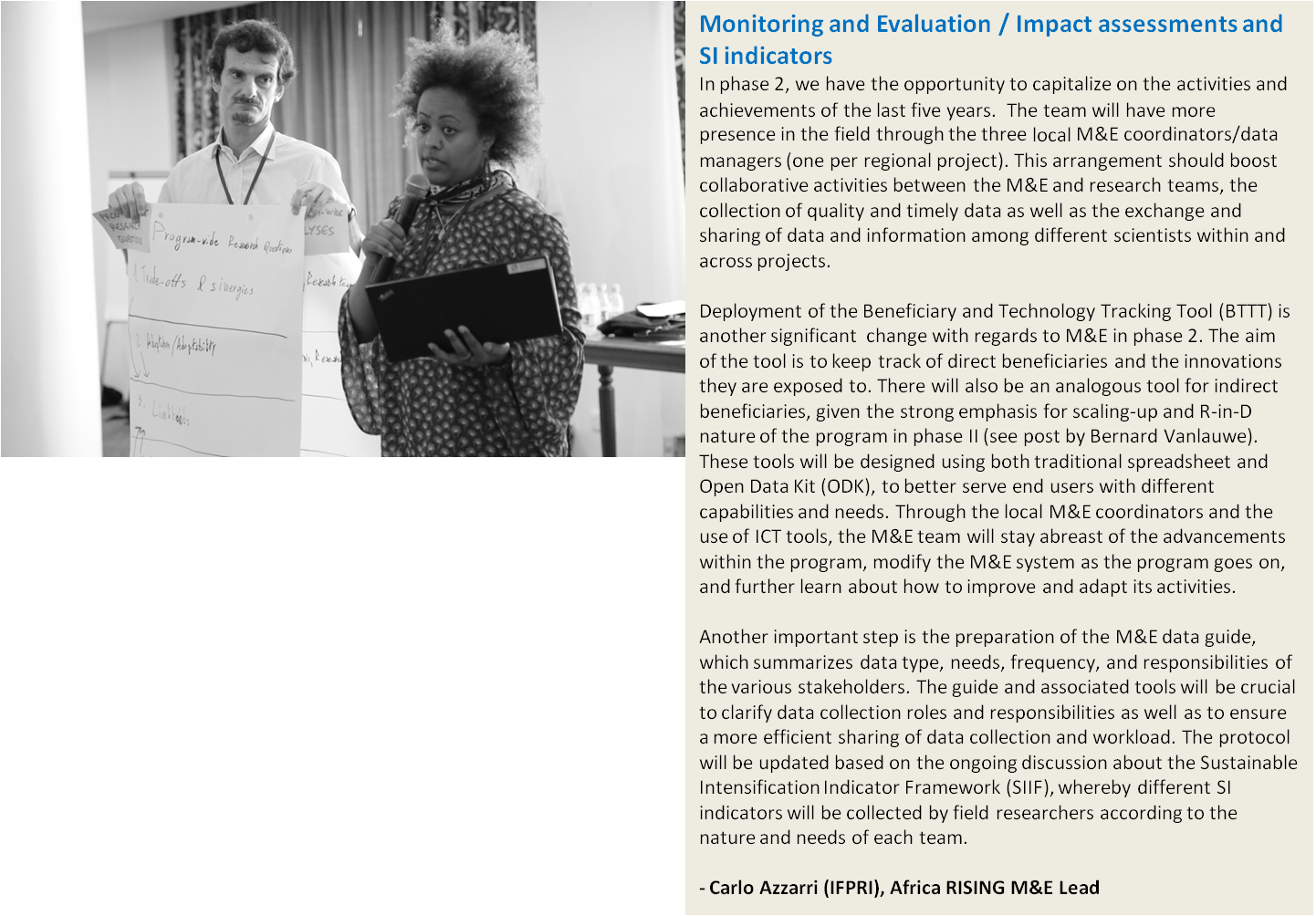
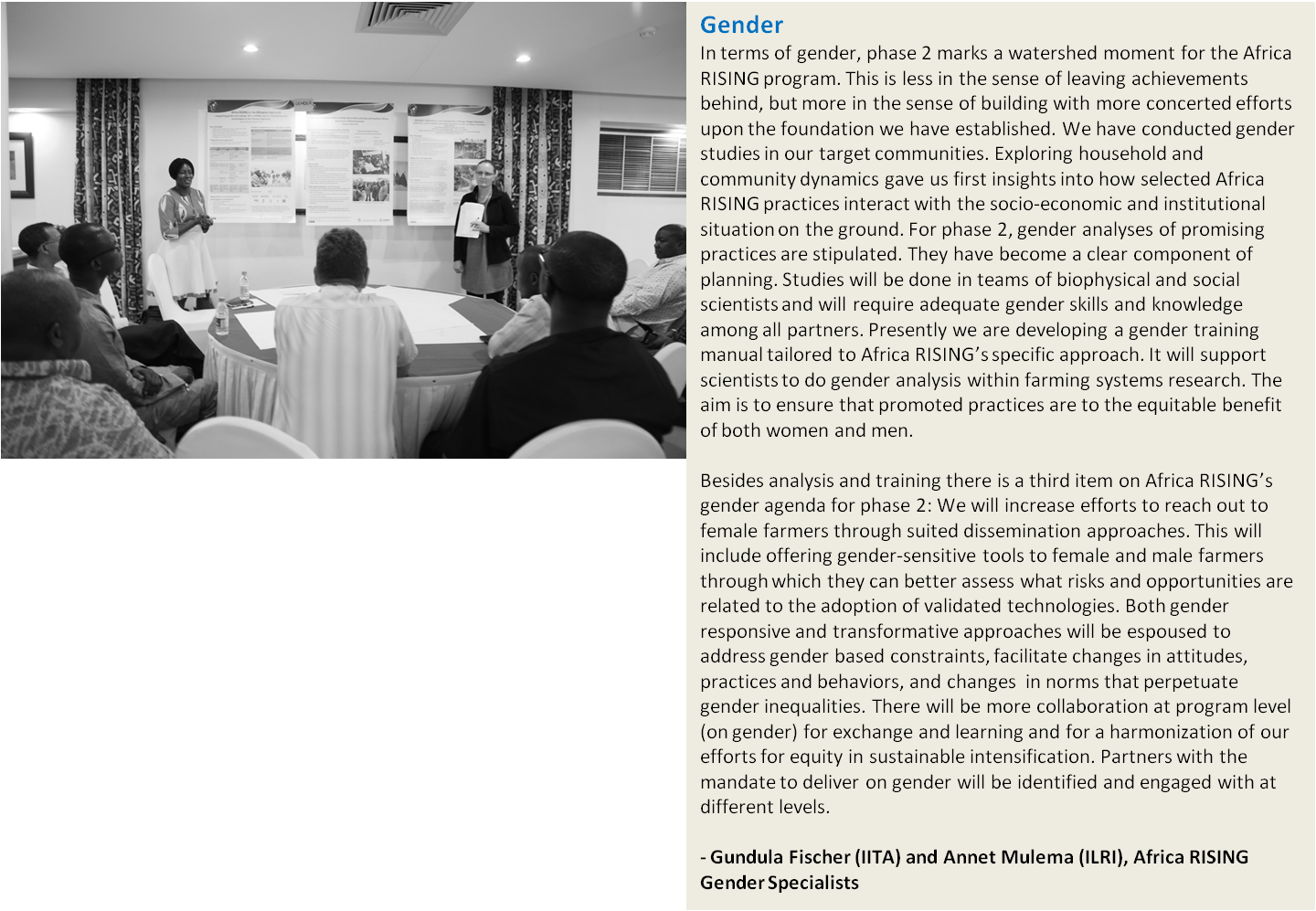
Approximately 80 people representing different organizations and a diverse group of partners in agricultural research and development gathered in Dar es Salaam to participate in the Africa RISING science for impact event. The meeting which held on 17 – 19 January, 2017 also doubled-up as a launch event for a second 5 year phase of the USAID – funded Africa RISING program. Quite fittingly too, the choice of venue, Tanzania’s port city of Dar es Salaam bared a historical significance considering that this was the ‘birth place’ of the program 5 years ago. Over the 3-day course of the event, participants, including implementing partners from six Africa RISING countries, representatives from USAID, local and international development organizations reviewed the research achievements of Africa RISING phase 1 while at the same time interrogating and proffering options for the next step – getting the technologies (at scale) into the hands of smallholder farmers. The first half of day 1 focused on Africa RISING phase 2 elements, zooming in on what had changed, what was new and what remained as was in phase 1. While the second half (of day 1) and first half of day 2 anchored on a poster bus stop process that provided a rich 3600-view of the technologies developed, tested and refined by Africa RISING partners working in all the 6 program countries. Day 3 of the event delved into assessing various scaling models and approaches which have been used by Africa RISING (in some cases) and other projects to achieve impact at scale.

Big, achievable vision of success

In his opening remarks at the event, IITA Director for Central Africa and Chair of the Africa RISING Program Coordination Team Bernard van Lauwe explained the targets and ambitions of Africa RISING in its second phase. “We have achieved a lot in terms of identifying best-bet technologies in phase 1 of Africa RISING. In the second phase we therefore need to adopt dynamic scaling approaches to ensure these technologies get into the hands of millions of farmers who are counting on us. While this is something we (as project implementers) have expressed a lot of appetite for; our donor – USAID –  have made this an imperative for us as an extra motivation,” he said. At the program level, Africa RISING has set itself a target to scale sustainable innovation technologies to 1,119,438 households in the six project countries through various development partnerships. The program is working on various arrangements for co-investment with these development partners for wider uptake and adoption of its outputs which will in-turn generate a ‘partnership dividend’ that allows a research project like Africa RISING to actually generate impact at scale.
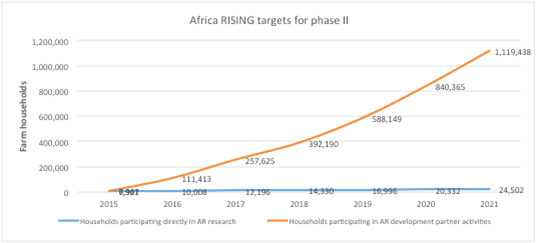
Picture of Africa RISING targets for phase 2

Africa RISING targets for phase 2

Continuity with evolutionary change

“Africa RISING phase 2 will be a fine blend between continuity from phase 1 and evolutionary change,” explains Peter Thorne, Africa RISING Ethiopia Project Manager. “IITA and ILRI will continue leading the program, which will retain its geographic focus on Mali, Ghana, Ethiopia, Tanzania, Malawi and Zambia. IFPRI will lead on data management, monitoring and impact assessment. And ILRI will continue to lead a communications and knowledge sharing component at program level,” he adds. The three regional projects that make up the Africa RISING program – West Africa, Ethiopia and East/Southern Africa, will therefore utilize learned lessons, where appropriate, to improve the program’s ways of operating (for example in terms of cross-project harmonization). This will significantly broaden engagement with development partners which, backstopped by target Africa RISING research, will be able to generate impact on Feed the Future target indicators at scale.

A look under the Africa RISING II hood

“To achieve the best results, the Africa RISING program has had to channel the wealth of experiences and lessons learned from phase 1 and make them into successful implementation strategies and plans for the second phase,” notes Irmgard Hoeschle-Zeledon, Manager – Africa RISING West Africa and East/Southern Africa Projects. Program-wide synergies will be built around shared analyses, common research questions, coordinated communities of practice and learning supported at the program level by investments in M&E, communications and knowledge sharing, and a light coordination structure.
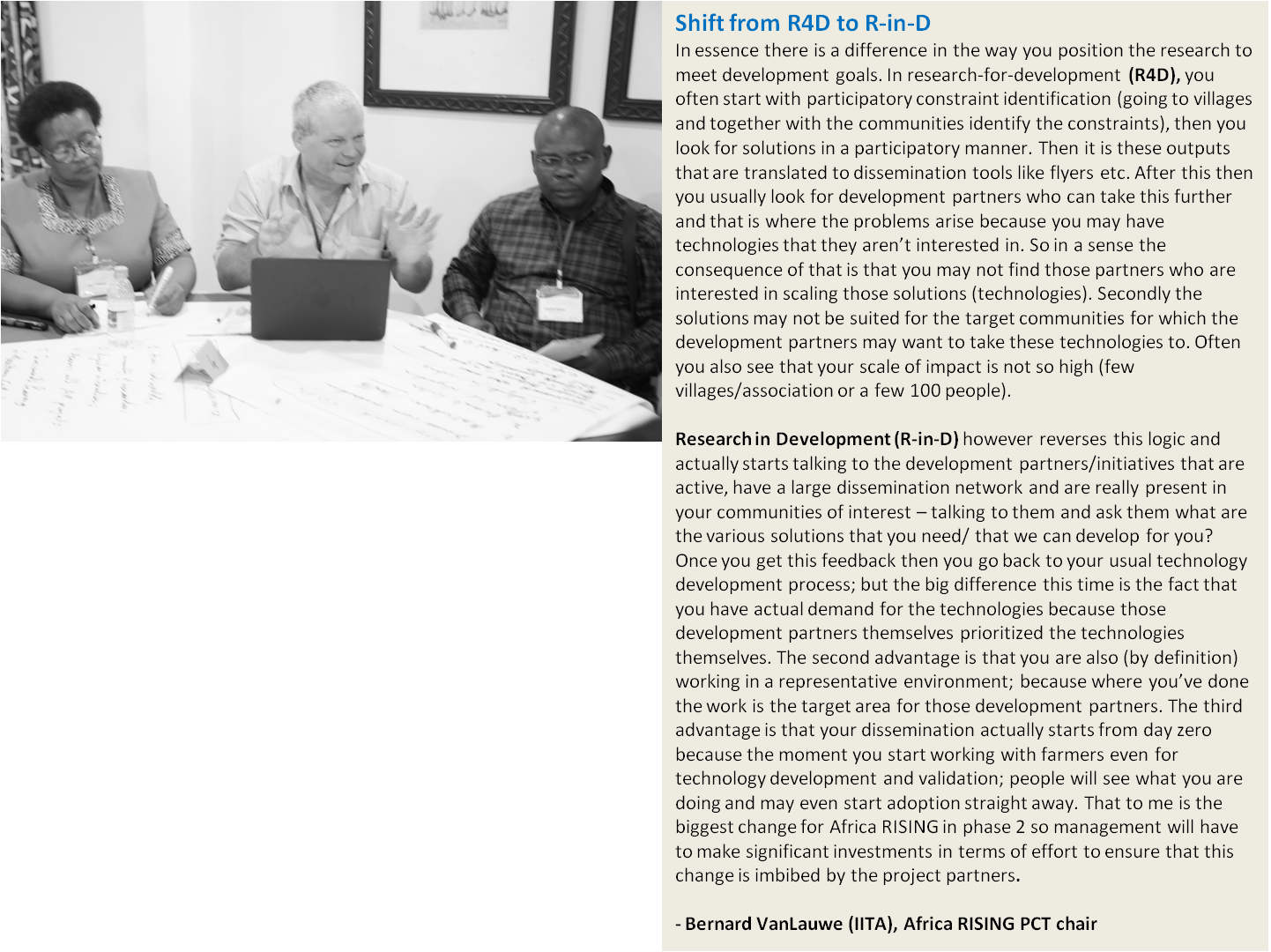
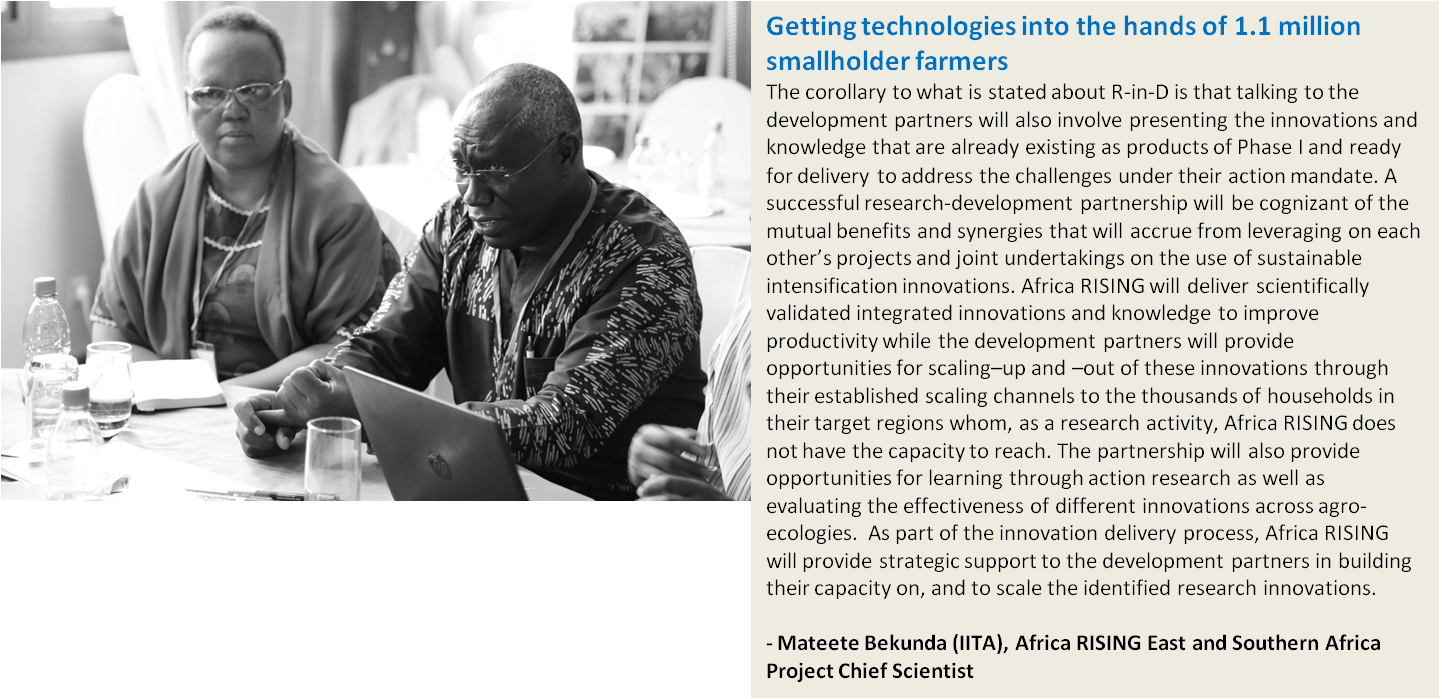
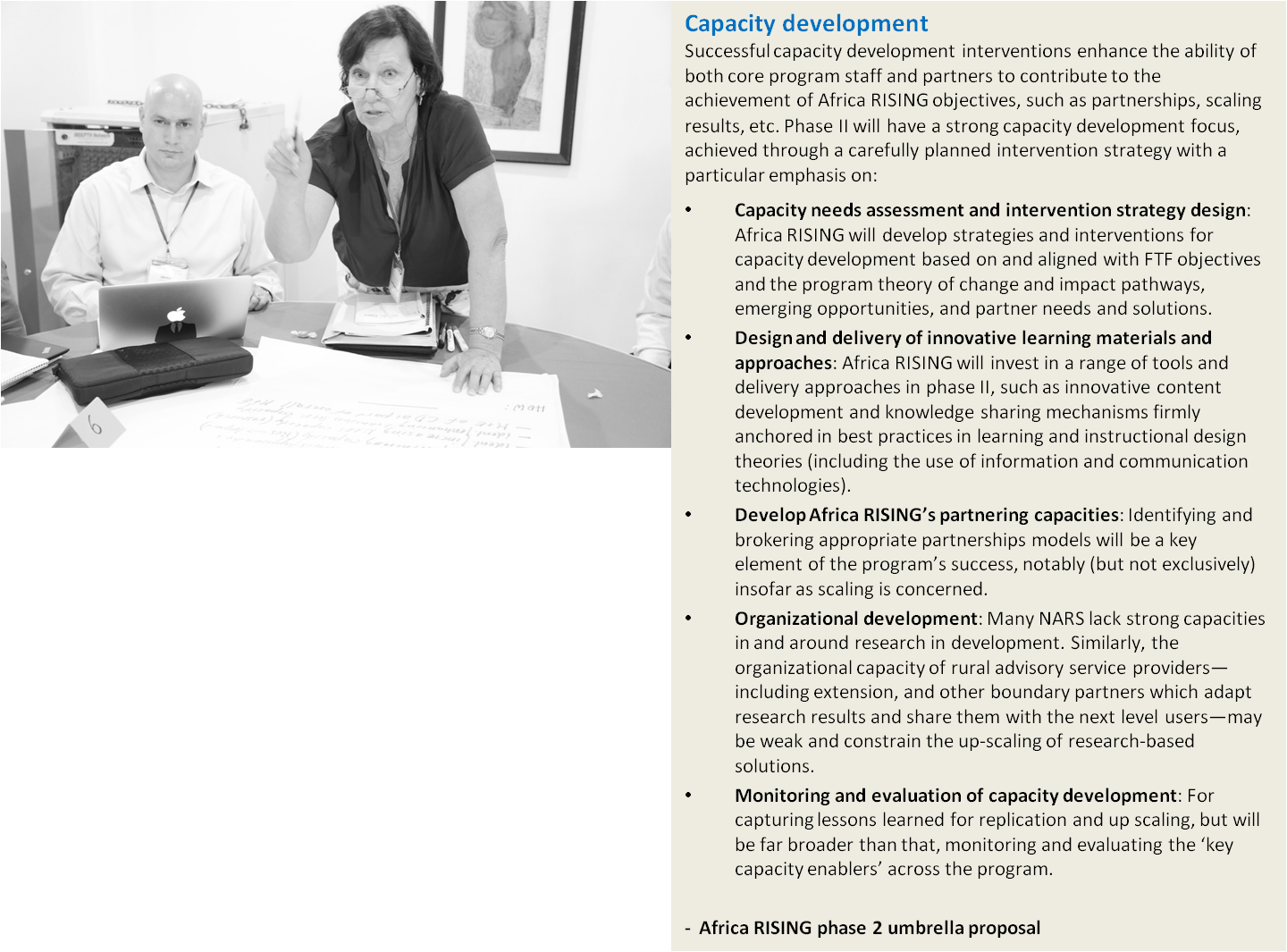
At a critical point and building on good foundations

Will Africa RISING achieve its vision of success at the turn of 2021? All remains to be seen, but majority in the project have a high optimism that these targets could even be surpassed. Siboniso Moyo, ILRI program leader and Africa RISING Program Coordinatioon Team  member notes that the shared vision and commitment by project partners are two critical elements that currently abound within the program hence the optimism. “Africa RISING is not the culmination of a journey, but a continuation of one that we all set off for 5 years ago. We had extensive synthesis in the first phase. I am certain you all appreciate that there were great achievements in the first phase, but we also have to learn from some challenges. We are at a critical point, transitioning from one phase to another. And we are confident that we have good foundations to build on. We can visualize together and commit to delivering on set objectives of the program which we will all come back to in 5 years’ time and check that we have delivered,” she said at the close of the event.

Contributed by

Recent stories

No items found

Leave a Reply

Your email address will not be published. Required fields are marked *

Scroll to Top
Olaosebikan, Olamide

Olamide Deborah Nwanze is a Senior Research Associate specializing in gender mainstreaming research to inform participatory and inclusive breeding, variety development, and seed systems policies regarding root, tuber, and banana (RTB) crops in the International Institute of Tropical Agriculture Headquarters, Ibadan, Nigeria. She is a PhD candidate at the University of Ibadan and holds an MSc and B. Agric in Agricultural Extension and Rural Development. Olamide is a fellow of the African Women in Agricultural Research and Development – Gender Responsive Agricultural Systems Policy (AWARD-GRASP) and the Gender Responsive Researchers Equipped for Agricultural Transformation (GREAT). She seeks to apply her gender-mainstreaming learnings, gender-responsive research, and policy development, and review expertise to facilitate women, youth, children, and vulnerable social group’s access to and adoption of agricultural Innovations that guarantee food, nutrition, income, and livelihood security in Africa. Her current roles include mentoring research fellows, development of guides and training manuals, implementation and adaptation of gender frameworks and tools, value chain actors’ engagement as citizen science partners, policy review and redesign, data management, and analysis. Her current research explores mixed methods and participatory and interdisciplinary approaches to capture and highlight gender dynamics, needs, preferences, and challenges stakeholders face within the agricultural livelihood value chain to prioritize gender-inclusive strategies in breeding programs, policy design, and implementation.

At IITA, she contributes to the implementation of the CGIAR Accelerated Breeding Initiative and Genetic Innovation Programs; participatory and gender research within the NextGen CassavaHarvestPlusRTBFoods, and Tricot-ClimMob 1000Farms Projects; and gender knowledge communication via the G-LENS webinar series, video documentary, policy briefspublications, and blogs.


Recent publications

de Sousa, K., van Etten, J., Manners, R. Bello, A., Teeken, B., Olaosebikan, O., et al. 2024. The tricot approach: an agile framework for decentralized on-farm testing supported by citizen science. A retrospective. Agron. Sustain. Dev. 44, 8. https://doi.org/10.1007/s13593-023-00937-1

Madu, T., Onwuka, S., Nwafor, S., Onyemauwa, N., Ejechi, M., Ofoeze, M., Ukeje, B., Eluagu, C., Olaosebikan, O., Okoye, B., 2024. Gender-Inclusive Consumer Studies Improve Cassava Breeding in Nigeria in: Frontiers in Sociology, volume 9, number: 1224504, doi: 10.3389/fsoc.2024.1224504

Olaosebikan, O.; Bello, A.; Utoblo, O.; Okoye, B.; Olutegbe, N.; Garner, E.; Teeken, B.; Bryan, E.; Forsythe, L.; Cole, S.; Madu, T. 2023.  Stressors and Resilience within the Cassava Value Chain in Nigeria: Preferred Cassava Variety Traits and Response Strategies of Men and Women to Inform Breeding. Sustainability 15, 7837. https://doi.org/10.3390/su15107837

Okoye, B., Ofoeze, M., Ejechi, M., Onwuka, S., Nwafor, S., Onyemauwa, N., Ukeje, B., Eluagu, C., Obidiegwu, J.*, Olaosebikan, O., Madu, T.* 2023. Prioritizing preferred traits in the yam value chain in Nigeria: a gender situation analysis in: Frontiers in Sociology, volume 8, number: 1232626, pages 1 – 9, ISSN 2297-7775, 2023. https://www.frontiersin.org/articles/10.3389/fsoc.2023.1232626/full

Olaosebikan, O., Bello, A. A., de Sousa, K., Ndjouenkeu, R., Adesokan, M., Alamu, E. O., Agbona, A., van Etten, J., Kegah, F. N.*, Dufour, D., Bouniol, A., Teeken, B. 2023. Consumer acceptability of cassava gari-eba food products across cultural and environmental settings using the triadic comparison of technologies approach (tricot) in: Journal of the Science of Food and Agriculture,

Teeken, B., Olaosebikan, O., Bello, A. A., Madu, T.*, Cole, S. M. 2023. Qualitative assessment on the positionality and preferences of dyads in relation to cassava-related activities: working with tricot trial citizen scientists https://hdl.handle.net/10568/138326 Type: Manual

Bouniol, A., Ceballos, H., Bello, A. A., Teeken, B., Olaosebikan, O., Owoade, D., Agbona, A., Fotso Kuate, A., Madu, T.*, Okoye, B.*, Ofoeze, M.*, Nwafor, S.*, Onyemauwa, N.*, Adinsi, L.*, Forsythe, L., Dufour, D. 2023. Varietal impact on women’s labour, workload and related drudgery in processing root, tuber and banana crops: focus on cassava in sub-Saharan Africa in: Journal of the Science of Food and Agriculture, pages 1 – 25, ISSN 0022-5142,

Bello, A. A., Agbona, A., Olaosebikan, O., Edughaen, G., Dufour, D., Bouniol, A., Iluebbey, P., Ndjouenkeu, R.*, Rabbi, I. Y., Teeken, B. 2023. Genetic and environmental effects on processing productivity and food product yield: drudgery of women’s work in: Journal of the Science of Food and Agriculture, pages 1 – 32, ISSN 0022-5142, 5

Cavicchioli, M., Zimbiti, T., Teeken, B., Nwanze, D.O., Liani, M., Parkes, E. & Bello, A. 2023. IITA-Gender Responsive Breeding Training Report. Genetic Resources Center, IITA-HQ, Ibadan, 21-23 September, 2022. Ibadan, Nigeria: IITA, (34 p.).https://hdl.handle.net/10568/131368

Agbona, A. Peteti P., Teeken B., Olaosebikan O. Bello, A. A., Parkes, E., Rabbi, I. Y., Mueller, L., Egesi, C., Kulakow, P. 2022. Data Management in Multi-disciplinary African RTB Crop Breeding Programs. In: Williamson, H.F., Leonelli, S. (eds) Towards Responsible Plant Data Linkage: Data Challenges for Agricultural Research and Development. Springer, Cham. https://doi.org/10.1007/978-3-031-13276-6_5

Lora Forsythe, Pricilla Marimo, Sarah Mayanja, Olamide D. Olaosebikan, Esme Stuart, Bela Teeken, Benjamin Okoye, Tessy Madu, (2021). Cross-product Gender Analysis of RTBfoods Step 2 Gendered Food Mapping on RTB Products. Understanding the Drivers of Trait Preferences and the Development of Multi-user RTB Product Profiles, WP1. London, UK: RTBfoods Field Scientific Report, 30 p.

Teeken, B., Garner, E., Agbona, A., Balogun, I., Olaosebikan, O., Bello, A., Madu, T., Okoye, B., Egesi, C., Kulakow, P. and Tufan, H.A. 2021. Beyond “Women’s Traits”: Exploring How Gender, Social Difference, and Household Characteristics Influence Trait Preferences. Frontiers Sustainable Food Systems 5:740926. https://doi.org/10.3389/fsufs.2021.740926

Teeken, B., Agbona, A., Bello, A., Olaosebikan, O., Alamu, E., Adesokan, M., Awoyale, W., Madu, T., Okoye, B., Chijioke, U., Owoade, D., Okoro, M., Bouniol, A., Dufour, D., Hershey, C., Rabbi, I., Maziya‐Dixon, B., Egesi, C., Tufan, H. and Kulakow, P. (020. Understanding cassava varietal preferences through pairwise ranking of gari‐eba and fufu prepared by local farmer–processors. Int J Food Sci Technol. https://doi.org/10.1111/ijfs.14862

Bela Teeken, Olamide Olaosebikan, Ireti Balogun, Benjamin Okoye, Tessy Madu, Steven Cole, Abolore Bello, Elizabeth Parkes. (2020). Piloting the G+ customer and product profile tools for gender-responsive cassava breeding in Nigeria. Nigeria: International Institute of Tropical Agriculture (IITA). https://hdl.handle.net/20.500.11766/13000