
Agriculture stakeholders in Tanzania hail CGIAR move on integration
January 8, 2016
Stakeholders in the agricultural sector in Tanzania support the move by CGIAR to integrate the activities of the different centers and research programs (CRPs) and to better align with the country’s priorities in developing its agriculture sector.
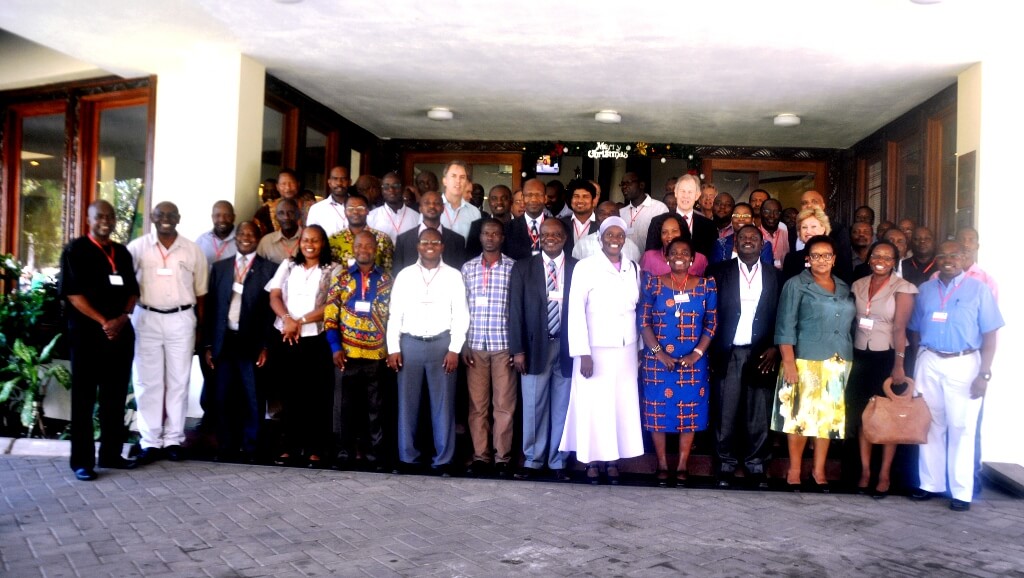 The stakeholders agreed on this at a national consultation workshop on CGIAR “site integration” that was held in Dar es Salaam, Tanzania on 4 December 2015 organized by IITA on behalf of CGIAR and CRPs working in the country. The aim was to discuss how CGIAR/CRPs can work better together and align their activities and research agenda to the country’s priorities. This was the second such workshop organized by IITA for CGIAR; the first one was held in Abuja, Nigeria, in November 2015.
The participants were drawn from the different ministries, national agricultural research systems (NARS), universities, NGOs, donor community, private sector, and farmers’ groups.
The Permanent Secretary in the Ministry of Agriculture, Food Security and Cooperatives, Sophia Kaduma, said that integration across the different CRPs and with a wide range of national partners and stakeholders in the agricultural sector can enhance the outcomes of CGIAR’s research agenda.
She noted the potential of the agriculture sector in Tanzania’s efforts to reduce poverty and achieve its developmental goals of shifting to a middle-income economy by 2025, and reiterated the role of research and development to improve agriculture and combat climate change and her government’s commitment to R&D.
Representatives from the donor community including the Bill & Melinda Gates Foundation, Irish Aid, USAID, and the World Bank also support the move, which is expected to lead to more efficient use of donor funding and reduction of duplication of efforts.
“Integration” and “alignment” were viewed as important in ensuring that development projects focused on the country’s priorities and not the donors/centers’ whims.
Representatives from the farming communities and the private sector were also at the forum and highlighted some of the challenges they faced. “Farming has to be profitable. As farmers, we face many issues including poor extension services. The extension staff are few, without resources. We are therefore unable to access new technologies from research. Therefore the integration should look at how to support extension to reach farmers,” said Omary Mwaimu from AMSHA Institute.
Participants at the event identified areas where CGIAR/CRP support was needed:
The stakeholders agreed on this at a national consultation workshop on CGIAR “site integration” that was held in Dar es Salaam, Tanzania on 4 December 2015 organized by IITA on behalf of CGIAR and CRPs working in the country. The aim was to discuss how CGIAR/CRPs can work better together and align their activities and research agenda to the country’s priorities. This was the second such workshop organized by IITA for CGIAR; the first one was held in Abuja, Nigeria, in November 2015.
The participants were drawn from the different ministries, national agricultural research systems (NARS), universities, NGOs, donor community, private sector, and farmers’ groups.
The Permanent Secretary in the Ministry of Agriculture, Food Security and Cooperatives, Sophia Kaduma, said that integration across the different CRPs and with a wide range of national partners and stakeholders in the agricultural sector can enhance the outcomes of CGIAR’s research agenda.
She noted the potential of the agriculture sector in Tanzania’s efforts to reduce poverty and achieve its developmental goals of shifting to a middle-income economy by 2025, and reiterated the role of research and development to improve agriculture and combat climate change and her government’s commitment to R&D.
Representatives from the donor community including the Bill & Melinda Gates Foundation, Irish Aid, USAID, and the World Bank also support the move, which is expected to lead to more efficient use of donor funding and reduction of duplication of efforts.
“Integration” and “alignment” were viewed as important in ensuring that development projects focused on the country’s priorities and not the donors/centers’ whims.
Representatives from the farming communities and the private sector were also at the forum and highlighted some of the challenges they faced. “Farming has to be profitable. As farmers, we face many issues including poor extension services. The extension staff are few, without resources. We are therefore unable to access new technologies from research. Therefore the integration should look at how to support extension to reach farmers,” said Omary Mwaimu from AMSHA Institute.
Participants at the event identified areas where CGIAR/CRP support was needed:
Participants at the CGIAR Site Integration Workshop, Tanzania.
- Dissemination and adoption of new technologies from research.
- Business and enterprise development to enable farmers to make money from farming.
- Capacity building of local researchers especially in areas such as biotechnology.
- Value addition and management of postharvest losses.
- Productivity improvement with focus on climate change – one of the major challenges facing smallholder farmers who need support in terms of what crops to grow in the face of climate change.
- Sustainable intensification of smallholder systems to increase agricultural production and productivity on the same land size but at the same time taking care of their natural resources.
Contributed by
Recent stories
No items found