
American Phytopathological Society honors IITA scientist as a Fellow
May 21, 2021
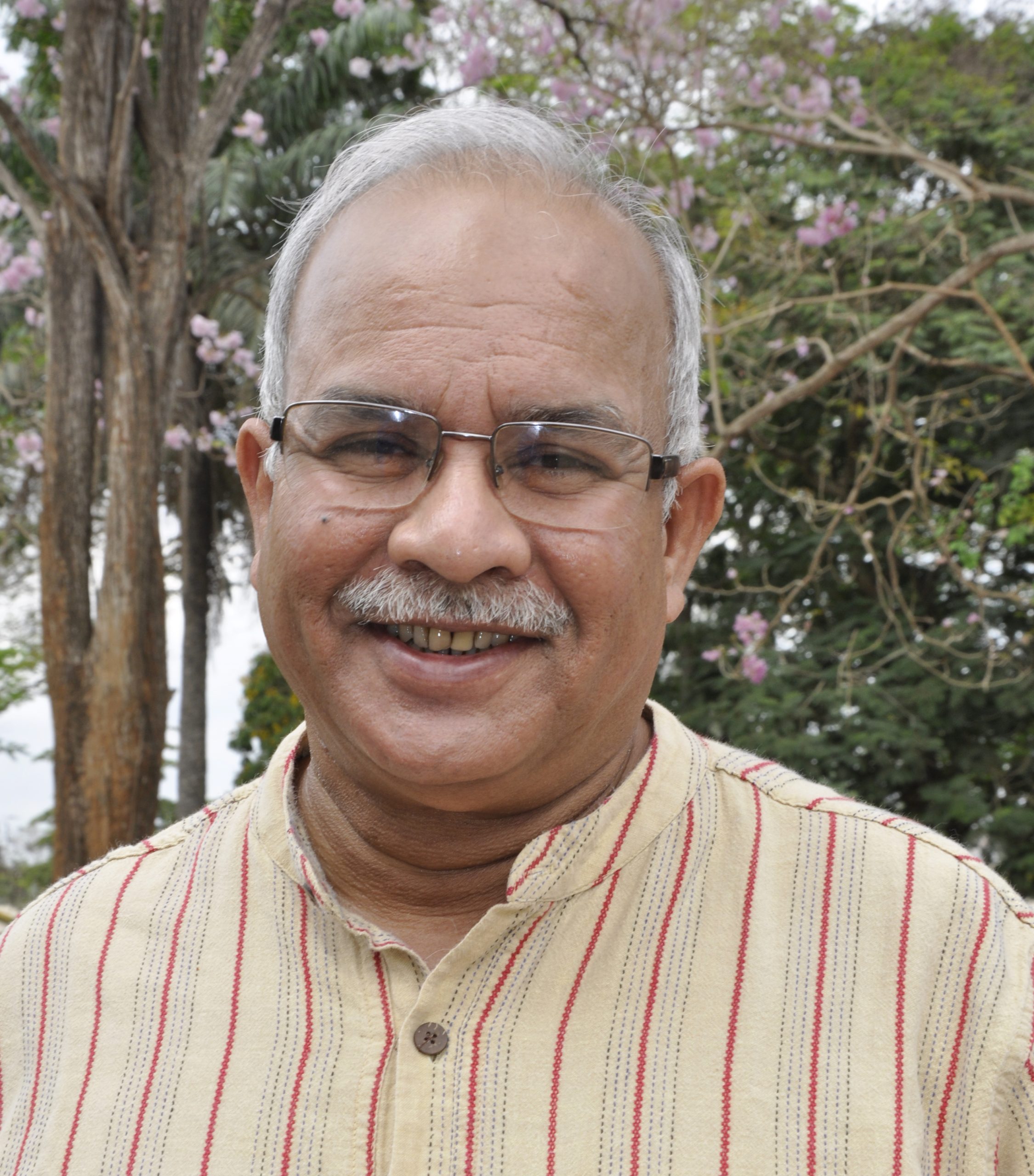
IITA Principal Plant Pathologist Ranajit Bandyopadhyay has been recognized as a Fellow of the American Phytopathological Society (APS). He will receive the award in July 2021 during the APS annual meeting. APS grants this honor only to a few members to recognize distinguished contributions to plant pathology. Fellow recognition is based on significant contributions in one or more of the following areas: original research, teaching, administration, professional and public service, and/or extension and outreach.
 Bandyopadhyay has a 42-year-long and distinguished career at two CGIAR centers—ICRISAT and IITA. He has conducted and led important research in multiple host-pathogen systems and has helped resolve some critical plant disease problems. However, his most significant efforts have been in reducing aflatoxin contamination through biocontrol using atoxigenic fungi.
He moved on-the-shelf concept technology into development and commercial application through multi-institutional, multinational, and multidisciplinary partnerships to address the complexities of aflatoxin contamination. This effort has inexorably changed the tactics used for aflatoxin control, increasing the profitability and safety of crops, and consequently, the incomes of smallholder farmers and crop-associated industries in many African countries.
His ability to work through complex issues with people whose agendas do not always overlap underlies the massive success of the Aflasafe Initiative, which he founded and has been the driving force, from research to commercialization. His ability to promote a vision of Africa with much smaller losses due to toxin contamination to a broad, non-scientific audience takes a unique set of talents to succeed. The use of Aflasafe products by smallholder farmers indicates that the fundamental vision Bandyopadhyay has been pursuing is ringing true for the people who can benefit from it the most.
His efforts have left a legacy of human capacity development and laboratory infrastructure for plant pathology across Africa. He has mentored over 60 scientists, postdocs, students, and technicians from 23 countries, including 19 African countries. Many of his mentees manage national or regional aflatoxin biocontrol programs in Africa, and two of them are among the 11 recipients of the APS Hewitt Award. Another mentee received the Norman Borlaug Award for Field Research and Application from the World Food Prize Foundation.
Bandyopadhyay’s research and extra-scientific efforts have been repeatedly recognized both within and beyond the CGIAR system. The awards he has received include the Outstanding Scientist Award from IITA and ICRISAT, the Outstanding Achievement Award from the National Grain Sorghum Producers Board of North America, the Agents of Change for Aflatoxin Mitigation Award from the African Union, and the APS International Service Award. He has published more than 145 journal articles, edited several books, and helped organize multiple conferences.
Bandyopadhyay is an enthusiastic advocate for all aspects of plant pathology and has used his time and boundless energy to make integrated aflatoxin management centered on biocontrol a real path leading to improved health for millions of Africans. His scientific contributions are significant, but his real contribution is safer food for millions of consumers and higher income for tens of thousands of farmers.
More information:
https://www.apsnet.org/members/give-awards/awards/Pages/2021_Bandyopadhyay.aspx
Bandyopadhyay has a 42-year-long and distinguished career at two CGIAR centers—ICRISAT and IITA. He has conducted and led important research in multiple host-pathogen systems and has helped resolve some critical plant disease problems. However, his most significant efforts have been in reducing aflatoxin contamination through biocontrol using atoxigenic fungi.
He moved on-the-shelf concept technology into development and commercial application through multi-institutional, multinational, and multidisciplinary partnerships to address the complexities of aflatoxin contamination. This effort has inexorably changed the tactics used for aflatoxin control, increasing the profitability and safety of crops, and consequently, the incomes of smallholder farmers and crop-associated industries in many African countries.
His ability to work through complex issues with people whose agendas do not always overlap underlies the massive success of the Aflasafe Initiative, which he founded and has been the driving force, from research to commercialization. His ability to promote a vision of Africa with much smaller losses due to toxin contamination to a broad, non-scientific audience takes a unique set of talents to succeed. The use of Aflasafe products by smallholder farmers indicates that the fundamental vision Bandyopadhyay has been pursuing is ringing true for the people who can benefit from it the most.
His efforts have left a legacy of human capacity development and laboratory infrastructure for plant pathology across Africa. He has mentored over 60 scientists, postdocs, students, and technicians from 23 countries, including 19 African countries. Many of his mentees manage national or regional aflatoxin biocontrol programs in Africa, and two of them are among the 11 recipients of the APS Hewitt Award. Another mentee received the Norman Borlaug Award for Field Research and Application from the World Food Prize Foundation.
Bandyopadhyay’s research and extra-scientific efforts have been repeatedly recognized both within and beyond the CGIAR system. The awards he has received include the Outstanding Scientist Award from IITA and ICRISAT, the Outstanding Achievement Award from the National Grain Sorghum Producers Board of North America, the Agents of Change for Aflatoxin Mitigation Award from the African Union, and the APS International Service Award. He has published more than 145 journal articles, edited several books, and helped organize multiple conferences.
Bandyopadhyay is an enthusiastic advocate for all aspects of plant pathology and has used his time and boundless energy to make integrated aflatoxin management centered on biocontrol a real path leading to improved health for millions of Africans. His scientific contributions are significant, but his real contribution is safer food for millions of consumers and higher income for tens of thousands of farmers.
More information:
https://www.apsnet.org/members/give-awards/awards/Pages/2021_Bandyopadhyay.aspx
Dr Ranajit Bandyopadhyayhas had a long and distinguished career in the CGIAR system. Photo: IITA Communication
Contributed by
Recent stories
No items found