
ATASP-1 holds first-ever “Sorghum Innovation Platform” in Kano
September 2, 2016
Stakeholders in the sorghum value chain in Nigeria recently gathered in the ancient northern city of Kano, to interact and find common ground in addressing the challenges which deny them opportunities for growth, as well as close up the supply and demand gap.
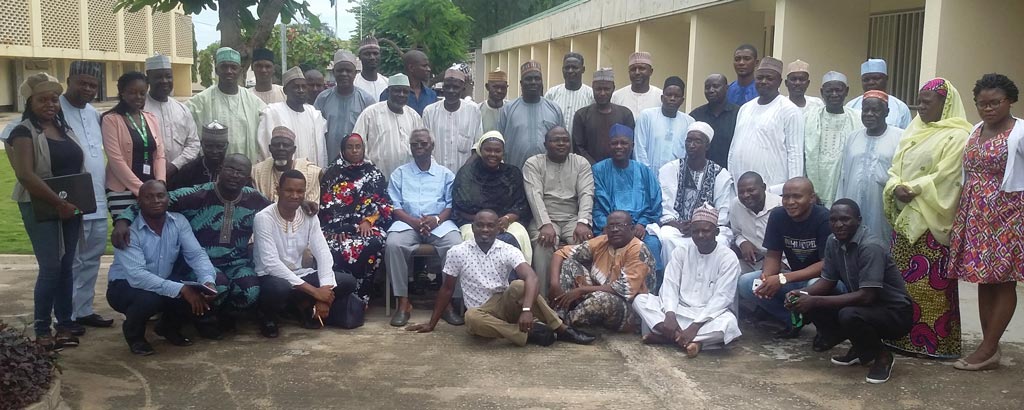 The “Sorghum Innovation Platform”, which was put together by The International Crops Research Institute for the Semi-Arid Tropics (ICRISAT) Nigeria under the auspices of the Agricultural Transformation Agenda Support Program (ATASP-1), brought together over 50 participants from sorghum seed companies, aggregators, the Honeywell Group, sorghum farmers, research institutes, development projects (ATASP-1, Fadama 3, USAID-MARKETS2, and SG2000) from eight states in Nigeria, namely, Kano, Kaduna, Bauchi, Gombe, Jigawa, Niger, Kebbi, and Sokoto.
During the event, farmers and other stakeholders (including IYA Abuja) who had received seed from the Honeywell Group gave feedback on how the seed had fared and the challenges encountered. Delighted by the feedback from the presentations, the Honeywell Group represented by Teddy Ngu, assured farmers that “if you produce high quality seed, you will get more incentives.” Ngu noted that the Honeywell Group would require about 80,000 tons of grain in the coming year, which would be a ready market for grains, especially the Samsong 17 (SK5912) and the CRS-01 varieties. If we can get good grains from farmers in Nigeria, the volume of our imports will be drastically reduced, Ngu said.
A seed provider, Lawan Gwadabe, the Managing Director, Seed Project Ltd., who has been in the seed business for nine years in Kano and owns one of the over 120 registered seed companies in Nigeria, expressed optimism that “now that we have big uptakers like Honeywell, we will make big sales in sorghum seed.”
Speaking about the benefits from the seed he got from the Honeywell Group, a sorghum farmer of over 20 years, Muhammad Abdulsalam based in Ningi in Bauchi State, described the seed of sorghum (CSR-01 and SK-5912) as “very good” as the 1,500 hectares planted by farmer groups in Ningi are “doing well.”
He observed that the new varieties yield more; “you get 3 tons (thirty 100-kg bags) per hectare as against the local variety which gives you between 1 and 1.5 tons (ten-fifteen 100-kg bags). Furthermore, the farmer testified that it takes just 100 to 110 days for the new varieties to mature, and now that they have a large-scale commercial buyer, they will be able to invest in inputs for higher yields.
He concluded, “With this type of system whereby the Honeywell Group is ready to buy these two varieties even before you plant, there is a ready market and farmers will turn to more commercial farming as they also need to make money from their farming activities.”
“With the new varieties, we will make more money, change our buildings, and drive cars instead of motorcycles”, Abdulsalam said. Again, “we have not recorded any pest and disease outbreak”, the elated farmer noted. In response, the ATASP-1 Sorghum Commodity Specialist who doubles as the ICRISAT Country representative, Hakeem Ajeigbe, encouraged the farmer and his group to invest the money in their children’s education and health.
The “Sorghum Innovation Platform”, which was put together by The International Crops Research Institute for the Semi-Arid Tropics (ICRISAT) Nigeria under the auspices of the Agricultural Transformation Agenda Support Program (ATASP-1), brought together over 50 participants from sorghum seed companies, aggregators, the Honeywell Group, sorghum farmers, research institutes, development projects (ATASP-1, Fadama 3, USAID-MARKETS2, and SG2000) from eight states in Nigeria, namely, Kano, Kaduna, Bauchi, Gombe, Jigawa, Niger, Kebbi, and Sokoto.
During the event, farmers and other stakeholders (including IYA Abuja) who had received seed from the Honeywell Group gave feedback on how the seed had fared and the challenges encountered. Delighted by the feedback from the presentations, the Honeywell Group represented by Teddy Ngu, assured farmers that “if you produce high quality seed, you will get more incentives.” Ngu noted that the Honeywell Group would require about 80,000 tons of grain in the coming year, which would be a ready market for grains, especially the Samsong 17 (SK5912) and the CRS-01 varieties. If we can get good grains from farmers in Nigeria, the volume of our imports will be drastically reduced, Ngu said.
A seed provider, Lawan Gwadabe, the Managing Director, Seed Project Ltd., who has been in the seed business for nine years in Kano and owns one of the over 120 registered seed companies in Nigeria, expressed optimism that “now that we have big uptakers like Honeywell, we will make big sales in sorghum seed.”
Speaking about the benefits from the seed he got from the Honeywell Group, a sorghum farmer of over 20 years, Muhammad Abdulsalam based in Ningi in Bauchi State, described the seed of sorghum (CSR-01 and SK-5912) as “very good” as the 1,500 hectares planted by farmer groups in Ningi are “doing well.”
He observed that the new varieties yield more; “you get 3 tons (thirty 100-kg bags) per hectare as against the local variety which gives you between 1 and 1.5 tons (ten-fifteen 100-kg bags). Furthermore, the farmer testified that it takes just 100 to 110 days for the new varieties to mature, and now that they have a large-scale commercial buyer, they will be able to invest in inputs for higher yields.
He concluded, “With this type of system whereby the Honeywell Group is ready to buy these two varieties even before you plant, there is a ready market and farmers will turn to more commercial farming as they also need to make money from their farming activities.”
“With the new varieties, we will make more money, change our buildings, and drive cars instead of motorcycles”, Abdulsalam said. Again, “we have not recorded any pest and disease outbreak”, the elated farmer noted. In response, the ATASP-1 Sorghum Commodity Specialist who doubles as the ICRISAT Country representative, Hakeem Ajeigbe, encouraged the farmer and his group to invest the money in their children’s education and health.
Members of the Sorghum Innovation Platform in Kano
Contributed by
Recent stories
No items found