
BASICS ARPM 2019: Communicating and outscaling successes beyond project life
May 10, 2019
The Building an Economically Sustainable Integrated Seed System for Cassava (BASICS) project hosted its stakeholders for the 2019 Annual Review and Planning Meeting (ARPM) on 11–13 March at IITA-Ibadan, Nigeria. Director of Pipal Limited, Kenya, Sue Davison, facilitated the meeting with the theme “Communicate,” which reflected on the activities of the project in the past three years and discussed ways to extend the successes in an economically sustainable way beyond the project support.
 Graham Thiele, CGIAR Research Program on Roots, Tubers and Bananas (RTB) Program Director and the PI for BASICS project said that the project falls under the RTB
Flagship Project 2 “Productive varieties & quality seed.” RTB benefits the project by bringing in its global outlook to foster a new breeding mindset—gender responsive, targeting product profiles with a stronger focus on varietal replacement, and bringing in learning from seed systems work in vegetatively propagated crops from across the world.
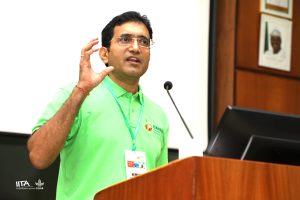
In his address, BASICS Project Director Hemant Nitturkar gave a run-down of the achievements and challenges of the four-year project. “We had set out to develop an economically sustainable system to produce and sell cassava breeder seed, foundation seed, and commercial seed of improved varieties so farmers can access and use quality seed of improved varieties that increase their net productivity and income,” he said.
As a part of the project, IITA established IITA GoSeed and the National Root Crops Research Institute (NRCRI) established Umudike Seeds as dedicated private businesses to produce and market breeder and foundation seed. This is a globally unique instance of a public‒private sector partnership initiative to strengthen the early generation seed (EGS) system for vegetatively propagated crops like cassava.
The innovative rapid multiplication technology, SAH™, has been successfully adapted, tested, and deployed and over 125 village seed entrepreneurs are producing and selling certified, commercial seed to the farmers. The National Agricultural Seed Council (NASC) has increased its capacity to offer market responsive seed quality regulatory services through the establishment of a seed diagnostic lab and adoption of an award winning online tool, Cassava Seed Tracker that connects all the seed value chain players.
Nitturkar recounted the project’s achievement: “In the ECOWAS report of 2015, there was no certified breeder seed, no foundation seed, and limited numbers of certified, commercial cassava seed. In 2018, BASICS facilitated production and sale of 4,556 bundles of breeder seed, 13,325 bundles of foundation seed, and 25,375 bundles of certified commercial seed.”
Olusegun Ojo, Director General of NASC enumerated the importance of BASICS on NASC operations: “The BASICS project has enhanced all external projects of the council in terms of innovation, impact, and sustainability.” He further explained, “The impact of the BASICS project has been overwhelming. The reports we receive daily from the field have been so encouraging. The production of certified cassava seed has increased tremendously and the need to use the certified seed is gradually becoming institutionalized.”
In addition, Ojo commented, “The Cassava Seed Tracker has revolutionized Nigerian seed certification systems. Presently, we are dovetailing it to become the Nigerian Seed Tracker, which will encompass all crops.”
Graham Thiele, CGIAR Research Program on Roots, Tubers and Bananas (RTB) Program Director and the PI for BASICS project said that the project falls under the RTB
Flagship Project 2 “Productive varieties & quality seed.” RTB benefits the project by bringing in its global outlook to foster a new breeding mindset—gender responsive, targeting product profiles with a stronger focus on varietal replacement, and bringing in learning from seed systems work in vegetatively propagated crops from across the world.
In his address, BASICS Project Director Hemant Nitturkar gave a run-down of the achievements and challenges of the four-year project. “We had set out to develop an economically sustainable system to produce and sell cassava breeder seed, foundation seed, and commercial seed of improved varieties so farmers can access and use quality seed of improved varieties that increase their net productivity and income,” he said.
As a part of the project, IITA established IITA GoSeed and the National Root Crops Research Institute (NRCRI) established Umudike Seeds as dedicated private businesses to produce and market breeder and foundation seed. This is a globally unique instance of a public‒private sector partnership initiative to strengthen the early generation seed (EGS) system for vegetatively propagated crops like cassava.
The innovative rapid multiplication technology, SAH™, has been successfully adapted, tested, and deployed and over 125 village seed entrepreneurs are producing and selling certified, commercial seed to the farmers. The National Agricultural Seed Council (NASC) has increased its capacity to offer market responsive seed quality regulatory services through the establishment of a seed diagnostic lab and adoption of an award winning online tool, Cassava Seed Tracker that connects all the seed value chain players.
Nitturkar recounted the project’s achievement: “In the ECOWAS report of 2015, there was no certified breeder seed, no foundation seed, and limited numbers of certified, commercial cassava seed. In 2018, BASICS facilitated production and sale of 4,556 bundles of breeder seed, 13,325 bundles of foundation seed, and 25,375 bundles of certified commercial seed.”
Olusegun Ojo, Director General of NASC enumerated the importance of BASICS on NASC operations: “The BASICS project has enhanced all external projects of the council in terms of innovation, impact, and sustainability.” He further explained, “The impact of the BASICS project has been overwhelming. The reports we receive daily from the field have been so encouraging. The production of certified cassava seed has increased tremendously and the need to use the certified seed is gradually becoming institutionalized.”
In addition, Ojo commented, “The Cassava Seed Tracker has revolutionized Nigerian seed certification systems. Presently, we are dovetailing it to become the Nigerian Seed Tracker, which will encompass all crops.”
 Okechukwu Eke-Okoro, NRCRI Director of External Projects, representing Executive Director Joseph Ukpabi, in his remarks, said, “NRCRI has collaborated with IITA in many projects, and this collaboration has enhanced the accomplishments of NRCRI as a federal institution with the mandate of genetic improvement, production, storage, processing, and socioeconomics of root and tuber crops. The BASICS project is changing the future of rural farmers from growing food for consumption to earning higher commercial returns with its technology of providing multiple pest and disease-free planting materials of cassava through Semi-Autotrophic Hydroponics (SAH™).”
May-Guri Saethre, IITA Deputy Director General, Research for Development, reaffirmed IITA’s commitment to improving cassava production and livelihoods in Africa while highlighting the efforts of BASICS in transforming the cassava value chain in Nigeria. “The BASICS project is critical for creating a sustainable, commercial seed system that will equitably deliver improved varieties to men and women farmers through commercial markets.” Saethre further praised the SAH™ technology: “Because of the success of the deployment of the SAH™ propagation system for cassava, SAH™ has become the most sought-after technology for cassava rapid multiplication.”
The Bill & Melinda Gates Foundation Program Officer for BASICS, Lawrence Kent, reiterated that “we want to build reusable bridges that deliver breeder seed to foundation seed to commercial seed to the farmers’ fields in a profitable manner. This is exciting because many people thought it wasn’t possible. Farmers were used to getting free seed. Through BASICS, we have been able to show what is possible. We need more time to consolidate this.”
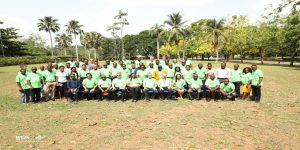
The meeting was attended by national and international partners, policymakers, and development experts from Catholic Relief Services (CRS), NRCRI, NASC, Fera Science Ltd (FERA), Context Global Development, SAHEL Consulting, RTB, the International Potato Center (CIP), and IITA.
All the partners in the BASICS project identified IITA GoSeed Cassava, Umudike Seeds, SAH, Mid-Size seed entrepreneurs, the Processor-led Model (PLM), Quality Seed, market responsive certification, and the Cassava Seed Tracker as key innovation packages to be scaled up to be able to establish an economically sustainable cassava seed system. Building on the good work done so far, the project team agreed to develop a concept note to seek funding for a second phase of the project.
Okechukwu Eke-Okoro, NRCRI Director of External Projects, representing Executive Director Joseph Ukpabi, in his remarks, said, “NRCRI has collaborated with IITA in many projects, and this collaboration has enhanced the accomplishments of NRCRI as a federal institution with the mandate of genetic improvement, production, storage, processing, and socioeconomics of root and tuber crops. The BASICS project is changing the future of rural farmers from growing food for consumption to earning higher commercial returns with its technology of providing multiple pest and disease-free planting materials of cassava through Semi-Autotrophic Hydroponics (SAH™).”
May-Guri Saethre, IITA Deputy Director General, Research for Development, reaffirmed IITA’s commitment to improving cassava production and livelihoods in Africa while highlighting the efforts of BASICS in transforming the cassava value chain in Nigeria. “The BASICS project is critical for creating a sustainable, commercial seed system that will equitably deliver improved varieties to men and women farmers through commercial markets.” Saethre further praised the SAH™ technology: “Because of the success of the deployment of the SAH™ propagation system for cassava, SAH™ has become the most sought-after technology for cassava rapid multiplication.”
The Bill & Melinda Gates Foundation Program Officer for BASICS, Lawrence Kent, reiterated that “we want to build reusable bridges that deliver breeder seed to foundation seed to commercial seed to the farmers’ fields in a profitable manner. This is exciting because many people thought it wasn’t possible. Farmers were used to getting free seed. Through BASICS, we have been able to show what is possible. We need more time to consolidate this.”
The meeting was attended by national and international partners, policymakers, and development experts from Catholic Relief Services (CRS), NRCRI, NASC, Fera Science Ltd (FERA), Context Global Development, SAHEL Consulting, RTB, the International Potato Center (CIP), and IITA.
All the partners in the BASICS project identified IITA GoSeed Cassava, Umudike Seeds, SAH, Mid-Size seed entrepreneurs, the Processor-led Model (PLM), Quality Seed, market responsive certification, and the Cassava Seed Tracker as key innovation packages to be scaled up to be able to establish an economically sustainable cassava seed system. Building on the good work done so far, the project team agreed to develop a concept note to seek funding for a second phase of the project.
Dr Nikkutar Hemant, BASICS Project Director, addressing participants.
Group photograph of annual meeting participants
Contributed by
Recent stories
No items found