
NEWS

Breeding for tomorrow: IITA with CGIAR B4T Director takes stock of gains, challenges, and the road ahead
October 9, 2026
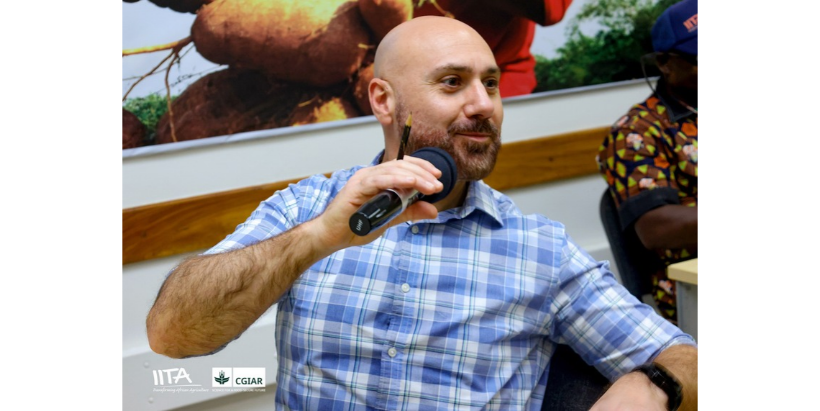
Director of CGIAR Breeding for Tomorrow (B4T) Science Program, Makram Geha, during discussions on progress, achievements, and future direction of B4T for IITA mandate crops.

For five days, from 14 – 18 September, IITA–CGIAR hosted Makram Geha, Director of the CGIAR Breeding for Tomorrow (B4T) Science Program, for an intensive engagement focused on one central question: how can breeding science deliver greater and faster impact for farmers and consumers at large?

The visit provided an opportunity for Geha to review close to six decades of breeding achievements at IITA–CGIAR, assess current challenges and opportunities, and explore pathways for accelerating the delivery of improved varieties and technologies to farmers across Africa.

Covering its six mandate crops—cassava, yam, banana and plantain, maize, soybean, and cowpea, the program brought together IITA breeding leads, scientists, partners, and stakeholders for presentations, discussions, and field and laboratory visits. Together, they examined breeding gains, product pipelines, released varieties, seed systems, modern breeding tools, infrastructure, partnerships, and the pathways required to move improved products from research outputs into farmers’ fields.

Welcoming Geha, IITA Head of Breeding, Dr Hapson Mushoriwa, highlighted IITA–CGIAR’s breeding vision to deliver higher productivity to farmers while reducing production risks through improved varieties and technologies. He noted that the institute’s breeding strategy is built around six strategic pillars: customer-centric solutions, product leadership, operational excellence, strategic partnerships, seed scaling, and strong organizational leadership. At the heart of this strategy are three interconnected elements: people, processes, and products.

The scale of IITA’s breeding contribution is also significant. The institute has released hundreds of varieties across its mandate crops, targeting diverse agroecologies, markets, and farmer needs. Historical examples presented during the engagement showed how breeding investments can translate into broad development outcomes. Improved cassava varieties, for instance, have contributed to food security and economic gains, while improved maize varieties have been adopted across hundreds of thousands of hectares.
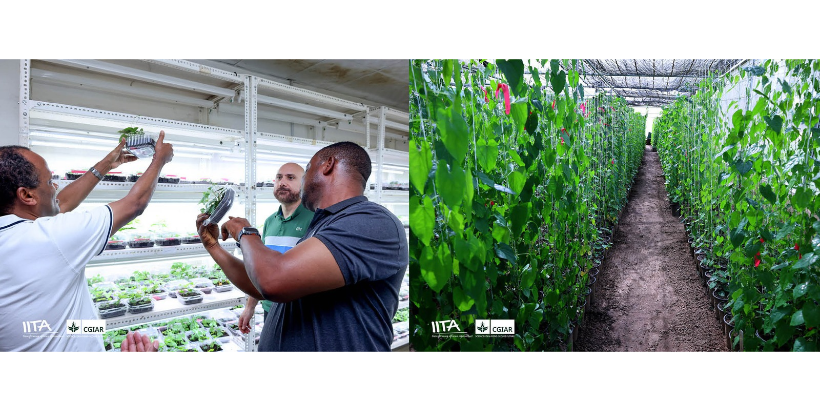
Scientists from IITA Yam Improvement Program demonstrate yam seed multiplication technologies to Makram Geha during a laboratory tour.

These efforts are increasingly supported by modern breeding tools that are transforming the speed and efficiency of crop improvement, shortening breeding cycles and improving the ability to identify promising materials. In yams, for example, the integration of genomic prediction, performance testing, optimal contribution selection, and other approaches has reduced the breeding cycle from the traditional 8-12 years to about 3 years.

Presenting the progress of the Yam Improvement Program, the Lead Breeder, Dr Asrat Amele, highlighted that IITA–CGIAR is transforming yam breeding through accelerated breeding approaches, advanced genomics, and emerging gene-editing technologies, which are helping to reduce breeding cycles and unlock traits that were previously difficult to improve. The program is pursuing next-generation yam varieties with enhanced disease resistance, improved flowering and fruiting efficiency, higher yields, superior tuber qualities, and greater suitability for mechanization and processing.

Dr Ismail Rabbi, IITA’s Cassava Improvement Program Lead, highlighted that IITA–CGIAR’s cassava breeding is leveraging region-specific pipelines and strong partnerships to address major diseases while improving productivity, nutrition, and processing qualities. IITA has successfully developed and deployed a resistant variety to Cassava Mosaic Disease—an achievement now benefiting countries in Asia facing disease outbreaks. He explained that separate breeding pipelines have been established across regions to address differing agroecological conditions and major threats such as Cassava Brown Streak Disease. Dr Rabbi also outlined the program’s market-driven approach, targeting cassava varieties for fresh consumption, processing, industry, and biofortification, while prioritizing higher yields, improved dry matter and starch content, disease resistance, and better root quality.

Dr Moses Nyine, IITA Plantain Breeder, highlighted that IITA–CGIAR’s banana and plantain breeding program is integrating advanced technologies, including AI-assisted screening, while drawing on one of the world’s largest germplasm collections to unlock the potential of plantain as Nigeria’s “green gold.” Dr Nyine emphasized the need to explore advanced breeding questions, including the possibility of breeding at the diploid level and improving genetic gains through innovative reproductive approaches. Discussions emphasized the need for stronger private-sector engagement and policy recognition to elevate plantain as a national priority crop.
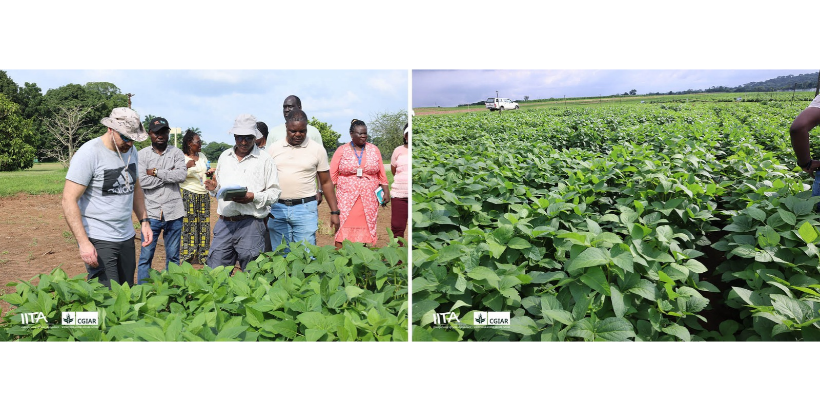
Makram Geha with IITA plant breeders, led by Soybean Breeder, Abush Abebe, during visit to soybean breeding trial field at IITA.

Maize Improvement Program Lead, Prof. John Derera, presented the achievements and strategic direction of IITA–CGIAR’s Maize Improvement Program, which serves more than 500 million people across West and Central Africa through breeding pipelines targeting diverse agroecologies and market segments. IITA–CGIAR’s maize breeding has delivered more than 223 varieties over the last 23 years. It employs genomic selection, doubled-haploid technology, and digital tools to develop climate-resilient hybrids with improved productivity and nutritional value. He highlighted the program’s focus on developing high-performing hybrid maize varieties with at least a 25% yield advantage over existing varieties, along with traits such as tolerance to drought, heat, Striga, and fall armyworm, improved nutritional quality, and reduced aflatoxin contamination.

IITA Soybean Breeder, Dr Godfree Chigeza, outlined growing market demand for non-GMO soybeans and described extensive testing activities involving hundreds of breeding lines across multiple environments. The program is increasingly using genomic prediction tools and advanced data analysis to accelerate selection and improve breeding efficiency.

Cowpea discussions, led by Dr Ousmane Boukar, IITA Cowpea Improvement Program Lead, highlighted progress in scaling improved varieties through strong collaborations among researchers, regulators, and seed companies. Together with maize, it is one of the crops for which bioengineered varieties are already reaching farmers through commercial channels, underscoring the importance of strong partnerships among researchers, regulators, and seed companies.

However, the discussions did not focus only on achievements. The visit also examined what is needed to sustain and accelerate progress. For Geha, the next phase requires bringing the different pieces together more deliberately. “The elements of success are available,” he said. “The task ahead is to connect those elements into systems that allow breeding programs to make better decisions, track progress, and deliver products more efficiently,” he continued. His reflections emphasized integration, efficiency, discovery, systems thinking, and the need to effectively exploit the entire pathway from the selection of genetic resources to products reaching farmers.

The engagement also highlighted the importance of thinking beyond individual varieties. A successful breeding product must connect with agronomy, seed systems, markets, policy, and farmer preferences. This is particularly important as IITA looks toward breeding for tomorrow’s challenges. Climate change, emerging diseases, changing consumer preferences, nutrition, labor availability, and evolving markets are already shaping what farmers will need in the future.

The five-day engagement, therefore, served not simply as a review of what IITA has achieved but as a strategic conversation about what comes next: combining genetic and agronomic gains, strengthening partnerships, modernizing breeding systems, and ensuring that the science ultimately translates into meaningful choices and benefits for farmers.


Contributed by

Safira Chirindza

Scroll to Top
Olaosebikan, Olamide

Olamide Deborah Nwanze is a Senior Research Associate specializing in gender mainstreaming research to inform participatory and inclusive breeding, variety development, and seed systems policies regarding root, tuber, and banana (RTB) crops in the International Institute of Tropical Agriculture Headquarters, Ibadan, Nigeria. She is a PhD candidate at the University of Ibadan and holds an MSc and B. Agric in Agricultural Extension and Rural Development. Olamide is a fellow of the African Women in Agricultural Research and Development – Gender Responsive Agricultural Systems Policy (AWARD-GRASP) and the Gender Responsive Researchers Equipped for Agricultural Transformation (GREAT). She seeks to apply her gender-mainstreaming learnings, gender-responsive research, and policy development, and review expertise to facilitate women, youth, children, and vulnerable social group’s access to and adoption of agricultural Innovations that guarantee food, nutrition, income, and livelihood security in Africa. Her current roles include mentoring research fellows, development of guides and training manuals, implementation and adaptation of gender frameworks and tools, value chain actors’ engagement as citizen science partners, policy review and redesign, data management, and analysis. Her current research explores mixed methods and participatory and interdisciplinary approaches to capture and highlight gender dynamics, needs, preferences, and challenges stakeholders face within the agricultural livelihood value chain to prioritize gender-inclusive strategies in breeding programs, policy design, and implementation.

At IITA, she contributes to the implementation of the CGIAR Accelerated Breeding Initiative and Genetic Innovation Programs; participatory and gender research within the NextGen Cassava, HarvestPlus, RTBFoods, and Tricot-ClimMob 1000Farms Projects; and gender knowledge communication via the G-LENS webinar series, video documentary, policy briefs, publications, and blogs.


Recent publications

de Sousa, K., van Etten, J., Manners, R. Bello, A., Teeken, B., Olaosebikan, O., et al. 2024. The tricot approach: an agile framework for decentralized on-farm testing supported by citizen science. A retrospective. Agron. Sustain. Dev. 44, 8. https://doi.org/10.1007/s13593-023-00937-1

Madu, T., Onwuka, S., Nwafor, S., Onyemauwa, N., Ejechi, M., Ofoeze, M., Ukeje, B., Eluagu, C., Olaosebikan, O., Okoye, B., 2024. Gender-Inclusive Consumer Studies Improve Cassava Breeding in Nigeria in: Frontiers in Sociology, volume 9, number: 1224504, doi: 10.3389/fsoc.2024.1224504

Olaosebikan, O.; Bello, A.; Utoblo, O.; Okoye, B.; Olutegbe, N.; Garner, E.; Teeken, B.; Bryan, E.; Forsythe, L.; Cole, S.; Madu, T. 2023.  Stressors and Resilience within the Cassava Value Chain in Nigeria: Preferred Cassava Variety Traits and Response Strategies of Men and Women to Inform Breeding. Sustainability 15, 7837. https://doi.org/10.3390/su15107837

Okoye, B., Ofoeze, M., Ejechi, M., Onwuka, S., Nwafor, S., Onyemauwa, N., Ukeje, B., Eluagu, C., Obidiegwu, J.*, Olaosebikan, O., Madu, T.* 2023. Prioritizing preferred traits in the yam value chain in Nigeria: a gender situation analysis in: Frontiers in Sociology, volume 8, number: 1232626, pages 1 – 9, ISSN 2297-7775, 2023. https://www.frontiersin.org/articles/10.3389/fsoc.2023.1232626/full

Olaosebikan, O., Bello, A. A., de Sousa, K., Ndjouenkeu, R., Adesokan, M., Alamu, E. O., Agbona, A., van Etten, J., Kegah, F. N.*, Dufour, D., Bouniol, A., Teeken, B. 2023. Consumer acceptability of cassava gari-eba food products across cultural and environmental settings using the triadic comparison of technologies approach (tricot) in: Journal of the Science of Food and Agriculture,

Teeken, B., Olaosebikan, O., Bello, A. A., Madu, T.*, Cole, S. M. 2023. Qualitative assessment on the positionality and preferences of dyads in relation to cassava-related activities: working with tricot trial citizen scientists https://hdl.handle.net/10568/138326 Type: Manual

Bouniol, A., Ceballos, H., Bello, A. A., Teeken, B., Olaosebikan, O., Owoade, D., Agbona, A., Fotso Kuate, A., Madu, T.*, Okoye, B.*, Ofoeze, M.*, Nwafor, S.*, Onyemauwa, N.*, Adinsi, L.*, Forsythe, L., Dufour, D. 2023. Varietal impact on women’s labour, workload and related drudgery in processing root, tuber and banana crops: focus on cassava in sub-Saharan Africa in: Journal of the Science of Food and Agriculture, pages 1 – 25, ISSN 0022-5142,

Bello, A. A., Agbona, A., Olaosebikan, O., Edughaen, G., Dufour, D., Bouniol, A., Iluebbey, P., Ndjouenkeu, R.*, Rabbi, I. Y., Teeken, B. 2023. Genetic and environmental effects on processing productivity and food product yield: drudgery of women’s work in: Journal of the Science of Food and Agriculture, pages 1 – 32, ISSN 0022-5142, 5

Cavicchioli, M., Zimbiti, T., Teeken, B., Nwanze, D.O., Liani, M., Parkes, E. & Bello, A. 2023. IITA-Gender Responsive Breeding Training Report. Genetic Resources Center, IITA-HQ, Ibadan, 21-23 September, 2022. Ibadan, Nigeria: IITA, (34 p.).https://hdl.handle.net/10568/131368

Agbona, A. Peteti P., Teeken B., Olaosebikan O. Bello, A. A., Parkes, E., Rabbi, I. Y., Mueller, L., Egesi, C., Kulakow, P. 2022. Data Management in Multi-disciplinary African RTB Crop Breeding Programs. In: Williamson, H.F., Leonelli, S. (eds) Towards Responsible Plant Data Linkage: Data Challenges for Agricultural Research and Development. Springer, Cham. https://doi.org/10.1007/978-3-031-13276-6_5

Lora Forsythe, Pricilla Marimo, Sarah Mayanja, Olamide D. Olaosebikan, Esme Stuart, Bela Teeken, Benjamin Okoye, Tessy Madu, (2021). Cross-product Gender Analysis of RTBfoods Step 2 Gendered Food Mapping on RTB Products. Understanding the Drivers of Trait Preferences and the Development of Multi-user RTB Product Profiles, WP1. London, UK: RTBfoods Field Scientific Report, 30 p.

Teeken, B., Garner, E., Agbona, A., Balogun, I., Olaosebikan, O., Bello, A., Madu, T., Okoye, B., Egesi, C., Kulakow, P. and Tufan, H.A. 2021. Beyond “Women’s Traits”: Exploring How Gender, Social Difference, and Household Characteristics Influence Trait Preferences. Frontiers Sustainable Food Systems 5:740926. https://doi.org/10.3389/fsufs.2021.740926

Teeken, B., Agbona, A., Bello, A., Olaosebikan, O., Alamu, E., Adesokan, M., Awoyale, W., Madu, T., Okoye, B., Chijioke, U., Owoade, D., Okoro, M., Bouniol, A., Dufour, D., Hershey, C., Rabbi, I., Maziya‐Dixon, B., Egesi, C., Tufan, H. and Kulakow, P. (020. Understanding cassava varietal preferences through pairwise ranking of gari‐eba and fufu prepared by local farmer–processors. Int J Food Sci Technol. https://doi.org/10.1111/ijfs.14862

Bela Teeken, Olamide Olaosebikan, Ireti Balogun, Benjamin Okoye, Tessy Madu, Steven Cole, Abolore Bello, Elizabeth Parkes. (2020). Piloting the G+ customer and product profile tools for gender-responsive cassava breeding in Nigeria. Nigeria: International Institute of Tropical Agriculture (IITA). https://hdl.handle.net/20.500.11766/13000