
Women account for less than 30% of scientists and researchers in the world, partly due to the lack of encouragement from family, peers, teachers, and society, which serves as a barrier to their development. IITA–CGIAR, being an advocate of gender equality, encourages and values the active engagement of women in all aspects of life, including science.
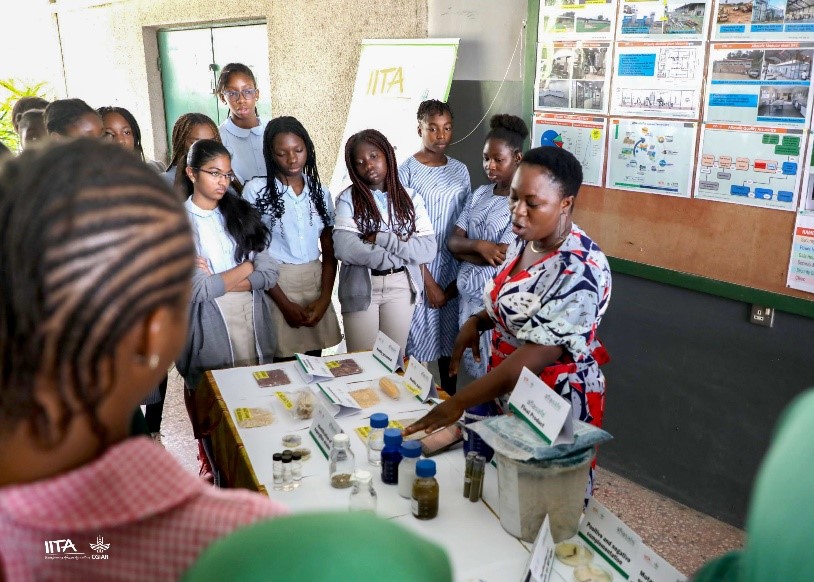
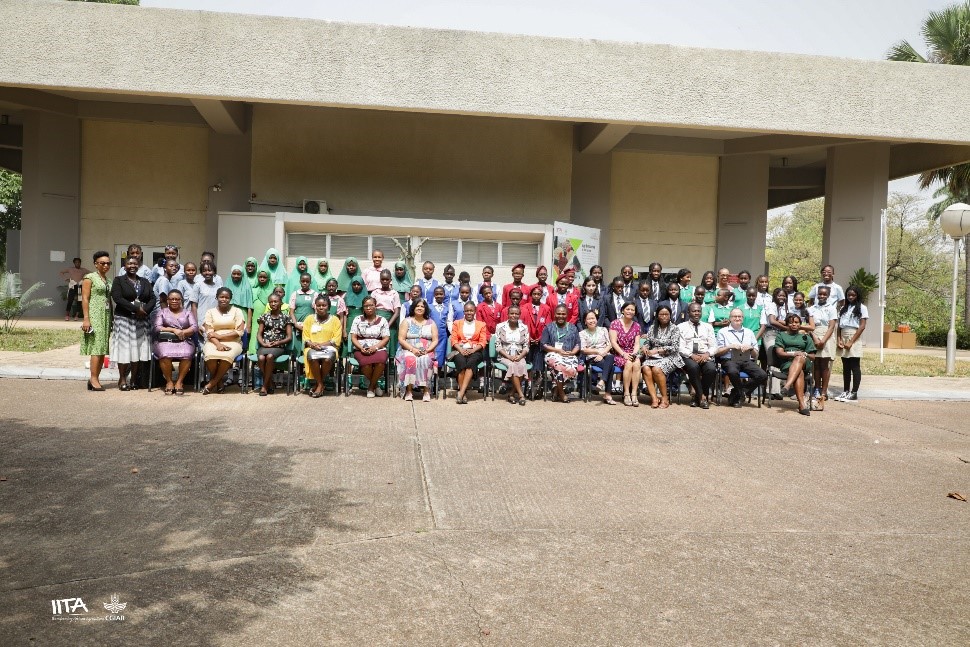
To demonstrate this, IITA celebrated the International Day of Women and Girls in Science (IDWGS) on 13 February by inviting students and teachers from various secondary schools to its headquarters in Ibadan to motivate and encourage girl-children who are aspiring to have careers in science, by exposing them to the success stories of women scientists. Other IITA stations and hubs across sub-Saharan Africa also invited girl-students to introduce them to the world of science by meeting inspiring women scientists.
Many girls interested in science do not grow up to be scientists. Hence, this year’s theme, “Innovate, Demonstrate, Elevate, Advance, and Sustain (I.D.E.A.S)”, was adopted to “break existing stereotypes and broaden the imagination of girls on how they can contribute to achieving the sustainable development goals.“
Anchoring the program at the Institute’s headquarters, Human Resources Manager Lade Oke expressed the need for more women in science to achieve gender equality and tackle the challenge of low representation of women in leadership positions.
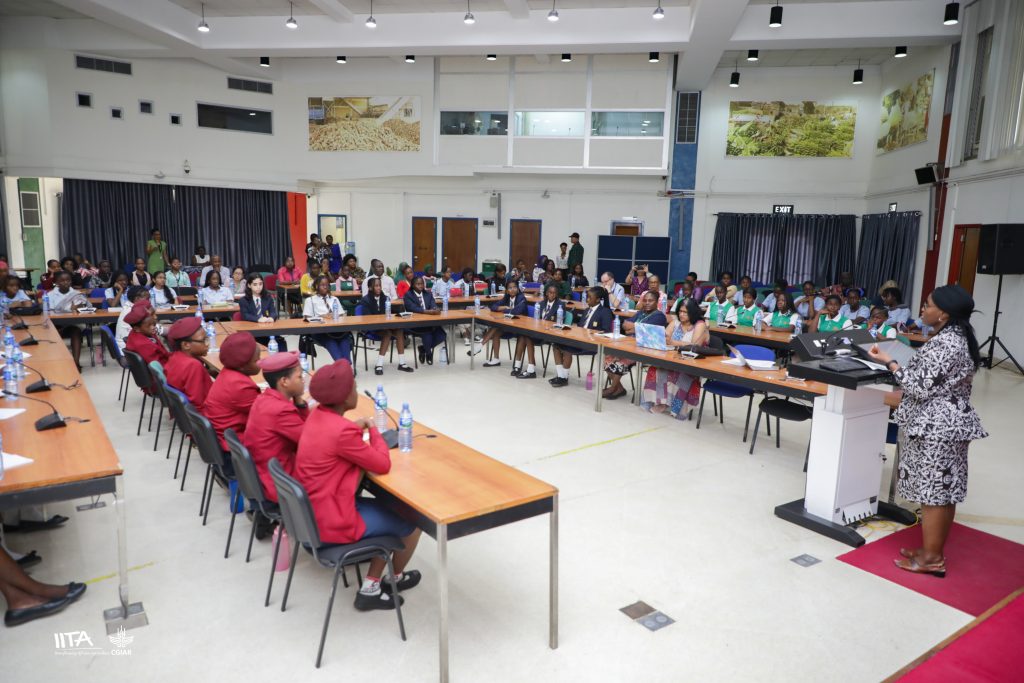
The Deputy Director General, Corporate Services (DDG-CS), Hilde Koper-Limbourg, in her welcome address, encouraged the girls to take an interest in subjects that will enable them to have a successful career in the sciences, technology, engineering, and math (STEM). She recommended flexible timing and mentoring as part of measures to eradicate inequality.
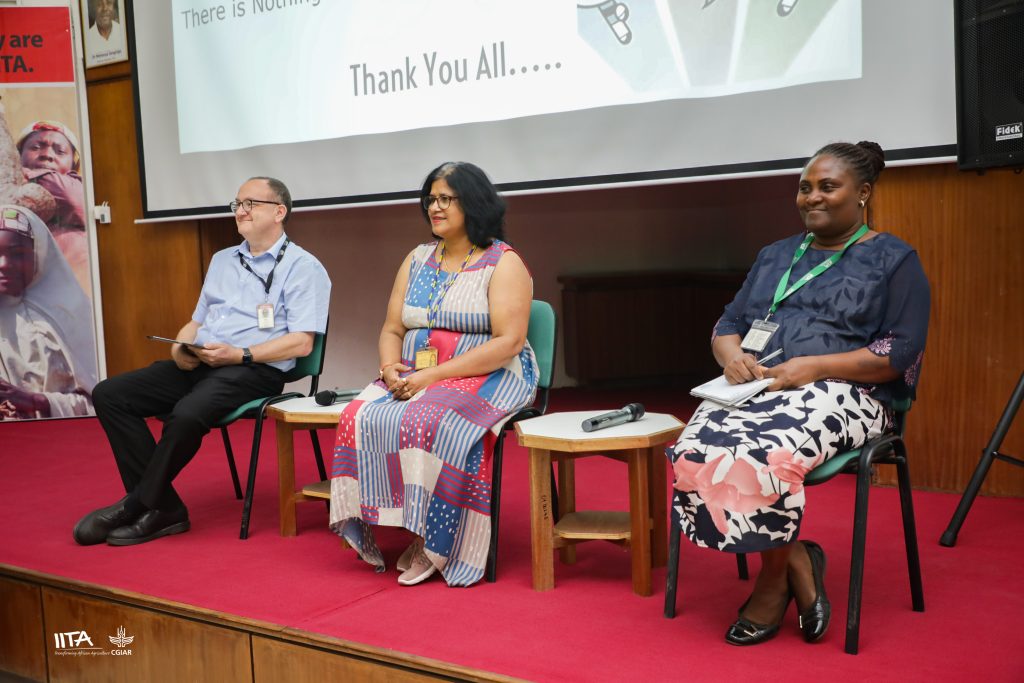
In a panel session, Yam Disease Phenotyping Specialist Olufisayo Kolade shared opportunities available to women and girls in science. She identified scholarship opportunities in sciences and urged the students to explore them. “Believe in yourselves and be willing to take risks,” she said.
In line with this, Molecular Geneticist Ranjana Bhattacharjee advised ensuring early exposure to female role models as girls often have very little idea of what STEM jobs offer. She urged parents and teachers to shield students from stereotype threats and nudged them towards activities that will expose them to learning some of the subjects that might seem difficult, such as physics and mathematics.
The impact of the panel session was seen during the interactive session, where students asked questions about their concerns, based on the panelists’ presentations. The panel also included the Head Teacher of IITA International School, Derek Smith. IITA Communication Officer Timilehin Osunde moderated the session.
At the IITA Eastern Africa Hub, four female scientists, including a senior researcher, Kiddo Mtunda, mid-career researcher Everlyne Wosula, and two early career researchers, Happy Zacharia and Fatuma Musa, shared their individual experiences and how they navigated various challenges in their career journey to get to where they are now. Gender Specialist Steven Cole and Emeritus Director Victor Manyong emphasized that lots of opportunities are available for women and girls in the scientific research fields. “IITA is open to welcome other students from the schools for further learning and moral support whenever needed,” Manyong added.
Seed Dissemination Manager Angelique Kajibwami at the IITA Central Africa Hub, shared examples of women who were able to step out of their comfort zones to challenge bias, establish rules in the society, and work in science, which have made them heroes. She emphasized that this happened in the Congolese society where women still struggle to pursue their dreams in science due to the difficulty of choosing between scientific careers and family life.
In the Southern Africa Hub event, Hub Administrator Adeleke Ali highlighted the importance of encouraging young girls to join science teams, stating that they are presently underrepresented in the field. IITA PhD student in Breeding Victoria Ndekeoria mentioned some of the qualities required to become a scientist—hard work, determination, innovation, and curiosity. Plant Pathologist Trainee Dora Shimbwabwa, Assistant Soybean breeder Christabell Nachilima, and Soil Scientist Mirriam Makungwe, also shared their science journey to motivate the young girls.
Following the discussions in all the IITA hubs and at headquarters, students and teachers were taken on a tour of laboratory facilities, including the Bioscience Center, Virology center, and Aflasafe lab, where the young girls saw firsthand what the “science” work entails.
Contributed by
Recent stories