
IITA-CGIAR led the organization of a field visit, which hosted about 150 participants for the Africa Food Systems (AGRF) 2023 pre-summit field visits. The field visit was held at the IITA’s Eastern Africa Hub office in Mikocheni, Dar es Salaam, on 3 September.
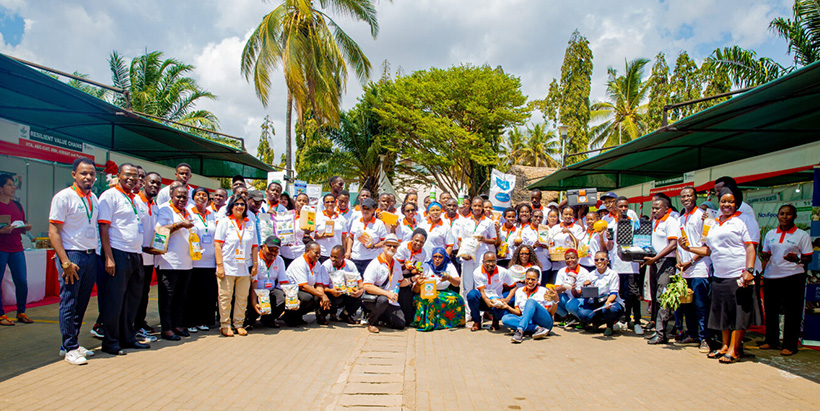
IITA, with other CGIAR centers and local partners, organized the field visit themed “Research innovations in the hands of users” to highlight the cutting-edge advancements in resilient agriculture, nutrition, and agribusiness landscapes and the diverse range of breakthrough technologies generated by the CGIAR centers and partners. Moreover, the field visit gave the participants space to discover the possibilities that agribusiness innovations offer and interact widely with the users of the CGIAR game-changing technologies in Tanzania and beyond.
In her opening remarks, IITA Eastern Africa Hub Director Leena Tripathi noted that IITA has existed for over two decades in Eastern Africa. “Most of our research-related activities, including breeding, are conducted in Dar es Salaam, Tanzania, for cassava. The Arusha station primarily focuses on banana breeding, particularly cooking banana varieties, especially those grown in Tanzania—Matooke and Mchare. We have a dedicated team focused on pest and disease control, since this remains one of the most significant challenges in Africa,” Tripathi noted.
Tripathi explained that IITA works on mitigating the Aflatoxin challenge, which is a big issue in producing maize and other crops, including groundnuts. Engaging in climate-smart agriculture initiatives and youth empowerment, IITA has established a Youth Center in Kwembe to provide capacity-building opportunities for youths in agribusiness.
The participants toured four IITA laboratories within the state-of-the-art architectural building, where they witnessed IITA’s commitment to research-for-development activities that bring solutions to farmers, rural communities, and the people of sub-Saharan Africa. The participants learned about molecular biology, plant health and pathology, soil and plant analytics, and food quality.
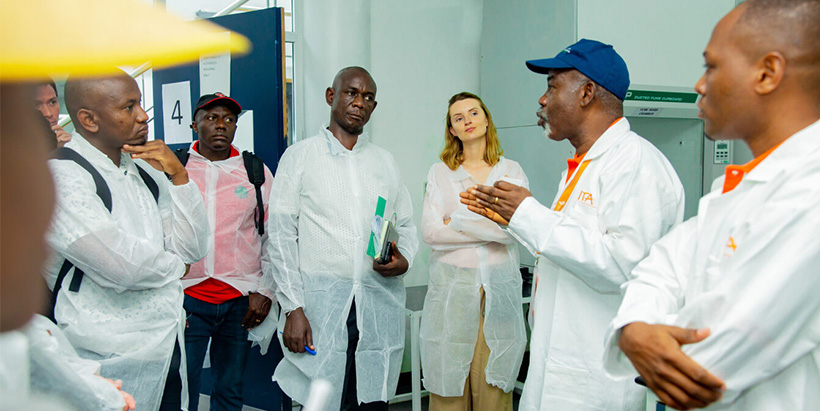
After experiencing how researchers and partners work hard to improve our food systems in the early stage, the participants learned how researchers work closely with farmers to research and scale different innovations that promote and improve the food systems. The experiential learning was accompanied by grouping the innovation activities in thematic areas, including seed technologies and vibrant seed delivery models, resilient value chain, Good Agricultural Practices and digital solutions, agri-nutrition, Technologies for African Agricultural Transformation (TAAT), and Empowering Youth in Economics/Agribusiness and Food Systems (EYAS).
Director of Bora Kilimo Biashara Group Wisdom Mola from Geita was delighted to participate in the exhibition. “I have learned a lot, and this will help us as entrepreneurs to establish new connections for learning on agricultural technologies, crop processing, and to find new market opportunities both locally and internationally,” noted Mola
IITA Deputy Director General, Partnerships for Delivery (DDG-P4D), Kenton Dashiell, was impressed with how IITA Tanzania has built excellent partnerships with other research centers and local partners in ensuring the transformation of Africa’s agriculture. He noted that the evidence was clear with the number of partners participating in making the field visit successful.
The CGIAR centers and partners that participated in the field visit include the International Potato Center (CIP), International Rice Research Institute (IRRI), Alliance Bioversity International – CIAT, CIFOR-ICRAF, Tanzania Agriculture Research Institute (TARI), The International Crops Research Institute for the Semi-Arid Tropics (ICRISAT), HarvestPlus and others.
The AGRF field visits allowed the participants to observe food systems solutions directly through visits to groundbreaking projects or agribusiness facilities where the experiences emphasized a focus on the process and an understanding of the most promising agricultural value chains on the mainland and Zanzibar. This presented a great chance for participants to gain knowledge and practical experience of real-world initiatives and an opportunity to get to know more about the host country and promote Agri-tourism.
Contributed by Gloriana NdibalemaContributed by
Recent stories