
CLiP success story
October 23, 2017
Forage production addresses need to improve milk production for better living conditions
For many years Appoline Mapendo M’Manobe and her family invested their time, resources, and energy on their four cows in the hope of turning a sustainable profit from the dairy venture. However, not once had Appoline and her family received significant returns from their effort. On the best days, they received just under a liter of milk per cow.
 With 12 children to provide for, she could never get the desired quantity of proteins and vitamins from the milk to improve the nutrition of her children. As a result of low income from livestock and crop production, she was unable to meet the educational fees of her children, their medical needs and food for the family.
Appoline lives in Cibinda village, Miti location in Kabare Territory, South Kivu Province, Democratic Republic of Congo where poverty and malnutrition are prevalent. Several studies have attributed this situation to low crop production and poor livestock husbandry practices, presence of pests and diseases, limited access to improved seed varieties and improved animal breeds. This situation was exacerbated by the civil war which ravaged the Eastern Congo between late 1900s and early 2000s. After the war, a few households that have retained their cattle against the odds now have recovered limited resources to sustainably engage in farming. As a part of post-war recovery efforts, a number of local associations, farmer organizations to mobilize farmers and engender collective actions for self-help and more importantly to access new technologies sprang up for agro-pastoral activities in their communities. Some of these ensembles offer good opportunities to farmers for learning, sharing experience and disseminating of information on good agricultural and livestock practices. It is with this perspective that, in 2015, the Crop-Livestock Integration Project (CLiP) mobilized farmers and trained them in forage production to improve animal feeding. Appoline participated in the training activities and received Napier grass (Pennisetum purpureum var. French Cameroon) cuttings and Velvet bean (Mucuna pruriens var. Sericolla) seeds. As recommended in the training she planted forage seeds in her maize-beans intercropping farm, by integrating the forage seeds into maize-beans intercropping to increase productivity. Appoline has planted the Pennisetum and Mucuna forages for the past two cropping seasons. Excited by the outputs (crop and livestock) she recorded, Appoline happily recounted her experience
“Before this CLiP project, I was getting only 4 L per day from my four cows, but now I produce more than 10 L of milk per day. My children look healthy, they complain less about sicknesses, and they eat 3 meals per day. I can sell milk to my neighbors after meeting my household needs. I can process the milk into traditional cheese for value addition which I take to the market twice a week and get an extra income. Nowadays, I affordably cater for school fees and meet their medical needs.”
Appoline said that she feels very happy sharing her experiences with other farmers. She has recommended to all her community members to plant forage despite the land scarcity to boost productivity and increase household income. With the desire to share knowledge with other farmers, Appoline volunteered to be a CLiP Champion Farmer in her community by positively impacting other farmers who are following her footsteps. She is a resourceful person in her community as she encourages other women to get involved in R4D activities as much as they can to enhance their livelihoods. She trains other farmers on forage production and cattle feeding options. She commended the CLiP team for training her on forage production for improved livestock feeding for better human feeding options.
With 12 children to provide for, she could never get the desired quantity of proteins and vitamins from the milk to improve the nutrition of her children. As a result of low income from livestock and crop production, she was unable to meet the educational fees of her children, their medical needs and food for the family.
Appoline lives in Cibinda village, Miti location in Kabare Territory, South Kivu Province, Democratic Republic of Congo where poverty and malnutrition are prevalent. Several studies have attributed this situation to low crop production and poor livestock husbandry practices, presence of pests and diseases, limited access to improved seed varieties and improved animal breeds. This situation was exacerbated by the civil war which ravaged the Eastern Congo between late 1900s and early 2000s. After the war, a few households that have retained their cattle against the odds now have recovered limited resources to sustainably engage in farming. As a part of post-war recovery efforts, a number of local associations, farmer organizations to mobilize farmers and engender collective actions for self-help and more importantly to access new technologies sprang up for agro-pastoral activities in their communities. Some of these ensembles offer good opportunities to farmers for learning, sharing experience and disseminating of information on good agricultural and livestock practices. It is with this perspective that, in 2015, the Crop-Livestock Integration Project (CLiP) mobilized farmers and trained them in forage production to improve animal feeding. Appoline participated in the training activities and received Napier grass (Pennisetum purpureum var. French Cameroon) cuttings and Velvet bean (Mucuna pruriens var. Sericolla) seeds. As recommended in the training she planted forage seeds in her maize-beans intercropping farm, by integrating the forage seeds into maize-beans intercropping to increase productivity. Appoline has planted the Pennisetum and Mucuna forages for the past two cropping seasons. Excited by the outputs (crop and livestock) she recorded, Appoline happily recounted her experience
“Before this CLiP project, I was getting only 4 L per day from my four cows, but now I produce more than 10 L of milk per day. My children look healthy, they complain less about sicknesses, and they eat 3 meals per day. I can sell milk to my neighbors after meeting my household needs. I can process the milk into traditional cheese for value addition which I take to the market twice a week and get an extra income. Nowadays, I affordably cater for school fees and meet their medical needs.”
Appoline said that she feels very happy sharing her experiences with other farmers. She has recommended to all her community members to plant forage despite the land scarcity to boost productivity and increase household income. With the desire to share knowledge with other farmers, Appoline volunteered to be a CLiP Champion Farmer in her community by positively impacting other farmers who are following her footsteps. She is a resourceful person in her community as she encourages other women to get involved in R4D activities as much as they can to enhance their livelihoods. She trains other farmers on forage production and cattle feeding options. She commended the CLiP team for training her on forage production for improved livestock feeding for better human feeding options.
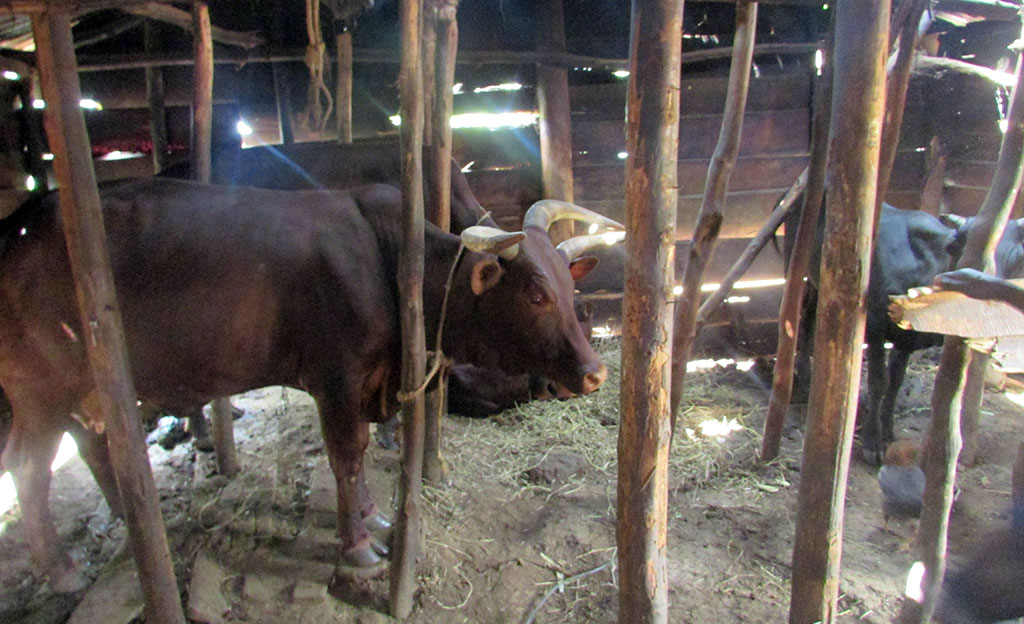
Appoline’s cattle.
Contributed by
Recent stories
No items found