
IITA NEWS

EiA plans to modernize agronomy through the SAA-Use Case Nigeria project
April 6, 2023

The Excellence in Agronomy (EiA) SAA-Use Case Nigeria project held its planning workshop from 14 to 17 February at the IITA-Kano station.
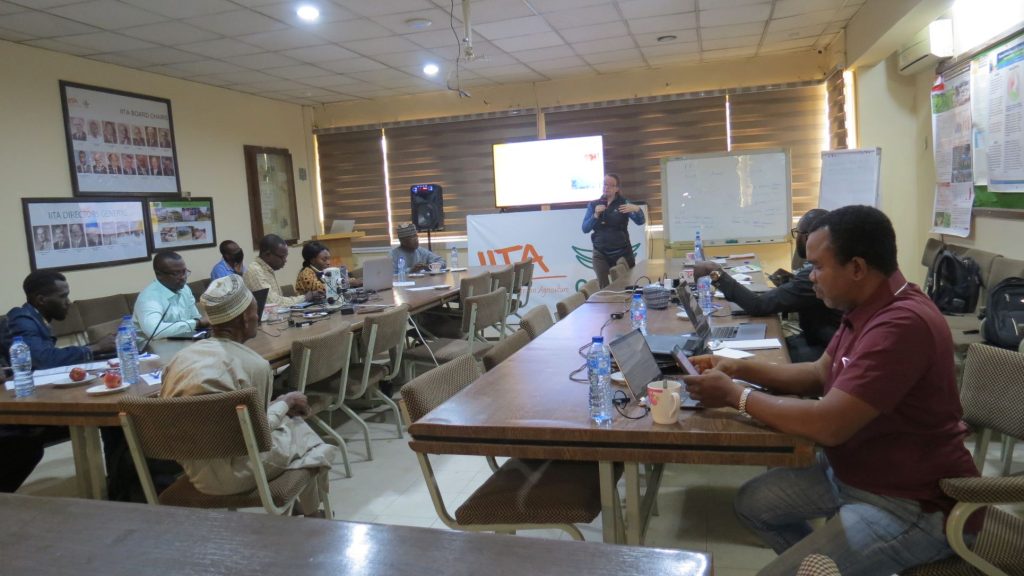
IITA Agronomist Dr Christine Kreye addressing the workshop participants.

While briefing the participants on the aims and objectives of Excellence in Agronomy, Mandla Nkomo, the Chief Growth Officer, mentioned that the EiA project wants to achieve modernized agronomy and deliver Good Agronomic Practices (GAP) for the benefit of the farmers. Mandla also talked about how to achieve a more significant impact. Part of the process led to a decision that they, as a team, will develop some research areas, including systems transformation and how they influence policies from a food and agricultural perspective. The process also led to genetic innovation, which CGIAR is known for globally because they have developed crop breeds in several sectors.

Nkomo further explained that within agro-food systems, they look to develop approaches, generate evidence, and provide tools and toolkits to drive the agenda of much more resilient agro-food systems in the world. The agro-food system is under much pressure from climate change and needs a crop lens. There are many challenges around yield, production quality, soil depletion, and the inability to get more crops.
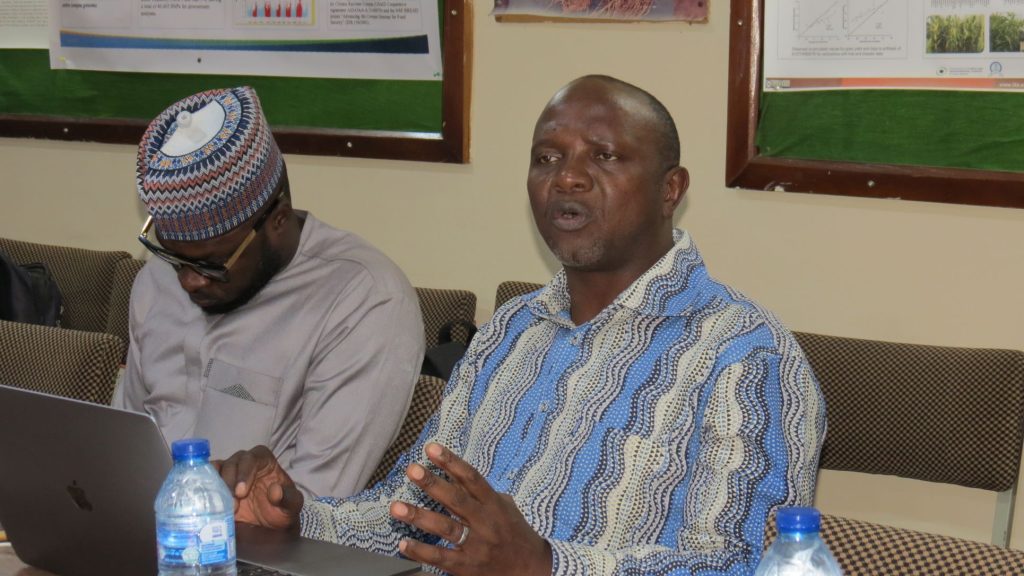
 EiA Chief Growth Officer Dr Nkomo Mandla briefing participants on the EiA objectives.
EiA Chief Growth Officer Dr Nkomo Mandla briefing participants on the EiA objectives.

EiA is the second-largest initiative under resilient agro-food systems within CGIAR. EiA has set itself as an agenda with an initiative to provide sustainable intensification and climate change adaptation solutions from an agronomic perspective. Therefore, we create such use cases when we work with partners like ourselves. Use-Cases are essential in generating responses to partners’ needs in the field.

“Based on that need, they develop solutions often perceived as bringing together the arm of CGIAR Centers. IITA, Africa Rice, and CDA came together to support the National Agricultural Research Systems in the places where we work. When the initiatives are over, the capacity and impact should be sustainable,” Nkomo continued.

The EiA looks to help farmers make better investing decisions and ensure extension agents (EAs) can interact with them and give them the best advice to influence their practices.

Nkomo also said the Use Case is important because Nigeria’s northern part is the country’s food basket. If good agronomic practices are applied, the impact will be huge, not just for Nigeria but even for neighboring countries. And to do that, we must make the tools we are developing become transformative in improving farmers’ yield quality and profitability and ensure there is nutrient and resource use efficiency. And soil health is also essential as that will feed Nigeria in the future.
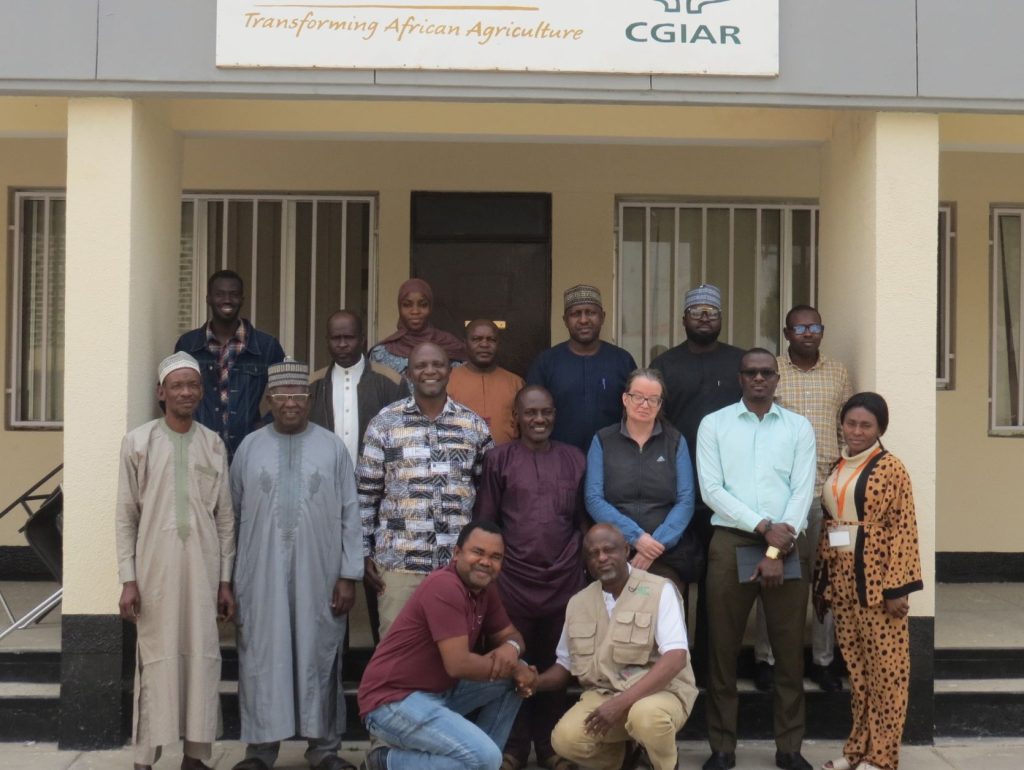
Participants at the SAA-Use Case Nigeria Planning Workshop in Kano.

He hopes that with the Use-Case, they can provide much better agronomic advisory services for farmers. “That will require a network of partners, the CGIAR centers, and the demand partners to properly help understand the needs, shape the solutions together, and deploy them at scale. As a team, we must ensure millions of farmers have access to quality agronomic information about growing maize, rice, and cassava,” he added.

In his presentation on Assessing User Needs and Experience, Thompson Ogunsanmi, the Scaling Scientist for African Agronomy Cassava Initiatives (ACAI), spoke about things to understand, such as planting windows, needs, variety, time to plant, the importance of yield estimation, and the certainty of losing your yield. He also highlighted the importance of knowing your target yield, the farm size, and how much manure to apply. “Meeting and having a focus group discussion (FGD) is essential to obtain an excellent agronomic practice,” said Ogunsanmi.

Dr Ali Ibrahim, AfricaRice Systems Agronomist, also presented on Safe Planting Windows, achievements, and the way forward. He said Pepin Van Oort first developed Rice Cropping Calender Construction with Climate Change (CCC) at AfricaRice. Van Oort et al. (2016) documented the method and rationale for the CCC model.

Ibrahim further discussed that AfricaRice had developed a simple version of RiceAdvice, the RiceAdvice Lite. The tools designed, and the ones yet to be designed, help provide recommendations regarding nutrient management for farmers. The previous version required much information, particularly knowing who provides the recommendation and the farmer. In contrast, the new version requires simple information for recommendations for farmers. He said the tool runs in Microsoft Excel, available on most computers. The device is available on the Google store, where anyone can download and use the ODK form of the RiceAdvice Lite with NutrientExpert (NE).

In an interview, Ibrahim said the objectives of sharing results with partners are to make sure the tools developed are working, and they are happy with the results and can also proceed with scaling the tools. The partners are excited about the results because the tools developed performed remarkably in all the states where validation trials were conducted.

Dr Bello Mohammed, Maize Fertilizer Recommendation Expert at the Centre for Dryland Agriculture (CDA-BUK), also mentioned that he acquired many benefits during the workshop. They also identified weak points from the tools developed in the Use-Case and the areas that need improvement.

Contributed by Sarah Sallau


Contributed by

Related news

No items found

Leave a Reply

Your email address will not be published. Required fields are marked *

Scroll to Top
Olaosebikan, Olamide

Olamide Deborah Nwanze is a Senior Research Associate specializing in gender mainstreaming research to inform participatory and inclusive breeding, variety development, and seed systems policies regarding root, tuber, and banana (RTB) crops in the International Institute of Tropical Agriculture Headquarters, Ibadan, Nigeria. She is a PhD candidate at the University of Ibadan and holds an MSc and B. Agric in Agricultural Extension and Rural Development. Olamide is a fellow of the African Women in Agricultural Research and Development – Gender Responsive Agricultural Systems Policy (AWARD-GRASP) and the Gender Responsive Researchers Equipped for Agricultural Transformation (GREAT). She seeks to apply her gender-mainstreaming learnings, gender-responsive research, and policy development, and review expertise to facilitate women, youth, children, and vulnerable social group’s access to and adoption of agricultural Innovations that guarantee food, nutrition, income, and livelihood security in Africa. Her current roles include mentoring research fellows, development of guides and training manuals, implementation and adaptation of gender frameworks and tools, value chain actors’ engagement as citizen science partners, policy review and redesign, data management, and analysis. Her current research explores mixed methods and participatory and interdisciplinary approaches to capture and highlight gender dynamics, needs, preferences, and challenges stakeholders face within the agricultural livelihood value chain to prioritize gender-inclusive strategies in breeding programs, policy design, and implementation.

At IITA, she contributes to the implementation of the CGIAR Accelerated Breeding Initiative and Genetic Innovation Programs; participatory and gender research within the NextGen CassavaHarvestPlusRTBFoods, and Tricot-ClimMob 1000Farms Projects; and gender knowledge communication via the G-LENS webinar series, video documentary, policy briefspublications, and blogs.


Recent publications

de Sousa, K., van Etten, J., Manners, R. Bello, A., Teeken, B., Olaosebikan, O., et al. 2024. The tricot approach: an agile framework for decentralized on-farm testing supported by citizen science. A retrospective. Agron. Sustain. Dev. 44, 8. https://doi.org/10.1007/s13593-023-00937-1

Madu, T., Onwuka, S., Nwafor, S., Onyemauwa, N., Ejechi, M., Ofoeze, M., Ukeje, B., Eluagu, C., Olaosebikan, O., Okoye, B., 2024. Gender-Inclusive Consumer Studies Improve Cassava Breeding in Nigeria in: Frontiers in Sociology, volume 9, number: 1224504, doi: 10.3389/fsoc.2024.1224504

Olaosebikan, O.; Bello, A.; Utoblo, O.; Okoye, B.; Olutegbe, N.; Garner, E.; Teeken, B.; Bryan, E.; Forsythe, L.; Cole, S.; Madu, T. 2023.  Stressors and Resilience within the Cassava Value Chain in Nigeria: Preferred Cassava Variety Traits and Response Strategies of Men and Women to Inform Breeding. Sustainability 15, 7837. https://doi.org/10.3390/su15107837

Okoye, B., Ofoeze, M., Ejechi, M., Onwuka, S., Nwafor, S., Onyemauwa, N., Ukeje, B., Eluagu, C., Obidiegwu, J.*, Olaosebikan, O., Madu, T.* 2023. Prioritizing preferred traits in the yam value chain in Nigeria: a gender situation analysis in: Frontiers in Sociology, volume 8, number: 1232626, pages 1 – 9, ISSN 2297-7775, 2023. https://www.frontiersin.org/articles/10.3389/fsoc.2023.1232626/full

Olaosebikan, O., Bello, A. A., de Sousa, K., Ndjouenkeu, R., Adesokan, M., Alamu, E. O., Agbona, A., van Etten, J., Kegah, F. N.*, Dufour, D., Bouniol, A., Teeken, B. 2023. Consumer acceptability of cassava gari-eba food products across cultural and environmental settings using the triadic comparison of technologies approach (tricot) in: Journal of the Science of Food and Agriculture,

Teeken, B., Olaosebikan, O., Bello, A. A., Madu, T.*, Cole, S. M. 2023. Qualitative assessment on the positionality and preferences of dyads in relation to cassava-related activities: working with tricot trial citizen scientists https://hdl.handle.net/10568/138326 Type: Manual

Bouniol, A., Ceballos, H., Bello, A. A., Teeken, B., Olaosebikan, O., Owoade, D., Agbona, A., Fotso Kuate, A., Madu, T.*, Okoye, B.*, Ofoeze, M.*, Nwafor, S.*, Onyemauwa, N.*, Adinsi, L.*, Forsythe, L., Dufour, D. 2023. Varietal impact on women’s labour, workload and related drudgery in processing root, tuber and banana crops: focus on cassava in sub-Saharan Africa in: Journal of the Science of Food and Agriculture, pages 1 – 25, ISSN 0022-5142,

Bello, A. A., Agbona, A., Olaosebikan, O., Edughaen, G., Dufour, D., Bouniol, A., Iluebbey, P., Ndjouenkeu, R.*, Rabbi, I. Y., Teeken, B. 2023. Genetic and environmental effects on processing productivity and food product yield: drudgery of women’s work in: Journal of the Science of Food and Agriculture, pages 1 – 32, ISSN 0022-5142, 5

Cavicchioli, M., Zimbiti, T., Teeken, B., Nwanze, D.O., Liani, M., Parkes, E. & Bello, A. 2023. IITA-Gender Responsive Breeding Training Report. Genetic Resources Center, IITA-HQ, Ibadan, 21-23 September, 2022. Ibadan, Nigeria: IITA, (34 p.).https://hdl.handle.net/10568/131368

Agbona, A. Peteti P., Teeken B., Olaosebikan O. Bello, A. A., Parkes, E., Rabbi, I. Y., Mueller, L., Egesi, C., Kulakow, P. 2022. Data Management in Multi-disciplinary African RTB Crop Breeding Programs. In: Williamson, H.F., Leonelli, S. (eds) Towards Responsible Plant Data Linkage: Data Challenges for Agricultural Research and Development. Springer, Cham. https://doi.org/10.1007/978-3-031-13276-6_5

Lora Forsythe, Pricilla Marimo, Sarah Mayanja, Olamide D. Olaosebikan, Esme Stuart, Bela Teeken, Benjamin Okoye, Tessy Madu, (2021). Cross-product Gender Analysis of RTBfoods Step 2 Gendered Food Mapping on RTB Products. Understanding the Drivers of Trait Preferences and the Development of Multi-user RTB Product Profiles, WP1. London, UK: RTBfoods Field Scientific Report, 30 p.

Teeken, B., Garner, E., Agbona, A., Balogun, I., Olaosebikan, O., Bello, A., Madu, T., Okoye, B., Egesi, C., Kulakow, P. and Tufan, H.A. 2021. Beyond “Women’s Traits”: Exploring How Gender, Social Difference, and Household Characteristics Influence Trait Preferences. Frontiers Sustainable Food Systems 5:740926. https://doi.org/10.3389/fsufs.2021.740926

Teeken, B., Agbona, A., Bello, A., Olaosebikan, O., Alamu, E., Adesokan, M., Awoyale, W., Madu, T., Okoye, B., Chijioke, U., Owoade, D., Okoro, M., Bouniol, A., Dufour, D., Hershey, C., Rabbi, I., Maziya‐Dixon, B., Egesi, C., Tufan, H. and Kulakow, P. (020. Understanding cassava varietal preferences through pairwise ranking of gari‐eba and fufu prepared by local farmer–processors. Int J Food Sci Technol. https://doi.org/10.1111/ijfs.14862

Bela Teeken, Olamide Olaosebikan, Ireti Balogun, Benjamin Okoye, Tessy Madu, Steven Cole, Abolore Bello, Elizabeth Parkes. (2020). Piloting the G+ customer and product profile tools for gender-responsive cassava breeding in Nigeria. Nigeria: International Institute of Tropical Agriculture (IITA). https://hdl.handle.net/20.500.11766/13000