
IITA NEWS

Empowering plant protection agencies to combat devastating potato pest in Africa
August 22, 2025


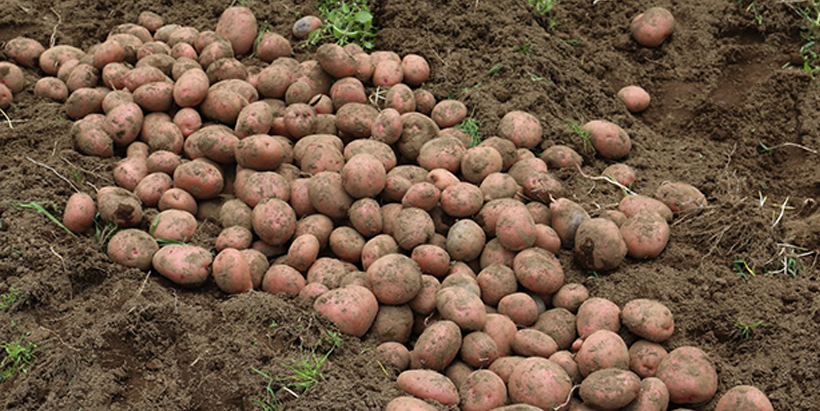
Harvested potatoes in field in Kenya.

IITACGIAR is empowering National Plant Protection organizations in Africa to effectively detect and manage Potato Cyst Nematodes (PCN), a microscopic pest devastating potato crops across the region.

Nematodes are tiny worms that attack potato roots, stunting their growth and can wipe out potato yields by up to 100 percent.

PCN has been reported to be highly prevalent in four countries in East and Southern Africa, a quarantine pest that infects and feeds on potato roots, causing significant yield losses and threatening regional trade due to strict border phytosanitary controls. However, research has shown that early detection and management are critical to protecting farmer livelihoods and regional potato markets.

A World Trade Organization (WTO)’s Standards and Trade Development Facility project coordinated by the Food and Agriculture Organization (FAO) involving technical training spearheaded by the IITA-CGIAR and ICIPE through the NemAfrica lab is designed to equip national plant protection agencies in 12 countries with cutting-edge diagnostic tools and management strategies to tackle the PCN threat.

The project is a collaborative effort involving the International Potato Center (CIP), the Kenya Plant Health Inspectorate Service (KEPHIS), and CABI.

Potatoes are an essential staple food in Eastern and Southern Africa. The crop supports the livelihoods of an estimated 800,000 smallholder farmers and covers over 800,000 hectares of land. Nearly 9 million tons of potatoes are produced in the region annually. However, the future of the potato is in peril with the silent and deadly spread of PCN.

However, the PCN remains a hidden enemy of potato production. It often goes unnoticed or is mistaken for other issues, such as sick or tired land with poor soil fertility. Affected plants are stunted and become yellow, producing smaller tubers and significant damage to yield. The project emphasizes the need for awareness to guide effective management strategies. The training program focuses on the accurate assessment and diagnosis of PCN. Stakeholders across the potato value chain farmers, traders, and policymakers have been encouraged to learn how to recognize PCN symptoms. Furthermore, the project has underscored the need to promote regional cooperation to prevent the spread of PCN.

“By strengthening diagnostic capacity and fostering regional collaboration, this project is a vital step toward safeguarding potato production and trade in East and Southern Africa,” said Dr Harun Murithi, Consultant Crop Health Specialist – Disease and Pest Management at IITA. “Accurate identification of PCN will enable timely interventions, protecting farmers’ livelihoods and contributing to food security.”

The project focuses on raising awareness and strengthening the capacity of public and private sector potato value chain organizations to address phytosanitary risks of PCN and other emerging pests collaboratively. It is enhancing the diagnostic capabilities of plant health professionals and border inspectors to identify PCN and effectively manage it.

Technicians and laboratory staff are being trained on sample collection, extraction, and identification of PCN. National Plant Protection labs are provided with essential diagnostic equipment and consumables to conduct this work, such as the key extraction tool known as the Fenwick can and sieves.

In addition, the project supports detection surveys in major potato-growing regions in the target countries in Eastern and Southern Africa to map the presence of PCN.

Covering 12 countries selected for their regional importance and trade links, the project recently held a training workshop in Nairobi, which brought together representatives from Burundi, Ethiopia, Kenya, Lesotho, Malawi, Mozambique, Rwanda, South Sudan, Tanzania, Uganda, Zambia and Zimbabwe to build foundational diagnostic skills for National Plant Protection organizations.

Following this training, countries have begun conducting national detection surveys with support from NemAfrica. Zimbabwe has completed sample extraction and identification, while Zambia and Malawi are currently in progress. Ethiopia has completed the sample collection and Lesotho, Mozambique, and Uganda are already planned.

Contributed by Barbra Muzata


Contributed by

Related news

No items found

Leave a Reply

Your email address will not be published. Required fields are marked *

Scroll to Top
Olaosebikan, Olamide

Olamide Deborah Nwanze is a Senior Research Associate specializing in gender mainstreaming research to inform participatory and inclusive breeding, variety development, and seed systems policies regarding root, tuber, and banana (RTB) crops in the International Institute of Tropical Agriculture Headquarters, Ibadan, Nigeria. She is a PhD candidate at the University of Ibadan and holds an MSc and B. Agric in Agricultural Extension and Rural Development. Olamide is a fellow of the African Women in Agricultural Research and Development – Gender Responsive Agricultural Systems Policy (AWARD-GRASP) and the Gender Responsive Researchers Equipped for Agricultural Transformation (GREAT). She seeks to apply her gender-mainstreaming learnings, gender-responsive research, and policy development, and review expertise to facilitate women, youth, children, and vulnerable social group’s access to and adoption of agricultural Innovations that guarantee food, nutrition, income, and livelihood security in Africa. Her current roles include mentoring research fellows, development of guides and training manuals, implementation and adaptation of gender frameworks and tools, value chain actors’ engagement as citizen science partners, policy review and redesign, data management, and analysis. Her current research explores mixed methods and participatory and interdisciplinary approaches to capture and highlight gender dynamics, needs, preferences, and challenges stakeholders face within the agricultural livelihood value chain to prioritize gender-inclusive strategies in breeding programs, policy design, and implementation.

At IITA, she contributes to the implementation of the CGIAR Accelerated Breeding Initiative and Genetic Innovation Programs; participatory and gender research within the NextGen CassavaHarvestPlusRTBFoods, and Tricot-ClimMob 1000Farms Projects; and gender knowledge communication via the G-LENS webinar series, video documentary, policy briefspublications, and blogs.


Recent publications

de Sousa, K., van Etten, J., Manners, R. Bello, A., Teeken, B., Olaosebikan, O., et al. 2024. The tricot approach: an agile framework for decentralized on-farm testing supported by citizen science. A retrospective. Agron. Sustain. Dev. 44, 8. https://doi.org/10.1007/s13593-023-00937-1

Madu, T., Onwuka, S., Nwafor, S., Onyemauwa, N., Ejechi, M., Ofoeze, M., Ukeje, B., Eluagu, C., Olaosebikan, O., Okoye, B., 2024. Gender-Inclusive Consumer Studies Improve Cassava Breeding in Nigeria in: Frontiers in Sociology, volume 9, number: 1224504, doi: 10.3389/fsoc.2024.1224504

Olaosebikan, O.; Bello, A.; Utoblo, O.; Okoye, B.; Olutegbe, N.; Garner, E.; Teeken, B.; Bryan, E.; Forsythe, L.; Cole, S.; Madu, T. 2023.  Stressors and Resilience within the Cassava Value Chain in Nigeria: Preferred Cassava Variety Traits and Response Strategies of Men and Women to Inform Breeding. Sustainability 15, 7837. https://doi.org/10.3390/su15107837

Okoye, B., Ofoeze, M., Ejechi, M., Onwuka, S., Nwafor, S., Onyemauwa, N., Ukeje, B., Eluagu, C., Obidiegwu, J.*, Olaosebikan, O., Madu, T.* 2023. Prioritizing preferred traits in the yam value chain in Nigeria: a gender situation analysis in: Frontiers in Sociology, volume 8, number: 1232626, pages 1 – 9, ISSN 2297-7775, 2023. https://www.frontiersin.org/articles/10.3389/fsoc.2023.1232626/full

Olaosebikan, O., Bello, A. A., de Sousa, K., Ndjouenkeu, R., Adesokan, M., Alamu, E. O., Agbona, A., van Etten, J., Kegah, F. N.*, Dufour, D., Bouniol, A., Teeken, B. 2023. Consumer acceptability of cassava gari-eba food products across cultural and environmental settings using the triadic comparison of technologies approach (tricot) in: Journal of the Science of Food and Agriculture,

Teeken, B., Olaosebikan, O., Bello, A. A., Madu, T.*, Cole, S. M. 2023. Qualitative assessment on the positionality and preferences of dyads in relation to cassava-related activities: working with tricot trial citizen scientists https://hdl.handle.net/10568/138326 Type: Manual

Bouniol, A., Ceballos, H., Bello, A. A., Teeken, B., Olaosebikan, O., Owoade, D., Agbona, A., Fotso Kuate, A., Madu, T.*, Okoye, B.*, Ofoeze, M.*, Nwafor, S.*, Onyemauwa, N.*, Adinsi, L.*, Forsythe, L., Dufour, D. 2023. Varietal impact on women’s labour, workload and related drudgery in processing root, tuber and banana crops: focus on cassava in sub-Saharan Africa in: Journal of the Science of Food and Agriculture, pages 1 – 25, ISSN 0022-5142,

Bello, A. A., Agbona, A., Olaosebikan, O., Edughaen, G., Dufour, D., Bouniol, A., Iluebbey, P., Ndjouenkeu, R.*, Rabbi, I. Y., Teeken, B. 2023. Genetic and environmental effects on processing productivity and food product yield: drudgery of women’s work in: Journal of the Science of Food and Agriculture, pages 1 – 32, ISSN 0022-5142, 5

Cavicchioli, M., Zimbiti, T., Teeken, B., Nwanze, D.O., Liani, M., Parkes, E. & Bello, A. 2023. IITA-Gender Responsive Breeding Training Report. Genetic Resources Center, IITA-HQ, Ibadan, 21-23 September, 2022. Ibadan, Nigeria: IITA, (34 p.).https://hdl.handle.net/10568/131368

Agbona, A. Peteti P., Teeken B., Olaosebikan O. Bello, A. A., Parkes, E., Rabbi, I. Y., Mueller, L., Egesi, C., Kulakow, P. 2022. Data Management in Multi-disciplinary African RTB Crop Breeding Programs. In: Williamson, H.F., Leonelli, S. (eds) Towards Responsible Plant Data Linkage: Data Challenges for Agricultural Research and Development. Springer, Cham. https://doi.org/10.1007/978-3-031-13276-6_5

Lora Forsythe, Pricilla Marimo, Sarah Mayanja, Olamide D. Olaosebikan, Esme Stuart, Bela Teeken, Benjamin Okoye, Tessy Madu, (2021). Cross-product Gender Analysis of RTBfoods Step 2 Gendered Food Mapping on RTB Products. Understanding the Drivers of Trait Preferences and the Development of Multi-user RTB Product Profiles, WP1. London, UK: RTBfoods Field Scientific Report, 30 p.

Teeken, B., Garner, E., Agbona, A., Balogun, I., Olaosebikan, O., Bello, A., Madu, T., Okoye, B., Egesi, C., Kulakow, P. and Tufan, H.A. 2021. Beyond “Women’s Traits”: Exploring How Gender, Social Difference, and Household Characteristics Influence Trait Preferences. Frontiers Sustainable Food Systems 5:740926. https://doi.org/10.3389/fsufs.2021.740926

Teeken, B., Agbona, A., Bello, A., Olaosebikan, O., Alamu, E., Adesokan, M., Awoyale, W., Madu, T., Okoye, B., Chijioke, U., Owoade, D., Okoro, M., Bouniol, A., Dufour, D., Hershey, C., Rabbi, I., Maziya‐Dixon, B., Egesi, C., Tufan, H. and Kulakow, P. (020. Understanding cassava varietal preferences through pairwise ranking of gari‐eba and fufu prepared by local farmer–processors. Int J Food Sci Technol. https://doi.org/10.1111/ijfs.14862

Bela Teeken, Olamide Olaosebikan, Ireti Balogun, Benjamin Okoye, Tessy Madu, Steven Cole, Abolore Bello, Elizabeth Parkes. (2020). Piloting the G+ customer and product profile tools for gender-responsive cassava breeding in Nigeria. Nigeria: International Institute of Tropical Agriculture (IITA). https://hdl.handle.net/20.500.11766/13000