
ENABLE-TAAT trained agripreneurs record their first million in the poultry business
February 19, 2021
The multifaceted Technologies for African Agricultural Transformation (TAAT) project registered another success story, this time, in Nigeria’s poultry sector. A team of youth agripreneurs trained by the Empowering Novel Agribusiness-led Employment (ENABLE-TAAT) program recorded a gross profit of over ₦1 million—about $2,580—in 8 weeks.
They got a return on investment of about 45% after two live-broiler production cycles. They attributed their success to the technical delivery of the ENABLE-TAAT agribusiness park initiative and the backstopping and monitoring activities provided by TAAT’s Youth in Agribusiness compact (another name for ENABLE-TAAT).
 This is fulfilling one of TAAT’s main objectives: improving the business of agriculture across Africa by raising agricultural productivity, mitigating risks, and promoting diversification and processing in 18 agricultural value chains within eight priority intervention areas.
As part of its Feed Africa Initiative, the African Development Bank sponsors TAAT, which increases agricultural productivity through the deployment of proven and high-performance agricultural technologies at scale along selected nine commodity compacts such as cassava, orange-fleshed sweet potato, aquaculture, small livestock, high iron beans, maize, rice, sorghum and millet, and wheat. These work with six enabler compacts addressing cross-sectional issues: Soil fertility management, water management, capacity development, policy support, attracting African youth in agribusiness, and fall armyworm response.
IITA leads the ENABLE-TAAT compact, which provides training and technical assistance to establish and expand youth-led agribusiness enterprises along the TAAT value chains. These include high iron beans, cassava, fish, maize, small livestock, rice, and orange-fleshed sweet potato.
This is fulfilling one of TAAT’s main objectives: improving the business of agriculture across Africa by raising agricultural productivity, mitigating risks, and promoting diversification and processing in 18 agricultural value chains within eight priority intervention areas.
As part of its Feed Africa Initiative, the African Development Bank sponsors TAAT, which increases agricultural productivity through the deployment of proven and high-performance agricultural technologies at scale along selected nine commodity compacts such as cassava, orange-fleshed sweet potato, aquaculture, small livestock, high iron beans, maize, rice, sorghum and millet, and wheat. These work with six enabler compacts addressing cross-sectional issues: Soil fertility management, water management, capacity development, policy support, attracting African youth in agribusiness, and fall armyworm response.
IITA leads the ENABLE-TAAT compact, which provides training and technical assistance to establish and expand youth-led agribusiness enterprises along the TAAT value chains. These include high iron beans, cassava, fish, maize, small livestock, rice, and orange-fleshed sweet potato.
 ENABLE-TAAT designed the agribusiness park initiative to support clustered agripreneurs during the early days of their business start-up. This backstopping may be in the form of infrastructure, services, mentoring, and linkage.
After their training from November to December 2019, the team of agripreneurs leveraged the incubation park facilities for their start-up. This poultry cluster, comprising three youth—Apawarisia Samuel, Obarijima Onyomi, and Vivian Okuboyeio, have now completed two live broiler production cycles with resounding success.
The huge profit has motivated the agripreneurs and convinced them that agribusiness is indeed profitable. They expressed their appreciation of ENABLE-TAAT’s model of engaging youth in agribusiness, which helps break the major hurdle of uncertainties associated with start-ups. The model, according to the agripreneurs, boosted their confidence in taking calculated risks in investments.
“For most of us who are new to a structured business environment, the clustering experience has greatly improved our ability to work in a team, enhance our leadership skills, practice business ethics, and improve interpersonal relationships with our colleagues, clients, and customers,” said Samuel, a member of the poultry cluster.
The agripreneurs have initiated the process of starting-up outside the incubation facility. Some of the trainees have also stocked birds outside the agribusiness park for the expansion of their enterprises.
ENABLE-TAAT designed the agribusiness park initiative to support clustered agripreneurs during the early days of their business start-up. This backstopping may be in the form of infrastructure, services, mentoring, and linkage.
After their training from November to December 2019, the team of agripreneurs leveraged the incubation park facilities for their start-up. This poultry cluster, comprising three youth—Apawarisia Samuel, Obarijima Onyomi, and Vivian Okuboyeio, have now completed two live broiler production cycles with resounding success.
The huge profit has motivated the agripreneurs and convinced them that agribusiness is indeed profitable. They expressed their appreciation of ENABLE-TAAT’s model of engaging youth in agribusiness, which helps break the major hurdle of uncertainties associated with start-ups. The model, according to the agripreneurs, boosted their confidence in taking calculated risks in investments.
“For most of us who are new to a structured business environment, the clustering experience has greatly improved our ability to work in a team, enhance our leadership skills, practice business ethics, and improve interpersonal relationships with our colleagues, clients, and customers,” said Samuel, a member of the poultry cluster.
The agripreneurs have initiated the process of starting-up outside the incubation facility. Some of the trainees have also stocked birds outside the agribusiness park for the expansion of their enterprises.
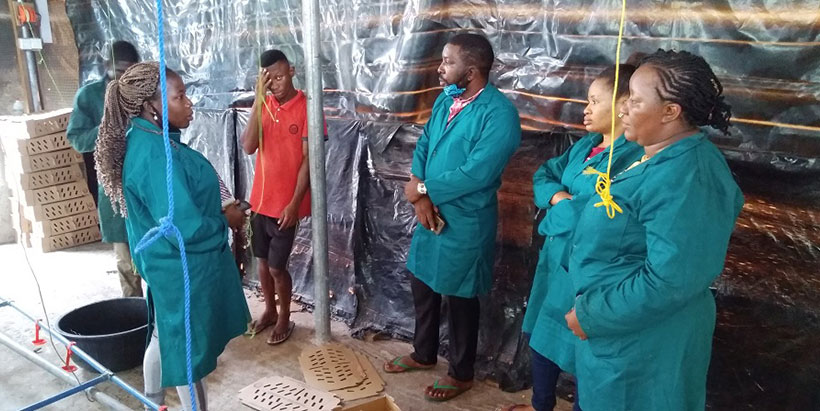
Monitoring activities of the poultry cluster by ENABLE-TAAT. PHOTO: TAAT/Dolapo Ogunsola
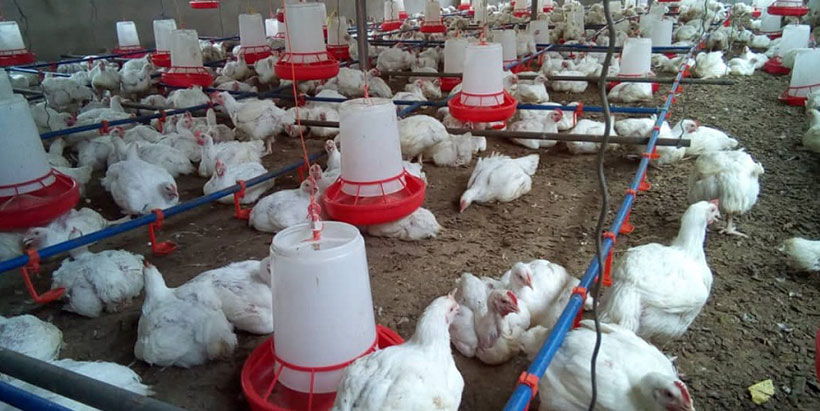
The birds at table size. PHOTO: TAAT/Dolapo Ogunsola
Contributed by
Recent stories
No items found