
NEWS

Gender book launch: A significant shift in the drive towards gender equality
January 21, 2022

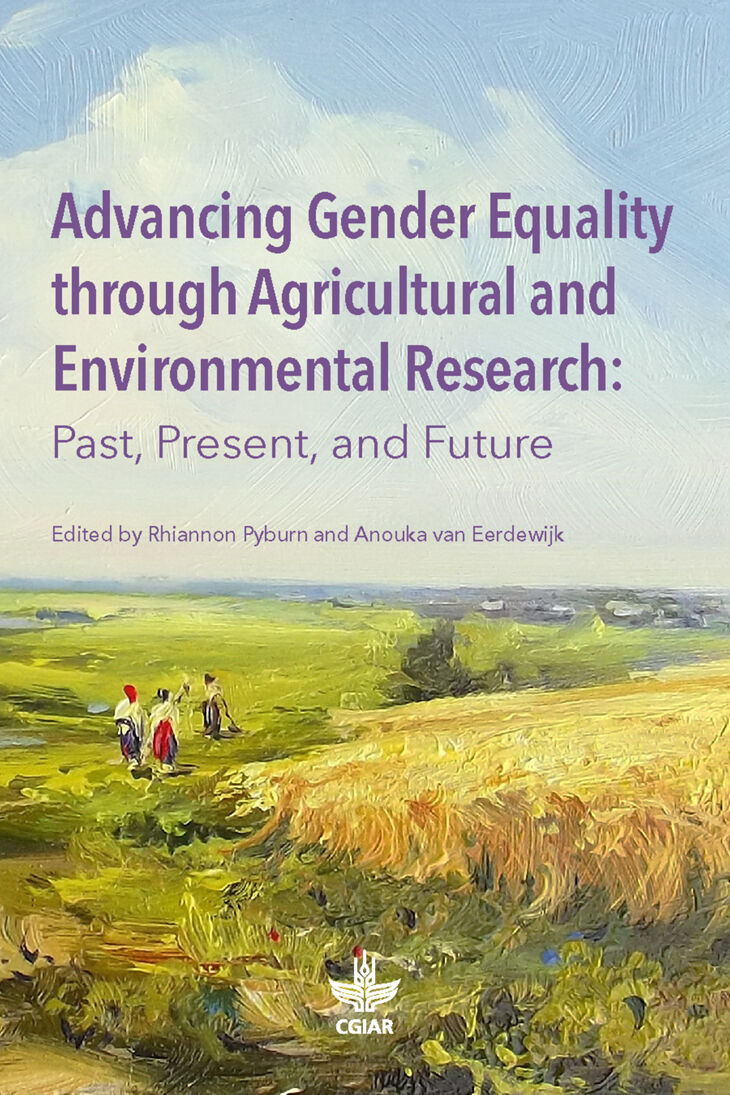
The past decade has seen a renewed and more comprehensive interest in gender equality and women’s empowerment in agricultural development. This drive has created a unique opportunity to advance gender equality and institutionalize gender research within agricultural research for development (AR4D) organizations. A new book, “Advancing Gender Equality through Agricultural and Environmental Research: Past, Present, and Future,” has been released as part of this overall drive and the growing body of evidence and ideas generated.
Gender book launch: A significant shift in the drive towards gender equality
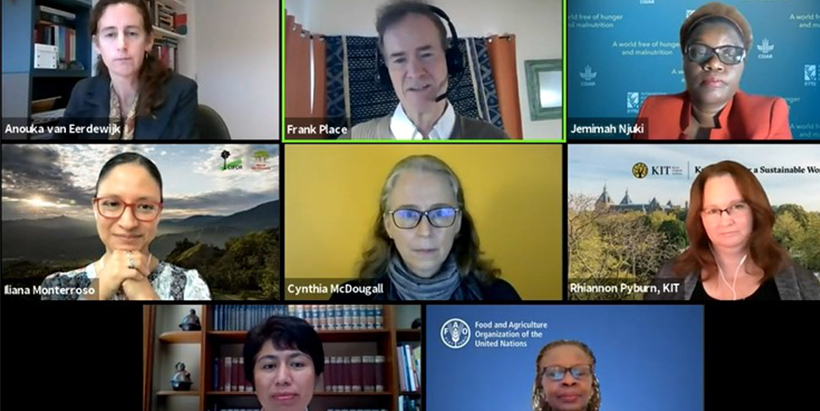
Speakers at the virtual book launch.

The book highlights the over 30 years of history and wealth of gender knowledge by over 55 gender researchers from CGIAR and partners, including IITA. The book will help discover how agricultural and environmental research and development contribute to gender equality and women’s empowerment. For CGIAR, this is an opportune moment to take stock of progress and articulate a forward-looking agenda for future gender research with gender equality and women’s empowerment at the center.

The book was launched in a virtual meeting organized by IFPRI and the CGIAR Research Program on Policies, Institutions, and Markets (PIM). During the launch, the moderator, Frank Place, Director of CGIAR Research Program on PIM at IFPRI, stated that the book is timely as its insights are indispensable for the One CGIAR’s aim to contribute to the ambitious gender equality targets. He added that the book indicates a shift away from a typical instrumentalist outlook focused on how gender analysis can contribute to research objectives, such as improved productivity.
Gender book launch: A significant shift in the drive towards gender equality
Front cover of the new book, “Advancing Gender Equality through Agricultural and Environmental Research: Past, Present, and Future”.

Co-editors and authors, CGIAR Senior Expert and Advisor Rhiannon Pyburn and Senior Associate Anouka Van Eerdewijk, both from KIT Royal Tropical Institute, gave an overview of the book. Pyburn mentioned that the book began with an idea from the second scientific conference in 2018. She further shared details of the book’s three sets of thematic chapters: technical research topics that have integrated gender; research themes where gender integration is pivotal like nutrition, climate change, and agriculture; and gender-specific themes such as women empowerment.

Eerdewijk added that one central point made in the book is the importance of being explicit and comprehensive in conceptualizing gender equality and women’s empowerment.

In her presentation, RTB CIP Gender Research Coordinator Vivian Polar shared insights from Chapter 2, “Examining choice to advance gender equality in breeding research,” which she co-authored. She said the chapter focused on how breeding research can promote gender equality. “Technological options available to women are usually not in line with their needs and priorities. Hence, for empowerment to happen, people must have the option to choose,” she said.

Iliana Monterroso Ibarra, Co-Coordinator of Gender and Social Inclusion Research, CIFOR, shared from Chapter 6, “A gender-natural resources tango: Water, land and forest research.” She mentioned that the chapter analyzes the theoretical work that led to major shifts in policy discourse- such as shifts from management to governance,  recognizing plurality and diversity, and focusing on intersectional inequalities, which is strongly influenced by political ecology scholarship. “The chapter highlights how it is no longer possible to conceive Natural Resources Management (NRM) initiatives without taking equality or inclusion into account,” she said.

Cynthia McDougall, Senior Research Fellow- Gender, Environment and Development, Stockholm Environment Institute (SEI), spoke about chapter 10, “Toward structural change: gender transformative approaches (GTA).” She mentioned that the chapter shows the need for a change in approach as gender approaches in agriculture, NRM, and other areas, leading to gender equality, is not doing well enough. “Not a single country is set to achieve gender equality by 2030; hence there is a need for change in approach,” she said.

Susan Kaaria, Senior Gender Officer, Inclusive Rural Transformation and Gender Equality Division at FAO, also shared her thoughts on the book. Kaaria stated that the book offers an opportunity to change and reframe the global debate on gender equality. She highlighted two things that should be put in place for the book to influence the future agenda for gender: First, the need to widely disseminate the book so that it influences practice; second, ensuring that this innovative thinking influences global and national policy debate.

Jemimah Njuki, Director for Africa at IFPRI, another discussant, said a major contribution of the book is that it defines the partnership that people have to build in achieving gender equality and women’s empowerment as a goal. She added that another interesting thing is the evolution of the scope of research, moving from the thought of what women’s roles are to transformative change. “This is a fundamental shift in CGIAR gender research,” she said.

Concluding the event, the moderator mentioned that CGIAR is already recognized as a powerhouse in gender research. He added that CGIAR is working as a system and with other partners engaged in gender research in various capacities. “We are positioning ourselves to become a stronger voice on gender in the future,” Place said.

IITA gender scientists contributed to four chapters of this book. Béla Teeken co-authored chapter 2, Sounkoura Adetonah contributed to Chapter 4, Steven Michael Cole contributed to chapter 9, and Gundula Fischer co-authored chapter 10.


Contributed by

Recent stories

No items found

Leave a Reply

Your email address will not be published. Required fields are marked *

Scroll to Top
Olaosebikan, Olamide

Olamide Deborah Nwanze is a Senior Research Associate specializing in gender mainstreaming research to inform participatory and inclusive breeding, variety development, and seed systems policies regarding root, tuber, and banana (RTB) crops in the International Institute of Tropical Agriculture Headquarters, Ibadan, Nigeria. She is a PhD candidate at the University of Ibadan and holds an MSc and B. Agric in Agricultural Extension and Rural Development. Olamide is a fellow of the African Women in Agricultural Research and Development – Gender Responsive Agricultural Systems Policy (AWARD-GRASP) and the Gender Responsive Researchers Equipped for Agricultural Transformation (GREAT). She seeks to apply her gender-mainstreaming learnings, gender-responsive research, and policy development, and review expertise to facilitate women, youth, children, and vulnerable social group’s access to and adoption of agricultural Innovations that guarantee food, nutrition, income, and livelihood security in Africa. Her current roles include mentoring research fellows, development of guides and training manuals, implementation and adaptation of gender frameworks and tools, value chain actors’ engagement as citizen science partners, policy review and redesign, data management, and analysis. Her current research explores mixed methods and participatory and interdisciplinary approaches to capture and highlight gender dynamics, needs, preferences, and challenges stakeholders face within the agricultural livelihood value chain to prioritize gender-inclusive strategies in breeding programs, policy design, and implementation.

At IITA, she contributes to the implementation of the CGIAR Accelerated Breeding Initiative and Genetic Innovation Programs; participatory and gender research within the NextGen CassavaHarvestPlusRTBFoods, and Tricot-ClimMob 1000Farms Projects; and gender knowledge communication via the G-LENS webinar series, video documentary, policy briefspublications, and blogs.


Recent publications

de Sousa, K., van Etten, J., Manners, R. Bello, A., Teeken, B., Olaosebikan, O., et al. 2024. The tricot approach: an agile framework for decentralized on-farm testing supported by citizen science. A retrospective. Agron. Sustain. Dev. 44, 8. https://doi.org/10.1007/s13593-023-00937-1

Madu, T., Onwuka, S., Nwafor, S., Onyemauwa, N., Ejechi, M., Ofoeze, M., Ukeje, B., Eluagu, C., Olaosebikan, O., Okoye, B., 2024. Gender-Inclusive Consumer Studies Improve Cassava Breeding in Nigeria in: Frontiers in Sociology, volume 9, number: 1224504, doi: 10.3389/fsoc.2024.1224504

Olaosebikan, O.; Bello, A.; Utoblo, O.; Okoye, B.; Olutegbe, N.; Garner, E.; Teeken, B.; Bryan, E.; Forsythe, L.; Cole, S.; Madu, T. 2023.  Stressors and Resilience within the Cassava Value Chain in Nigeria: Preferred Cassava Variety Traits and Response Strategies of Men and Women to Inform Breeding. Sustainability 15, 7837. https://doi.org/10.3390/su15107837

Okoye, B., Ofoeze, M., Ejechi, M., Onwuka, S., Nwafor, S., Onyemauwa, N., Ukeje, B., Eluagu, C., Obidiegwu, J.*, Olaosebikan, O., Madu, T.* 2023. Prioritizing preferred traits in the yam value chain in Nigeria: a gender situation analysis in: Frontiers in Sociology, volume 8, number: 1232626, pages 1 – 9, ISSN 2297-7775, 2023. https://www.frontiersin.org/articles/10.3389/fsoc.2023.1232626/full

Olaosebikan, O., Bello, A. A., de Sousa, K., Ndjouenkeu, R., Adesokan, M., Alamu, E. O., Agbona, A., van Etten, J., Kegah, F. N.*, Dufour, D., Bouniol, A., Teeken, B. 2023. Consumer acceptability of cassava gari-eba food products across cultural and environmental settings using the triadic comparison of technologies approach (tricot) in: Journal of the Science of Food and Agriculture,

Teeken, B., Olaosebikan, O., Bello, A. A., Madu, T.*, Cole, S. M. 2023. Qualitative assessment on the positionality and preferences of dyads in relation to cassava-related activities: working with tricot trial citizen scientists https://hdl.handle.net/10568/138326 Type: Manual

Bouniol, A., Ceballos, H., Bello, A. A., Teeken, B., Olaosebikan, O., Owoade, D., Agbona, A., Fotso Kuate, A., Madu, T.*, Okoye, B.*, Ofoeze, M.*, Nwafor, S.*, Onyemauwa, N.*, Adinsi, L.*, Forsythe, L., Dufour, D. 2023. Varietal impact on women’s labour, workload and related drudgery in processing root, tuber and banana crops: focus on cassava in sub-Saharan Africa in: Journal of the Science of Food and Agriculture, pages 1 – 25, ISSN 0022-5142,

Bello, A. A., Agbona, A., Olaosebikan, O., Edughaen, G., Dufour, D., Bouniol, A., Iluebbey, P., Ndjouenkeu, R.*, Rabbi, I. Y., Teeken, B. 2023. Genetic and environmental effects on processing productivity and food product yield: drudgery of women’s work in: Journal of the Science of Food and Agriculture, pages 1 – 32, ISSN 0022-5142, 5

Cavicchioli, M., Zimbiti, T., Teeken, B., Nwanze, D.O., Liani, M., Parkes, E. & Bello, A. 2023. IITA-Gender Responsive Breeding Training Report. Genetic Resources Center, IITA-HQ, Ibadan, 21-23 September, 2022. Ibadan, Nigeria: IITA, (34 p.).https://hdl.handle.net/10568/131368

Agbona, A. Peteti P., Teeken B., Olaosebikan O. Bello, A. A., Parkes, E., Rabbi, I. Y., Mueller, L., Egesi, C., Kulakow, P. 2022. Data Management in Multi-disciplinary African RTB Crop Breeding Programs. In: Williamson, H.F., Leonelli, S. (eds) Towards Responsible Plant Data Linkage: Data Challenges for Agricultural Research and Development. Springer, Cham. https://doi.org/10.1007/978-3-031-13276-6_5

Lora Forsythe, Pricilla Marimo, Sarah Mayanja, Olamide D. Olaosebikan, Esme Stuart, Bela Teeken, Benjamin Okoye, Tessy Madu, (2021). Cross-product Gender Analysis of RTBfoods Step 2 Gendered Food Mapping on RTB Products. Understanding the Drivers of Trait Preferences and the Development of Multi-user RTB Product Profiles, WP1. London, UK: RTBfoods Field Scientific Report, 30 p.

Teeken, B., Garner, E., Agbona, A., Balogun, I., Olaosebikan, O., Bello, A., Madu, T., Okoye, B., Egesi, C., Kulakow, P. and Tufan, H.A. 2021. Beyond “Women’s Traits”: Exploring How Gender, Social Difference, and Household Characteristics Influence Trait Preferences. Frontiers Sustainable Food Systems 5:740926. https://doi.org/10.3389/fsufs.2021.740926

Teeken, B., Agbona, A., Bello, A., Olaosebikan, O., Alamu, E., Adesokan, M., Awoyale, W., Madu, T., Okoye, B., Chijioke, U., Owoade, D., Okoro, M., Bouniol, A., Dufour, D., Hershey, C., Rabbi, I., Maziya‐Dixon, B., Egesi, C., Tufan, H. and Kulakow, P. (020. Understanding cassava varietal preferences through pairwise ranking of gari‐eba and fufu prepared by local farmer–processors. Int J Food Sci Technol. https://doi.org/10.1111/ijfs.14862

Bela Teeken, Olamide Olaosebikan, Ireti Balogun, Benjamin Okoye, Tessy Madu, Steven Cole, Abolore Bello, Elizabeth Parkes. (2020). Piloting the G+ customer and product profile tools for gender-responsive cassava breeding in Nigeria. Nigeria: International Institute of Tropical Agriculture (IITA). https://hdl.handle.net/20.500.11766/13000