
IITA NEWS

Genomics breakthrough offers new hope for faster improvement of Africa’s staple RTB crops
May 21, 2026

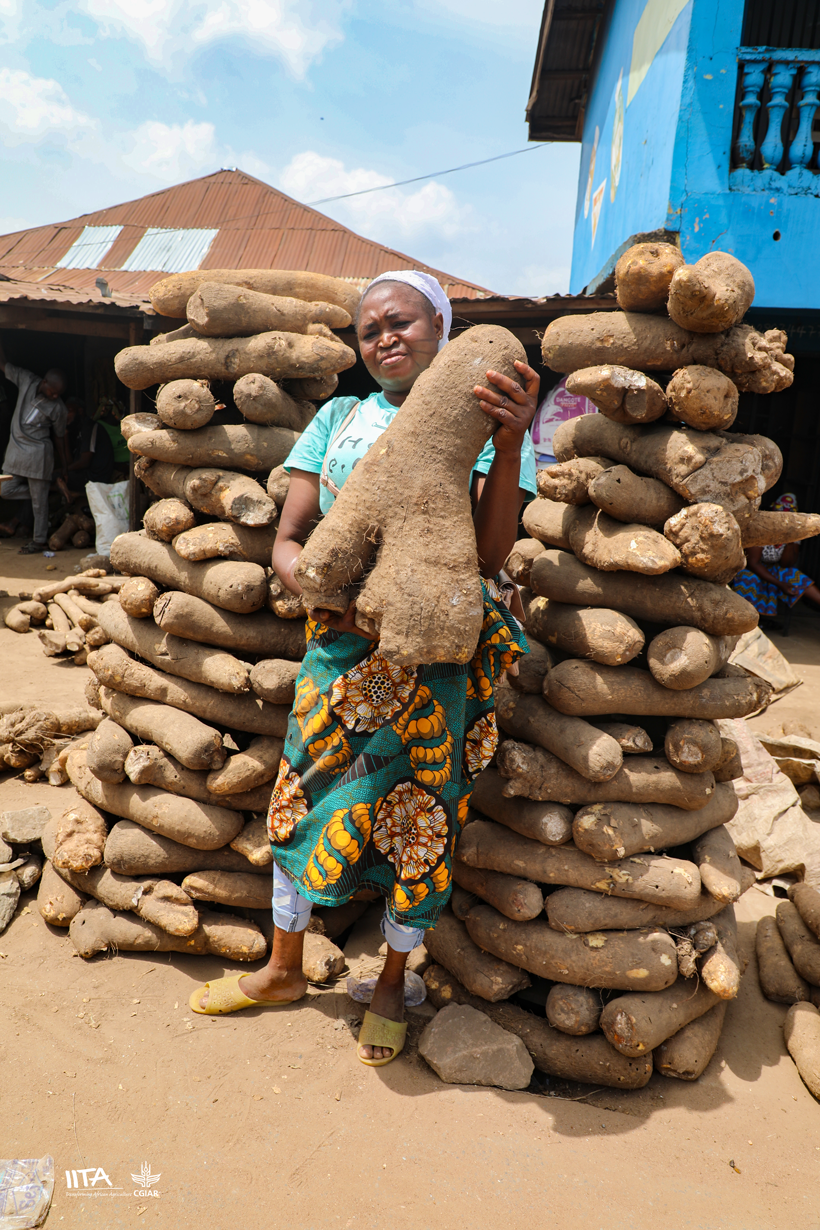
A woman yam trader at a market in Ibadan

Roots, Tubers, and Bananas (RTB) crops, which include cassava, yam, banana, plantain, sweet potato, and potato, remain at the heart of food and nutritional security for millions of people across the tropics. In sub-Saharan Africa, especially these crops contribute significantly to daily calorie intake and serve as a major source of livelihood for over two billion people globally. Yet, despite their importance, efforts to improve these crops have historically lagged behind those for cereals and legumes due to their genetic complexity and reliance on vegetative propagation.

A new research review by IITA scientists led by Molecular Breeder Scientist Paterne Agre, sheds light on how recent advances in genomics-assisted breeding (GAB) are transforming this narrative. Focusing on banana and plantain, cassava, and yam breeding programs, the study provides a comprehensive blend of how modern genomic tools can accelerate the development of improved, resilient, and high-yielding RTB varieties.

RTB crops are uniquely suited to the environments in which they are grown. Cassava and yam, for instance, can withstand drought and poor soils, while bananas and plantains provide food year-round, acting as a safety net for farmers during dry seasons. However, these advantages are offset by major breeding challenges. Many RTB crops are genetically complex, making it difficult to predict inheritance patterns or stabilize desirable traits. In addition, poor flowering, low seed viability, and the vegetative nature of propagation limit opportunities for recombination and slow down breeding progress.

The research highlights how genomics is now helping to overcome these constraints. By integrating tools such as DNA sequencing, molecular markers, and genomic selection into breeding pipelines, scientists can better understand genetic diversity, identify valuable traits, and select superior progenies with high potential. Techniques like marker-assisted selection and genomic prediction are already shortening breeding cycles and improving efficiency. Emerging innovations such as pan-genomics and gene editing are further expanding possibilities, allowing scientists to target specific traits such as disease resistance, yield improvement, and climate resilience.
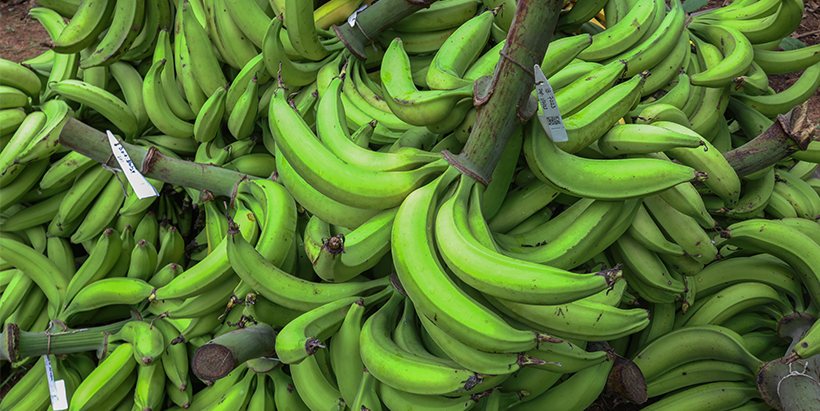
Plantain harvested from an IITA field trial.

The study also reflects the broader efforts of the CGIAR RTB research initiative, launched to accelerate genetic innovation and address longstanding breeding challenges. Through collaboration among international research institutions, national programs, and development partners, significant progress has been made in building genomic resources and applying them across RTB crops.
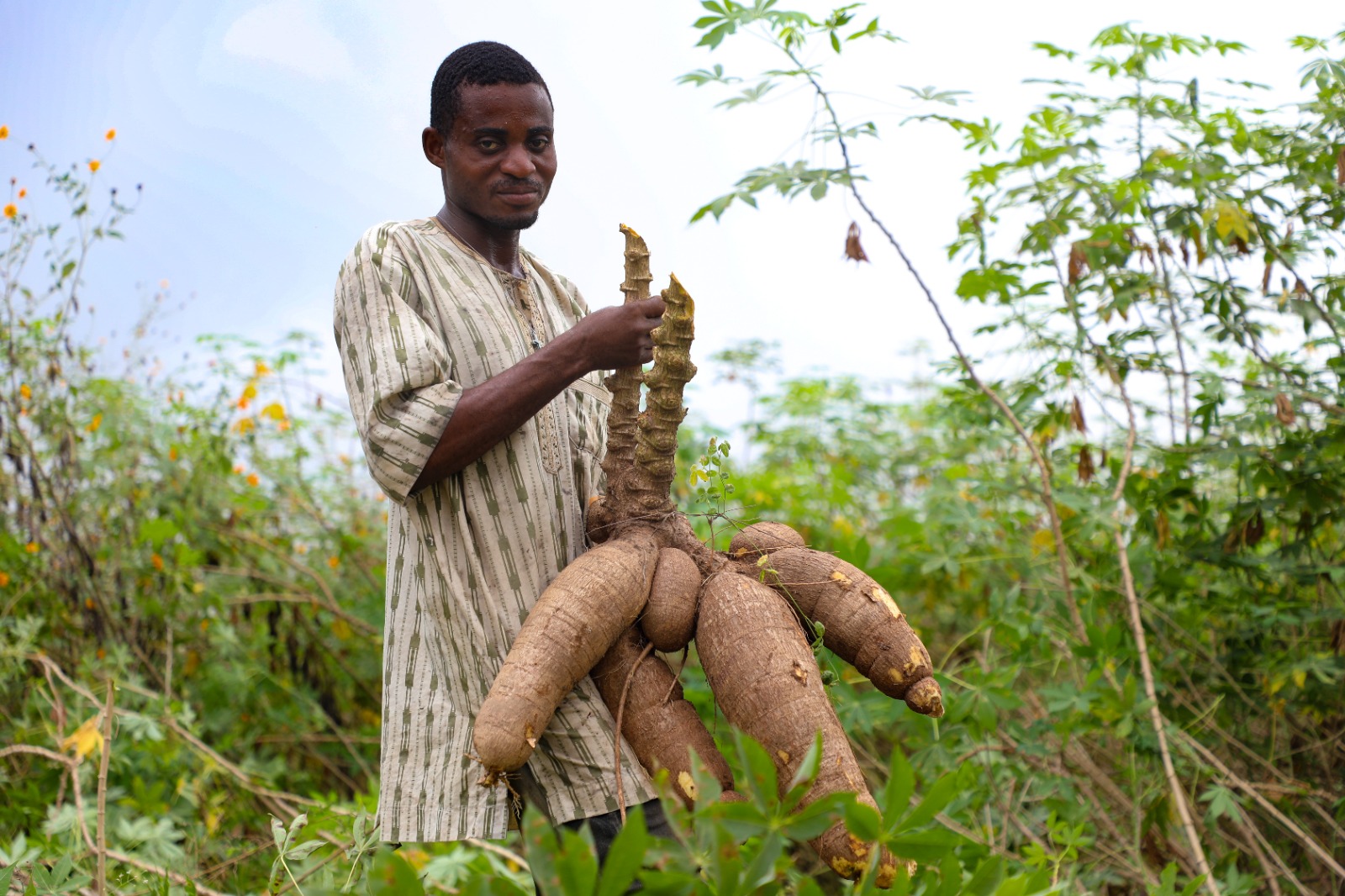
Cassava roots harvested from an IITA field trials.

At the core of the research is a detailed assessment of available genomic resources and their practical impact. The authors examined how these tools are being used throughout the breeding process, from early-stage, diversity studies and trait discovery to advanced selection and variety development. They also evaluated digital innovations that are helping modernize breeding programs, including data management systems and decision-support tools.

One of the most promising developments highlighted in the review is the integration of artificial intelligence and machine learning into breeding systems. These technologies enable scientists to easily analyse large datasets, uncover complex trait relationships, and make more accurate predictions about plant performance under different environmental conditions. This is particularly important for developing climate-resilient varieties that can withstand unpredictable weather patterns.

Despite these advancements, the study emphasizes that sustained impact will require strategic investments and coordinated action. The researchers recommended strengthening interdisciplinary expertise in genomics and data science, expanding access to affordable genotyping technologies, and establishing regional innovation hubs equipped with advanced computing infrastructure. The authors also stressed the importance of participatory breeding approaches that incorporate farmers’ preferences, particularly those of women and processors, to ensure that improved varieties meet real-world needs.

The study also calls for supportive policy frameworks to guide the adoption of emerging technologies such as gene editing, as well as the integration of impact-driven metrics to track progress in yield improvement, adoption rates, and resilience outcomes.

As demand for RTB crops continues to rise, especially in Africa, the findings emphasize the urgency of accelerating breeding efforts. By harnessing the power of genomics and aligning innovation with local realities, researchers and partners are paving the way for a new generation of RTB crops that can better feed populations, strengthen livelihoods, and build resilience in the face of climate change.

Contributed by Ochuwa Favour Daramola


Contributed by

Related news

No items found

Leave a Reply

Your email address will not be published. Required fields are marked *

Scroll to Top
Olaosebikan, Olamide

Olamide Deborah Nwanze is a Senior Research Associate specializing in gender mainstreaming research to inform participatory and inclusive breeding, variety development, and seed systems policies regarding root, tuber, and banana (RTB) crops in the International Institute of Tropical Agriculture Headquarters, Ibadan, Nigeria. She is a PhD candidate at the University of Ibadan and holds an MSc and B. Agric in Agricultural Extension and Rural Development. Olamide is a fellow of the African Women in Agricultural Research and Development – Gender Responsive Agricultural Systems Policy (AWARD-GRASP) and the Gender Responsive Researchers Equipped for Agricultural Transformation (GREAT). She seeks to apply her gender-mainstreaming learnings, gender-responsive research, and policy development, and review expertise to facilitate women, youth, children, and vulnerable social group’s access to and adoption of agricultural Innovations that guarantee food, nutrition, income, and livelihood security in Africa. Her current roles include mentoring research fellows, development of guides and training manuals, implementation and adaptation of gender frameworks and tools, value chain actors’ engagement as citizen science partners, policy review and redesign, data management, and analysis. Her current research explores mixed methods and participatory and interdisciplinary approaches to capture and highlight gender dynamics, needs, preferences, and challenges stakeholders face within the agricultural livelihood value chain to prioritize gender-inclusive strategies in breeding programs, policy design, and implementation.

At IITA, she contributes to the implementation of the CGIAR Accelerated Breeding Initiative and Genetic Innovation Programs; participatory and gender research within the NextGen CassavaHarvestPlusRTBFoods, and Tricot-ClimMob 1000Farms Projects; and gender knowledge communication via the G-LENS webinar series, video documentary, policy briefspublications, and blogs.


Recent publications

de Sousa, K., van Etten, J., Manners, R. Bello, A., Teeken, B., Olaosebikan, O., et al. 2024. The tricot approach: an agile framework for decentralized on-farm testing supported by citizen science. A retrospective. Agron. Sustain. Dev. 44, 8. https://doi.org/10.1007/s13593-023-00937-1

Madu, T., Onwuka, S., Nwafor, S., Onyemauwa, N., Ejechi, M., Ofoeze, M., Ukeje, B., Eluagu, C., Olaosebikan, O., Okoye, B., 2024. Gender-Inclusive Consumer Studies Improve Cassava Breeding in Nigeria in: Frontiers in Sociology, volume 9, number: 1224504, doi: 10.3389/fsoc.2024.1224504

Olaosebikan, O.; Bello, A.; Utoblo, O.; Okoye, B.; Olutegbe, N.; Garner, E.; Teeken, B.; Bryan, E.; Forsythe, L.; Cole, S.; Madu, T. 2023.  Stressors and Resilience within the Cassava Value Chain in Nigeria: Preferred Cassava Variety Traits and Response Strategies of Men and Women to Inform Breeding. Sustainability 15, 7837. https://doi.org/10.3390/su15107837

Okoye, B., Ofoeze, M., Ejechi, M., Onwuka, S., Nwafor, S., Onyemauwa, N., Ukeje, B., Eluagu, C., Obidiegwu, J.*, Olaosebikan, O., Madu, T.* 2023. Prioritizing preferred traits in the yam value chain in Nigeria: a gender situation analysis in: Frontiers in Sociology, volume 8, number: 1232626, pages 1 – 9, ISSN 2297-7775, 2023. https://www.frontiersin.org/articles/10.3389/fsoc.2023.1232626/full

Olaosebikan, O., Bello, A. A., de Sousa, K., Ndjouenkeu, R., Adesokan, M., Alamu, E. O., Agbona, A., van Etten, J., Kegah, F. N.*, Dufour, D., Bouniol, A., Teeken, B. 2023. Consumer acceptability of cassava gari-eba food products across cultural and environmental settings using the triadic comparison of technologies approach (tricot) in: Journal of the Science of Food and Agriculture,

Teeken, B., Olaosebikan, O., Bello, A. A., Madu, T.*, Cole, S. M. 2023. Qualitative assessment on the positionality and preferences of dyads in relation to cassava-related activities: working with tricot trial citizen scientists https://hdl.handle.net/10568/138326 Type: Manual

Bouniol, A., Ceballos, H., Bello, A. A., Teeken, B., Olaosebikan, O., Owoade, D., Agbona, A., Fotso Kuate, A., Madu, T.*, Okoye, B.*, Ofoeze, M.*, Nwafor, S.*, Onyemauwa, N.*, Adinsi, L.*, Forsythe, L., Dufour, D. 2023. Varietal impact on women’s labour, workload and related drudgery in processing root, tuber and banana crops: focus on cassava in sub-Saharan Africa in: Journal of the Science of Food and Agriculture, pages 1 – 25, ISSN 0022-5142,

Bello, A. A., Agbona, A., Olaosebikan, O., Edughaen, G., Dufour, D., Bouniol, A., Iluebbey, P., Ndjouenkeu, R.*, Rabbi, I. Y., Teeken, B. 2023. Genetic and environmental effects on processing productivity and food product yield: drudgery of women’s work in: Journal of the Science of Food and Agriculture, pages 1 – 32, ISSN 0022-5142, 5

Cavicchioli, M., Zimbiti, T., Teeken, B., Nwanze, D.O., Liani, M., Parkes, E. & Bello, A. 2023. IITA-Gender Responsive Breeding Training Report. Genetic Resources Center, IITA-HQ, Ibadan, 21-23 September, 2022. Ibadan, Nigeria: IITA, (34 p.).https://hdl.handle.net/10568/131368

Agbona, A. Peteti P., Teeken B., Olaosebikan O. Bello, A. A., Parkes, E., Rabbi, I. Y., Mueller, L., Egesi, C., Kulakow, P. 2022. Data Management in Multi-disciplinary African RTB Crop Breeding Programs. In: Williamson, H.F., Leonelli, S. (eds) Towards Responsible Plant Data Linkage: Data Challenges for Agricultural Research and Development. Springer, Cham. https://doi.org/10.1007/978-3-031-13276-6_5

Lora Forsythe, Pricilla Marimo, Sarah Mayanja, Olamide D. Olaosebikan, Esme Stuart, Bela Teeken, Benjamin Okoye, Tessy Madu, (2021). Cross-product Gender Analysis of RTBfoods Step 2 Gendered Food Mapping on RTB Products. Understanding the Drivers of Trait Preferences and the Development of Multi-user RTB Product Profiles, WP1. London, UK: RTBfoods Field Scientific Report, 30 p.

Teeken, B., Garner, E., Agbona, A., Balogun, I., Olaosebikan, O., Bello, A., Madu, T., Okoye, B., Egesi, C., Kulakow, P. and Tufan, H.A. 2021. Beyond “Women’s Traits”: Exploring How Gender, Social Difference, and Household Characteristics Influence Trait Preferences. Frontiers Sustainable Food Systems 5:740926. https://doi.org/10.3389/fsufs.2021.740926

Teeken, B., Agbona, A., Bello, A., Olaosebikan, O., Alamu, E., Adesokan, M., Awoyale, W., Madu, T., Okoye, B., Chijioke, U., Owoade, D., Okoro, M., Bouniol, A., Dufour, D., Hershey, C., Rabbi, I., Maziya‐Dixon, B., Egesi, C., Tufan, H. and Kulakow, P. (020. Understanding cassava varietal preferences through pairwise ranking of gari‐eba and fufu prepared by local farmer–processors. Int J Food Sci Technol. https://doi.org/10.1111/ijfs.14862

Bela Teeken, Olamide Olaosebikan, Ireti Balogun, Benjamin Okoye, Tessy Madu, Steven Cole, Abolore Bello, Elizabeth Parkes. (2020). Piloting the G+ customer and product profile tools for gender-responsive cassava breeding in Nigeria. Nigeria: International Institute of Tropical Agriculture (IITA). https://hdl.handle.net/20.500.11766/13000