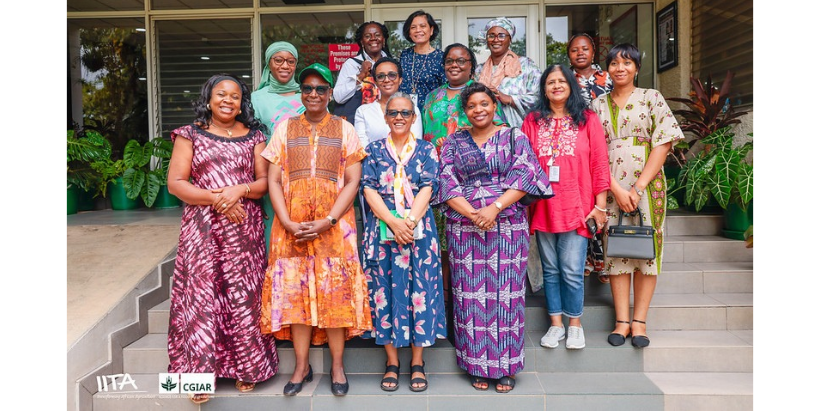
As part of efforts to explore opportunities for collaboration in agriculture, nutrition, education, health, and the empowerment of women and young people, Roman Tesfaye, former First Lady of Ethiopia, visited the IITA headquarters from 22 to 24 September. The visit reflected her longstanding commitment to improving lives through initiatives that promote better health, food security, and brighter futures for children, women, and youth. Accompanied by her husband, Hailemariam Desalegn, former Prime Minister of Ethiopia and Chair of the CGIAR Board on the margins of the CGIAR Board meetings; she toured several facilities across IITA to gain insights into the institute’s research and identify potential areas of collaboration.
The visit offered more than an opportunity to see IITA’s facilities. It provided a platform to explore areas of shared interest and identify possible opportunities for collaboration between IITA and the Hailemariam and Roman Foundation (HRF), which she leads as Chief Executive Officer. Established in 2018 by Roman Tesfaye and her husband, the foundation supports national and regional efforts in agricultural transformation; food and nutrition security; climate-smart conservation and ecotourism; maternal, neonatal and child health and nutrition; and youth and women economic empowerment in Ethiopia.
Her interest in these areas is rooted in years of work, particularly in improving children’s welfare. During her tenure as First Lady of Ethiopia from 2012 to 2018, she worked with the China Foundation for Poverty Alleviation (CFPA) to establish the “Smiling Children Project,” a school feeding initiative that provided breakfast and lunch to thousands of students across several public primary schools in Addis Ababa.
Connecting agriculture with better nutrition
The Food Science and Nutrition Laboratory was one of the first stops on the tour. The visit offered an opportunity to explore how agricultural research can help address nutritional challenges across Africa.
For the former First Lady of Ethiopia, nutrition extends beyond food availability. It is closely connected to children’s wellbeing, education, and their ability to remain in school and participate meaningfully in society. Her experience with school feeding initiatives in Ethiopia has demonstrated the importance of interventions that address these interconnected needs. At IITA, discussions explored how research, food systems, and nutrition can work together to improve outcomes for communities.
The visit also reflected a broader reality: agricultural transformation is ultimately about people. The crops developed, technologies tested, and innovations generated through research have their greatest value when they contribute to healthier diets, stronger livelihoods, and better opportunities for communities.
Education as a pathway out of poverty
The connection between food, wellbeing, and opportunity continued during her visit to the IITA school. As someone who strongly believes in education as a means of breaking the cycle of poverty, the former First Lady of Ethiopia was particularly interested in understanding how the school supports its students’ development.
Timothy Shepherd, Head of the IITA School, explained that the school adopts an adaptive approach to learning, encouraging students to apply what they learn to their everyday lives and activities. The interaction reinforced a shared interest in creating environments where children are not only given access to education but are equipped with knowledge and skills that can shape their future.
The visit also complemented her previous work with children, including efforts to keep students in school through nutrition support, providing another perspective on how education and wellbeing can work together to improve children’s prospects.
A broader approach to health and wellbeing
The former First Lady of Ethiopia also visited the institute’s now-expanded Medical Center during her tour. Her interest in healthcare is reflected in her previous advocacy for women affected by breast and cervical cancer in Ethiopia. What began as a campaign to help women access medical support has since grown into a broader initiative addressing different forms of cancer.
Her engagement at the Medical Center highlighted another area where human development intersects with IITA’s institutional environment, while providing an opportunity to exchange experiences around health and community wellbeing.
Creating opportunities for young people
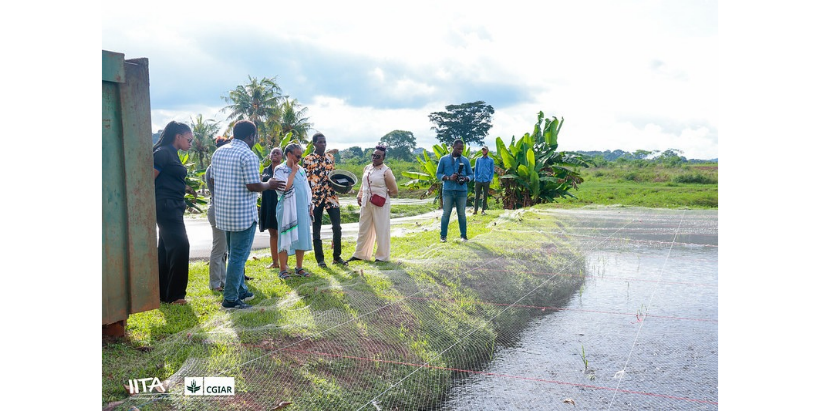
For a foundation whose work includes youth and women’s economic empowerment, IITA’s Youth in Agribusiness component offered another potential area for collaboration. During the engagement, the former First Lady of Ethiopia was introduced to strategies for supporting young people in agriculture. She heard success stories from beneficiaries of IITA’s youth programs and empowerment trainings.
The interaction demonstrated how agriculture can extend beyond farming to become a pathway to entrepreneurship, employment, and economic participation for young people.
For Africa’s growing youth population, creating these opportunities is increasingly important. Connecting young people to skills, technologies, markets, and viable agribusiness opportunities can help position agriculture as a source of livelihood and enterprise rather than simply subsistence.
Women turning opportunity into action
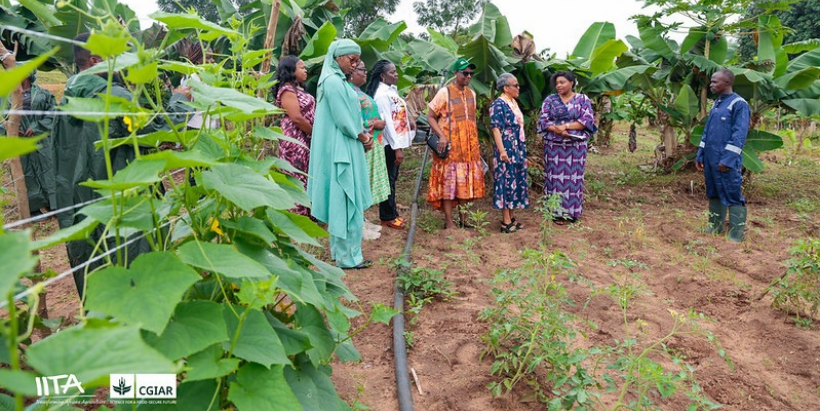
The final leg of the former First Lady of Ethiopia’s visit was to the IITA Women’s Group. She toured the farm area donated to the group, where crops such as cucumbers and plantains were cultivated. Beyond farming, however, the group’s activities extend into community support.
The group shared their initiatives, including community school projects and scholarship support for wards of Nationally Recruited Staff (NRS) on lower pay grades. These initiatives, they explained, are sustained largely through donations. Similarly, the former First Lady of Ethiopia, shared experiences from her own work with the Human Rights Commission, including her involvement in issues relating to children and juvenile welfare.
She applauded the women’s effort and emphasized the importance of empowering them to contribute meaningfully to society. The meeting with the women’s group re-emphasized that empowerment is not only about creating opportunities for women but also about enabling them to use those opportunities to support their families, communities, and wider society.