
In a major move to leverage its research efforts and strengthen an existing partnership of close to 40 years in Zambia, IITA–CGIAR officially launched state-of-the-art research facilities at the Southern Africa Research and Administration Hub (SARAH) in Lusaka.
Designed to create an enabling environment for increased collaboration and partnerships with government, policymakers, other CGIAR centers, and donors, the IITA-SARAH facilities will ensure better delivery of agricultural innovations to national programs in the region, improved research collaboration, faster innovation scaling, and enhanced regional policy engagements.
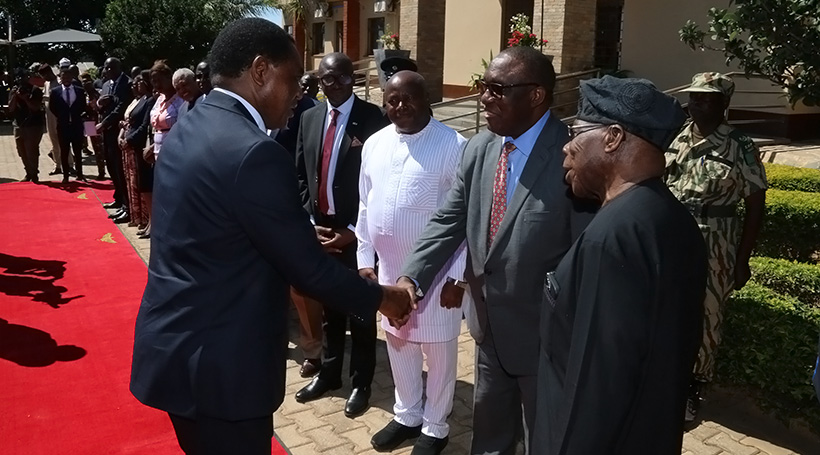 While IITA-CGIAR research interventions have contributed to improving food systems in Zambia, the research facilities herald the start of a significant commitment between IITA, CGIAR, and the Zambia Government to enhance agricultural productivity, food security, and livelihoods of millions in Zambia and the Southern Africa region.
During the launch of the research facilities, Zambia President His Excellency Hakainde Hichilema called for increased collaboration between government Ministries and agencies to leverage opportunities that the IITA Zambia research facilities will provide, adding that the launch is coming at a critical time in the country where efforts are being deployed to address the drought in Zambia.
“These impressive innovations will help Zambia address the challenges of hunger, malnutrition, and poverty,” he said.
IITA Director General and CGIAR Regional Director for Continental Africa, Dr Simeon Ehui, excitedly highlighted how the hub would serve as a melting pot for innovation, capacity building, and knowledge sharing in research and agriculture in Zambia.
“This partnership with the Zambian Government aligns with IITA and CGIAR’s commitment to lift millions out of hunger and poverty in Africa. We are committed to transforming the food systems’ landscape and improving the livelihoods of millions of smallholder farmers in Africa. Today, IITA-SARAH is championing the cause in the southern region,” Dr Ehui said.
The IITA-SARAH launch, which brought together key stakeholders within Zambia and other parts of Africa, signifies a major milestone in the country’s agriculture and research efforts.
Former President of Nigeria and IITA Goodwill Ambassador, Chief Olusegun Obasanjo—also present at the launch—called for increased efforts in youth engagement, as there is a need to attract more youth into agriculture. “The youth are taking up jobs in attractive fields portrayed as easy while agriculture, which is most important to humans, is being neglected. This is the only profession that puts food on the table; hence, it is imperative that youth are encouraged to embrace agriculture as a business in Africa.”
“We have to factor in youth engagement in all of these as they are the ones to carry on the legacy,” he said.
While IITA-CGIAR research interventions have contributed to improving food systems in Zambia, the research facilities herald the start of a significant commitment between IITA, CGIAR, and the Zambia Government to enhance agricultural productivity, food security, and livelihoods of millions in Zambia and the Southern Africa region.
During the launch of the research facilities, Zambia President His Excellency Hakainde Hichilema called for increased collaboration between government Ministries and agencies to leverage opportunities that the IITA Zambia research facilities will provide, adding that the launch is coming at a critical time in the country where efforts are being deployed to address the drought in Zambia.
“These impressive innovations will help Zambia address the challenges of hunger, malnutrition, and poverty,” he said.
IITA Director General and CGIAR Regional Director for Continental Africa, Dr Simeon Ehui, excitedly highlighted how the hub would serve as a melting pot for innovation, capacity building, and knowledge sharing in research and agriculture in Zambia.
“This partnership with the Zambian Government aligns with IITA and CGIAR’s commitment to lift millions out of hunger and poverty in Africa. We are committed to transforming the food systems’ landscape and improving the livelihoods of millions of smallholder farmers in Africa. Today, IITA-SARAH is championing the cause in the southern region,” Dr Ehui said.
The IITA-SARAH launch, which brought together key stakeholders within Zambia and other parts of Africa, signifies a major milestone in the country’s agriculture and research efforts.
Former President of Nigeria and IITA Goodwill Ambassador, Chief Olusegun Obasanjo—also present at the launch—called for increased efforts in youth engagement, as there is a need to attract more youth into agriculture. “The youth are taking up jobs in attractive fields portrayed as easy while agriculture, which is most important to humans, is being neglected. This is the only profession that puts food on the table; hence, it is imperative that youth are encouraged to embrace agriculture as a business in Africa.”
“We have to factor in youth engagement in all of these as they are the ones to carry on the legacy,” he said.
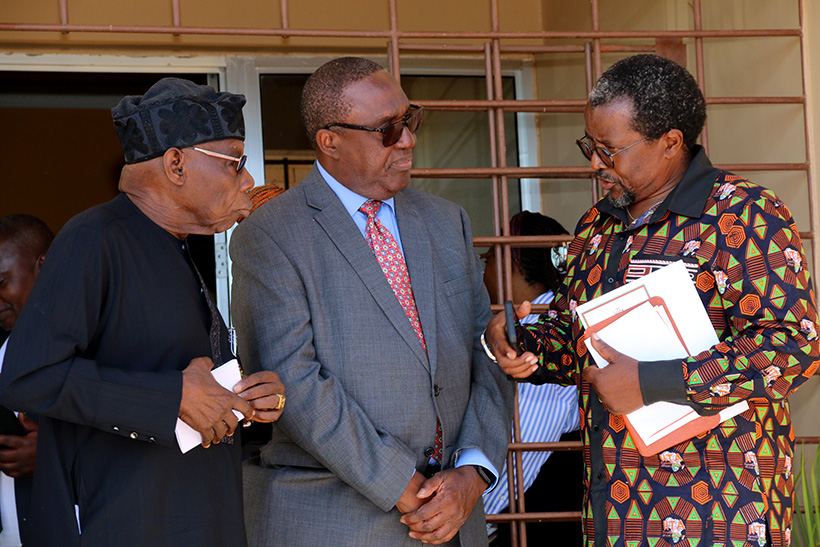 IITA Zambia Country Director and Director for the Regional Hub for Southern Africa, David Chikoye, who hosted the event, said the collaboration between IITA and the Zambia Government will strengthen agricultural research and development efforts in Zambia and across the Southern Africa region while creating an enabling environment for policy engagement and government involvement in critical decision-making in areas like seed systems, breeding efforts, and nutrition security.
The launch of IITA-SARAH and the research and delivery facilities will provide technical backstopping for addressing critical issues like food insecurity, plant health, and seed systems and support the government in achieving the agricultural transformation agenda in Zambia and the southern region in Africa.
IITA Zambia Country Director and Director for the Regional Hub for Southern Africa, David Chikoye, who hosted the event, said the collaboration between IITA and the Zambia Government will strengthen agricultural research and development efforts in Zambia and across the Southern Africa region while creating an enabling environment for policy engagement and government involvement in critical decision-making in areas like seed systems, breeding efforts, and nutrition security.
The launch of IITA-SARAH and the research and delivery facilities will provide technical backstopping for addressing critical issues like food insecurity, plant health, and seed systems and support the government in achieving the agricultural transformation agenda in Zambia and the southern region in Africa.
Contributed by
Recent stories