
IITA NEWS

IITA and Ministry of Agriculture moves to reposition yam in Nigeria
March 6, 2026

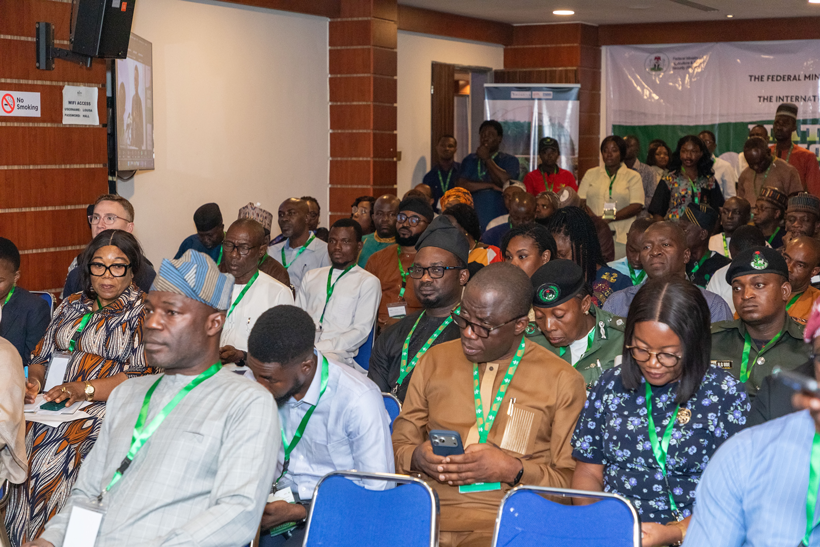
Participants during the Yam Advocacy Summit.

Nigeria’s dominance in global yam production may soon translate into economic leadership, following a decisive National Yam Advocacy Summit convened by IITACGIAR under the PROSSIVA program in partnership with the Federal Ministry of Agriculture and Food Security in Abuja recently.

Bringing together policymakers, regulators, researchers, seed companies, farmers, processors, exporters, and development partners, the summit marked a strategic turning point in repositioning yam from a culturally significant staple to a formally recognized national economic priority.

Despite producing approximately 71% of the world’s yam, Nigeria has yet to fully unlock the crop’s commercial potential. Stakeholders agreed that structural inefficiencies, particularly in the seed system, remain the single largest barrier to transforming yam into a driver of productivity, and export growth.
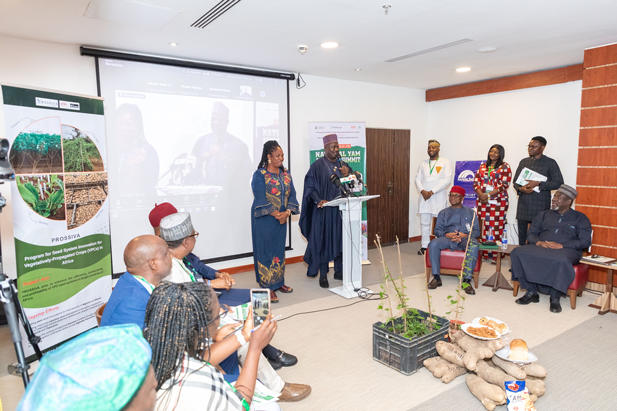
Minister of State for Agriculture, Senator Aliyu Sabi Abdullahi during his opening remarks with one of the women seed yam entrepreneurs under the PROSSIVA program.

A key insight into discussions during the summit showed that seed accounts for up to 50% of yam production costs under traditional systems. With seed prices ranging between ₦300-₦500 per tuber and recommended planting densities of 10,000 plants per hectare, farmers can spend nearly ₦3 million per hectare on seed alone. Speaking during her presentation, IITA Seed System specialist, Dr Beatrice Aighewi revealed that at an estimated national yam cultivation area of eight million hectares, the Nigerian seed economy represents a multi-trillion-naira opportunity.

Dr Aighewi explained how under the Gates Foundation funded PROSSIVA program, IITA-CGIAR and partners have developed and validated breakthrough seed technologies such as vine-based propagation, mini-tuber production, and virus-cleaned planting materials, that dramatically increase multiplication rates, reduce disease pressure, and more than double yields under farmer conditions.
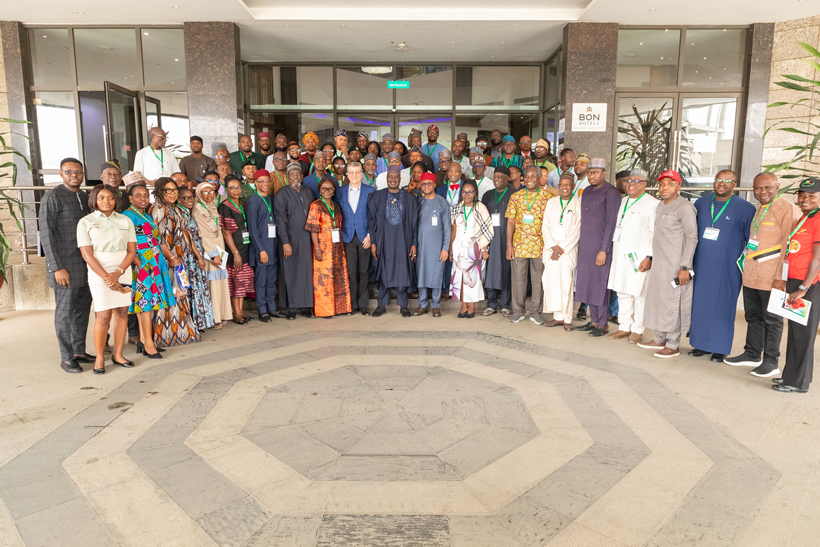
Participants of the Yam Advocacy Summit in Abuja.

Evidence presented at the summit showed establishment rates of up to 98% and yield increases exceeding 100% when clean seed is used. Importantly, seed production itself was shown to be more profitable than ware yam production, opening new investment pathways for specialized seed enterprises.

In his welcome address, Dr Tahirou Abdoulaye emphasized that while IITA has developed improved varieties and advanced seed technologies over decades of research, “varieties alone cannot drive transformation; efficient seed systems must follow.”

Representing the Gates Foundation, Dr Lawrence Kent described the new leaf-bud cutting technologies as “almost a miracle,” noting that clean planting materials can increase yields by 106%. He reaffirmed the Foundation’s commitment to supporting innovations that improve smallholder productivity across Africa.

Delivering the keynote, Senator Aliyu Sabi Abdullahi, Minister of State for Agriculture, described yam as “the king of all crops” and confirmed its inclusion among Nigeria’s priority Tier 1 crops under the Ministry’s evolving food systems strategy. He stressed that the time has come to reposition yam within national policy, investment, and food security frameworks.

The Director General of the National Agricultural Seed Council (NASC) Fatuhu Mohammed called for certified seed system strengthening to ensure quality assurance and sustainable scaling, while the Executive Director of the National Root Crops Research Institute (NRCRI), Prof. Chiedozie Egesi urged a shift from cultural symbolism to economic acceleration, spanning exports, processing, and innovation leadership.

A high-level panel discussion moderated by BASICS II Program lead, Prof Lateef Sanni, underscored that clean seed systems are foundational to productivity, export competitiveness, and market buoyancy. Participants highlighted the need for formal national recognition of yam as a strategic commodity and strengthened regulatory oversight and certification systems amongst other actions for impact.

The repeal of long-standing export restrictions was recognized as a major milestone, opening space for structured export expansion. Regulatory authorities clarified export requirements, emphasizing uniform tuber size, disease-free certification, and phytosanitary compliance as critical to accessing premium markets.

Processors and seed entrepreneurs stressed that finance remains the biggest constraint to scaling, calling for credit programs and investment platforms that de-risk yam enterprises across the value chain.

The summit concluded with the reading of a communique calling for accelerated national implementation of validated seed technologies, institutional strengthening of certified seed systems, policy alignment, and export competitiveness.

In her closing remarks, PROSSIVA Program Coordinator, Dr Delphine Amah delivered what became the defining message of the summit; “Seed system was the constraint for yam expansion, and today, seed system is the solution.”

Across stakeholders, the consensus was clear, Nigeria must transition from being the world’s largest yam producer to becoming the global leader in yam productivity, seed innovation, value addition, and export competitiveness.

With proven technologies, strong policy signals, and unprecedented multi-sector alignment, the National Yam Advocacy Summit may well mark the moment yam shifts from cultural representation to economic powerhouse in Nigeria’s agricultural transformation agenda.

Contributed by ‘Timilehin Osunde


Contributed by

Related news

No items found

Leave a Reply

Your email address will not be published. Required fields are marked *

Scroll to Top
Olaosebikan, Olamide

Olamide Deborah Nwanze is a Senior Research Associate specializing in gender mainstreaming research to inform participatory and inclusive breeding, variety development, and seed systems policies regarding root, tuber, and banana (RTB) crops in the International Institute of Tropical Agriculture Headquarters, Ibadan, Nigeria. She is a PhD candidate at the University of Ibadan and holds an MSc and B. Agric in Agricultural Extension and Rural Development. Olamide is a fellow of the African Women in Agricultural Research and Development – Gender Responsive Agricultural Systems Policy (AWARD-GRASP) and the Gender Responsive Researchers Equipped for Agricultural Transformation (GREAT). She seeks to apply her gender-mainstreaming learnings, gender-responsive research, and policy development, and review expertise to facilitate women, youth, children, and vulnerable social group’s access to and adoption of agricultural Innovations that guarantee food, nutrition, income, and livelihood security in Africa. Her current roles include mentoring research fellows, development of guides and training manuals, implementation and adaptation of gender frameworks and tools, value chain actors’ engagement as citizen science partners, policy review and redesign, data management, and analysis. Her current research explores mixed methods and participatory and interdisciplinary approaches to capture and highlight gender dynamics, needs, preferences, and challenges stakeholders face within the agricultural livelihood value chain to prioritize gender-inclusive strategies in breeding programs, policy design, and implementation.

At IITA, she contributes to the implementation of the CGIAR Accelerated Breeding Initiative and Genetic Innovation Programs; participatory and gender research within the NextGen CassavaHarvestPlusRTBFoods, and Tricot-ClimMob 1000Farms Projects; and gender knowledge communication via the G-LENS webinar series, video documentary, policy briefspublications, and blogs.


Recent publications

de Sousa, K., van Etten, J., Manners, R. Bello, A., Teeken, B., Olaosebikan, O., et al. 2024. The tricot approach: an agile framework for decentralized on-farm testing supported by citizen science. A retrospective. Agron. Sustain. Dev. 44, 8. https://doi.org/10.1007/s13593-023-00937-1

Madu, T., Onwuka, S., Nwafor, S., Onyemauwa, N., Ejechi, M., Ofoeze, M., Ukeje, B., Eluagu, C., Olaosebikan, O., Okoye, B., 2024. Gender-Inclusive Consumer Studies Improve Cassava Breeding in Nigeria in: Frontiers in Sociology, volume 9, number: 1224504, doi: 10.3389/fsoc.2024.1224504

Olaosebikan, O.; Bello, A.; Utoblo, O.; Okoye, B.; Olutegbe, N.; Garner, E.; Teeken, B.; Bryan, E.; Forsythe, L.; Cole, S.; Madu, T. 2023.  Stressors and Resilience within the Cassava Value Chain in Nigeria: Preferred Cassava Variety Traits and Response Strategies of Men and Women to Inform Breeding. Sustainability 15, 7837. https://doi.org/10.3390/su15107837

Okoye, B., Ofoeze, M., Ejechi, M., Onwuka, S., Nwafor, S., Onyemauwa, N., Ukeje, B., Eluagu, C., Obidiegwu, J.*, Olaosebikan, O., Madu, T.* 2023. Prioritizing preferred traits in the yam value chain in Nigeria: a gender situation analysis in: Frontiers in Sociology, volume 8, number: 1232626, pages 1 – 9, ISSN 2297-7775, 2023. https://www.frontiersin.org/articles/10.3389/fsoc.2023.1232626/full

Olaosebikan, O., Bello, A. A., de Sousa, K., Ndjouenkeu, R., Adesokan, M., Alamu, E. O., Agbona, A., van Etten, J., Kegah, F. N.*, Dufour, D., Bouniol, A., Teeken, B. 2023. Consumer acceptability of cassava gari-eba food products across cultural and environmental settings using the triadic comparison of technologies approach (tricot) in: Journal of the Science of Food and Agriculture,

Teeken, B., Olaosebikan, O., Bello, A. A., Madu, T.*, Cole, S. M. 2023. Qualitative assessment on the positionality and preferences of dyads in relation to cassava-related activities: working with tricot trial citizen scientists https://hdl.handle.net/10568/138326 Type: Manual

Bouniol, A., Ceballos, H., Bello, A. A., Teeken, B., Olaosebikan, O., Owoade, D., Agbona, A., Fotso Kuate, A., Madu, T.*, Okoye, B.*, Ofoeze, M.*, Nwafor, S.*, Onyemauwa, N.*, Adinsi, L.*, Forsythe, L., Dufour, D. 2023. Varietal impact on women’s labour, workload and related drudgery in processing root, tuber and banana crops: focus on cassava in sub-Saharan Africa in: Journal of the Science of Food and Agriculture, pages 1 – 25, ISSN 0022-5142,

Bello, A. A., Agbona, A., Olaosebikan, O., Edughaen, G., Dufour, D., Bouniol, A., Iluebbey, P., Ndjouenkeu, R.*, Rabbi, I. Y., Teeken, B. 2023. Genetic and environmental effects on processing productivity and food product yield: drudgery of women’s work in: Journal of the Science of Food and Agriculture, pages 1 – 32, ISSN 0022-5142, 5

Cavicchioli, M., Zimbiti, T., Teeken, B., Nwanze, D.O., Liani, M., Parkes, E. & Bello, A. 2023. IITA-Gender Responsive Breeding Training Report. Genetic Resources Center, IITA-HQ, Ibadan, 21-23 September, 2022. Ibadan, Nigeria: IITA, (34 p.).https://hdl.handle.net/10568/131368

Agbona, A. Peteti P., Teeken B., Olaosebikan O. Bello, A. A., Parkes, E., Rabbi, I. Y., Mueller, L., Egesi, C., Kulakow, P. 2022. Data Management in Multi-disciplinary African RTB Crop Breeding Programs. In: Williamson, H.F., Leonelli, S. (eds) Towards Responsible Plant Data Linkage: Data Challenges for Agricultural Research and Development. Springer, Cham. https://doi.org/10.1007/978-3-031-13276-6_5

Lora Forsythe, Pricilla Marimo, Sarah Mayanja, Olamide D. Olaosebikan, Esme Stuart, Bela Teeken, Benjamin Okoye, Tessy Madu, (2021). Cross-product Gender Analysis of RTBfoods Step 2 Gendered Food Mapping on RTB Products. Understanding the Drivers of Trait Preferences and the Development of Multi-user RTB Product Profiles, WP1. London, UK: RTBfoods Field Scientific Report, 30 p.

Teeken, B., Garner, E., Agbona, A., Balogun, I., Olaosebikan, O., Bello, A., Madu, T., Okoye, B., Egesi, C., Kulakow, P. and Tufan, H.A. 2021. Beyond “Women’s Traits”: Exploring How Gender, Social Difference, and Household Characteristics Influence Trait Preferences. Frontiers Sustainable Food Systems 5:740926. https://doi.org/10.3389/fsufs.2021.740926

Teeken, B., Agbona, A., Bello, A., Olaosebikan, O., Alamu, E., Adesokan, M., Awoyale, W., Madu, T., Okoye, B., Chijioke, U., Owoade, D., Okoro, M., Bouniol, A., Dufour, D., Hershey, C., Rabbi, I., Maziya‐Dixon, B., Egesi, C., Tufan, H. and Kulakow, P. (020. Understanding cassava varietal preferences through pairwise ranking of gari‐eba and fufu prepared by local farmer–processors. Int J Food Sci Technol. https://doi.org/10.1111/ijfs.14862

Bela Teeken, Olamide Olaosebikan, Ireti Balogun, Benjamin Okoye, Tessy Madu, Steven Cole, Abolore Bello, Elizabeth Parkes. (2020). Piloting the G+ customer and product profile tools for gender-responsive cassava breeding in Nigeria. Nigeria: International Institute of Tropical Agriculture (IITA). https://hdl.handle.net/20.500.11766/13000