
IITA and other Long-term EU-AU Research and Innovation Partnership for Food and Nutrition Security and Sustainable Agriculture (LEAP4FNSSA) project partners—the Association of Commonwealth University (ACU) and Greenwich University Natural Resource Institute, UK—conducted an impact and value-addition assessment study in Belgium, France, Germany, Kenya, and Uganda between June and July 2022.
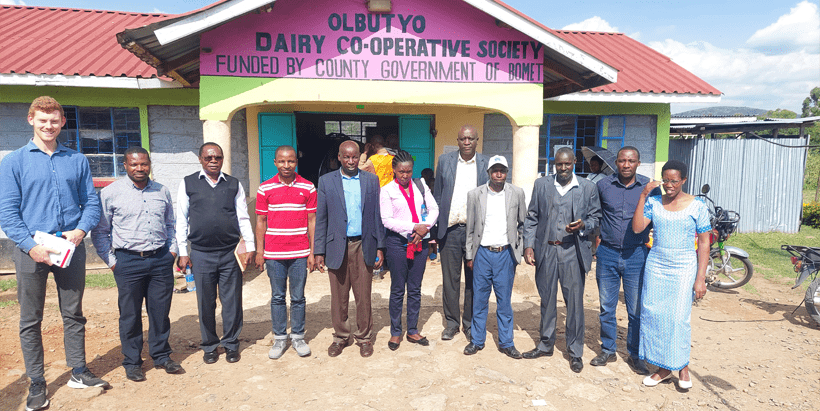
The study documented the impact of using research, science, and innovation generated by the partnership between African and European research and academic institutions on improving livelihoods and development outcomes of beneficiaries, including farmers, farmers’ networks and associations, NGOs, and the organized private sector. The study also supported the overall objective of the LEAP4FNSSA project and delivered a sustainable structure or “Platform.”
The activity involved developing impact pathway timelines for 11 projects in countries visited and data gathering from farmers, and the private sector, including manufacturers’ associations, NGOs, and farmer groups and associations. The 11 projects selected were ServInno, Innofood Africa, Ento-economy, ATM4FS, MUSBCEA, UPSCALE, Tuta Absoluta, AFRICA Milk, CASSANRDA, SmallFish Food, and Mung4FE, across the five countries. These beneficiaries and multi-stakeholder actors/committees were involved in the various research initiatives.
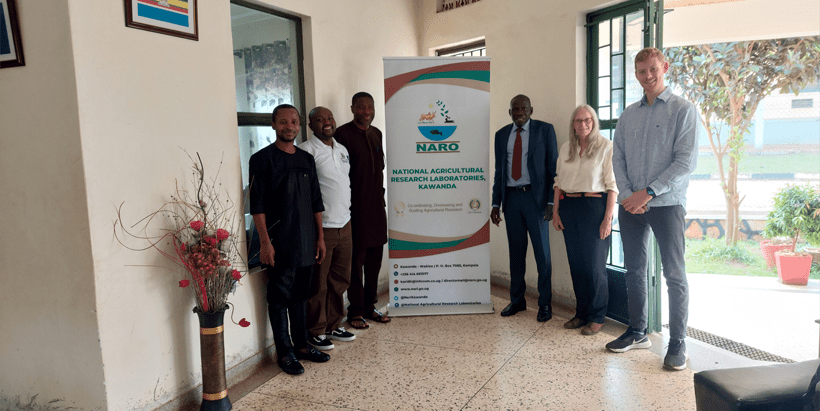
During the exercise, the study team visited five districts (Wakiso, Jinja, Soroti, Lira, Kampala), and 10 villages/parishes in Uganda; three counties (Kisumu, Kiambu, Bomet) and sub-countries in Kenya, and two organizations in Montpellier. Eleven principal investigators, two co-investigators, and several work package leads were interviewed in several departments at Makerere University, Uganda, University of Nairobi, Jomo Kenyatta University of Agriculture and Technology, Nairobi, icipe, and Kenya Agricultural and Livestock Research Organisation (KARLO), Kenya Marine and Fisheries Research Institute, and Lake Victoria Basin Commission.
The team interacted with several government officials from the National Agricultural Research Organisation (NARO), Uganda, and its several associated agencies, such National Semi-Arid Research Institute in Serere, National Cereal Crops Research Institute in Namulogue, National Fisheries Resources Research Institute in Jinja, National Agricultural Research Laboratories (NARL), Uganda. In Kenya, the team attended a field day in Juja sub-county, Kisimu, and Bomet, visited a milk collection center owned by a dairy cooperative, interacted with officials of Kenya Plant Health Inspectorate Services (KEPHIS), and county and district agricultural/animal health extension officers in Kenya and Uganda.
In Montpellier and Paris, the team attended the Africa Milk project workshop and interviewed the former coordinator of the LEAP4FNSSA project from CIRAD, the coordinator of the LEAP Agric and FOSC projects at Agence Nationale de la Recherche (ANR), and European counterparts of the 11 projects for Bonn, Hannover Hohenheim, Göttingen in Germany; Liege, Leuven in Belgium; Montpellier, Avingon–INREA in France, and EU and AU focal persons for LEAP4FNSSA. Moreover, they participated in writing the preliminary report presented at the LEAP4FNSSA stakeholders’ engagement workshop in Brussels.
The focus of the impact assessment was to provide descriptions of FNSSA Partnership outcomes, causal factors, and pathways of contributions developed through 12 in-depth case studies of the FNSSA Partnership project impact in five countries.
The study interviewed 132 agricultural stakeholders (40 females and 92 males) in Belgium, France, Germany, Kenya, and Uganda. The stakeholders interviewed include donors, researchers, farmers, NGOs, NARS, seed producers, and processors.
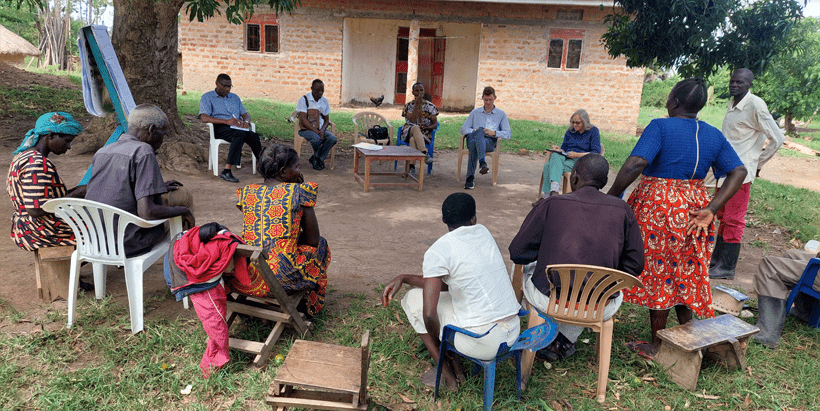
The initial findings revealed how co-design and co-creation of research, science, and innovation have improved production and productivity of crops and livestock systems.
The preliminary results of the study were well received by the EU and AU and have contributed to the development of the new initiative International Research Consortium (IRC), planned by the EU and AU. Following the findings’ presentations at the IRC stakeholder engagement meeting in Brussels, the EU Commission encouraged the IITA-CGIAR team and partners to continue to work on this kind of impact analysis. At the same time, they added that the findings can feed into the innovation scaling that the Commission is planning to implement.
Contributed by Oyewale Abioye
Contributed by
Recent stories