
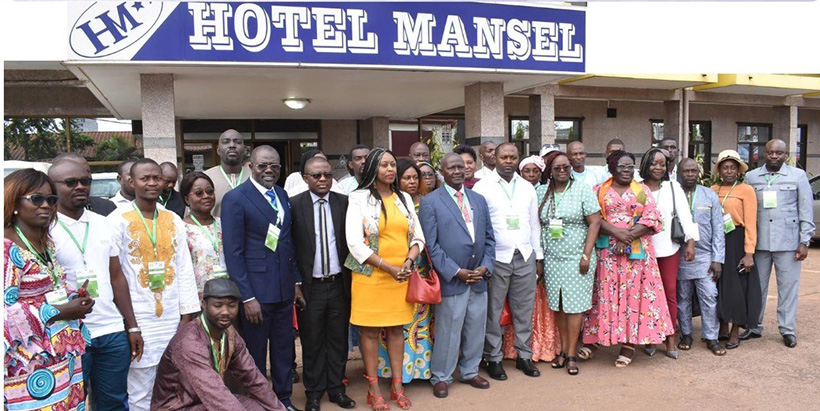
From 8 to 10 November, IITA–CGIAR organized a workshop to validate the results of the diagnostic and evaluation of the maize seed market and cassava planting materials of the Strengthening the Supply of Improved Seeds and Improved Public-private Partnership in Central Africa (SISCA) project in Yaoundé, Cameroon.
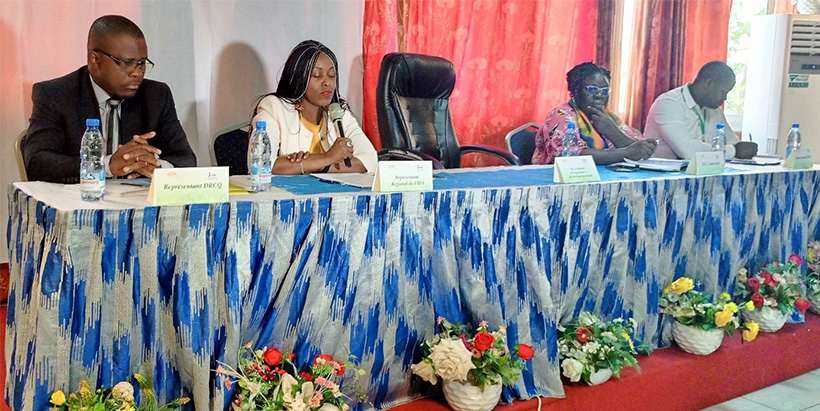
The workshop was attended by the Ministry of Agriculture and Rural Development of Cameroon, represented by Stanislas Bila, Deputy Director of the Directorate of Regulation and Quality Control of Agricultural Inputs and Products (DRCQ); the Regional Representative of the International Fund for Agricultural Development (IFAD), Emime Ndihokubwayo; the representative of the Institute of Agricultural Research for Development (IRAD), Mike Akem; the representative of the extension service, Ndam Njiemessa Mournir; and representatives of several companies and local structures involved in the production and distribution of seeds and private companies and cooperatives of producers and processors of corn and cassava.
On the IITA side, Marie Claire represented IITA-Cameroon Resident Representative Masso Cargele, who closed the workshop. Three IITA experts, SISCA Coordinator Pheneas Ntawuruhunga, SISCA Project Coordination Team Member Alfred Mutundi, and IITA Impact Economist Paul Dontsop also participated.
In her opening remarks, Ndihokubwayo recalled that SISCA is working in the three countries of the central Africa region—Cameroon, the Democratic Republic of Congo, and the Republic of Congo. It aims to improve the access of smallholder farmers (women, men, and young people) to quality maize and cassava seeds in a sustainable manner and at an affordable price, based on strengthening a “research-administration private-sector partnership”.
The stakeholders expressed joy at being associated with this activity which constitutes a baseline and the clarification of the starting points for the improvement of the Cameroon seed sector as established in the roadmap proposed based on the results of the study.
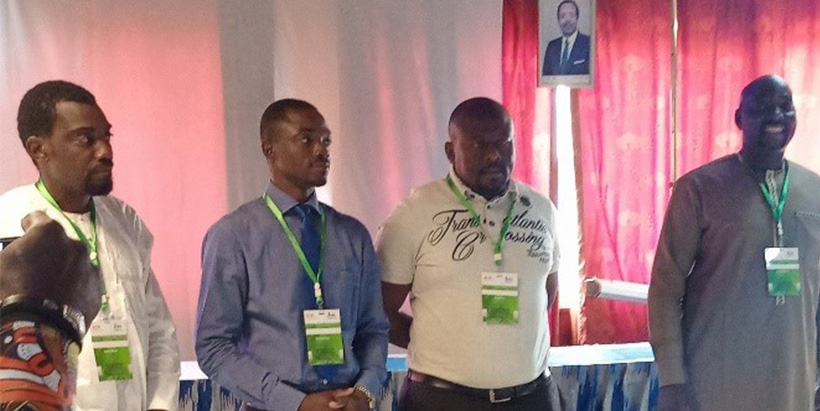
After validation of the study’s results, a platform of seed actors was formed for a collaborative framework between the public and private sectors of the seed industry in Cameroon. The platform’s representatives at the regional level have been temporarily appointed by the various actors of the regions represented in this workshop, the Littoral, the South, and the Centre regions.
This platform will constitute a framework for consultation, exchanges, and orientation on implementing the seed law and regulation to create a favorable environment allowing farmers to access quality seed in quantity and at the desired time. At the end of the exchanges, a seed roadmap and a model of collaboration between the Cameroon seed stakeholders were adopted.
With a view to technical capacity building, priority has been given to the capacity building of researchers, certification agents, seed producers and distributors, and extension agents. The capacity development would focus on seed regulations and certification, varietal maintenance, production and quality assurance of certified basic seed, and seed business management.
Contributed by Ntawuruhunga Pheneas (P.Ntawuruhunga@cgiar.org) and Mutundi Alfred Nseleka (A.Mutundi@cgiar.org)
Contributed by
Recent stories