
IITA Cameroon participates in the “first ever” World Soil Day celebration
January 18, 2019
On 5 December, staff of IITA Cameroon, led by Martin Yemefack, IITA Senior Scientist, convened at the main campus of The Institute of Agricultural Research for Development (IRAD), Nkolbisson in Yaoundé, to participate in the World Soil Day 2018 celebration. Being the maiden edition, the event was commemorated with a symposium themed “Soil nutrient management: A solution for sustainable development.”
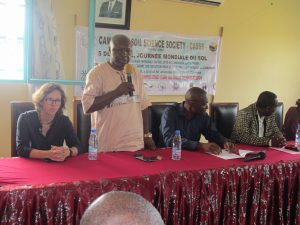 The occasion was attended by soil scientists, stakeholders, policy makers on soil in development planning, as well as students. The symposium provided an excellent opportunity for officials of the Cameroon Soil Science Society (CASSS) to strengthen its position as a national body and to consolidate its relationship, collaboration, and partnership with government and global institutions involved in the domain of soil management.
Presentations were centered on international challenges on soils with a focus on the Global Soil Partnership, Africa Regional Soil Partnership, and the World Bank Project for Africa. Participants also focused on soil pollution and sustainable development in Cameroon with an emphasis on the negative effects of toxic chemicals and other pollutants to plants, wildlife, humans, and the soil.
Stakeholders deliberated on strategies for improving education and capacity building in soil science and extension services in Cameroon. Discussions were based on issues relating to training and education challenges, the responsibilities of soil scientists, and the possibilities of organizing training in Cameroon. Issues concerning digital soil mapping were equally highlighted as an opportunity for sustainable agriculture, with priorities on theories of digital soil mapping, soil data collection and modeling, land suitability classification, soil and land aptitude, and its application in Cameroon.
Speaking on water management and soil nutrients, IRAD Scientist Tueche Jacque Roberto stated that soil scientists are now experiencing climate change in the cropping calendar. “We have introduced different irrigation practices that will also help manage soil nutrients for crops to grow well. Soil is very important for sustainable development, in terms of farming, road construction, building, and mineral resources; as such, it should be conserved by all.”
The occasion was attended by soil scientists, stakeholders, policy makers on soil in development planning, as well as students. The symposium provided an excellent opportunity for officials of the Cameroon Soil Science Society (CASSS) to strengthen its position as a national body and to consolidate its relationship, collaboration, and partnership with government and global institutions involved in the domain of soil management.
Presentations were centered on international challenges on soils with a focus on the Global Soil Partnership, Africa Regional Soil Partnership, and the World Bank Project for Africa. Participants also focused on soil pollution and sustainable development in Cameroon with an emphasis on the negative effects of toxic chemicals and other pollutants to plants, wildlife, humans, and the soil.
Stakeholders deliberated on strategies for improving education and capacity building in soil science and extension services in Cameroon. Discussions were based on issues relating to training and education challenges, the responsibilities of soil scientists, and the possibilities of organizing training in Cameroon. Issues concerning digital soil mapping were equally highlighted as an opportunity for sustainable agriculture, with priorities on theories of digital soil mapping, soil data collection and modeling, land suitability classification, soil and land aptitude, and its application in Cameroon.
Speaking on water management and soil nutrients, IRAD Scientist Tueche Jacque Roberto stated that soil scientists are now experiencing climate change in the cropping calendar. “We have introduced different irrigation practices that will also help manage soil nutrients for crops to grow well. Soil is very important for sustainable development, in terms of farming, road construction, building, and mineral resources; as such, it should be conserved by all.”
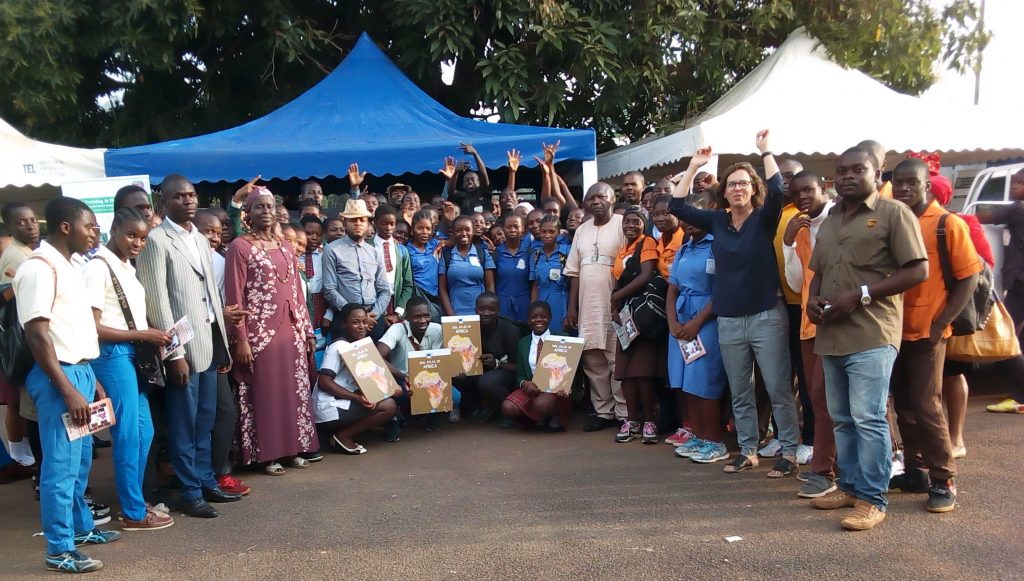 Representing the student participants of the symposium, Cynthia Yenisi, an Upper sixth Art student expressed her excitement, saying: “I am privileged to attend the seminar on soil science. We were told that the soil is not only the ground we move on, but is also a non-renewable resource which humanity lives on for food. I have learnt that there are different classes of soils and a total of 32 soils with Cameroon having more than 20 different types. I am certain that the knowledge and experience acquired would help me in the future as I hope to be a soil biologist.”
In concluding the event, stakeholders visited the various stands where different soil types, natural and chemical fertilizers, soil products, and food items were displayed.
Representing the student participants of the symposium, Cynthia Yenisi, an Upper sixth Art student expressed her excitement, saying: “I am privileged to attend the seminar on soil science. We were told that the soil is not only the ground we move on, but is also a non-renewable resource which humanity lives on for food. I have learnt that there are different classes of soils and a total of 32 soils with Cameroon having more than 20 different types. I am certain that the knowledge and experience acquired would help me in the future as I hope to be a soil biologist.”
In concluding the event, stakeholders visited the various stands where different soil types, natural and chemical fertilizers, soil products, and food items were displayed.
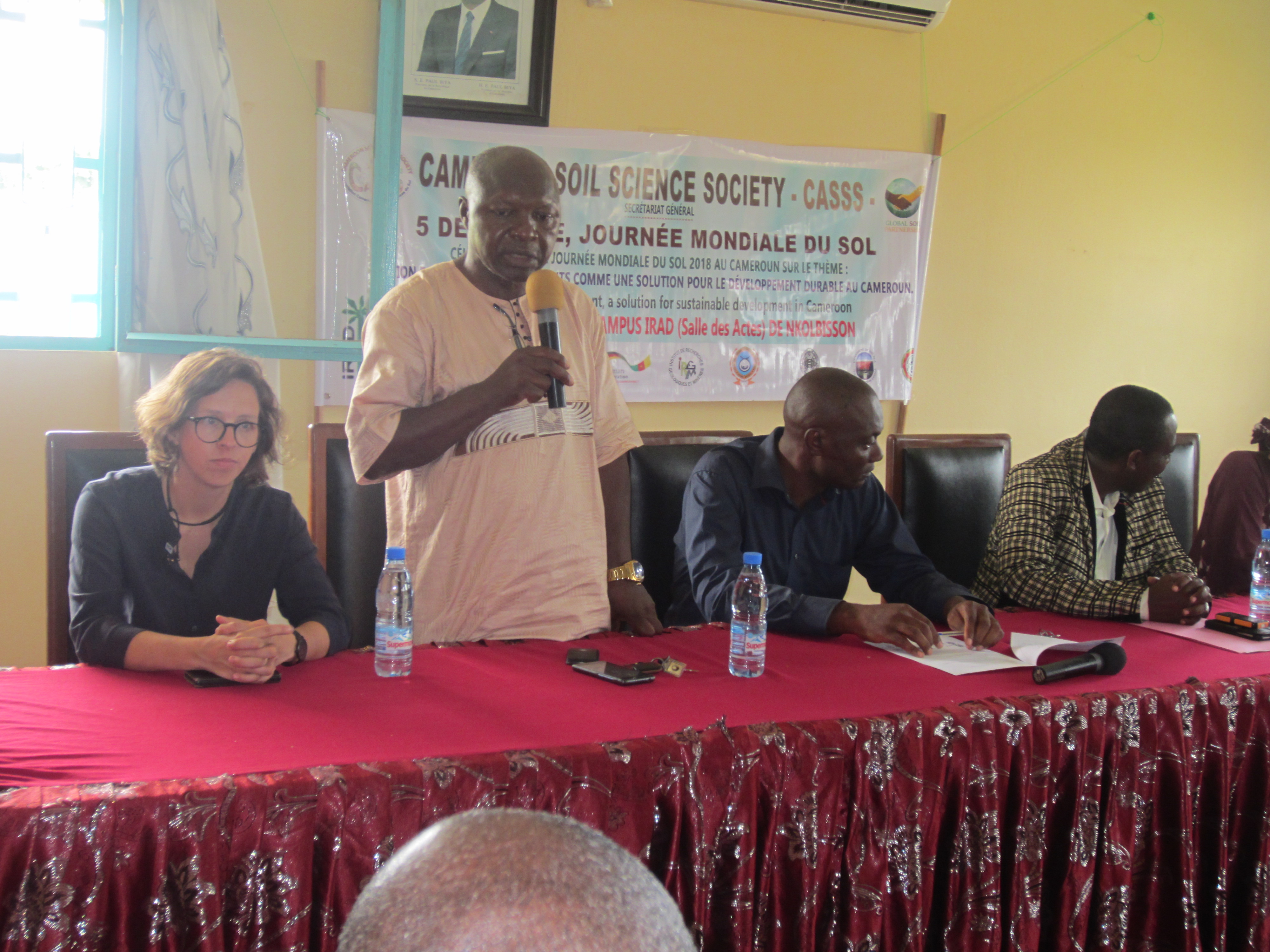
IITA Country Representative Dr Masso Cargele was represented at the occasion by Visiting Scientist Yemefack Martin.
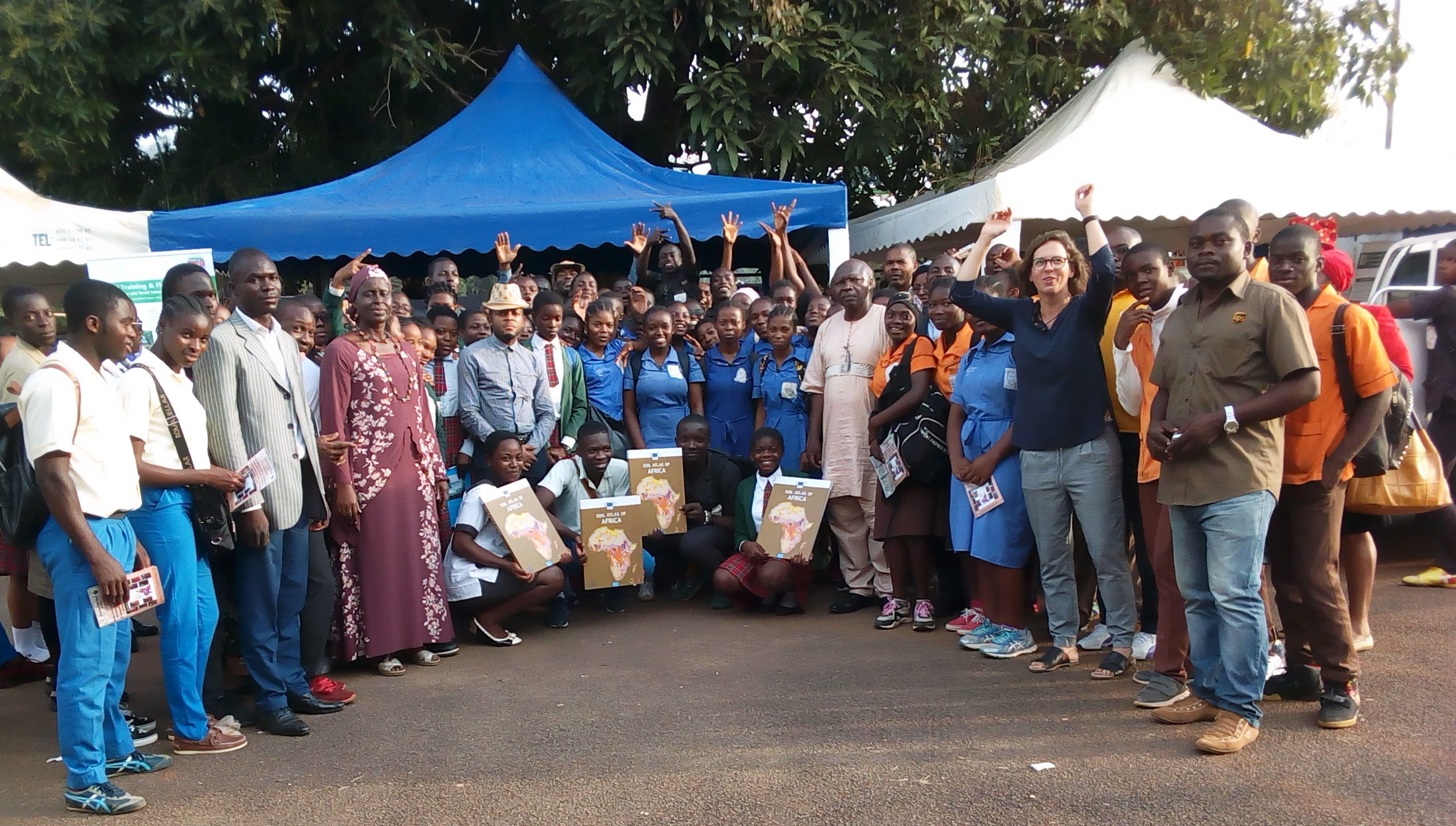
Students with participants at the symposium.
Contributed by
Recent stories
No items found