
IITA celebrates world migratory bird day
May 14, 2016
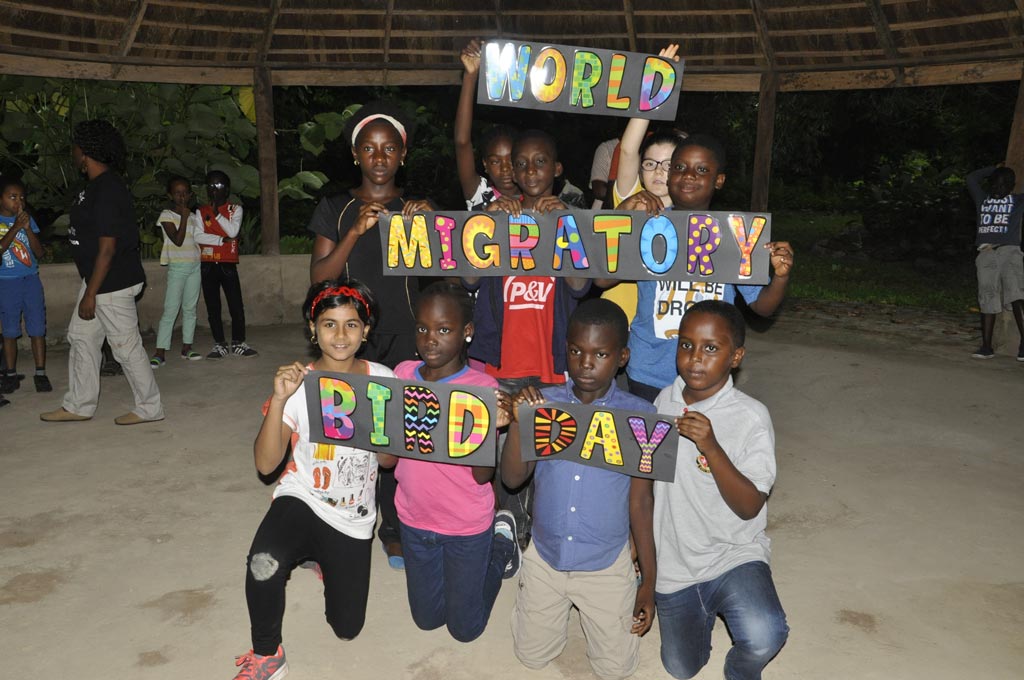
Students, ornithologists, and bird lovers celebrated the World Migratory Bird Day (WMBD) at IITA-Ibadan, on 10 May. The day comprised educational talks by ornithologists on the importance of bird conservation, followed by an opportunity for the guests to view and learn more about birds, especially migrants.
 With support from BirdLife International, the WMBD campaign is organized by the Secretariat of the African-Eurasian Migratory Water-bird Agreement (AEWA), in collaboration with the Convention on the Conservation of Migratory Species of Wild Animals (CMS). It aims to raise global awareness, highlighting the need for the conservation of migratory birds and their habitats. The event is celebrated every second week of May.
This year, focus was given to the millions of birds lost through illegal capturing, killing and trade during migration. “Every day is meant for birds,” remarked Taiye Adeyanju, an ornithologist at the University of Ibadan attending the event. “However we want to mark it significantly by choosing a day, so we can raise awareness and reduce the amount of killings of birds”, he stated.
The guests learned about palaearctic-afrotropical migratory birds—those that are suffering a substantial decline from the frequent capture and killings that occur during their migration. “These birds breed in Europe and ‘winter’ (spend the European winter months) in Africa. While migrating to and from Europe they have several stopover sites. However, along the way people trap, cage, and even kill them” explained Adewale Awoyemi, IITA Projects and Products Supervisor, Forest Unit. Trapped or killed, the birds cannot return to breed and their demise has negative effects on the environment.
“We have to raise awareness about the bigger picture and the roles birds play in the ecosystem, from pollination to climate change. We invited students to celebrate the day with us here in hopes that we can make them understand why we need to preserve birds,” he further explained. “We need to raise awareness so people give birds a chance to survive along their migratory pathways. Birds are an important part of the environment,” added Adeyanju.
Speaking about the importance of the day Adun Okupe, a guest, said “If you look at what is happening around the world, particularly with rapid urbanization, you realize that a lot of birds and their migratory patterns are being affected. So in terms of relevance of today, it is for us to get a keen appreciation for how important nature is, and how our activities as humans are affecting the ecosystem and how we can in our own little way try and preserve this for our children” she stated.
Fifth grader Issa Abdoulaye of the International School of IITA, promised to take the message home to his brothers. “We need to stop killing birds. On my own part, I have a brother who sits and draws the birds around. I will tell him that we can make a poster together to raise awareness.”
The IITA Forest Reserve in the Ibadan campus is an Important Bird Area. IITA has partnered with national and international bird organizations to ensure the conservation of birds in Nigeria.
With support from BirdLife International, the WMBD campaign is organized by the Secretariat of the African-Eurasian Migratory Water-bird Agreement (AEWA), in collaboration with the Convention on the Conservation of Migratory Species of Wild Animals (CMS). It aims to raise global awareness, highlighting the need for the conservation of migratory birds and their habitats. The event is celebrated every second week of May.
This year, focus was given to the millions of birds lost through illegal capturing, killing and trade during migration. “Every day is meant for birds,” remarked Taiye Adeyanju, an ornithologist at the University of Ibadan attending the event. “However we want to mark it significantly by choosing a day, so we can raise awareness and reduce the amount of killings of birds”, he stated.
The guests learned about palaearctic-afrotropical migratory birds—those that are suffering a substantial decline from the frequent capture and killings that occur during their migration. “These birds breed in Europe and ‘winter’ (spend the European winter months) in Africa. While migrating to and from Europe they have several stopover sites. However, along the way people trap, cage, and even kill them” explained Adewale Awoyemi, IITA Projects and Products Supervisor, Forest Unit. Trapped or killed, the birds cannot return to breed and their demise has negative effects on the environment.
“We have to raise awareness about the bigger picture and the roles birds play in the ecosystem, from pollination to climate change. We invited students to celebrate the day with us here in hopes that we can make them understand why we need to preserve birds,” he further explained. “We need to raise awareness so people give birds a chance to survive along their migratory pathways. Birds are an important part of the environment,” added Adeyanju.
Speaking about the importance of the day Adun Okupe, a guest, said “If you look at what is happening around the world, particularly with rapid urbanization, you realize that a lot of birds and their migratory patterns are being affected. So in terms of relevance of today, it is for us to get a keen appreciation for how important nature is, and how our activities as humans are affecting the ecosystem and how we can in our own little way try and preserve this for our children” she stated.
Fifth grader Issa Abdoulaye of the International School of IITA, promised to take the message home to his brothers. “We need to stop killing birds. On my own part, I have a brother who sits and draws the birds around. I will tell him that we can make a poster together to raise awareness.”
The IITA Forest Reserve in the Ibadan campus is an Important Bird Area. IITA has partnered with national and international bird organizations to ensure the conservation of birds in Nigeria.
Pupils from the IITA International School participate in celebrating World Migratory Bird Day in Ibadan.
Contributed by
Recent stories
No items found