
The study and application of biotechnology have become essential in everyday life. This new research branch has reached every aspect of human activity, from agriculture to the medical industry and green energy. These have resulted from different innovations from molecular breeders, such as improved plant varieties and fortified plant seeds to ensure food security and safety and create a sustainable environment for plants and animals.
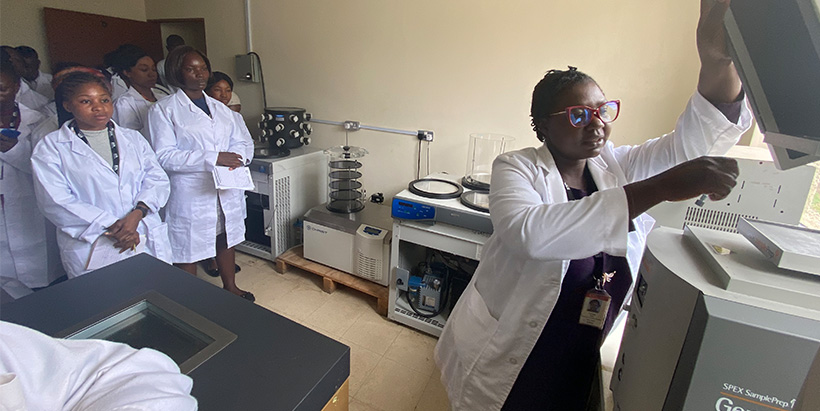
To ensure the continuity of these innovations, the IITA–CGIAR Bioscience Center organized a week-long workshop for graduates on “Hands-on Basic Molecular Biology Techniques.” The workshop took place at the Institute’s headquarters from 27 to 31 March, and the IITA Bioscience Lab Manager, Yemi Fajire, coordinated it.
The workshop was a learning opportunity for the participants to participate in the practical applications of biotechnology and molecular biology tools to harness agricultural improvements in sub-Saharan Africa. In addition, it will standardize their work and increase their productivity in research.
During the training, they learned how to run Polymerase Chain Reaction (PCR), agarose gel electrophoresis, sequencing analysis, Real-Time PCR analysis, Single Nucleotide Polymorphism (SNP), bioinformatics, and how to extract genomic DNA from plants, fungi, and bacteria. The participants also learned about molecular markers and their applications in plant breeding.
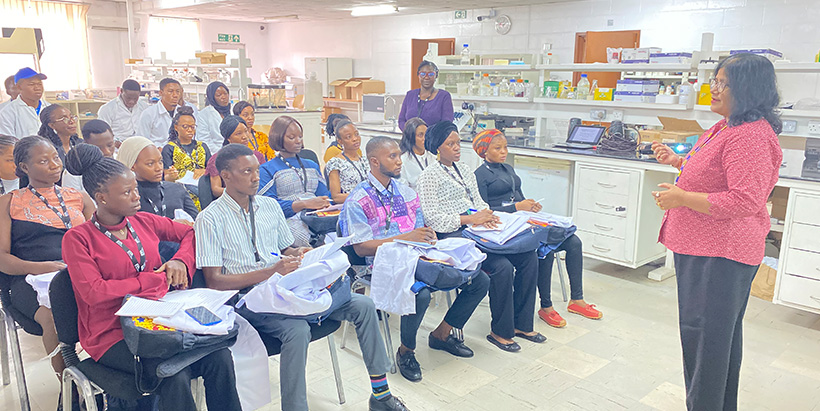
Moreover, the participants were assessed before and after the training. In an interview with the participants, they ascertained the effectiveness of the training in helping them build more interest and discover technical and practical ways of applying molecular biology in their various careers, particularly to address food insecurity in sub-Saharan Africa.
One of the participants, Anuoluwapo Ilegomah, revealed that the workshop gave her a foundation to build upon as she furthers her studies, as IITA Bioscience Center underpins and enables research across the life sciences. “I would use the knowledge acquired to engineer food crops with higher nutritional values, particularly in my research interest which is to improve food nutrition for diabetic patients,” she added.
IITA West Africa Hub Director and Head of the Bioscience Center, Michael Abberton, applauded the facilitators for their excellent job imparting knowledge to the participants, including Fajire and Senior Research Supervisors Adetutu Udofia and Victoria Iwu, among seven others. Abberton also commended the participants on their impressive results from the assessments conducted after the workshop. “I encourage you to always think, reflect, and find ways to apply the acquired knowledge in your various fields,” he stated. The participants were awarded certificates of participation on the last day of the workshop.
Contributed by Anita Akinyomade
Contributed by
Recent stories