
IITA, Ekimiks conduct training on Agripreneurial and Business Management
April 8, 2016
The 2nd phase of the Agripreneurial and Business Management in Agribusiness training workshop was held from 29 March to 2 April, for the IITA Youth Agripreneurs (IYA). The training, tagged “Developing Strategic Skills in Agribusiness,” was sponsored by Ekimiks Nigeria Limited, in collaboration with IITA and LA Consult.
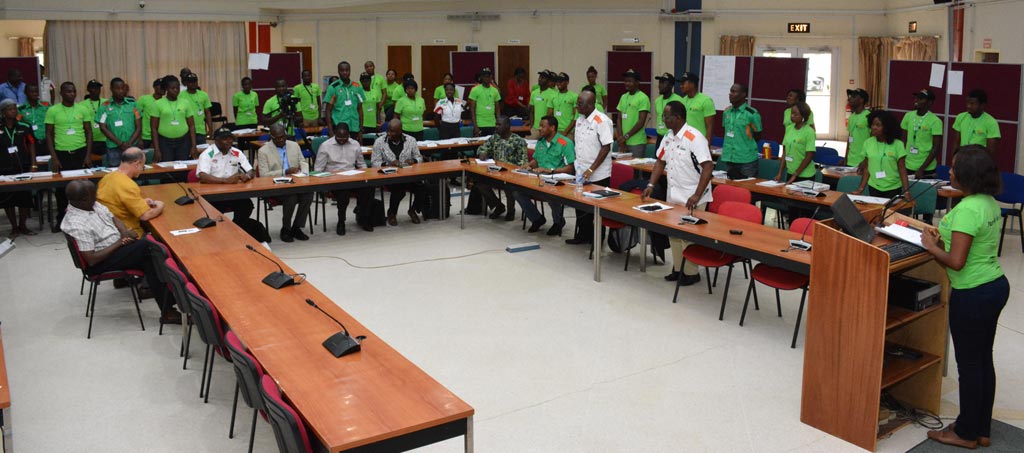 The workshop, held at the Conference Center, IITA-Ibadan was attended by about 50 youth Agripreneurs who have embraced agriculture as a business.
The participants, who were drawn from various locations including Port Harcourt, Ogun, Ondo, Abuja, Oyo, and Kano, were taken through a series of sessions to enhance their strategic skills in agribusiness.
Stakeholders from the private and public sectors provided lessons, experiences, and support to the youth Agripreneurs.
Speaking about the IITA Youth Agripreneurs initiative, Ekiyor Tope Miriki, Managing Director, Ekimiks Ltd, said the IYA initiative was a means of ensuring that youth see the vast opportunity embedded in the agricultural value chain.
“We decided to organize this second training based on the responses and success of the first one which we organized last year. The training has actually brought out some sense of responsibility in our organization. We want to be part of great initiatives like this one and IITA has taken a giant stride in ensuring that the youth have the necessary resources to embrace agriculture as a business,” he said.
IITA Director General Nteranya Sanginga, also speaking at the training, said that the IYA initiative started at point zero, but will now be adopted in 27 states across Nigeria and also in some countries in sub-Saharan Africa under the ENABLE YOUTH program.
He added that under the ENABLE Youth program which will be funded by the African Development Bank (AfDB) the youth will learn how to make agriculture a business.
“Agriculture is more than just taking the cutlass and hoe. It is a complex activity which involves a vast value chain like transportation, value addition, middlemen, etc. You will have access to loans under this program after developing a business plan for a bankable project and Ekimiks here will teach you how to do that,” he said.
Delivering a motivational speech, the Managing Director of Durante Fish Industries, Dr Tomi Asuni, encouraged the youth to maximize the opportunity of being in the workshop. He said the recent dwindling price of crude oil in the world market is a sign of the fact that many countries will fall back on agriculture.
The Executive Director of the Forum for Agricultural Research in Africa (FARA), Dr Yemi Akinbamijo and a representative of the AfDB team who were present at the training workshop advised the youth to be proactive in their business dealings and emphasized the significance of private sector interventions in the promotion of agribusiness in Africa.
The youth were taken through a series of sessions that covered Risk management and business continuity planning, Effective sales and marketing strategies, Achieving operational excellence, Writing a winning business plan for agribusiness, Fundamentals of business accounting, and much more.
The workshop, held at the Conference Center, IITA-Ibadan was attended by about 50 youth Agripreneurs who have embraced agriculture as a business.
The participants, who were drawn from various locations including Port Harcourt, Ogun, Ondo, Abuja, Oyo, and Kano, were taken through a series of sessions to enhance their strategic skills in agribusiness.
Stakeholders from the private and public sectors provided lessons, experiences, and support to the youth Agripreneurs.
Speaking about the IITA Youth Agripreneurs initiative, Ekiyor Tope Miriki, Managing Director, Ekimiks Ltd, said the IYA initiative was a means of ensuring that youth see the vast opportunity embedded in the agricultural value chain.
“We decided to organize this second training based on the responses and success of the first one which we organized last year. The training has actually brought out some sense of responsibility in our organization. We want to be part of great initiatives like this one and IITA has taken a giant stride in ensuring that the youth have the necessary resources to embrace agriculture as a business,” he said.
IITA Director General Nteranya Sanginga, also speaking at the training, said that the IYA initiative started at point zero, but will now be adopted in 27 states across Nigeria and also in some countries in sub-Saharan Africa under the ENABLE YOUTH program.
He added that under the ENABLE Youth program which will be funded by the African Development Bank (AfDB) the youth will learn how to make agriculture a business.
“Agriculture is more than just taking the cutlass and hoe. It is a complex activity which involves a vast value chain like transportation, value addition, middlemen, etc. You will have access to loans under this program after developing a business plan for a bankable project and Ekimiks here will teach you how to do that,” he said.
Delivering a motivational speech, the Managing Director of Durante Fish Industries, Dr Tomi Asuni, encouraged the youth to maximize the opportunity of being in the workshop. He said the recent dwindling price of crude oil in the world market is a sign of the fact that many countries will fall back on agriculture.
The Executive Director of the Forum for Agricultural Research in Africa (FARA), Dr Yemi Akinbamijo and a representative of the AfDB team who were present at the training workshop advised the youth to be proactive in their business dealings and emphasized the significance of private sector interventions in the promotion of agribusiness in Africa.
The youth were taken through a series of sessions that covered Risk management and business continuity planning, Effective sales and marketing strategies, Achieving operational excellence, Writing a winning business plan for agribusiness, Fundamentals of business accounting, and much more.
Youth Agripreneurs undergo training in agribusiness management in IITA
Contributed by
Recent stories
No items found