
IITA NEWS

IITA joins other CGIAR centers to provide support to rebuild Somalia’s Agriculture sector
November 21, 2019

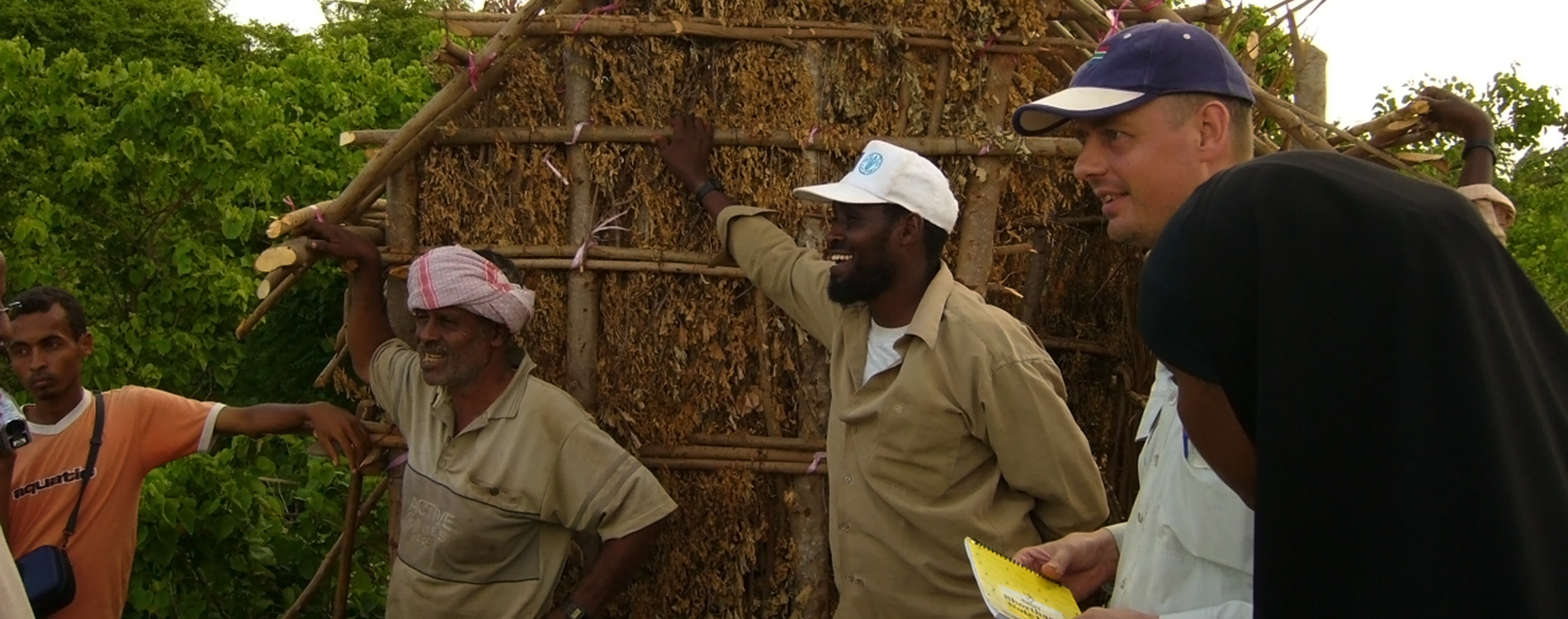
IITA and eight other CGIAR centers have met with officials from the Government of Somalia and several agriculture development partners to put together a plan to rehabilitate Somalia’s agricultural sector following years of conflict in the country. The meeting took place on 24 September at ICRAF offices in Nairobi, Kenya.
IITA joins other CGIAR centers to provide support to rebuild Somalia’s Agriculture sector

Donor organizations with development programs in Somalia convened the meeting hoping to introduce the improved technologies from CGIAR centers. These organizations, including the US Agency for International Development (USAID), the European Union (EU), the UK Department for International Development (DFID), and Japan International Cooperation Agency (JICA), also want to see improved approaches in the agriculture and natural resource management sectors applied in the country.

The other centers represented at the meeting include Center for International Center for Tropical Agriculture (CIAT), International Crops Research Institute for the Semi-Arid Tropics (ICRISAT), International Forestry Research (CIFOR), International Maize and Wheat Improvement Center (CIMMYT), International Livestock Research Institute (ILRI), International Potato Center (CIP), International Rice Research Institute (IRRI), and World Agroforestry (ICRAF). Each organization shared what they could do, or are already doing, in Somalia.

The meeting chair was Mohamed Abdinoor, Chief of Party of the Somalia Growth, Enterprise, Employment and Livelihoods (GEEL) project. GEEL is a USAID-funded project that aims to boost Somalia’s exports of quality agriculture and fish produce, increase dairy production, reduce reliance on imports, and increase jobs in a country recovering from years of conflict and recurrent natural disasters. “After 30 years of conflict, Somalia is coming back,” Abdinoor said.

The suggestions for support from CGIAR included providing technical backstopping in formal and informal capacity-building programs, genebank conservation, supporting crop performance trials, or support in direct implementation.
IITA joins other CGIAR centers to provide support to rebuild Somalia’s Agriculture sector
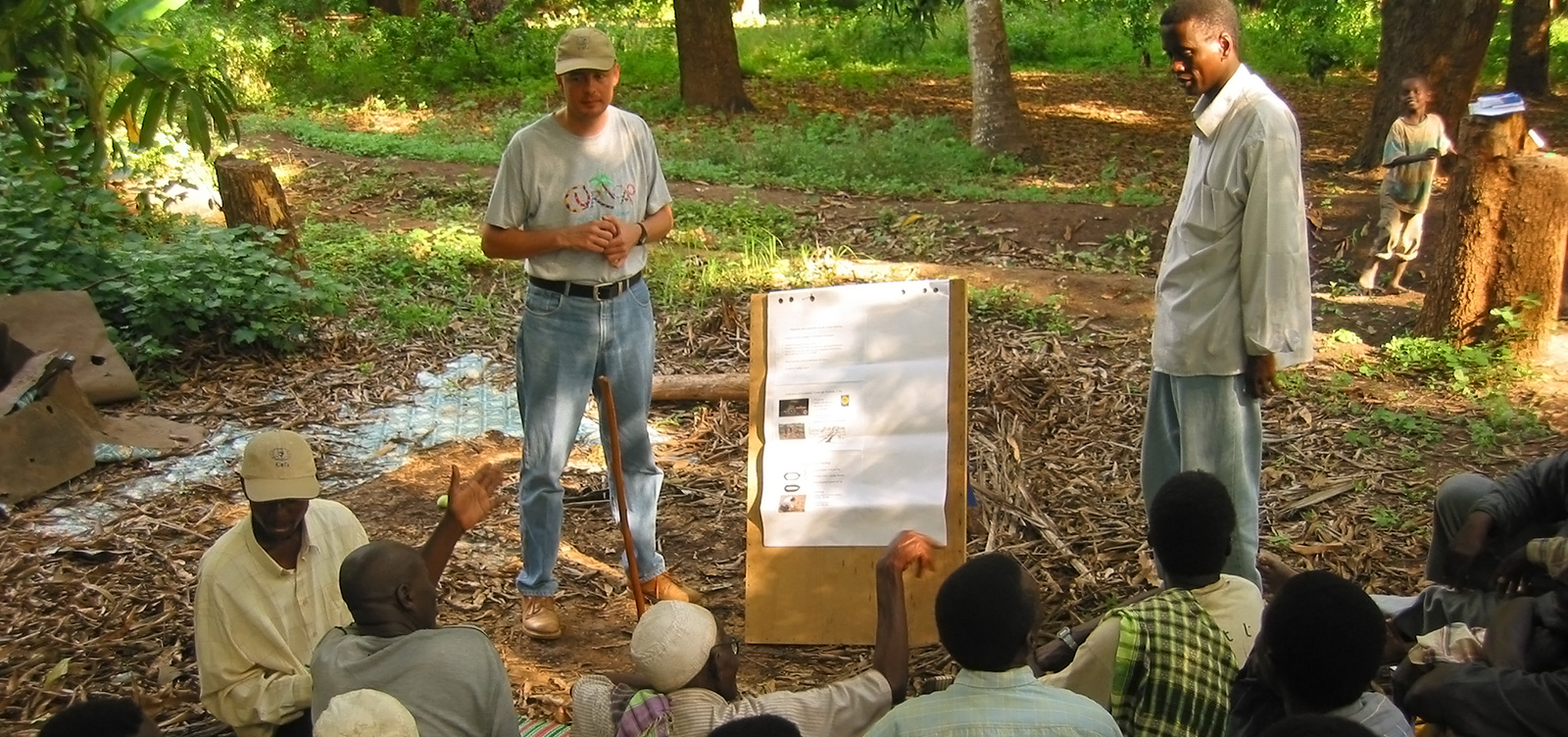
Edward Baars facilitating discussion in Somalia. Photo by CEFA Somalia.

They also canvassed for the introduction of climate-smart crops such as sesame, sorghum, cowpea, sweet potato, cassava, and millet. These include short-season and/or drought-tolerant varieties that can enhance livelihoods and promote the resilience of smallholder farmers. Combining these with trees that are suited to the different agro-climatic zones can further enhance productivity and lead to more sustainable agricultural systems.

Senior Business Development Officer Edward Baars led the team from IITA. He pointed out that IITA’s contribution could include the introduction of a strategic multiple stress-tolerant crop roadmap for Somalia, including science-based crop improvement trials and demo plots to identify appropriate varieties. This should also include use of crop Genetics and Molecular breeding to speed up breeding. The crops should also be tolerant to biotic stresses such as cassava brown streak disease (CBSD) and mosaic disease (CMD) and include other IITA crops including banana and cowpea.

Other activities discussed include establishing a vibrant seed system to support and maintain the crop improvement activities; and capacity building and training of researchers in crop improvement and seed systems.

He also suggested IITA could support banana production by introducing tissue culture propagation to provide clean planting materials; and developing and scaling-up Aflasafe®, an innovation that helps keep maize, sorghum, and other agricultural products free from aflatoxins to meet the EU standards for safe consumption and export.

Both ILRI and IITA mentioned livestock-crop index insurance and synergies between them as a potentially high impact innovation for Somalia, following initial successes elsewhere.

ICRISAT’s Senior Cereal Breeder Eric Manyasa advocated for farmer-led seed production, describing a successful project with CARE in 2002 in Lower Shebelle where the two organizations had produced 400 tonnes of seed under irrigation.

CIP proposed to bring Irish and orange-fleshed sweet potato (OFSP) that are adapted to all environments and are climate resilient. Furthermore, 125 grams of OFSP provides 100% of the required daily allowance of Vitamin A for a child under 5 years old.

World Agroforestry described its work in the Regreening Africa project to restore landscapes in a country that has been devastated by among other things, the felling of trees for charcoal production and export to Gulf States.

Culled from ICRAF blog: http://www.worldagroforestry.org/blog/2019/09/24/agriculture-resurges-somalia-cgiar-centres-government-fao-and-donors-plan-help-it


Contributed by

Related news

No items found

Leave a Reply

Your email address will not be published. Required fields are marked *

Scroll to Top
Olaosebikan, Olamide

Olamide Deborah Nwanze is a Senior Research Associate specializing in gender mainstreaming research to inform participatory and inclusive breeding, variety development, and seed systems policies regarding root, tuber, and banana (RTB) crops in the International Institute of Tropical Agriculture Headquarters, Ibadan, Nigeria. She is a PhD candidate at the University of Ibadan and holds an MSc and B. Agric in Agricultural Extension and Rural Development. Olamide is a fellow of the African Women in Agricultural Research and Development – Gender Responsive Agricultural Systems Policy (AWARD-GRASP) and the Gender Responsive Researchers Equipped for Agricultural Transformation (GREAT). She seeks to apply her gender-mainstreaming learnings, gender-responsive research, and policy development, and review expertise to facilitate women, youth, children, and vulnerable social group’s access to and adoption of agricultural Innovations that guarantee food, nutrition, income, and livelihood security in Africa. Her current roles include mentoring research fellows, development of guides and training manuals, implementation and adaptation of gender frameworks and tools, value chain actors’ engagement as citizen science partners, policy review and redesign, data management, and analysis. Her current research explores mixed methods and participatory and interdisciplinary approaches to capture and highlight gender dynamics, needs, preferences, and challenges stakeholders face within the agricultural livelihood value chain to prioritize gender-inclusive strategies in breeding programs, policy design, and implementation.

At IITA, she contributes to the implementation of the CGIAR Accelerated Breeding Initiative and Genetic Innovation Programs; participatory and gender research within the NextGen CassavaHarvestPlusRTBFoods, and Tricot-ClimMob 1000Farms Projects; and gender knowledge communication via the G-LENS webinar series, video documentary, policy briefspublications, and blogs.


Recent publications

de Sousa, K., van Etten, J., Manners, R. Bello, A., Teeken, B., Olaosebikan, O., et al. 2024. The tricot approach: an agile framework for decentralized on-farm testing supported by citizen science. A retrospective. Agron. Sustain. Dev. 44, 8. https://doi.org/10.1007/s13593-023-00937-1

Madu, T., Onwuka, S., Nwafor, S., Onyemauwa, N., Ejechi, M., Ofoeze, M., Ukeje, B., Eluagu, C., Olaosebikan, O., Okoye, B., 2024. Gender-Inclusive Consumer Studies Improve Cassava Breeding in Nigeria in: Frontiers in Sociology, volume 9, number: 1224504, doi: 10.3389/fsoc.2024.1224504

Olaosebikan, O.; Bello, A.; Utoblo, O.; Okoye, B.; Olutegbe, N.; Garner, E.; Teeken, B.; Bryan, E.; Forsythe, L.; Cole, S.; Madu, T. 2023.  Stressors and Resilience within the Cassava Value Chain in Nigeria: Preferred Cassava Variety Traits and Response Strategies of Men and Women to Inform Breeding. Sustainability 15, 7837. https://doi.org/10.3390/su15107837

Okoye, B., Ofoeze, M., Ejechi, M., Onwuka, S., Nwafor, S., Onyemauwa, N., Ukeje, B., Eluagu, C., Obidiegwu, J.*, Olaosebikan, O., Madu, T.* 2023. Prioritizing preferred traits in the yam value chain in Nigeria: a gender situation analysis in: Frontiers in Sociology, volume 8, number: 1232626, pages 1 – 9, ISSN 2297-7775, 2023. https://www.frontiersin.org/articles/10.3389/fsoc.2023.1232626/full

Olaosebikan, O., Bello, A. A., de Sousa, K., Ndjouenkeu, R., Adesokan, M., Alamu, E. O., Agbona, A., van Etten, J., Kegah, F. N.*, Dufour, D., Bouniol, A., Teeken, B. 2023. Consumer acceptability of cassava gari-eba food products across cultural and environmental settings using the triadic comparison of technologies approach (tricot) in: Journal of the Science of Food and Agriculture,

Teeken, B., Olaosebikan, O., Bello, A. A., Madu, T.*, Cole, S. M. 2023. Qualitative assessment on the positionality and preferences of dyads in relation to cassava-related activities: working with tricot trial citizen scientists https://hdl.handle.net/10568/138326 Type: Manual

Bouniol, A., Ceballos, H., Bello, A. A., Teeken, B., Olaosebikan, O., Owoade, D., Agbona, A., Fotso Kuate, A., Madu, T.*, Okoye, B.*, Ofoeze, M.*, Nwafor, S.*, Onyemauwa, N.*, Adinsi, L.*, Forsythe, L., Dufour, D. 2023. Varietal impact on women’s labour, workload and related drudgery in processing root, tuber and banana crops: focus on cassava in sub-Saharan Africa in: Journal of the Science of Food and Agriculture, pages 1 – 25, ISSN 0022-5142,

Bello, A. A., Agbona, A., Olaosebikan, O., Edughaen, G., Dufour, D., Bouniol, A., Iluebbey, P., Ndjouenkeu, R.*, Rabbi, I. Y., Teeken, B. 2023. Genetic and environmental effects on processing productivity and food product yield: drudgery of women’s work in: Journal of the Science of Food and Agriculture, pages 1 – 32, ISSN 0022-5142, 5

Cavicchioli, M., Zimbiti, T., Teeken, B., Nwanze, D.O., Liani, M., Parkes, E. & Bello, A. 2023. IITA-Gender Responsive Breeding Training Report. Genetic Resources Center, IITA-HQ, Ibadan, 21-23 September, 2022. Ibadan, Nigeria: IITA, (34 p.).https://hdl.handle.net/10568/131368

Agbona, A. Peteti P., Teeken B., Olaosebikan O. Bello, A. A., Parkes, E., Rabbi, I. Y., Mueller, L., Egesi, C., Kulakow, P. 2022. Data Management in Multi-disciplinary African RTB Crop Breeding Programs. In: Williamson, H.F., Leonelli, S. (eds) Towards Responsible Plant Data Linkage: Data Challenges for Agricultural Research and Development. Springer, Cham. https://doi.org/10.1007/978-3-031-13276-6_5

Lora Forsythe, Pricilla Marimo, Sarah Mayanja, Olamide D. Olaosebikan, Esme Stuart, Bela Teeken, Benjamin Okoye, Tessy Madu, (2021). Cross-product Gender Analysis of RTBfoods Step 2 Gendered Food Mapping on RTB Products. Understanding the Drivers of Trait Preferences and the Development of Multi-user RTB Product Profiles, WP1. London, UK: RTBfoods Field Scientific Report, 30 p.

Teeken, B., Garner, E., Agbona, A., Balogun, I., Olaosebikan, O., Bello, A., Madu, T., Okoye, B., Egesi, C., Kulakow, P. and Tufan, H.A. 2021. Beyond “Women’s Traits”: Exploring How Gender, Social Difference, and Household Characteristics Influence Trait Preferences. Frontiers Sustainable Food Systems 5:740926. https://doi.org/10.3389/fsufs.2021.740926

Teeken, B., Agbona, A., Bello, A., Olaosebikan, O., Alamu, E., Adesokan, M., Awoyale, W., Madu, T., Okoye, B., Chijioke, U., Owoade, D., Okoro, M., Bouniol, A., Dufour, D., Hershey, C., Rabbi, I., Maziya‐Dixon, B., Egesi, C., Tufan, H. and Kulakow, P. (020. Understanding cassava varietal preferences through pairwise ranking of gari‐eba and fufu prepared by local farmer–processors. Int J Food Sci Technol. https://doi.org/10.1111/ijfs.14862

Bela Teeken, Olamide Olaosebikan, Ireti Balogun, Benjamin Okoye, Tessy Madu, Steven Cole, Abolore Bello, Elizabeth Parkes. (2020). Piloting the G+ customer and product profile tools for gender-responsive cassava breeding in Nigeria. Nigeria: International Institute of Tropical Agriculture (IITA). https://hdl.handle.net/20.500.11766/13000