
IITA to host One-Health webinar on climate-driven pests and diseases in West Africa
June 30, 2020
On Tuesday, 30 June 2020, CGIAR-IITA will host a webinar on climate-driven pests and diseases in West Africa under the “One-Health platform for climate-driven pests and diseases in West Africa”. The webinar will take place from 2 to 4 pm West African time.
To advance agricultural and food systems, CGIAR instituted eight unique Regional Grand Challenges focusing on generating different radical innovations in technology and practice. These challenges are all under the umbrella of the Two Degree Initiative for Food and Agriculture. As one of the eight challenges, One-Health aims to address the risks of climate change and how the world’s food systems and small-scale farmers can adapt at the speed and scale needed.
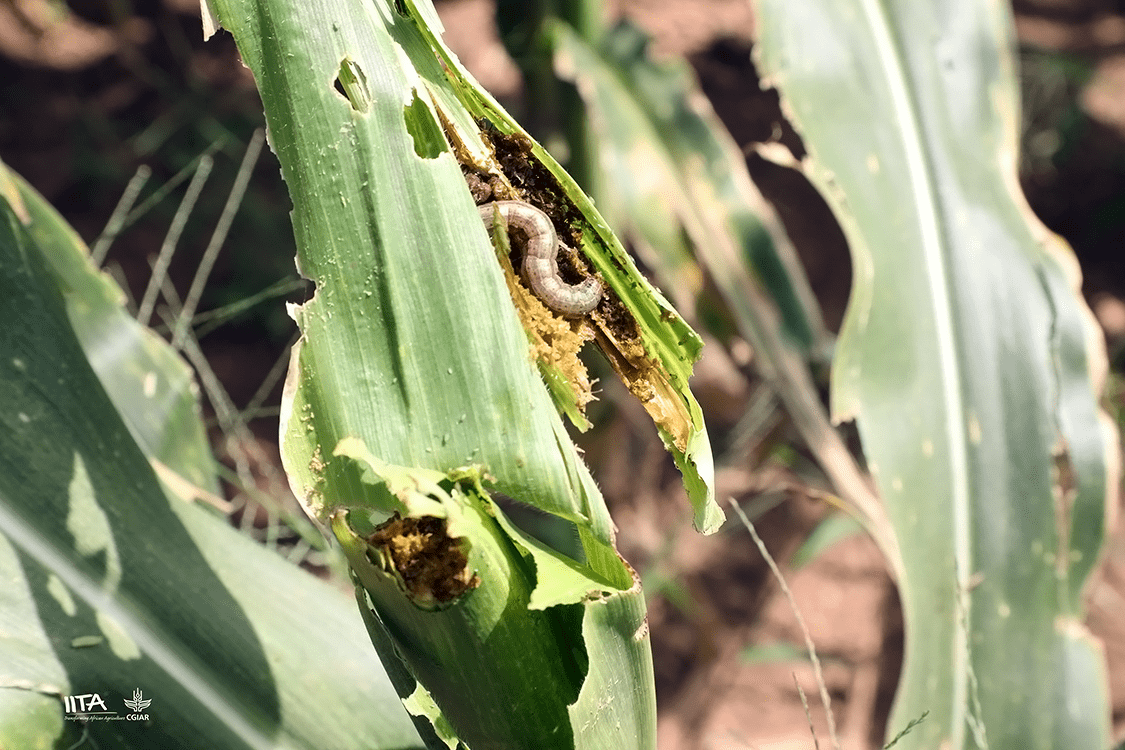 Through its Biorisk Management Facility (BIMAF) in Benin, IITA is leading the One-Health regional grand challenge, which will support farmers in managing biorisks and climate-driven food-health risks. This regional challenge will give particular focus to cross-government approaches in addressing these risks, institutionalized capabilities for early detection of emerging threats and rapid response, and new technologies for biocontrol. West Africa will serve as a model for what is achievable before scaling to other regions.
IITA’s Deputy Director-General for Research and Development, May-Guri Saethre, highlighted how each Regional/Subregional Challenge is structured around three interlinked implementation strategies: (i) improving access to climate-smart technologies and agroecological practices, (ii) enhancing climate-informed digital advisory services, and decision support, and (iii) supporting policy and institutional reforms.
“Technology-focused R4D is a ‘given’ for CGIAR; thus, in this Initiative, CGIAR will step up research and action, through developing global thematic groups that link to all the Regional/Subregional Challenges: learning lessons, promoting South-South learning on these topics, and linking to global processes,” said Saethre.
The One-Health platform has four strategic priorities:
Through its Biorisk Management Facility (BIMAF) in Benin, IITA is leading the One-Health regional grand challenge, which will support farmers in managing biorisks and climate-driven food-health risks. This regional challenge will give particular focus to cross-government approaches in addressing these risks, institutionalized capabilities for early detection of emerging threats and rapid response, and new technologies for biocontrol. West Africa will serve as a model for what is achievable before scaling to other regions.
IITA’s Deputy Director-General for Research and Development, May-Guri Saethre, highlighted how each Regional/Subregional Challenge is structured around three interlinked implementation strategies: (i) improving access to climate-smart technologies and agroecological practices, (ii) enhancing climate-informed digital advisory services, and decision support, and (iii) supporting policy and institutional reforms.
“Technology-focused R4D is a ‘given’ for CGIAR; thus, in this Initiative, CGIAR will step up research and action, through developing global thematic groups that link to all the Regional/Subregional Challenges: learning lessons, promoting South-South learning on these topics, and linking to global processes,” said Saethre.
The One-Health platform has four strategic priorities:
Through its Biorisk Management Facility (BIMAF) in Benin, IITA is leading the One-Health regional grand challenge, which will support farmers in managing biorisks and climate-driven food-health risks. This regional challenge will give particular focus to cross-government approaches in addressing these risks, institutionalized capabilities for early detection of emerging threats and rapid response, and new technologies for biocontrol. West Africa will serve as a model for what is achievable before scaling to other regions.
IITA’s Deputy Director-General for Research and Development, May-Guri Saethre, highlighted how each Regional/Subregional Challenge is structured around three interlinked implementation strategies: (i) improving access to climate-smart technologies and agroecological practices, (ii) enhancing climate-informed digital advisory services, and decision support, and (iii) supporting policy and institutional reforms.
“Technology-focused R4D is a ‘given’ for CGIAR; thus, in this Initiative, CGIAR will step up research and action, through developing global thematic groups that link to all the Regional/Subregional Challenges: learning lessons, promoting South-South learning on these topics, and linking to global processes,” said Saethre.
The One-Health platform has four strategic priorities:
- Horizon scanning and building of early warning and rapid-response systems, which aim to provide seasonal and long-term forecast and management options for biorisks affecting plants, animals, people and the environment in West and Central Africa;
- Managing climate-driven biorisks, which will prioritize and manage the most serious, existing and emerging, biorisks in agriculture;
- Harnessing high throughput technologies for food safety and health for mega-cities in West Africa to improve food safety and health for mega-cities in West Africa under a climate change context;
- Bringing biorisk management into the mainstream of national and regional development programs, which will establish a platform for information sharing on climate change-related biorisks and to influence policy dialog and advocacy;
Contributed by
Recent stories
No items found