
Climate change in Nigeria threatens economic growth in sectors such as agriculture, fishery, and forestry, which are more predisposed to adverse climatic conditions. The Nigerian climate has been irregular over the years, alternating between periods of extreme dry or rainy seasons. Climate change in Nigeria has led to seasons of drought and excess flood, which has affected agricultural activities and caused loss of shelter.
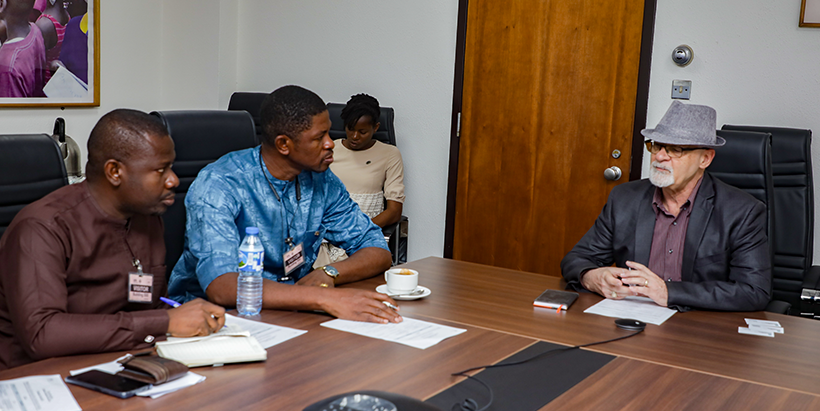
On 5 April, representatives from Academic Associates PeaceWorks (AAPW) visited IITA–CGIAR headquarters to discuss ways to reduce the negative impact of climate change and strengthen sustainable agro-resilient strategies in communities, especially the coastal areas of Delta and Rivers states.
In a meeting with the visiting team, Deputy Director General, Partnerships for Delivery (DDG-P4D), Kenton Dashiell, highlighted IITA’s research and delivery programs, including those aimed at building resilience against climate change. He stated that IITA is committed to serving Nigeria and Africa through research and highlighted the Institute’s work with Nigeria’s federal and state governments to achieve their goals. He added that IITA is open to partnerships at different levels to exchange ideas, knowledge, and expertise.
Following a video documentary highlighting IITA’s activities and programs, the AAPW Deputy Director, Godson Jim-Dorgu, shared how impressed he was with the Institute’s work. He stated that contrary to what many think, the video shows practical examples of how IITA’s activities go beyond research and academics to benefit people from various organizations and levels.
Explaining the purpose of their visit, Jim-Dorgu stated that AAPW is implementing a project in coastal communities to help indigenes cope with climate change in a way that would preserve their sources of livelihood. He mentioned that research conducted by the team reveals that many communities are losing their source of livelihood due to drastic climate change. He added that in 10 communities where the team is working across the Atlantic coast of Nigeria, people had lost their lands to the ocean due to the rise in water waves, resulting in loss of homes and livelihood activities, predominantly farming and fishing. “This challenge has increased social vices in the communities, especially among youths,” he said.
He further shared that to solve this climate change challenge, AAPW developed a toolkit of practical adaptation strategies for these communities. The team decided to visit IITA to get ideas on solving the challenges in these communities. They would include these ideas in the toolkit since IITA has scientific knowledge and research experience in various communities. “We are looking to see if the document could help get funding from the government to support these communities,” he said.
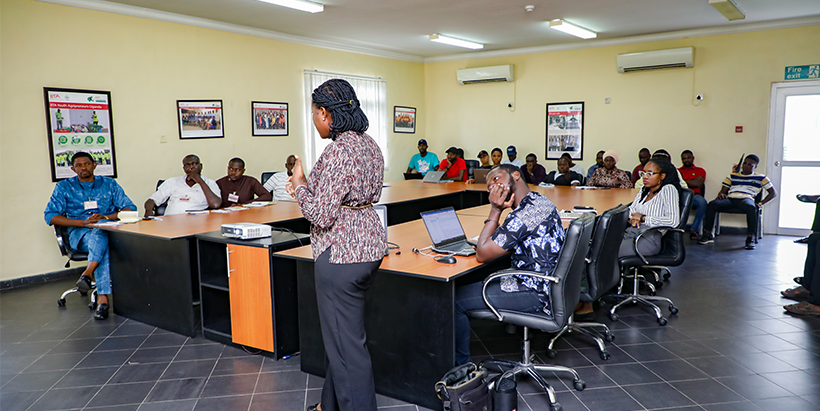
Dashiell congratulated the team for their positive impact and the opportunity for partnership with IITA. He set the team on a tour of IITA’s facilities to identify various units that could assist with their goal.
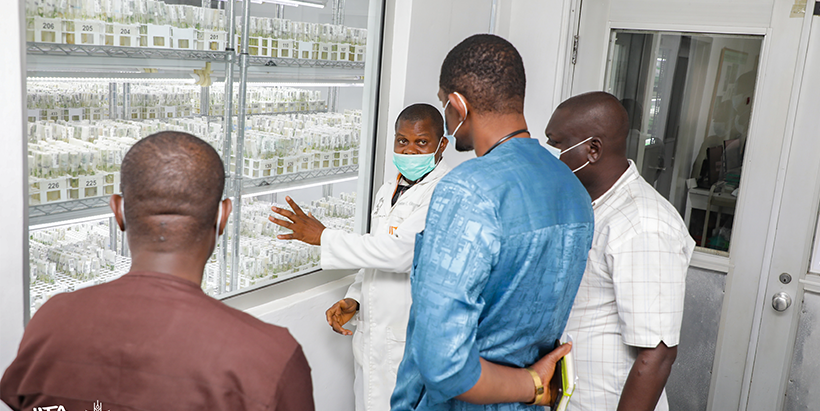
The AAPW team toured the Institute’s facilities, visiting the Genebank, Semi-Autotrophic Hydroponics, IITA Youth Agripreneurs, Aflasafe, and Nodumax. After the tour, they shared areas of interest they identified for achieving their goal. Jim-Dorgu suggested that AAPW and IITA could plan a stakeholders’ workshop where governments and private organizations would collectively support the mission in the communities. Both organizations agreed to keep the communication lines open for further discussions.
Contributed by Ochuwa Favour Daramola
Contributed by
Recent stories