
Food processors in Libreville, Gabon, recently participated in a training on the use of provitamin A rich plantain flour to alleviate Vitamin A deficiency in vulnerable groups. IITA-Cameroon Visiting Scientist Apollin Fotso Kuate led the workshop, which took place on 30 September under the framework of the project—Enhancing nutritional quality of plantain food products through improved access to endophyte primed and high provitamin A plantain cultivars under integrated soil fertility management practices in Nigeria, Cameroon and Gabon. Forty-one participants (30 men and 11 women) from the National Consultation of Producers of Gabon (CNOP-GA), researchers from IRAF, WAVE program, and the Gabonese Food Security Agency attended the training under the plantain project funded by the European Union through the African Union.
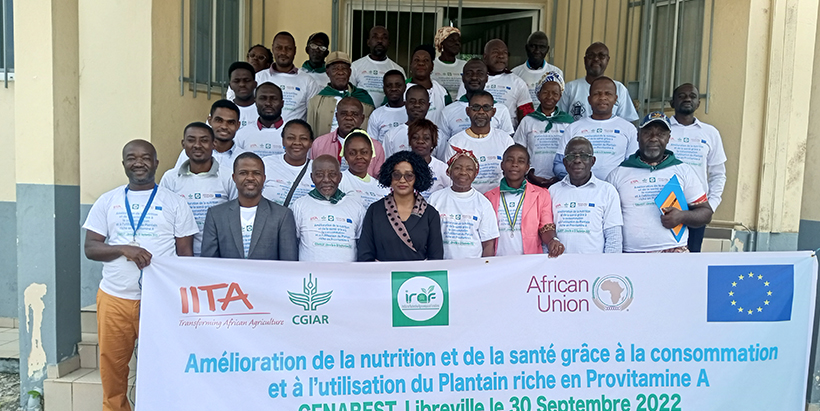
The workshop’s first module focused on the provitamin A content of the plantain varieties found in Gabon, following analyses of green and unripe plantain samples. The second module focused on vitamin A sources and risk factors for vitamin A deficiency in the vulnerable group, particularly in children under five years of age, as well as post-harvest plantain management, promotion of plantain-based composite flour, the basics of food processing, and sun drying.
The training course was dynamic and based on the contributions and needs of each participant. Discussions during the training provided these participants with an in-depth knowledge of plantain flour production and its application as a substitute for wheat flour in various foods. As the pre- and post-test questionnaires were used to assess the basic knowledge of these participants, the result showed that their knowledge of plantain, post-harvest technology, and food processing increased by about 80% after the training.
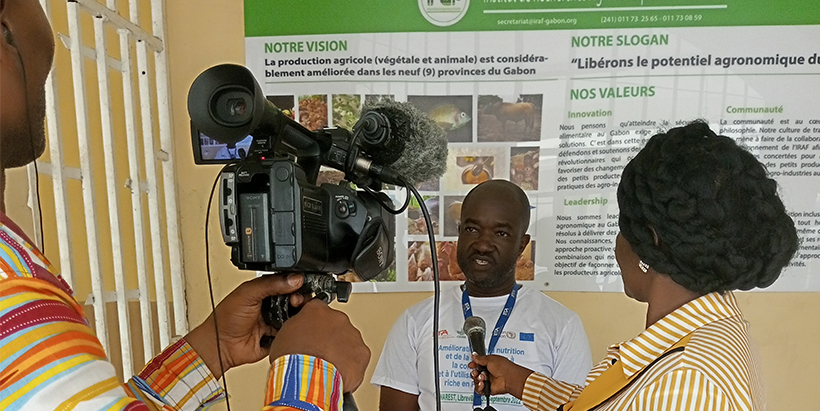
Speaking at the end of the training, the representative of the farmers’ organization, Phil Philo, said the training allowed the participants to know about the plantain flour that can reduce dependency on wheat flour. He believes there are opportunities to develop the banana value chain in Gabon.
The IITA-led project is implemented in collaboration with Gabon’s Institute of Agronomic and Forestry Research (IRAF/CENAREST), Nigeria’s National Horticultural Research Institute (NIHORT), and Cameroon’s University of Buea. The project’s goal is to sustainably enhance the adoption, productivity, and utilization of endophyte-primed high provitamin A plantains cultivars and hybrids in the context of integrated soil fertility management in smallholder farms in Nigeria, Cameroon, and Gabon.
Contributed by Dr Apollin Fotso
Contributed by
Recent stories