
In sub-Saharan Africa, mineral fertilisation and agroecology are not incompatible
October 5, 2023
Should mineral fertiliser use be increased in sub-Saharan Africa? A team of African and European agronomists* provide a nuanced response to this question in an article published in Outlook on Agriculture. Their analysis is based on a review of the existing scientific literature and on years of field experience in sub-Saharan Africa.
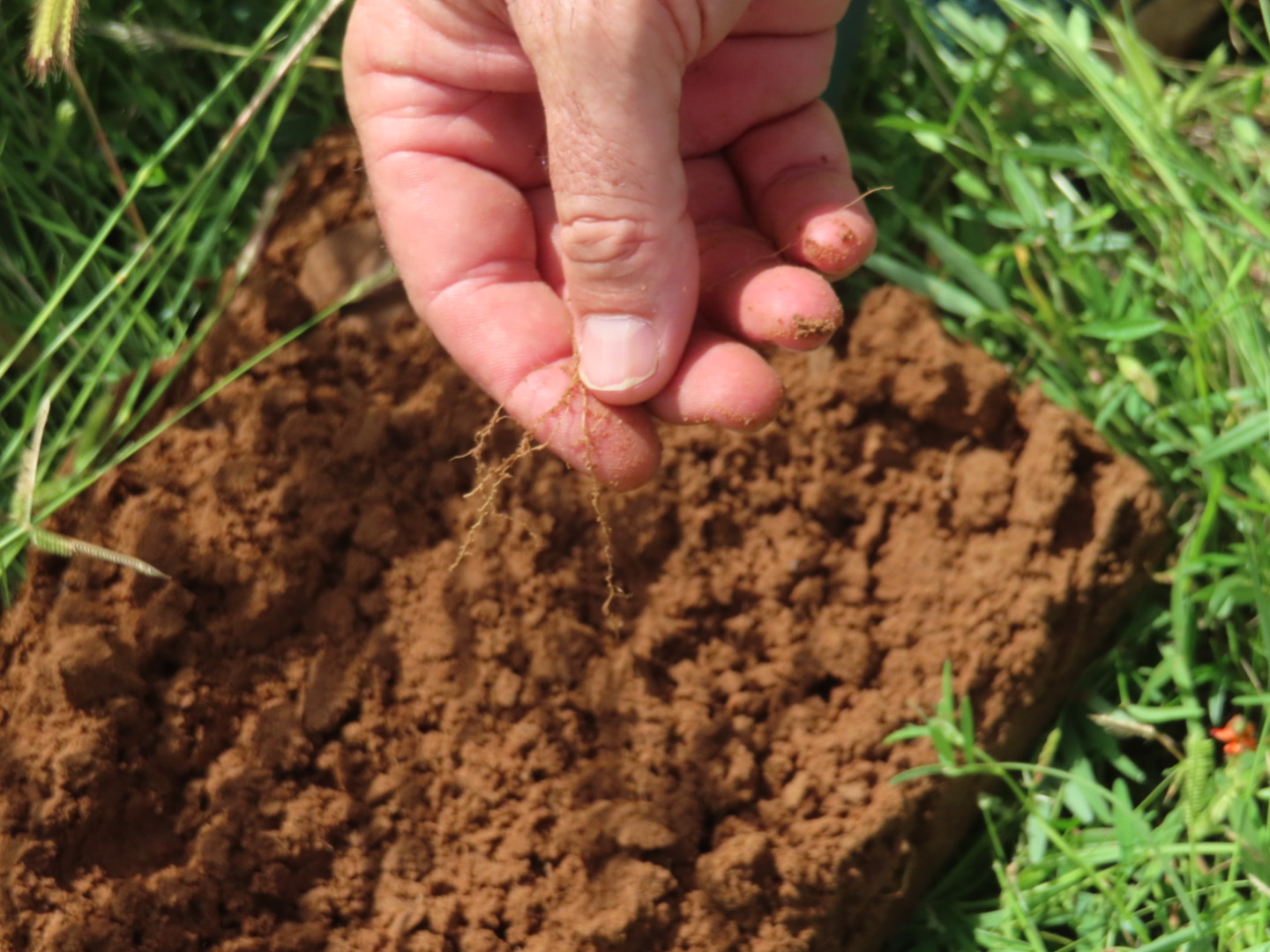 Are agroecological approaches, based for example on the use of legumes and manure, enough by themselves to ensure a long-term increase in annual crop yields in sub-Saharan Africa (SSA), without using more mineral fertiliser?
The answer is no, according to a team of agronomists who have published an in-depth analysis of 150 scientific articles on annual crops (maize, sorghum, millet, rice, cassava, etc.) and tropical legumes, both annual grain legumes (cowpea, groundnut) and legume trees (acacia, sesbania) in tropical environments.
These publications collate 50 years of knowledge on nutrient balances in sub-Saharan Africa, biological nitrogen fixation by tropical legumes, manure use in smallholder farming systems and the environmental impact of mineral fertiliser.
“When we look at comparable climate conditions and physical soil constraints, yields of maize – the main source of calories for people – in sub-Saharan Africa are three to four times lower than elsewhere in the world. This is largely due to the fact that mineral fertiliser use (nitrogen, potassium) is on average four times lower there”, says Gatien Falconnier, a researcher at CIRAD based in Zimbabwe and lead author of the article. “On average, 13 kg of nitrogen are used per hectare and per year in sub-Saharan Africa, for all crops, bearing in mind that the poorest farmers have no access to nitrogen fertilisers and therefore do not use them. It is mainly agri-business and vegetable farmers that have access to fertilisers”, adds François Affholder, an agronomist at CIRAD based in Mozambique and co-author of the article.
“Our objective is not to produce like Europe or North America, but to produce more and more regularly according to the seasons and the years, and thus to increase the economic sustainability of our farming systems. To do so, we must ensure a minimum level of nutrients for crops, which require essential mineral elements for efficient photosynthesis, and therefore growth. Soils are typically lacking in mineral elements in sub-Saharan Africa, and the largely insufficient organic inputs lead to nutrient deficiencies in crops. This is the main limiting factor for crop yields, excluding drought situations”, says Pauline Chivenge of the African Plant Nutrition Institute (APNI). “The work by Christian Pieri showed as early as 1989 that it is possible to restore high levels of fertility to African soils through a balanced approach to organic and mineral nutrient inputs”, says François Affholder.
The article highlights five reasons why more mineral fertiliser is needed in sub-Saharan Africa:
Are agroecological approaches, based for example on the use of legumes and manure, enough by themselves to ensure a long-term increase in annual crop yields in sub-Saharan Africa (SSA), without using more mineral fertiliser?
The answer is no, according to a team of agronomists who have published an in-depth analysis of 150 scientific articles on annual crops (maize, sorghum, millet, rice, cassava, etc.) and tropical legumes, both annual grain legumes (cowpea, groundnut) and legume trees (acacia, sesbania) in tropical environments.
These publications collate 50 years of knowledge on nutrient balances in sub-Saharan Africa, biological nitrogen fixation by tropical legumes, manure use in smallholder farming systems and the environmental impact of mineral fertiliser.
“When we look at comparable climate conditions and physical soil constraints, yields of maize – the main source of calories for people – in sub-Saharan Africa are three to four times lower than elsewhere in the world. This is largely due to the fact that mineral fertiliser use (nitrogen, potassium) is on average four times lower there”, says Gatien Falconnier, a researcher at CIRAD based in Zimbabwe and lead author of the article. “On average, 13 kg of nitrogen are used per hectare and per year in sub-Saharan Africa, for all crops, bearing in mind that the poorest farmers have no access to nitrogen fertilisers and therefore do not use them. It is mainly agri-business and vegetable farmers that have access to fertilisers”, adds François Affholder, an agronomist at CIRAD based in Mozambique and co-author of the article.
“Our objective is not to produce like Europe or North America, but to produce more and more regularly according to the seasons and the years, and thus to increase the economic sustainability of our farming systems. To do so, we must ensure a minimum level of nutrients for crops, which require essential mineral elements for efficient photosynthesis, and therefore growth. Soils are typically lacking in mineral elements in sub-Saharan Africa, and the largely insufficient organic inputs lead to nutrient deficiencies in crops. This is the main limiting factor for crop yields, excluding drought situations”, says Pauline Chivenge of the African Plant Nutrition Institute (APNI). “The work by Christian Pieri showed as early as 1989 that it is possible to restore high levels of fertility to African soils through a balanced approach to organic and mineral nutrient inputs”, says François Affholder.
The article highlights five reasons why more mineral fertiliser is needed in sub-Saharan Africa:
Are agroecological approaches, based for example on the use of legumes and manure, enough by themselves to ensure a long-term increase in annual crop yields in sub-Saharan Africa (SSA), without using more mineral fertiliser?
The answer is no, according to a team of agronomists who have published an in-depth analysis of 150 scientific articles on annual crops (maize, sorghum, millet, rice, cassava, etc.) and tropical legumes, both annual grain legumes (cowpea, groundnut) and legume trees (acacia, sesbania) in tropical environments.
These publications collate 50 years of knowledge on nutrient balances in sub-Saharan Africa, biological nitrogen fixation by tropical legumes, manure use in smallholder farming systems and the environmental impact of mineral fertiliser.
“When we look at comparable climate conditions and physical soil constraints, yields of maize – the main source of calories for people – in sub-Saharan Africa are three to four times lower than elsewhere in the world. This is largely due to the fact that mineral fertiliser use (nitrogen, potassium) is on average four times lower there”, says Gatien Falconnier, a researcher at CIRAD based in Zimbabwe and lead author of the article. “On average, 13 kg of nitrogen are used per hectare and per year in sub-Saharan Africa, for all crops, bearing in mind that the poorest farmers have no access to nitrogen fertilisers and therefore do not use them. It is mainly agri-business and vegetable farmers that have access to fertilisers”, adds François Affholder, an agronomist at CIRAD based in Mozambique and co-author of the article.
“Our objective is not to produce like Europe or North America, but to produce more and more regularly according to the seasons and the years, and thus to increase the economic sustainability of our farming systems. To do so, we must ensure a minimum level of nutrients for crops, which require essential mineral elements for efficient photosynthesis, and therefore growth. Soils are typically lacking in mineral elements in sub-Saharan Africa, and the largely insufficient organic inputs lead to nutrient deficiencies in crops. This is the main limiting factor for crop yields, excluding drought situations”, says Pauline Chivenge of the African Plant Nutrition Institute (APNI). “The work by Christian Pieri showed as early as 1989 that it is possible to restore high levels of fertility to African soils through a balanced approach to organic and mineral nutrient inputs”, says François Affholder.
The article highlights five reasons why more mineral fertiliser is needed in sub-Saharan Africa:
- Farming systems are characterised by very low mineral fertiliser use, widespread mixed crop-livestock systems, and significant crop diversity, including legumes. Inputs of mineral elements to crops by farmers are insufficient, resulting in a widespread decline in soil fertility due to soil nutrient mining.
- The nitrogen requirements of crops cannot be met solely through biological nitrogen fixation by legumes and manure recycling. Legumes can only fix atmospheric nitrogen if symbiosis with soil bacteria functions correctly, which requires absorption of different mineral elements by the plant. Ken Giller of Wageningen University, highlights that the ability of legumes to capture nitrogen from the air through their symbiosis with rhizobium bacteria is a fantastic opportunity for smallholder farmers, “but the amounts on nitrogen fixed are very small unless other nutrients such as phosphorus are supplied through fertilisers”.
- Phosphorus and potassium are often the main limiting factors of the functioning of plants and living organisms, including symbiotic bacteria: if there is not enough phosphorus and potassium in soils, then there is no nitrogen fixation. These nutrient elements, phosphorus, potassium and micro-elements, need to be provided by fertilisers, since they cannot be provided by legumes, which draw these elements directly from the soil. In the case of manure, this is simply a transfer from grazing areas to cultivated areas, which gradually reduces fertility in grazing areas.
- If used appropriately, mineral fertilisers have little impact on the environment. The greenhouse gas emissions linked to nitrogen fertiliser use can be controlled through a balanced and efficient application. In addition, mineral fertilisers can be produced more efficiently in order to reduce the impact of their production on greenhouse gas emissions, keeping in mind that this impact is low, at around 1% of total anthropogenic emissions.
- Further reducing mineral fertiliser use in SSA would hamper productivity gains and would contribute directly to increasing food insecurity and indirectly to agricultural expansion and deforestation. Producing for a population that will double by 2050 is likely to require the use of more agricultural land. An extensive strategy thus harms biodiversity and contributes to increasing greenhouse gas emissions, contrary to an agroecological intensification strategy combined with efficient and moderate mineral fertiliser use.
Contributed by
Recent stories
No items found