
IITA NEWS

Nurturing future scientists in Cameroon’s agricultural systems
February 9, 2026

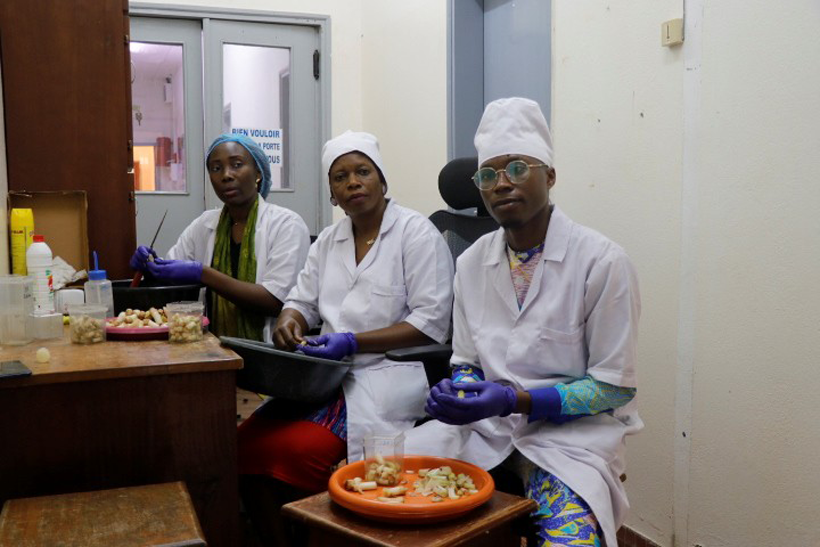
A research supervisor during a hands-on session with an intern in banana/plantain  vitro-plantelet production in the Tissue Culture Laboratory at IITA Cameroon.
A research supervisor during a hands-on session with an intern in banana/plantain vitro-plantelet production in the Tissue Culture Laboratory at IITA Cameroon.

As part of IITA’s mandate to contribute to research systems and build the capacity of the next generation or scientists, IITA-Cameroon trained 35 interns, from undergraduates to advanced researchers, in various hands-on programs that turn academic theory into tangible solutions to enhance local agrifood systems in the last one year.

This internship program addresses a growing need to bridge the gap between academic theory and the pressing, real-world challenges faced by farmers in the region. The initiative was designed following joint discussions between IITA-Cameroon and partner universities, who recognized that students need substantial practical experience in research, laboratory techniques, and field experimentation.
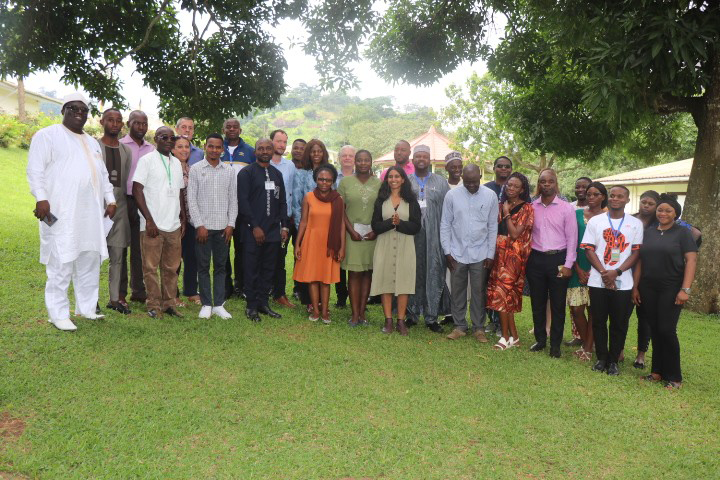
IITA Cameroon Country Representative, the interns with their supervisors.

As a result, IITA-CGIAR established collaborative training pathways with the University of Dschang, the University of Yaounde I, the University of Buea, the University of Bamenda, and the University of Ngaoundere. These internships are strategic platforms where students can apply classroom knowledge to real agricultural problems, benefiting from hands-on supervision by IITA-CGIAR scientists, and contribute meaningfully to ongoing research that supports national and regional agricultural development.

This initiative is part of IITA’s mission to build a food-secure future. As one of the IITA-CGIAR supervisors, Dr Abang Albert (Researcher in entomology and plant health), perfectly captures, “We are not just hosting students; we are co-creating solutions with the people who will implement them long after our projects are complete. This philosophy transforms a temporary placement into a vital apprenticeship for sustainable development.”

At the IITA-Cameroon research station, interns are paired with expert mentors to learn and tackle existing agricultural challenges in greenhouses and labs. The work is diverse and directly applicable, bridging the critical gap between the classroom and the community, providing a designed environment for real impact.

One of the interns, Geovarice Yetdjo who evaluated biopesticides, assessing their effectiveness, safety, and quality to ensure they deliver reliable pest control without harming people or the environment said, “Working at IITA-CGIAR opened my eyes to the real impact of agricultural science; I was contributing to research that could directly help farmers improve their yields and income.”

The interns’ contributions are embedded in projects that address urgent needs for farmers across the region. Their work also contributes to critical data needed to push innovation forward. Under the guidance of supervisors, interns are exploring sustainable pathways for key crops such as cocoa. Belmondo Riphin Assopdjeu, who investigated how foliar fertilizers and shading affect cocoa yields, explained: I gained skills, I never imagined, especially in practical data collection on the effect of foliar fertilizers and shading on the potential yield of cocoa plants in field experimentation and interpreting results. The support from the staff made me feel like part of a research team.”

IITA Agronomist and research supervisor Dr Pauline Mandah, highlighted the mutual benefit of such initiative: “mentoring these bright young minds is incredibly rewarding. They bring fresh energy and perspectives to our work, and we have a duty to equip them with the skills to lead our agricultural sector forward”.

A key focus at IITA is the development of eco-friendly farming practices, and interns play a central role in this effort. Charleine Grace Chendjou worked in the laboratory, studying a natural parasitic wasp as a biological control for destructive armyworms.

“Contributing to biological control research has strengthened my passion for agricultural innovation. Knowing that my work could help reduce pesticide use and protect crops in an environmentally safe way is incredibly motivating.” Her research contributes to the development of a toolkit of sustainable pest management solutions that are both effective and accessible to smallholder farmers.

Beyond technical skills, the IITA internship instills professionalism, confidence, and a problem-solving mindset. Experience often solidifies a student’s decision to build a career in agriculture, whether in research, entrepreneurship, or policy.

The impact of training 35 highly skilled young professionals in a single year creates a powerful ripple effect. They leave IITA not just with a certificate, but with a renewed determination to be agents of change in their communities and countries.

Contributed by Melanie Nyako Epse Akem and Ritha Marie Clarisse Bumwe.


Contributed by

Related news

No items found

Leave a Reply

Your email address will not be published. Required fields are marked *

Scroll to Top
Olaosebikan, Olamide

Olamide Deborah Nwanze is a Senior Research Associate specializing in gender mainstreaming research to inform participatory and inclusive breeding, variety development, and seed systems policies regarding root, tuber, and banana (RTB) crops in the International Institute of Tropical Agriculture Headquarters, Ibadan, Nigeria. She is a PhD candidate at the University of Ibadan and holds an MSc and B. Agric in Agricultural Extension and Rural Development. Olamide is a fellow of the African Women in Agricultural Research and Development – Gender Responsive Agricultural Systems Policy (AWARD-GRASP) and the Gender Responsive Researchers Equipped for Agricultural Transformation (GREAT). She seeks to apply her gender-mainstreaming learnings, gender-responsive research, and policy development, and review expertise to facilitate women, youth, children, and vulnerable social group’s access to and adoption of agricultural Innovations that guarantee food, nutrition, income, and livelihood security in Africa. Her current roles include mentoring research fellows, development of guides and training manuals, implementation and adaptation of gender frameworks and tools, value chain actors’ engagement as citizen science partners, policy review and redesign, data management, and analysis. Her current research explores mixed methods and participatory and interdisciplinary approaches to capture and highlight gender dynamics, needs, preferences, and challenges stakeholders face within the agricultural livelihood value chain to prioritize gender-inclusive strategies in breeding programs, policy design, and implementation.

At IITA, she contributes to the implementation of the CGIAR Accelerated Breeding Initiative and Genetic Innovation Programs; participatory and gender research within the NextGen CassavaHarvestPlusRTBFoods, and Tricot-ClimMob 1000Farms Projects; and gender knowledge communication via the G-LENS webinar series, video documentary, policy briefspublications, and blogs.


Recent publications

de Sousa, K., van Etten, J., Manners, R. Bello, A., Teeken, B., Olaosebikan, O., et al. 2024. The tricot approach: an agile framework for decentralized on-farm testing supported by citizen science. A retrospective. Agron. Sustain. Dev. 44, 8. https://doi.org/10.1007/s13593-023-00937-1

Madu, T., Onwuka, S., Nwafor, S., Onyemauwa, N., Ejechi, M., Ofoeze, M., Ukeje, B., Eluagu, C., Olaosebikan, O., Okoye, B., 2024. Gender-Inclusive Consumer Studies Improve Cassava Breeding in Nigeria in: Frontiers in Sociology, volume 9, number: 1224504, doi: 10.3389/fsoc.2024.1224504

Olaosebikan, O.; Bello, A.; Utoblo, O.; Okoye, B.; Olutegbe, N.; Garner, E.; Teeken, B.; Bryan, E.; Forsythe, L.; Cole, S.; Madu, T. 2023.  Stressors and Resilience within the Cassava Value Chain in Nigeria: Preferred Cassava Variety Traits and Response Strategies of Men and Women to Inform Breeding. Sustainability 15, 7837. https://doi.org/10.3390/su15107837

Okoye, B., Ofoeze, M., Ejechi, M., Onwuka, S., Nwafor, S., Onyemauwa, N., Ukeje, B., Eluagu, C., Obidiegwu, J.*, Olaosebikan, O., Madu, T.* 2023. Prioritizing preferred traits in the yam value chain in Nigeria: a gender situation analysis in: Frontiers in Sociology, volume 8, number: 1232626, pages 1 – 9, ISSN 2297-7775, 2023. https://www.frontiersin.org/articles/10.3389/fsoc.2023.1232626/full

Olaosebikan, O., Bello, A. A., de Sousa, K., Ndjouenkeu, R., Adesokan, M., Alamu, E. O., Agbona, A., van Etten, J., Kegah, F. N.*, Dufour, D., Bouniol, A., Teeken, B. 2023. Consumer acceptability of cassava gari-eba food products across cultural and environmental settings using the triadic comparison of technologies approach (tricot) in: Journal of the Science of Food and Agriculture,

Teeken, B., Olaosebikan, O., Bello, A. A., Madu, T.*, Cole, S. M. 2023. Qualitative assessment on the positionality and preferences of dyads in relation to cassava-related activities: working with tricot trial citizen scientists https://hdl.handle.net/10568/138326 Type: Manual

Bouniol, A., Ceballos, H., Bello, A. A., Teeken, B., Olaosebikan, O., Owoade, D., Agbona, A., Fotso Kuate, A., Madu, T.*, Okoye, B.*, Ofoeze, M.*, Nwafor, S.*, Onyemauwa, N.*, Adinsi, L.*, Forsythe, L., Dufour, D. 2023. Varietal impact on women’s labour, workload and related drudgery in processing root, tuber and banana crops: focus on cassava in sub-Saharan Africa in: Journal of the Science of Food and Agriculture, pages 1 – 25, ISSN 0022-5142,

Bello, A. A., Agbona, A., Olaosebikan, O., Edughaen, G., Dufour, D., Bouniol, A., Iluebbey, P., Ndjouenkeu, R.*, Rabbi, I. Y., Teeken, B. 2023. Genetic and environmental effects on processing productivity and food product yield: drudgery of women’s work in: Journal of the Science of Food and Agriculture, pages 1 – 32, ISSN 0022-5142, 5

Cavicchioli, M., Zimbiti, T., Teeken, B., Nwanze, D.O., Liani, M., Parkes, E. & Bello, A. 2023. IITA-Gender Responsive Breeding Training Report. Genetic Resources Center, IITA-HQ, Ibadan, 21-23 September, 2022. Ibadan, Nigeria: IITA, (34 p.).https://hdl.handle.net/10568/131368

Agbona, A. Peteti P., Teeken B., Olaosebikan O. Bello, A. A., Parkes, E., Rabbi, I. Y., Mueller, L., Egesi, C., Kulakow, P. 2022. Data Management in Multi-disciplinary African RTB Crop Breeding Programs. In: Williamson, H.F., Leonelli, S. (eds) Towards Responsible Plant Data Linkage: Data Challenges for Agricultural Research and Development. Springer, Cham. https://doi.org/10.1007/978-3-031-13276-6_5

Lora Forsythe, Pricilla Marimo, Sarah Mayanja, Olamide D. Olaosebikan, Esme Stuart, Bela Teeken, Benjamin Okoye, Tessy Madu, (2021). Cross-product Gender Analysis of RTBfoods Step 2 Gendered Food Mapping on RTB Products. Understanding the Drivers of Trait Preferences and the Development of Multi-user RTB Product Profiles, WP1. London, UK: RTBfoods Field Scientific Report, 30 p.

Teeken, B., Garner, E., Agbona, A., Balogun, I., Olaosebikan, O., Bello, A., Madu, T., Okoye, B., Egesi, C., Kulakow, P. and Tufan, H.A. 2021. Beyond “Women’s Traits”: Exploring How Gender, Social Difference, and Household Characteristics Influence Trait Preferences. Frontiers Sustainable Food Systems 5:740926. https://doi.org/10.3389/fsufs.2021.740926

Teeken, B., Agbona, A., Bello, A., Olaosebikan, O., Alamu, E., Adesokan, M., Awoyale, W., Madu, T., Okoye, B., Chijioke, U., Owoade, D., Okoro, M., Bouniol, A., Dufour, D., Hershey, C., Rabbi, I., Maziya‐Dixon, B., Egesi, C., Tufan, H. and Kulakow, P. (020. Understanding cassava varietal preferences through pairwise ranking of gari‐eba and fufu prepared by local farmer–processors. Int J Food Sci Technol. https://doi.org/10.1111/ijfs.14862

Bela Teeken, Olamide Olaosebikan, Ireti Balogun, Benjamin Okoye, Tessy Madu, Steven Cole, Abolore Bello, Elizabeth Parkes. (2020). Piloting the G+ customer and product profile tools for gender-responsive cassava breeding in Nigeria. Nigeria: International Institute of Tropical Agriculture (IITA). https://hdl.handle.net/20.500.11766/13000