
PASIC influences policies at national and local levels in Uganda
May 14, 2016
The Policy Action for Sustainable Intensification of Ugandan Cropping Systems (PASIC) project has successfully proven that evidence-based policy making is possible by influencing the development of agricultural policies at the national and district level in Uganda.
 PASIC is a four-year project supported by the Embassy of the Kingdom of Netherlands (EKN) in Uganda to strengthen the capacity of Uganda’s Ministry of Agriculture, Animal Industry and Fisheries (MAAIF) in setting up policies and actions for sustainable agricultural intensification to boost the production of smallholder farmers to improve their food security and livelihoods. The project is managed by IITA in partnership with MAAIF.
At the national level, working in collaboration with partners such as the United States Agency for International Development (USAID)’s Feed the Future and the World Bank, PASIC has supported Uganda’s agriculture ministry to transform the country’s extension system.
Currently different actors from public, private, and nongovernmental organizations have been providing advisory services to farmers independently often times giving contradicting information. Therefore, to provide policy direction, Uganda’s first ever National Agricultural Extension Policy and strategy was developed to provide long-term strategic direction for agricultural extension services.
The aim of the policy is to transform extension into a well-coordinated, harmonized, regulated pluralistic service with multiple providers addressing diverse needs while the strategy outlines a plan to improve the efficiency and effectiveness of the extension system through the delivery of information, best practices, and other technologies to an array of beneficiaries.
“This strategy is intended to effectively and efficiently provide agricultural extension services, to support sustained progression of smallholder farmers, from subsistence agriculture to market-oriented and commercial farming,” noted Byarugaba Beatrice, the Agriculture Director of the Directorate of Agricultural Extension Services, in her opening remarks during the final validation workshop of the extension strategy on 12 April.
PASIC provided additional funds to support the development of the policy. “We specifically supported the consultants that developed the monitoring and evaluation (M&E) matrix and the strategy together with Feed the Future,” said Odiirah Nansamba, PASIC Communication Officer.
Supporting policies at district level
To boost the production of rice and potato, the project further conducted and shared the results of various studies on the production and marketing of the two crops in six districts in Uganda to identify gaps in their value chains and spur investment on then. The Districts were Kanungu, Kabale, and Kisoro for irish potato production and, Tororo, Bugiri, and Butaleja for rice production.
Taking a systems approach to policy action, the PASIC studies included agronomic diagnostics, socioeconomic household surveys, and analysis of value chains, policies, and institutions. From the study, access to quality seed for potato was identified as a major challenge in south western Uganda. It was found that, although the farmers were growing improved varieties, they seldom used good quality seeds because they recycle their own seeds up to more than four times.
The study also established that the potato varieties grown by the farmers were not suited for the potato chips industry and hence the fast food chains such as Kentucky Fried Chicken, Java House, and Café Javas resorted to importing frozen potato chips.
In the rice sector, the yields were found to be low due to lack of application of good agronomic practices and inability to meet the amounts required for milling machines to operate at required capacity.
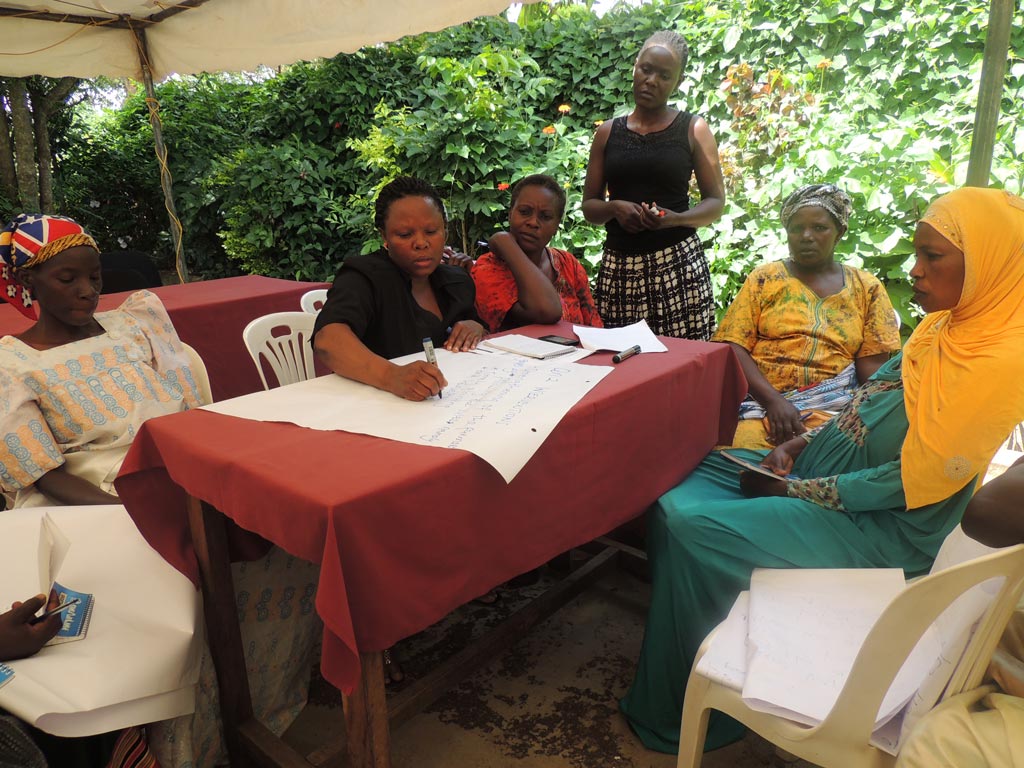
The findings were shared in feedback workshops in south-western Uganda for potato and eastern Uganda for lowland rice production. They brought together actors along the value chains of the two crops including farmers, and the district leadership.
Interventions and action points were developed to integrate the study findings into the Districts’ five-year development plans which will go into the country’s Agricultural Sector Strategic Plan for 2015/16-2019/20.
The plans have been presented for approval to the respective district councils by the District Production Officers of the Agriculture Ministry and in three of the six districts (Kanungu, Kabale and Butaleja) they have been approved.
PASIC is a four-year project supported by the Embassy of the Kingdom of Netherlands (EKN) in Uganda to strengthen the capacity of Uganda’s Ministry of Agriculture, Animal Industry and Fisheries (MAAIF) in setting up policies and actions for sustainable agricultural intensification to boost the production of smallholder farmers to improve their food security and livelihoods. The project is managed by IITA in partnership with MAAIF.
At the national level, working in collaboration with partners such as the United States Agency for International Development (USAID)’s Feed the Future and the World Bank, PASIC has supported Uganda’s agriculture ministry to transform the country’s extension system.
Currently different actors from public, private, and nongovernmental organizations have been providing advisory services to farmers independently often times giving contradicting information. Therefore, to provide policy direction, Uganda’s first ever National Agricultural Extension Policy and strategy was developed to provide long-term strategic direction for agricultural extension services.
The aim of the policy is to transform extension into a well-coordinated, harmonized, regulated pluralistic service with multiple providers addressing diverse needs while the strategy outlines a plan to improve the efficiency and effectiveness of the extension system through the delivery of information, best practices, and other technologies to an array of beneficiaries.
“This strategy is intended to effectively and efficiently provide agricultural extension services, to support sustained progression of smallholder farmers, from subsistence agriculture to market-oriented and commercial farming,” noted Byarugaba Beatrice, the Agriculture Director of the Directorate of Agricultural Extension Services, in her opening remarks during the final validation workshop of the extension strategy on 12 April.
PASIC provided additional funds to support the development of the policy. “We specifically supported the consultants that developed the monitoring and evaluation (M&E) matrix and the strategy together with Feed the Future,” said Odiirah Nansamba, PASIC Communication Officer.
Supporting policies at district level
To boost the production of rice and potato, the project further conducted and shared the results of various studies on the production and marketing of the two crops in six districts in Uganda to identify gaps in their value chains and spur investment on then. The Districts were Kanungu, Kabale, and Kisoro for irish potato production and, Tororo, Bugiri, and Butaleja for rice production.
Taking a systems approach to policy action, the PASIC studies included agronomic diagnostics, socioeconomic household surveys, and analysis of value chains, policies, and institutions. From the study, access to quality seed for potato was identified as a major challenge in south western Uganda. It was found that, although the farmers were growing improved varieties, they seldom used good quality seeds because they recycle their own seeds up to more than four times.
The study also established that the potato varieties grown by the farmers were not suited for the potato chips industry and hence the fast food chains such as Kentucky Fried Chicken, Java House, and Café Javas resorted to importing frozen potato chips.
In the rice sector, the yields were found to be low due to lack of application of good agronomic practices and inability to meet the amounts required for milling machines to operate at required capacity.
The findings were shared in feedback workshops in south-western Uganda for potato and eastern Uganda for lowland rice production. They brought together actors along the value chains of the two crops including farmers, and the district leadership.
Interventions and action points were developed to integrate the study findings into the Districts’ five-year development plans which will go into the country’s Agricultural Sector Strategic Plan for 2015/16-2019/20.
The plans have been presented for approval to the respective district councils by the District Production Officers of the Agriculture Ministry and in three of the six districts (Kanungu, Kabale and Butaleja) they have been approved.
A group of women in group work during one of the feedback workshops.
Contributed by
Recent stories
No items found