
“I am very happy because I know my harvest will be plenty this year. You can tell from the way the cassava plants look healthy. We just did ratooning on it. I gave it to some members of our cooperative, Ashina Women Production Multi-Purpose Cooperative Society, to go and cultivate as well. Still, by the next time I do the ratooning, I intend to sell the stems instead.”
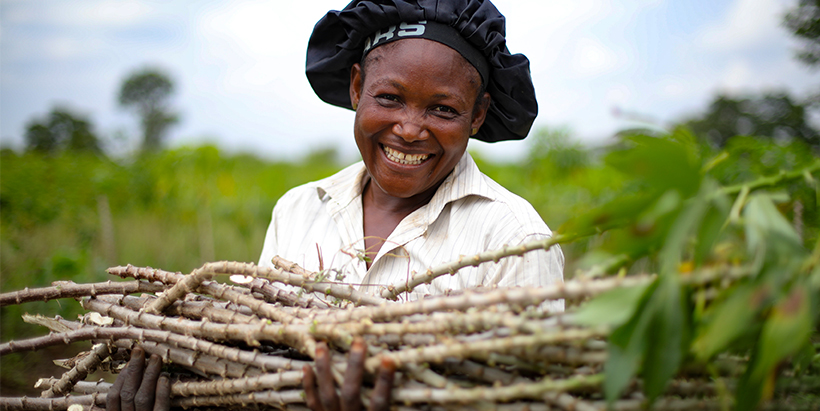
Those are the words of Francisca Ajav, who owns a cassava demonstration plot in Aliade, Gwer East Local Government Area (LGA) of Benue State. The IITA’s Zero Hunger Initiative (IITA-ZHI) helped set up the demo plot to give farmers in her cluster practical knowledge on the best practices in cassava cultivation. The 0.25-hectare demo plot has been cultivated with TME 419 and Vitamin A varieties of cassava and is used by the lead Extension Agent in the community Moses Unja to disseminate knowledge.
Another farmer, Ortserga Seember, revealed that the practical training she received had helped her farm. According to her, weeds were previously competing for nutrients and space with her cassava because she did not know the right approach to weed management. However, her fortunes changed after engaging with Unja and having first-hand knowledge of the demo plot. She has adopted the six steps to weed management, and her farm is quite different from what it used to be.
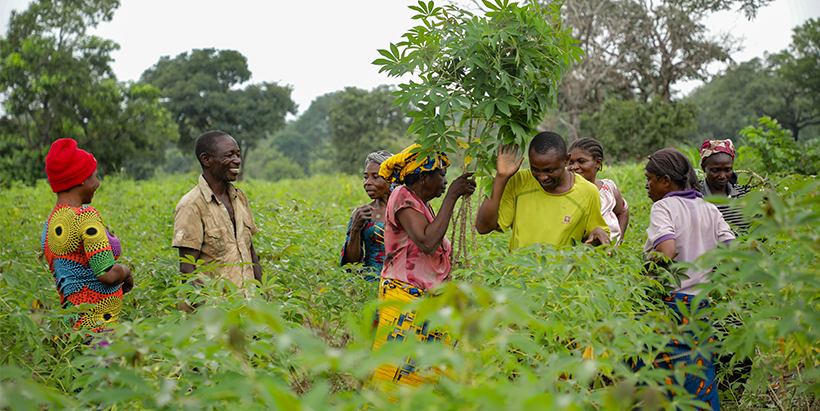
Chiangi Terseer John is a member of a knapsack gang. He recently got practical knowledge on ratooning, thanks to the demonstration plot in Aliade. The lead extension agent also trained him on proper calibration and he recently acquired ratooning skills, which he uses to earn a living. According to him, people pay him to ratoon and spray because they know he is equipped with that knowledge. He says he now knows the proper length of stems to be bundled as well as the right length to cut for planting.
Unja, an extension agent in Aliade, reemphasizes the importance of the demo plot. He disclosed that the plot had demystified previously held beliefs and doubts about adopting and adhering to the six steps in cassava cultivation as the farmers now have first-hand knowledge of its advantages.
 The IITA-ZHI team, led by Monitoring, Evaluation, and Learning Manager Oyewale Abioye, also visited a demonstration plot in the VCDP-assisted Kyogen Cluster in Kwande LGA, Benue State. They held an interactive session with Mbakur Multi-Purpose Cooperative Society members, custodians of the demo plot. The Chairman of the cluster, Elder Denen Gregory, disclosed that the demo plot had been an eye opener because of the practicality involved. He disclosed that he is now aware that one can ratoon a cassava farm twice before harvest enabling them to have more seeds to replant or sell.
The VCDP Extension Agent, Hellen Ijeh, who is now passing on the knowledge, expressed delight at the level of adoption by the farmers. She added that the farmers had been taught the nutritional benefits, particularly of Vitamin A Cassava, and they are keying into it. Ijeh appreciated IITA-ZHI for their efforts, particularly in the area of value addition, as she is expecting some trainers who are attending a training of trainers workshop on nutrition and agripreneurship organized by IITA-ZHI. She expressed hope that after the training and the knowledge has been stepped down, her women farmers will be able to make products like cakes, moin-moin, pap, and other snacks to earn money and complement the nutritional needs of their families.
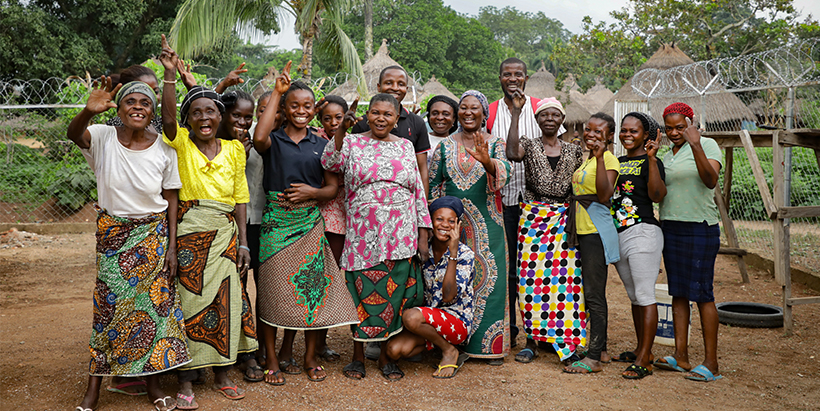
Giving justification for the demonstration plots, IITA-ZHI Training Manager Bolanle Olorode disclosed that extension agents lead the plots on farmers’ fields. This is to ensure that the agents can lead these research efforts independently and be convinced of the need to transfer this knowledge and technology to farmers. He added that the demo plots are appropriate avenues not only to practicalize best practices in cultivation like the six steps but also to test technologies like herbicide calculators, calibrators, and area calculators and how it influences input cost, yield, and profitability. The visit also allowed the team to ratoon and distribute improved cassava varieties like the vitamin A and TME 419 to farmers in the hope that they would give the seeds to other farmers upon cultivation.
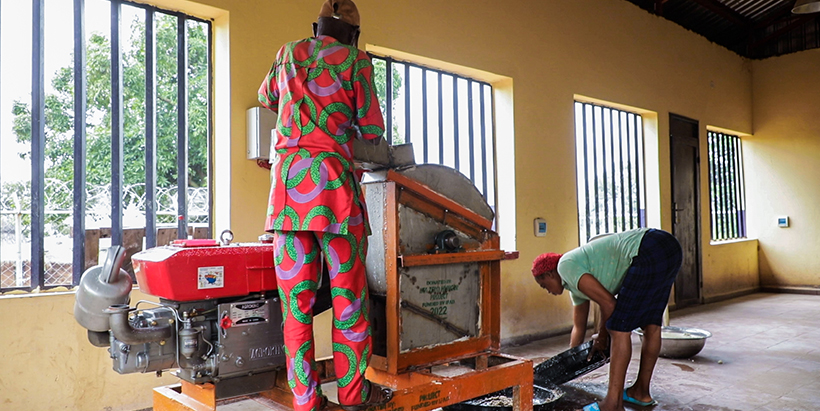
The women at the processing center in Kwande LGA, supported by the Wet Hammer mill donated by the project, excitedly demonstrated how they had been using the cassava and cassava peel processing equipment.
Contributed by the Zero Hunger Project team
Contributed by
Recent stories