
PROSSIVA’s transition from research to reach: Scaling seed innovations for impact in Africa
February 17, 2026
Vegetatively propagated crops (VPCs) such as cassava, yam, banana, and plantain are central to food security, livelihoods, and economic growth across Africa. Yet, limited access to quality, disease-free planting material continues to constrain productivity, profitability, and value chain competitiveness for millions of farmers. Inefficient seed delivery systems and slow adoption of improved varieties remain persistent challenges.
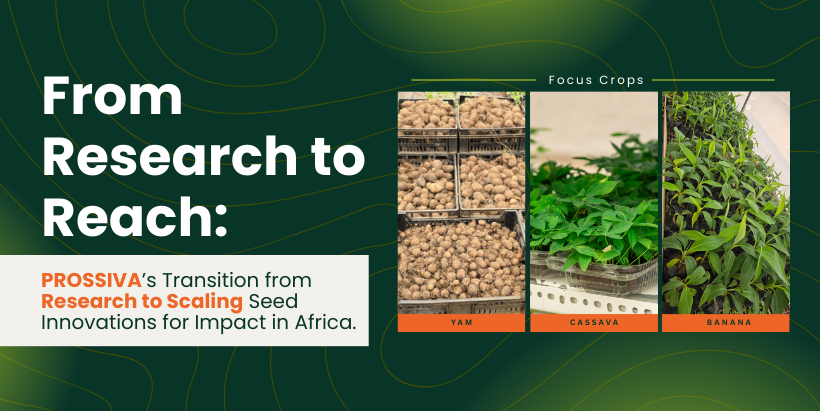 The PROSSIVA project was designed to address these gaps by strengthening seed systems for VPCs. During its research phase, the project focused primarily on innovative research and validation of propagation technologies, marketing strategies, and institutional arrangements tailored to the unique challenges of vegetatively propagated crops. This work was designed to address long-standing constraints, such as disease accumulation, low multiplication rates, and inconsistent quality of planting material.
Through this process, the project generated strong evidence on effective and scalable propagation technologies, underpinning functional seed value chains capable of delivering healthy, high-quality planting material to millions of farmers. These achievements demonstrated that effective solutions exist and can deliver results when aligned with market demand, institutional support, and farmer needs.
The PROSSIVA project was designed to address these gaps by strengthening seed systems for VPCs. During its research phase, the project focused primarily on innovative research and validation of propagation technologies, marketing strategies, and institutional arrangements tailored to the unique challenges of vegetatively propagated crops. This work was designed to address long-standing constraints, such as disease accumulation, low multiplication rates, and inconsistent quality of planting material.
Through this process, the project generated strong evidence on effective and scalable propagation technologies, underpinning functional seed value chains capable of delivering healthy, high-quality planting material to millions of farmers. These achievements demonstrated that effective solutions exist and can deliver results when aligned with market demand, institutional support, and farmer needs.
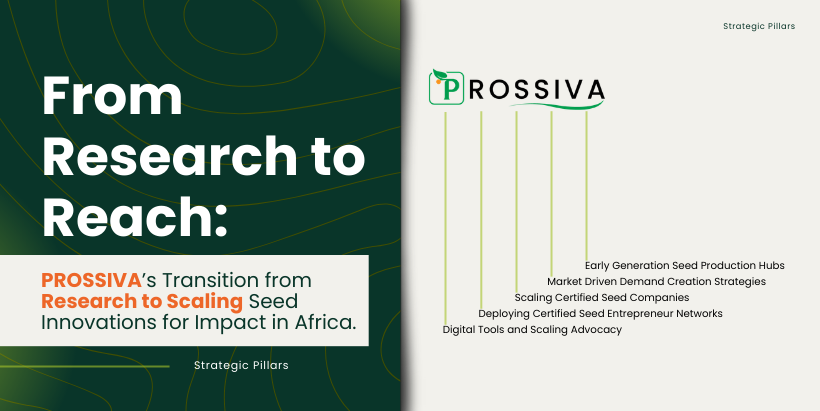 With strong evidence in place, the project is now intentionally shifting its focus toward scaling. The next phase of PROSSIVA is therefore centered on moving proven technologies from pilot settings into broader use, thereby ensuring they reach farmers, seed enterprises, and markets sustainably.
This deliberate transition is being formally launched at the 2026 PROSSIVA Annual Review and Planning Meeting, where partners are aligning on a coordinated roadmap to scale impact across focus countries.
Over the next two years, PROSSIVA will concentrate on two flagship scaling efforts:
With strong evidence in place, the project is now intentionally shifting its focus toward scaling. The next phase of PROSSIVA is therefore centered on moving proven technologies from pilot settings into broader use, thereby ensuring they reach farmers, seed enterprises, and markets sustainably.
This deliberate transition is being formally launched at the 2026 PROSSIVA Annual Review and Planning Meeting, where partners are aligning on a coordinated roadmap to scale impact across focus countries.
Over the next two years, PROSSIVA will concentrate on two flagship scaling efforts:
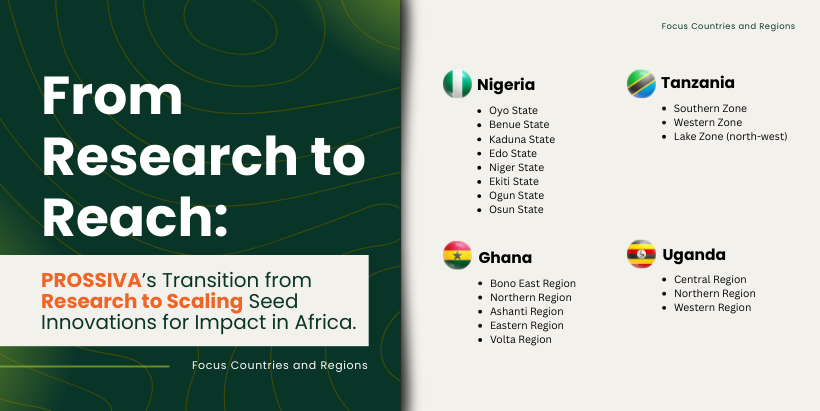 To support this focus, PROSSIVA has refined its scope to concentrate resources where the potential for impact is greatest. This includes prioritizing specific crops, countries, and high-potential regions, as well as strengthening partnerships that align with comparative advantage and the scaling agenda. This strategic focus enables deeper engagement, stronger coordination, and more efficient delivery of tangible results.
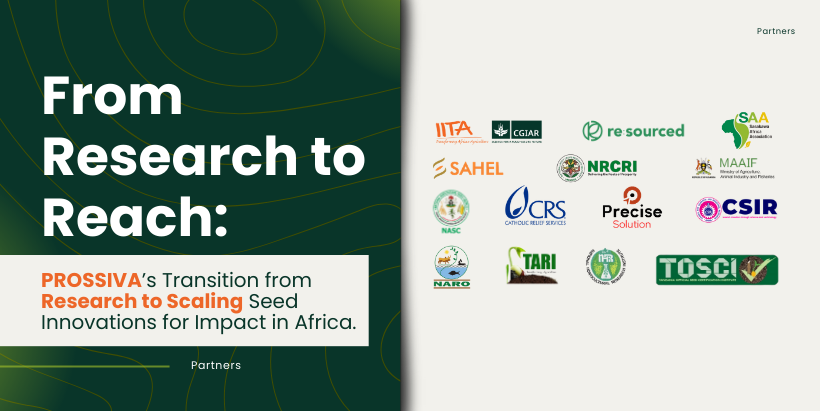 As PROSSIVA transitions, it aims to create vibrant seed value chains that deliver measurable reach to millions of smallholder farmers and lay the foundation for continued scaling beyond the project’s timeframe.
From research to reach, PROSSIVA’s next chapter is about scale, sustainability, and impact.
Contributed by Isaac Ajayi
As PROSSIVA transitions, it aims to create vibrant seed value chains that deliver measurable reach to millions of smallholder farmers and lay the foundation for continued scaling beyond the project’s timeframe.
From research to reach, PROSSIVA’s next chapter is about scale, sustainability, and impact.
Contributed by Isaac Ajayi
The PROSSIVA project was designed to address these gaps by strengthening seed systems for VPCs. During its research phase, the project focused primarily on innovative research and validation of propagation technologies, marketing strategies, and institutional arrangements tailored to the unique challenges of vegetatively propagated crops. This work was designed to address long-standing constraints, such as disease accumulation, low multiplication rates, and inconsistent quality of planting material.
Through this process, the project generated strong evidence on effective and scalable propagation technologies, underpinning functional seed value chains capable of delivering healthy, high-quality planting material to millions of farmers. These achievements demonstrated that effective solutions exist and can deliver results when aligned with market demand, institutional support, and farmer needs.
With strong evidence in place, the project is now intentionally shifting its focus toward scaling. The next phase of PROSSIVA is therefore centered on moving proven technologies from pilot settings into broader use, thereby ensuring they reach farmers, seed enterprises, and markets sustainably.
This deliberate transition is being formally launched at the 2026 PROSSIVA Annual Review and Planning Meeting, where partners are aligning on a coordinated roadmap to scale impact across focus countries.
Over the next two years, PROSSIVA will concentrate on two flagship scaling efforts:
- Scaling yam seed innovations to strengthen food security in Nigeria and Ghana.
- Scaling improved cassava seed innovations to support industrial growth in Nigeria, while continuing targeted scaling of improved cassava varieties in Tanzania through established seed entrepreneur networks.
To support this focus, PROSSIVA has refined its scope to concentrate resources where the potential for impact is greatest. This includes prioritizing specific crops, countries, and high-potential regions, as well as strengthening partnerships that align with comparative advantage and the scaling agenda. This strategic focus enables deeper engagement, stronger coordination, and more efficient delivery of tangible results.
As PROSSIVA transitions, it aims to create vibrant seed value chains that deliver measurable reach to millions of smallholder farmers and lay the foundation for continued scaling beyond the project’s timeframe.
From research to reach, PROSSIVA’s next chapter is about scale, sustainability, and impact.
Contributed by Isaac Ajayi
Contributed by
Recent stories
No items found