
As the re-planted tree seedlings continue to grow in the degraded Olokemeji Forest Reserve, the IITA Forest Center recently conducted a fire mitigation and prevention training and practical session for residents of the host community, Olokemeji. The reforestation project staff residing and working in Olokemeji also participated in the demonstration.
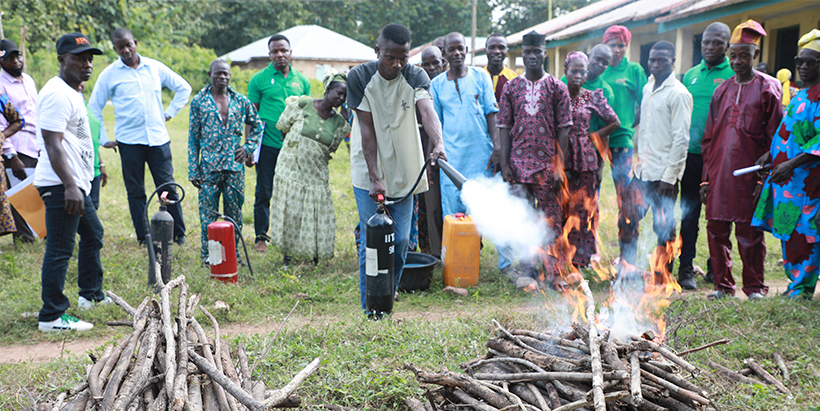
During dry seasons, fire outbreaks are common where untended fire sources can grow wild, consuming entire fields, properties, and lives. According to WHO, “Wildfires and volcanic activities affected 6.2 million people between 1998 and 2017 with 2400 attributable deaths worldwide from suffocation, injuries, and burns, but the size and frequency of wildfires are growing due to climate change.”
The IITA Security Unit carried out the fire sensitization training with Fire Safety Officer Sola Ayinde anchoring the session while Olusoji Babatunde interpreted for him. The Baale of Olokemeji’s representative, Akinyinbola Maruff, was among several dignitaries, including the Ogun State Ministry of Forestry representatives. The training took place at Methodist Primary School, Olokemeji.
The Ministry of Forestry Representative, Oluwaseun Alli, urged the community members to stand together and take responsibility for the project. He highlighted the possible causes of fire outbreaks—carelessly dropping smoked cigarettes and burning bush for land clearing. He asked the whole community to protect the planted seedlings on the project land and their various farmlands.
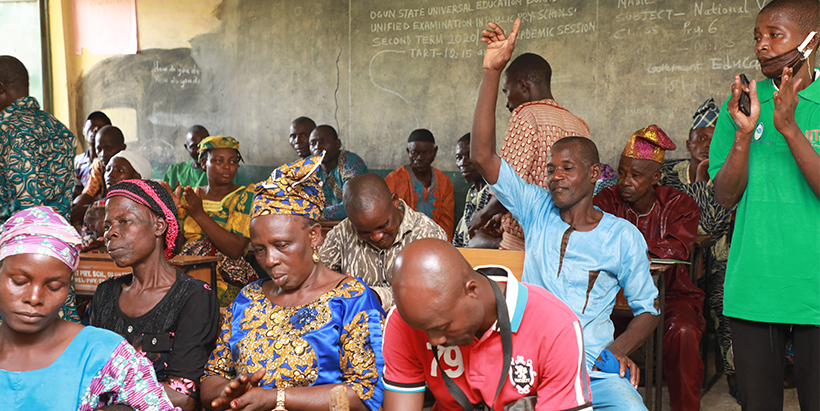
Ayinde reiterated the causes of fire outbreaks, the different factors that fuel fire spread, and the different ways to put out various degrees of fire. He demonstrated how to put out fires safely using a fire extinguisher.
The Baale’s representative Maruff acknowledged the progress Olokemeji has enjoyed since the project’s inception in the community. He gave assurances of the community’s continued support of the project.
The Chief Ranger of Olokemeji, Paul Awen, congratulated the community’s residents for enjoying the benefits of the reforestation project’s progress already. He encouraged farmers to report to the rangers if they see anyone igniting a fire to burn up fields. He urged them to carefully burn their weeds after land clearing and ensure they do not leave their fields unattended while their gathered weeds are still burning. They must completely put out any intentionally lit fire in their fields.
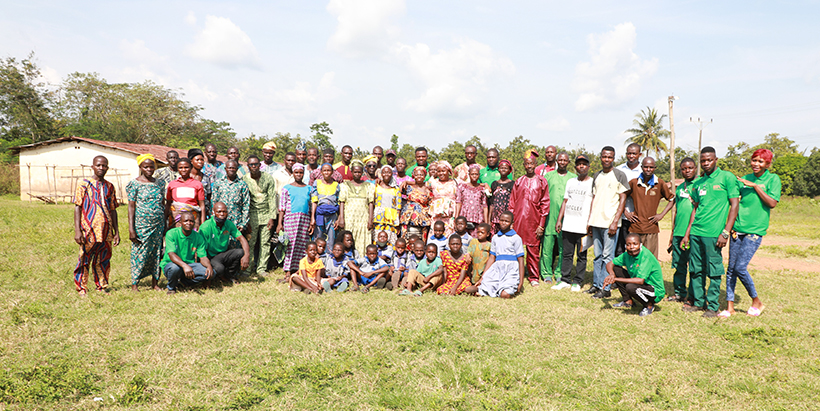
Forty-four community members (33 males and 11 females) participated in the training and gave feedback. One respondent, Lamidi Nojim, identified cattle herders as one of the community’s leading causes of fire outbreaks. He said they do so to cause new sprouts to come up to feed their cattle. Another participant, Ijaduola Adelani, appealed for the project to employ security officers to monitor the area at night and help spot possible fire outbreaks for rapid response and quick mitigation.
Other respondents expressed their satisfaction with the training. They acknowledged the project’s impact in the community through employment and other opportunities bringing development and progress to Olokemeji.
After the training, the project donated three fire extinguishers to the community to respond rapidly to fire outbreaks.
Contributed by
Recent stories