
To strengthen food systems on the continent, CGIAR Regional Director for Africa and IITA Director General Dr Simeon Ehui led a delegation from IITA on a working visit to Sierra Leone to discuss collaborative efforts with the government.
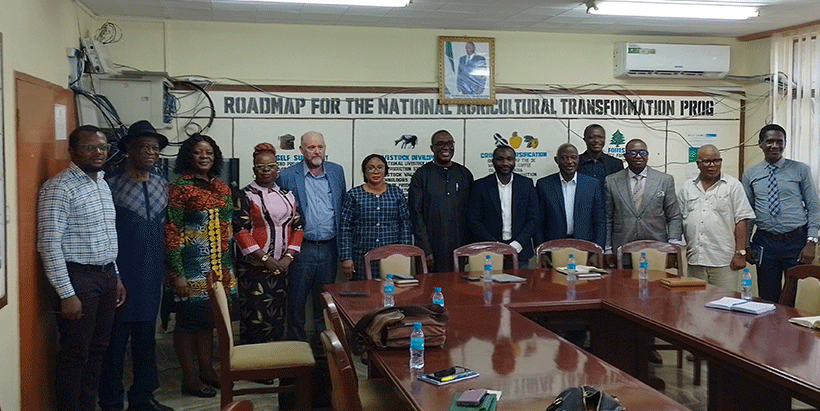
While receiving the delegation in his office in the nation’s capital, Sierra Leone Minister of Agriculture Honorable Henry Musa Kpaka appreciated the IITA team and commended the amazing work the Institute has been doing. “Your visit is a reflection of the commendable work you are doing and the confidence you have in the government of Sierra Leone to deliver on the agricultural transformation agenda,” he said.
During the visit, Dr Ehui, in the company of IITA Director for Development and Delivery Alfred Dixon and IITA West Africa Hub Director Michael Abberton, said IITA and CGIAR are aware of the government’s commitment to changing the agricultural landscape.
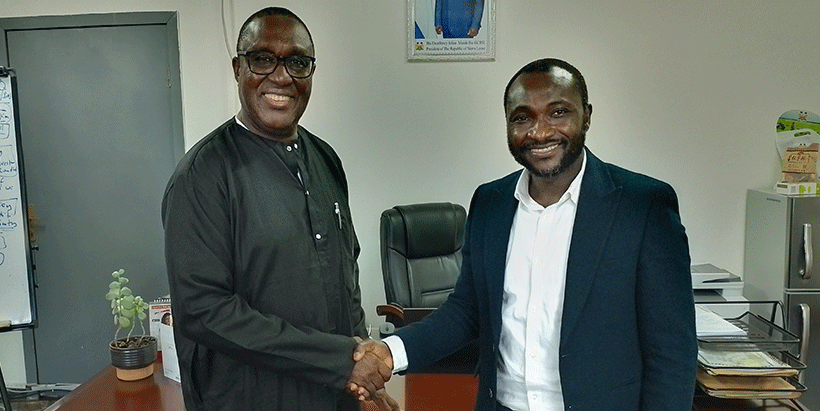
“We are hopeful that working together and providing the required support would go a long way to bring the desired change that we envision,” he added.
Speaking on the need to leverage strategic collaborations in Sierra Leone and across the continent towards changing the food systems’ narrative, Dr Ehui said collaborative efforts would target strengthening food systems while providing the needed technical support to drive the country’s agricultural transformation agenda.
On trajectories for boosting crop production in the coming months, Hon Kpaka revealed that in line with President Bio’s agricultural mandate, there are plans to provide mechanization, irrigation, and processing solutions to aid the agriculture sector.
Dixon highlighted the long history of IITA’s relationship with Sierra Leone and how it has contributed significantly to the country’s food systems. He said the Institute is ready to work closely with the Ministry of Agriculture to produce tangible deliverables that will impact the livelihoods of farmers in the country.
Following the meeting, the Ministry of Agriculture will be signing an MoU with IITA, which would include the framework for an array of plans and activities, including the adoption of hybrid seeds and improved varieties.
Contributed by Timilehin Osunde
Contributed by
Recent stories