
Small tends to be underrated. Yet, it can be tremendously successful. Initially skeptical, market actors have now embraced the village-based advisor (VBA)/small-pack approach in their marketing strategy.
Seed systems in the Great Lakes Region are still nascent and characterized by a broad diversity in actors, and in production and distribution models. These models span from government-led production and distribution in Burundi to a private sector-led and government-enabled approach in Rwanda, while DRC relies heavily on imports and informal systems. Small companies and cooperatives involved in seed production – albeit with limited marketing and distribution operations – are common across all three countries. Indeed, most of them sell their produce in bulk to the government, relief agencies, and non-governmental organizations. Consequently, farmers remain largely unaware of new technologies, and innovative products are not always locally available when needed.
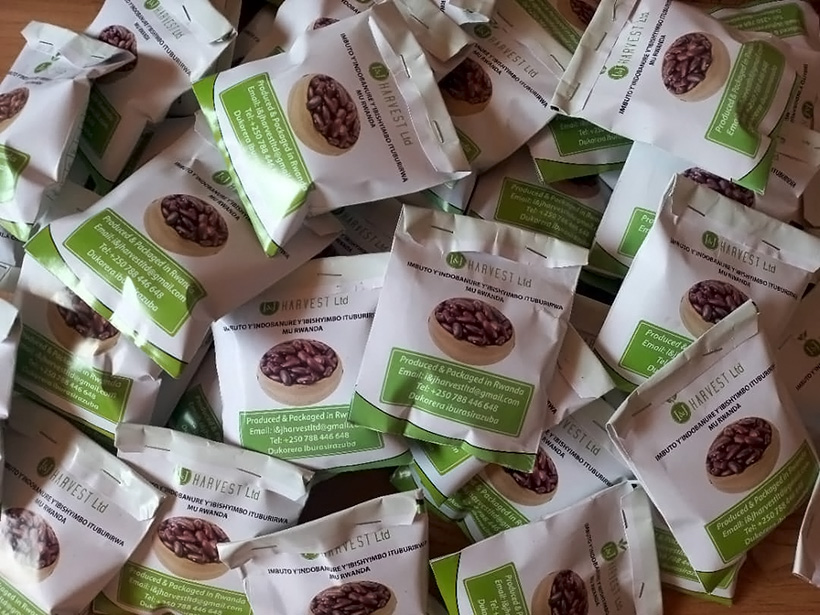
In light of this, the Great Lakes Accelerated Innovation Delivery Initiative Rapid Delivery Hub (AID-I GLR) introduced the ‘village-based advisor/small pack’ approach. In this approach, as an integral part of their promotional activities for market expansion, seed companies or producers and other selected input providers run mother demonstration plots and package inputs (e.g., seeds, veterinary products, fertilizers, and soil amendments) in small packs for broader and more proactive distribution to smallholder farmers, along with advisory information. The mother demonstration plot, managed by a village-based advisor (usually a lead farmer), serves for learning purposes, demonstrating the new technology’s benefits and the technical know-how to ensure success. The small pack is provided to farmers learning the ‘how-to’ at the mother demonstration plot, which they can then practice and test on their farms.
In Burundi, Rwanda, and the Democratic Republic of Congo (DRC), AID-I GLR trained seed companies on the small pack approach and supported them in its implementation. This was achieved by delivering certified, climate-smart, and clean seed varieties in small packs of 100 grams to farmers, accompanied by training and information kits on good agronomic practices.
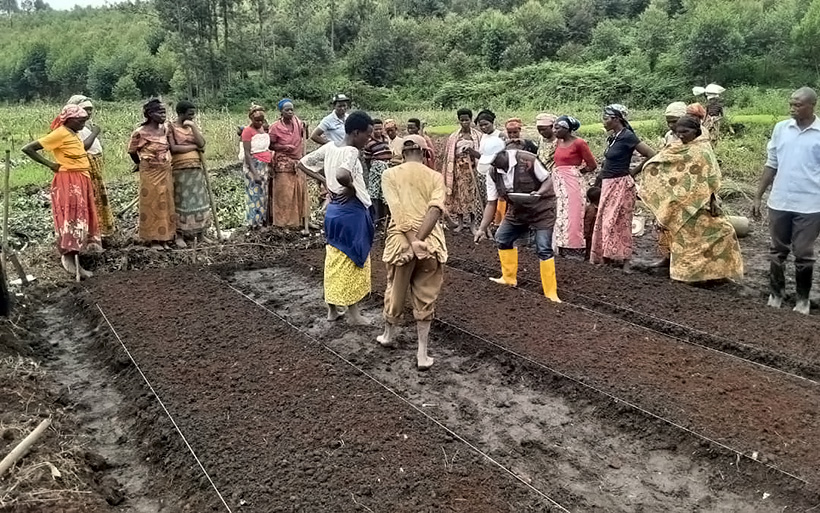
Initially, there was resistance to the approach from nearly all quarters – seed companies, farmers, and, in some cases, local authorities. Their main concern was that the quantity would not demonstrate substantial effectiveness in farmers’ fields. However, following a training and experience-sharing session facilitated by Seed Systems Group through Farm Input Promotions Africa (SSG/FIPS-Africa) in Nairobi, extension managers successfully conveyed the approach’s benefits to their leaders.
After just a single agriculture season of implementation, there have already been positive outcomes, leading to increased interest and adoption by market actors, farmers, and the public. The approach has also proven successful in giving farmers a firsthand experience of seed performance in their fields.
Market actors have widely embraced the small-pack approach. During the previous season (2024A), seed companies played a significant role in increasing the distribution of small packs to farmers. In Rwanda, seed companies contributed nearly half (42%) of the total number of small packs distributed. This was a direct market response: ever market-conscious, seed companies had noticed the growing demand for small packs and decided to supplement the quantities provided by AID-I GLR. For instance, I&J Harvest produced an additional 6,500 kilos of high-iron bean seeds on top of the initial 7,000 kilos provided by AID-I GLR. Similarly, KGB Seed Company supplemented the initial 6,000 kilos of hybrid maize seed with an additional 5,500 kilos.
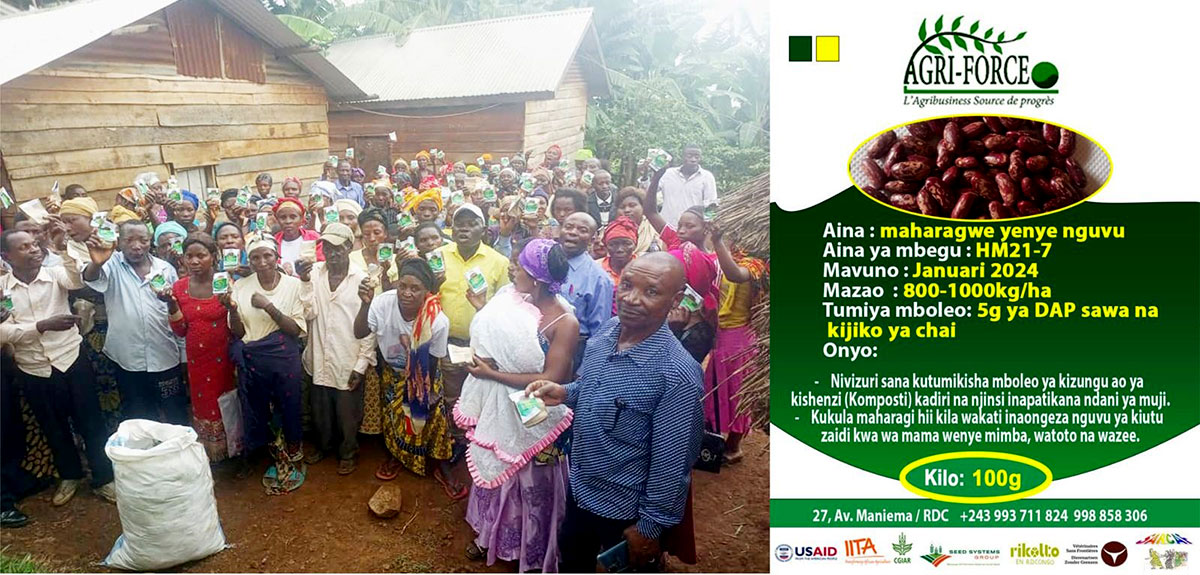
In DRC, AgriForce seed company has also supplemented the small packs delivered to farmers. “Thanks to this integration, in the 2023B season, we produced and distributed approximately 26,000 seed packs of beans. Demand increased in the 2024A season, leading us to produce up to 30,000 small packs as part of the project,” revealed Herman Mutabataba, AgriForce CEO. He added, “We also produced an extra 16,000 small packs, totaling 46,000 small packs of high-iron beans. Furthermore, a total of 81,600 small packs and 50,000 maize seeds were distributed respectively in the 2024 A and B seasons.”
What are market actors and farmers saying about the small-pack approach?
Jacques Tuyishimire, Managing Director of Holland Green Tech, a vegetable seed company in Rwanda, emphasized the shift in their marketing strategy to integrate small packs, with encouraging feedback from farmers and an expanded market reach.
“We were accustomed to packaging vegetable seeds for larger farmers, not small packs. This project opened doors to smallholder farmers, providing a new avenue to expand our business and cater to a broader clientele with small packs,” he said. “The positive feedback from farmers during the small pack testing in phase 1 has inspired us to adapt and revise our marketing strategy. We are now actively planning to include small packs in our product line to ensure our products reach a diverse market.”
Richard Hatungimana, the CEO of Coop Eden, a farmer cooperative and seed company in Burundi, spoke of the company’s eye-opening transformative experience with the small-pack approach. He explained, “I had limited knowledge of the small pack approach when it was introduced. I thought the project brought money to buy seeds for distribution as charity to vulnerable households in communities.”
He further explained that he had seized an opportunity to train in Kenya through SSG/FIPS-Africa, “where we were instructed on implementing the VBA/small-pack approach.”
After the training, he said, “I gained a profound understanding of the small-pack technology used by the Kugwiza project, for instance the nickname for AID-I GLR in Kirundi, means ‘to increase.’ It’s not just about distribution but equipping me with innovative approaches to market my seeds to increase demand. Farmers to whom I provided small seed packs of 100 grams of improved high-iron beans appreciated the yields, harvesting between 2 and 3 kilos. Most of them returned to order more seeds due to their satisfaction. As a result, I’ve increased sales by 1.5% through the small-pack approach.
We have integrated the small-pack approach into our marketing system. Indeed, when a customer comes to buy any quantity of one or two varieties, we offer them one or two small packs of improved varieties as an opportunity to test the new varieties. This will allow them to compare yields and decide which variety to buy in the future.”
Herman Mutabataba adds, “In my opinion, this approach is effective because it allows farmers to form personal opinions on the seeds. Additionally, it enables us to reach a large number of Farmers quickly. Information spreads fast and in real time. The small-pack approach is gradually being integrated into our marketing strategy, where sales agents are the primary link between farmers and AgriForce.”
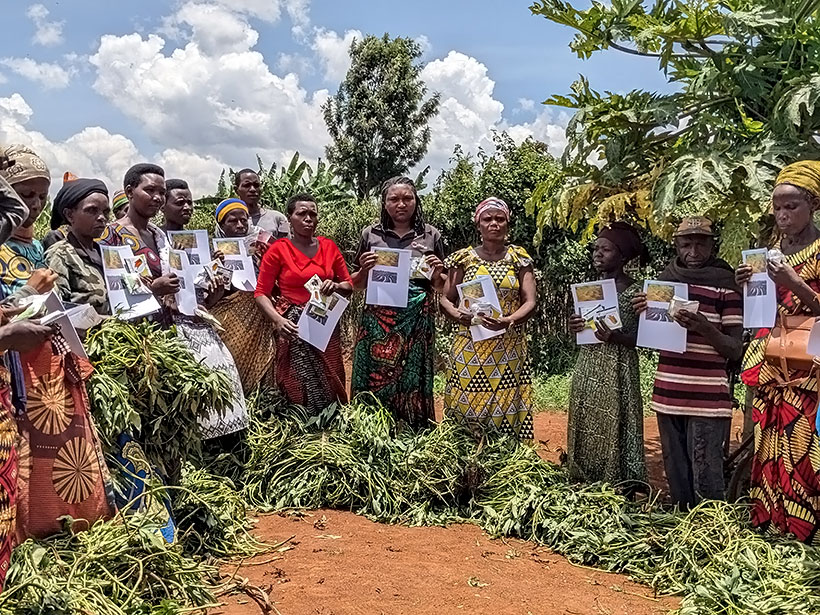
How have market actors responded to farmers’ demands after witnessing the benefits of the technologies?
The adoption of improved inputs among farmers has been significantly stimulated by continuous exposure to new agricultural technologies in the two previous seasons.
The positive response from farmers is amply reflected in increased orders for seeds, leading to heightened engagement with agro-dealers as an integral part of the marketing strategy. This strategic collaboration ensures the availability of improved seeds at input shops, thereby enhancing farmers’ accessibility.
Through effective links and engagement in Rwanda, more than 30 new agro-dealers have been successfully enlisted by seed companies and input suppliers in the areas where farmers were exposed to new technologies during the last season. This collaboration has produced 59.6 tons of improved seed and 2,965 tons of lime for agro-dealers, who have delivered them to farmers for planting during the 2024A season.
Furthermore, the impact of exposing more than 300,000 individual farmers in Rwanda to improved seeds of potatoes, high-iron beans, maize, and orange-fleshed sweet potatoes (OFSPs) is evident. As a direct result of this exposure, these farmers have collectively placed orders for more than 515 tons of seeds of high-iron beans, vegetables, hybrid maize, and potatoes, as well as up to 500,000 cuttings of OFSPs and 284 tons of lime. The combined market value of all these is US$ 769,988. This reflects a substantial increase in demand and market share and convincingly demonstrates the initiative’s success and sustainability.
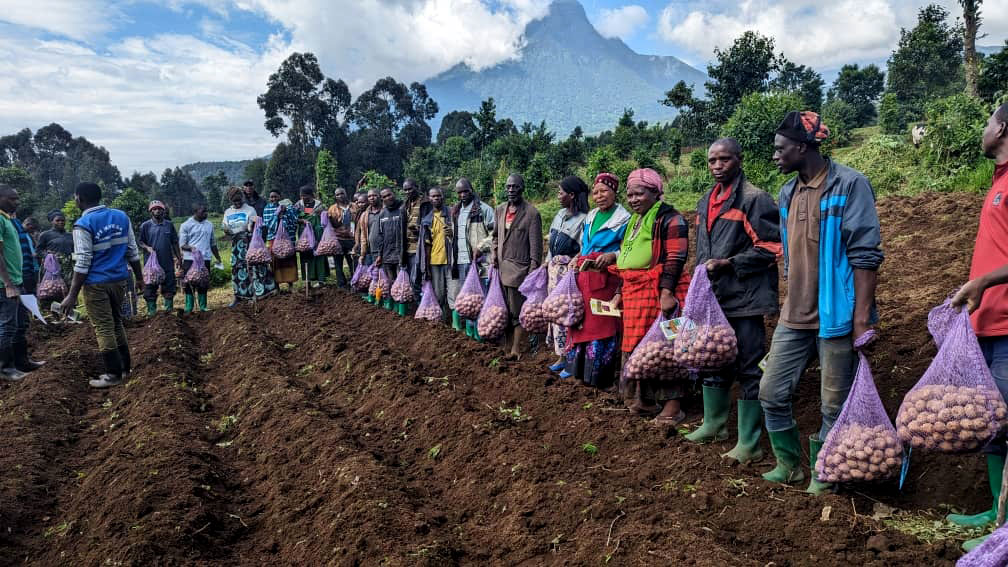
In addition, seed and lime companies expanded their markets into new geographies. For instance, I&J seed company penetrated the seed market in four new districts in Rwanda (Nyamasheke, Kayonza, Rwamagana, and Ngororero) with high-iron beans, while MULMECO, a lime producer, started business in Rutsiro and Gicumbi Districts. As a result of the intervention, KGB Seed Company began seed production of hybrid maize in Nyamasheke.
In Burundi, Richard Hatungimana recalls, “When I started working with the Kugwiza Project during the 2023B season, I distributed 160,000 small packs of high-iron bean seeds, weighing 16,000 kilos. During the subsequent planting season (2024A), it was evident that farmers were delighted with the seeds’ performance. As a result, they independently placed orders and purchased up to 24,000 kilos of high-iron bean varieties.”
Contributed by Ritha Bumwe
Contributed by
Recent stories