
IITA NEWS

Spraying locusts is ineffective – IITA entomologist
February 17, 2020

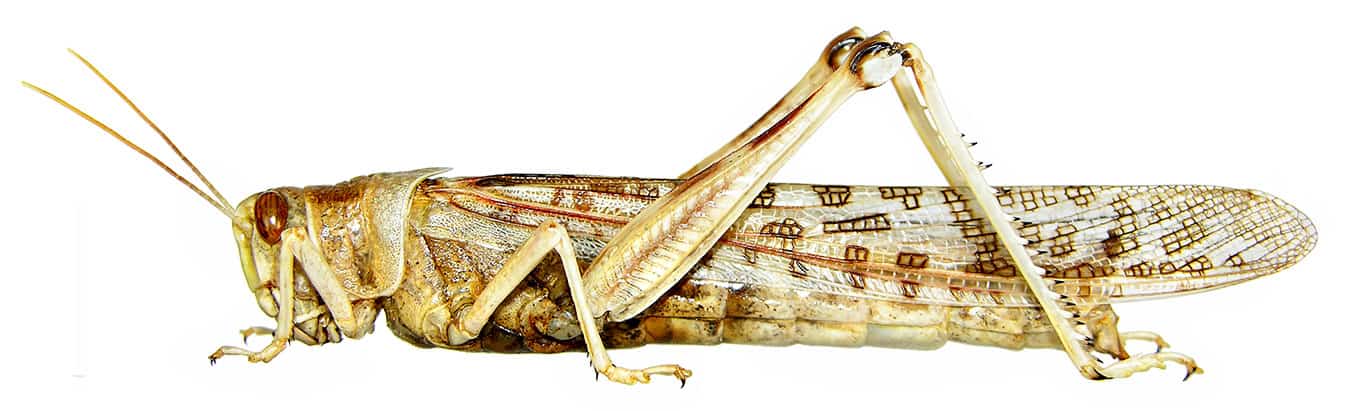
International Year of Plant Health 2020As Ethiopia, Kenya, and Somalia battle huge swarms of desert locusts, great efforts are underway to control these destructive insects. These locusts, according to the Food and Agriculture Organization (FAO), are twice as big in body size and destruction potential. We talked to one of our entomologists, Peter Neuenschwander about solutions that can bring this menace to an end and save farming communities the pain of crop and income loss.

Neuenschwander has over 30 years of experience as an entomologist. In the 1990s, as Director of IITA’s Plant Health Management Division, he oversaw a program, LUBILOSA, which was entirely devoted to developing alternatives to chemical control of locusts and grasshoppers. Below are excerpts.
Spraying locusts is ineffective – IITA entomologist

Q: As Kenya, Ethiopia and Somalia battle the worst desert locust outbreak in recent years, what is your advice to these nations, i.e. what should they do in the short and long term?

A: According to news reports these three countries face devastating locust swarms. In my opinion, at this time there is very little that can be done to help the affected farmers. But in the long term, concerned personnel should carefully monitor hopper bands on the ground in areas where locusts are known to lay their eggs. As soon as conditions for their development are conducive, can be very bio-pesticides such as Green Muscle should be applied. This will prevent the eggs from maturing into locusts.

Q: What should the neighboring countries of Uganda and Tanzania do in order to stop the locusts from reaching their countries? Should they even be worried?

A: The neighboring countries should also focus on the long-term measures as suggested above. Locust swarms are highly fidgety and the direction they move is hard to foresee. The last big outbreak in Northern Africa ended only when the swarms were blown off into the Atlantic, sometimes as far as Brazil.

Q: Is consumption, both by humans and animals, an option to locust control?

A: Yes, locusts are a first quality source of proteins for both people and animals. They are followed by birds and mammals. As long as they have not been sprayed with insecticides (which at this stage are almost ineffective) they can be consumed. Greater efforts at collecting them for food might be envisaged.

Q: How is this related to climate change, if at all?

A: Locust swarms are so infrequent that it is probably very difficult to link them with climate change. However, increased effects of local El-Niño might influence their ecology.

Q: In hindsight, what could have been done to avert this invasion?

A: In hindsight, we always have 20/20 vision. Eastern and Southern Africa harbor excellent organizations dedicated to the forecasting of locust outbreaks. If such organizations are only used once in a human’s lifetime, they tend to become rusty or partially dismantled. Revitalizing these organizations should now be a priority.

Q: What biocontrol solutions, both long and short term are available to these countries?

A: GreenMuscle is the best bio-control pesticide that can be used. A bio-control pesticide is one which only kills the target insect without affecting non-target insects,

the environment, and human health.

After the last big outbreak in 1989, the donor community insisted on avoiding the usual insecticide spray campaigns and asked CABI and IITA, in collaboration with the affected countries, particularly Niger, to develop a bio pesticide.

An Africa-wide search for strains of what was later to become Metarhizium anisopliae was undertaken and an effective strain from Niger was selected and an effective bio-control pesticide, GreenMuscle, was developed. The patent was housed with CABI, with IITA and Niger as minor contributors.

Since locust swarms are known to be infrequent, care was taken from the beginning to make sure the product also found a perennial niche, namely against the yearly outbreaks of grasshoppers in the Sahel zone. Production, started at IITA, was then picked up by a South African company. Even though FAO officially recommend GreenMuscle for control of locus hopper bands, production mostly ceased. It picked up again, when an NGO run by the Senegal president’s wife, started to produce GreenMuslce.

Already before, the Australians picked up the technology for use against their locusts and commercialized a product they called GreenShield. GreenMuscle was also used in Central Asia; but whether it is still available, I do not know. However, a new biocide NOVACRID was later developed and registered in Central Asia. It is being tested in Somalia and Saudi Arabia, talks are also ongoing with Ethiopia and Sudan.

Q: Any other advice?

A: A recent article in American Entomologist by Allant T. Showler summarizes the findings concerning locust control. His most important message is that preventive control is mostly ineffective, so is spraying locust swarms. The key to success is the detection of moving hopper bands and their treatment. NOVACRID is now available, it would be the perfect solution.

This story first appeared in Daily Nation: https://www.nation.co.ke/news/Top-expert-provides-insight-on-containing-locusts-/1056-5439766-ns5q2hz/index.html


Contributed by

Related news

No items found

Leave a Reply

Your email address will not be published. Required fields are marked *

Scroll to Top
Olaosebikan, Olamide

Olamide Deborah Nwanze is a Senior Research Associate specializing in gender mainstreaming research to inform participatory and inclusive breeding, variety development, and seed systems policies regarding root, tuber, and banana (RTB) crops in the International Institute of Tropical Agriculture Headquarters, Ibadan, Nigeria. She is a PhD candidate at the University of Ibadan and holds an MSc and B. Agric in Agricultural Extension and Rural Development. Olamide is a fellow of the African Women in Agricultural Research and Development – Gender Responsive Agricultural Systems Policy (AWARD-GRASP) and the Gender Responsive Researchers Equipped for Agricultural Transformation (GREAT). She seeks to apply her gender-mainstreaming learnings, gender-responsive research, and policy development, and review expertise to facilitate women, youth, children, and vulnerable social group’s access to and adoption of agricultural Innovations that guarantee food, nutrition, income, and livelihood security in Africa. Her current roles include mentoring research fellows, development of guides and training manuals, implementation and adaptation of gender frameworks and tools, value chain actors’ engagement as citizen science partners, policy review and redesign, data management, and analysis. Her current research explores mixed methods and participatory and interdisciplinary approaches to capture and highlight gender dynamics, needs, preferences, and challenges stakeholders face within the agricultural livelihood value chain to prioritize gender-inclusive strategies in breeding programs, policy design, and implementation.

At IITA, she contributes to the implementation of the CGIAR Accelerated Breeding Initiative and Genetic Innovation Programs; participatory and gender research within the NextGen CassavaHarvestPlusRTBFoods, and Tricot-ClimMob 1000Farms Projects; and gender knowledge communication via the G-LENS webinar series, video documentary, policy briefspublications, and blogs.


Recent publications

de Sousa, K., van Etten, J., Manners, R. Bello, A., Teeken, B., Olaosebikan, O., et al. 2024. The tricot approach: an agile framework for decentralized on-farm testing supported by citizen science. A retrospective. Agron. Sustain. Dev. 44, 8. https://doi.org/10.1007/s13593-023-00937-1

Madu, T., Onwuka, S., Nwafor, S., Onyemauwa, N., Ejechi, M., Ofoeze, M., Ukeje, B., Eluagu, C., Olaosebikan, O., Okoye, B., 2024. Gender-Inclusive Consumer Studies Improve Cassava Breeding in Nigeria in: Frontiers in Sociology, volume 9, number: 1224504, doi: 10.3389/fsoc.2024.1224504

Olaosebikan, O.; Bello, A.; Utoblo, O.; Okoye, B.; Olutegbe, N.; Garner, E.; Teeken, B.; Bryan, E.; Forsythe, L.; Cole, S.; Madu, T. 2023.  Stressors and Resilience within the Cassava Value Chain in Nigeria: Preferred Cassava Variety Traits and Response Strategies of Men and Women to Inform Breeding. Sustainability 15, 7837. https://doi.org/10.3390/su15107837

Okoye, B., Ofoeze, M., Ejechi, M., Onwuka, S., Nwafor, S., Onyemauwa, N., Ukeje, B., Eluagu, C., Obidiegwu, J.*, Olaosebikan, O., Madu, T.* 2023. Prioritizing preferred traits in the yam value chain in Nigeria: a gender situation analysis in: Frontiers in Sociology, volume 8, number: 1232626, pages 1 – 9, ISSN 2297-7775, 2023. https://www.frontiersin.org/articles/10.3389/fsoc.2023.1232626/full

Olaosebikan, O., Bello, A. A., de Sousa, K., Ndjouenkeu, R., Adesokan, M., Alamu, E. O., Agbona, A., van Etten, J., Kegah, F. N.*, Dufour, D., Bouniol, A., Teeken, B. 2023. Consumer acceptability of cassava gari-eba food products across cultural and environmental settings using the triadic comparison of technologies approach (tricot) in: Journal of the Science of Food and Agriculture,

Teeken, B., Olaosebikan, O., Bello, A. A., Madu, T.*, Cole, S. M. 2023. Qualitative assessment on the positionality and preferences of dyads in relation to cassava-related activities: working with tricot trial citizen scientists https://hdl.handle.net/10568/138326 Type: Manual

Bouniol, A., Ceballos, H., Bello, A. A., Teeken, B., Olaosebikan, O., Owoade, D., Agbona, A., Fotso Kuate, A., Madu, T.*, Okoye, B.*, Ofoeze, M.*, Nwafor, S.*, Onyemauwa, N.*, Adinsi, L.*, Forsythe, L., Dufour, D. 2023. Varietal impact on women’s labour, workload and related drudgery in processing root, tuber and banana crops: focus on cassava in sub-Saharan Africa in: Journal of the Science of Food and Agriculture, pages 1 – 25, ISSN 0022-5142,

Bello, A. A., Agbona, A., Olaosebikan, O., Edughaen, G., Dufour, D., Bouniol, A., Iluebbey, P., Ndjouenkeu, R.*, Rabbi, I. Y., Teeken, B. 2023. Genetic and environmental effects on processing productivity and food product yield: drudgery of women’s work in: Journal of the Science of Food and Agriculture, pages 1 – 32, ISSN 0022-5142, 5

Cavicchioli, M., Zimbiti, T., Teeken, B., Nwanze, D.O., Liani, M., Parkes, E. & Bello, A. 2023. IITA-Gender Responsive Breeding Training Report. Genetic Resources Center, IITA-HQ, Ibadan, 21-23 September, 2022. Ibadan, Nigeria: IITA, (34 p.).https://hdl.handle.net/10568/131368

Agbona, A. Peteti P., Teeken B., Olaosebikan O. Bello, A. A., Parkes, E., Rabbi, I. Y., Mueller, L., Egesi, C., Kulakow, P. 2022. Data Management in Multi-disciplinary African RTB Crop Breeding Programs. In: Williamson, H.F., Leonelli, S. (eds) Towards Responsible Plant Data Linkage: Data Challenges for Agricultural Research and Development. Springer, Cham. https://doi.org/10.1007/978-3-031-13276-6_5

Lora Forsythe, Pricilla Marimo, Sarah Mayanja, Olamide D. Olaosebikan, Esme Stuart, Bela Teeken, Benjamin Okoye, Tessy Madu, (2021). Cross-product Gender Analysis of RTBfoods Step 2 Gendered Food Mapping on RTB Products. Understanding the Drivers of Trait Preferences and the Development of Multi-user RTB Product Profiles, WP1. London, UK: RTBfoods Field Scientific Report, 30 p.

Teeken, B., Garner, E., Agbona, A., Balogun, I., Olaosebikan, O., Bello, A., Madu, T., Okoye, B., Egesi, C., Kulakow, P. and Tufan, H.A. 2021. Beyond “Women’s Traits”: Exploring How Gender, Social Difference, and Household Characteristics Influence Trait Preferences. Frontiers Sustainable Food Systems 5:740926. https://doi.org/10.3389/fsufs.2021.740926

Teeken, B., Agbona, A., Bello, A., Olaosebikan, O., Alamu, E., Adesokan, M., Awoyale, W., Madu, T., Okoye, B., Chijioke, U., Owoade, D., Okoro, M., Bouniol, A., Dufour, D., Hershey, C., Rabbi, I., Maziya‐Dixon, B., Egesi, C., Tufan, H. and Kulakow, P. (020. Understanding cassava varietal preferences through pairwise ranking of gari‐eba and fufu prepared by local farmer–processors. Int J Food Sci Technol. https://doi.org/10.1111/ijfs.14862

Bela Teeken, Olamide Olaosebikan, Ireti Balogun, Benjamin Okoye, Tessy Madu, Steven Cole, Abolore Bello, Elizabeth Parkes. (2020). Piloting the G+ customer and product profile tools for gender-responsive cassava breeding in Nigeria. Nigeria: International Institute of Tropical Agriculture (IITA). https://hdl.handle.net/20.500.11766/13000