
“STEP” identifies school for training in agribusiness
August 16, 2019
Fasola Grammar School (FGS) in Oyo, Oyo State, has been identified as a training center for the Start Them Early Program (STEP). The program, which is designed with the objective of erasing the bad perception about agriculture among secondary school students, aims to raise a generation of young leaders with education in agribusiness.
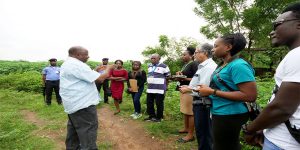 IITA Director General, Dr Nteranya Sanginga, visited FGS with representatives from STEP, the Communication Unit, and Facility Management Services (FMS) on 2 August. “The intention is to change the mindset of young people about agriculture; from being a punishment to a business venture from which they can make a living,” DG Sanginga said.
An abandoned building that was established for introducing technology about 30 years ago has been set apart for this initiative.
According to Jimoh Adedeji, a security guard of the school who has lived in Fasola Community for over 50 years, “The building was constructed about three decades ago as a workshop. Shortly after construction, it was abandoned and became dilapidated. After some years, a new principal was transferred to the school; he renovated the building and it was back in use. However, this was short-lived because the building was again deserted a short while after the Principal left.”
Principal officers of FGS have agreed that the abandoned building be renovated and transformed into a center for agribusiness education. “We appreciate IITA as an international body that cares about food security. Every reasonable mind ought to cooperate with IITA because the institute has the capacity and the best hands for the job. We are also happy to become IITA family members,” said M.A. Okunlola, FGS Vice Principal.
Proposed training activities for the center include food processing including baking, juice making, and cassava processing as well as information and communication technology (ICT). The center will also have provision for a library.
IITA Director General, Dr Nteranya Sanginga, visited FGS with representatives from STEP, the Communication Unit, and Facility Management Services (FMS) on 2 August. “The intention is to change the mindset of young people about agriculture; from being a punishment to a business venture from which they can make a living,” DG Sanginga said.
An abandoned building that was established for introducing technology about 30 years ago has been set apart for this initiative.
According to Jimoh Adedeji, a security guard of the school who has lived in Fasola Community for over 50 years, “The building was constructed about three decades ago as a workshop. Shortly after construction, it was abandoned and became dilapidated. After some years, a new principal was transferred to the school; he renovated the building and it was back in use. However, this was short-lived because the building was again deserted a short while after the Principal left.”
Principal officers of FGS have agreed that the abandoned building be renovated and transformed into a center for agribusiness education. “We appreciate IITA as an international body that cares about food security. Every reasonable mind ought to cooperate with IITA because the institute has the capacity and the best hands for the job. We are also happy to become IITA family members,” said M.A. Okunlola, FGS Vice Principal.
Proposed training activities for the center include food processing including baking, juice making, and cassava processing as well as information and communication technology (ICT). The center will also have provision for a library.
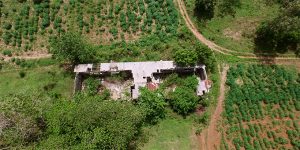 The piece of land in front of the school will be used as a demonstration site for agribusiness. The STEP center would be solar-powered because there is no public electricity supply in the community.
STEP currently carries out its activities in DR Congo, Kenya, and Nigeria. The training in agribusiness will merge with the school curriculum. This initiative seeks to transform FGS into a model for other schools to include agribusiness in their curriculum.
The school was selected because of its proximity to the government-owned Fasola Farms. The farm workers have agreed to provide their expertise once the STEP center opens. Along with the students, the entire Fosala community will have the opportunity to learn agribusiness.
The piece of land in front of the school will be used as a demonstration site for agribusiness. The STEP center would be solar-powered because there is no public electricity supply in the community.
STEP currently carries out its activities in DR Congo, Kenya, and Nigeria. The training in agribusiness will merge with the school curriculum. This initiative seeks to transform FGS into a model for other schools to include agribusiness in their curriculum.
The school was selected because of its proximity to the government-owned Fasola Farms. The farm workers have agreed to provide their expertise once the STEP center opens. Along with the students, the entire Fosala community will have the opportunity to learn agribusiness.
Dr Sanginga addressing IITA team after the inspection of the building.
Aerial view of the proposed site for the STEP Center at Fasola Grammar School, Oyo State.
Contributed by
Recent stories
No items found