
Study lifts the lid on plantain consumer preferences, adds fresh insights for breeding programs
October 27, 2020
Over the years, breeders have developed and distributed high-yielding, disease-resistant plantain varieties, but adoption rates have been limited. To understand why, scientists from CGIAR–IITA have published the results of a new study revealing end-user (consumer) perspectives about desirable qualities/characteristics of the plantain fruit and its derivative food products.
 The research, carried out within the RTBfoods project, aims to identify quality traits that determine the adoption of new root, tuber, and banana (RTB) varieties developed by breeders in five African countries (Benin, Cameroon, Côte d’Ivoire, Nigeria, and Uganda).
The scientists published their research in the International Journal of Food Science and Technology in September 2020. The study calls for plantain breeding programs to be aware of what end-users consider essential traits. Understanding this would ensure that they do not develop varieties that may have a higher yield and better disease resistance but lack the “must-have” quality traits that stimulate adoption.
The research, carried out within the RTBfoods project, aims to identify quality traits that determine the adoption of new root, tuber, and banana (RTB) varieties developed by breeders in five African countries (Benin, Cameroon, Côte d’Ivoire, Nigeria, and Uganda).
The scientists published their research in the International Journal of Food Science and Technology in September 2020. The study calls for plantain breeding programs to be aware of what end-users consider essential traits. Understanding this would ensure that they do not develop varieties that may have a higher yield and better disease resistance but lack the “must-have” quality traits that stimulate adoption.
 According to the study, fruit pulp texture (firmness/softness), color, and taste stand out as the most critical fruit quality traits that impact plantain-derived food products. It implies that, along with mainstream breeder-desired qualities such as fruit and bunch size, these three qualities should be essential selection criteria for new hybrids in plantain breeding programs.
The researchers gathered data through focus group discussions and key informant interviews in plantain farming communities of three states in Nigeria’s plantain growing belt—Delta, Osun, and Rivers.
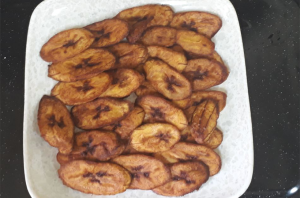
The study also makes a strong case for breeding programs to seek localized understanding of the diversity of plantain food products and processing methods as a critical aspect for developing the next generation of hybrid plantain varieties. In particular locations, dodo (fried ripe pulp) may be a more popular plantain food product than boli (roasted unripe–ripe pulp) or boiled plantain. Therefore, in such locations releasing a suitable variety for making good quality dodo is a step in the right direction towards successful end-user adoption.
The study also explores the question of whether plantain breeding programs could affect gender inequality. However, there was no evidence to indicate that quality traits for improvement could impact gender inequality. The researchers observed minor gender differences between men and women regarding preference for bunch size. However, this could only indicate that while men focus more on yield (for sale), women might have spread their preferences more over the other characteristics (related to home consumption) such as taste.
Citing some limitations of the study, IITA Social and Gender Scientist Bela Teeken notes that this study’s data was predominantly collected from rural communities and therefore offers a “part” of the bigger picture. “A large quantity of the plantain produced is sold out and transported for sale to consumers in urban areas. So we need further research on preferences related to urban use to complement the end-user preferences highlighted in this study,” he notes.
The study authors also call for “rapid progress” in developing breeding technologies that will support easy assessment of the important quality attributes identified, such as texture, color, and taste across the different stages of ripening in plantain.
“Most of these end-user preferred traits are influenced by several underlying physicochemical factors that may not be easy to select using current breeding tools,” explains Delphine Amah, IITA Plantain Breeder. “Plantain is an important food security and cash crop, and we believe the outcomes of this study will result in major improvements in the next line of hybrid varieties that we shall offer to farmers,” she adds.
According to the study, fruit pulp texture (firmness/softness), color, and taste stand out as the most critical fruit quality traits that impact plantain-derived food products. It implies that, along with mainstream breeder-desired qualities such as fruit and bunch size, these three qualities should be essential selection criteria for new hybrids in plantain breeding programs.
The researchers gathered data through focus group discussions and key informant interviews in plantain farming communities of three states in Nigeria’s plantain growing belt—Delta, Osun, and Rivers.
The study also makes a strong case for breeding programs to seek localized understanding of the diversity of plantain food products and processing methods as a critical aspect for developing the next generation of hybrid plantain varieties. In particular locations, dodo (fried ripe pulp) may be a more popular plantain food product than boli (roasted unripe–ripe pulp) or boiled plantain. Therefore, in such locations releasing a suitable variety for making good quality dodo is a step in the right direction towards successful end-user adoption.
The study also explores the question of whether plantain breeding programs could affect gender inequality. However, there was no evidence to indicate that quality traits for improvement could impact gender inequality. The researchers observed minor gender differences between men and women regarding preference for bunch size. However, this could only indicate that while men focus more on yield (for sale), women might have spread their preferences more over the other characteristics (related to home consumption) such as taste.
Citing some limitations of the study, IITA Social and Gender Scientist Bela Teeken notes that this study’s data was predominantly collected from rural communities and therefore offers a “part” of the bigger picture. “A large quantity of the plantain produced is sold out and transported for sale to consumers in urban areas. So we need further research on preferences related to urban use to complement the end-user preferences highlighted in this study,” he notes.
The study authors also call for “rapid progress” in developing breeding technologies that will support easy assessment of the important quality attributes identified, such as texture, color, and taste across the different stages of ripening in plantain.
“Most of these end-user preferred traits are influenced by several underlying physicochemical factors that may not be easy to select using current breeding tools,” explains Delphine Amah, IITA Plantain Breeder. “Plantain is an important food security and cash crop, and we believe the outcomes of this study will result in major improvements in the next line of hybrid varieties that we shall offer to farmers,” she adds.
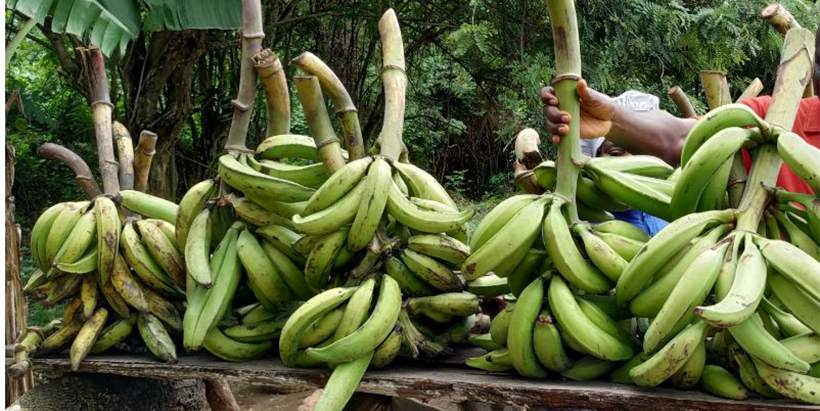
Plantain sold at roadside in Osun (Photo by Esme Stuart, IITA).
Fried plantain or dodo is a popular dish in Nigeria (Photo by Delphine Amah, IITA)
Contributed by
Recent stories
No items found