
Study sheds light on banana’s defense mechanism against the deadly Fusarium wilt disease
June 25, 2021
IITA scientists have identified the defense mechanisms for Fusarium oxysporum f. sp. cubense (Foc) in resistant and susceptible cultivars with or without biological control agent (BCA) inoculation as part of efforts to identify effective ways to control Fusarium wilt of banana.
Fusarium wilt is a disease caused by the soilborne fungus Fusarium oxysporum f. sp. cubense (Foc). It persists in soil for long periods as chlamydospores (thick-walled resting spores), even in the absence of its host. Once bananas have been infected, the fungus can easily spread through infected planting materials, soil run-off, and farm activities.
 Fusarium wilt is currently the most prominent disease that threatens global banana production, which does not have an effective control method. Researchers have been exploring the use of biocontrol agents to enhance plant resistance. Bacillus spp. and Trichoderma spp. are the two endophytes (fungi that live as parasites within the plants) that have been successfully used as BCAs against F. oxysporum in many host plants.
Banana is an important staple food crop for food security and income generation for smallholder farmers in sub-Saharan Africa. However, its production has been negatively impacted by Fusarium wilt disease for decades.
Fusarium wilt is currently the most prominent disease that threatens global banana production, which does not have an effective control method. Researchers have been exploring the use of biocontrol agents to enhance plant resistance. Bacillus spp. and Trichoderma spp. are the two endophytes (fungi that live as parasites within the plants) that have been successfully used as BCAs against F. oxysporum in many host plants.
Banana is an important staple food crop for food security and income generation for smallholder farmers in sub-Saharan Africa. However, its production has been negatively impacted by Fusarium wilt disease for decades.
 Manoj Kaushal, a Systems Agronomist from IITA and the author of the study, noted that the defense mechanisms of resistant and susceptible banana cultivars treated with BCAs were regulated by differentially expressed genes in various categories of defense pathways.
 “BCAs reduced the necrotic symptoms in the roots and leaves of the Fusarium-susceptible cultivar and lateral root growth were clearly visible in both the susceptible and resistant cultivars under BCA treatments,” Manoj explained. This study is the first to perform transcriptome and expression profile sequencing of a Fusarium resistant and susceptible cultivar following inoculation with BCAs. Furthermore, the insights gained on disease stress response provide researchers an idea on how to explore the orthologous genes and potential candidates for developing Fusarium wilt tolerant banana cultivars.
The study targeted the expression of defense-related genes in tissue-cultured banana plantlets of Fusarium resistant and susceptible cultivars after infection with BCAs and Fusarium (Foc race 1).
A total of 3034 differentially expressed genes (DEGs)—genes responding to signals or triggers—were identified. The results showed the DEGs involved in complex defense pathways in response to the pathogen.
The findings were published in the paper Comparative Transcriptome and Expression Profiling of Resistant and Susceptible Banana Cultivars during Infection by Fusarium oxysporum in the International Journal of Molecular Sciences on 16 March 2021.
“BCAs reduced the necrotic symptoms in the roots and leaves of the Fusarium-susceptible cultivar and lateral root growth were clearly visible in both the susceptible and resistant cultivars under BCA treatments,” Manoj explained. This study is the first to perform transcriptome and expression profile sequencing of a Fusarium resistant and susceptible cultivar following inoculation with BCAs. Furthermore, the insights gained on disease stress response provide researchers an idea on how to explore the orthologous genes and potential candidates for developing Fusarium wilt tolerant banana cultivars.
The study targeted the expression of defense-related genes in tissue-cultured banana plantlets of Fusarium resistant and susceptible cultivars after infection with BCAs and Fusarium (Foc race 1).
A total of 3034 differentially expressed genes (DEGs)—genes responding to signals or triggers—were identified. The results showed the DEGs involved in complex defense pathways in response to the pathogen.
The findings were published in the paper Comparative Transcriptome and Expression Profiling of Resistant and Susceptible Banana Cultivars during Infection by Fusarium oxysporum in the International Journal of Molecular Sciences on 16 March 2021.
 This research contributes to work on Biological Control Agents Against Fusarium Wilt of Banana to validate biological control by deepening the knowledge on the most valuable biological control agents and improving their efficacy by setting up effective formulations, application protocols, and integrated strategies.
The research was supported by the CGIAR Fund, in particular to the CGIAR Research Program Roots, Tubers and Bananas (RTB).
This research contributes to work on Biological Control Agents Against Fusarium Wilt of Banana to validate biological control by deepening the knowledge on the most valuable biological control agents and improving their efficacy by setting up effective formulations, application protocols, and integrated strategies.
The research was supported by the CGIAR Fund, in particular to the CGIAR Research Program Roots, Tubers and Bananas (RTB).
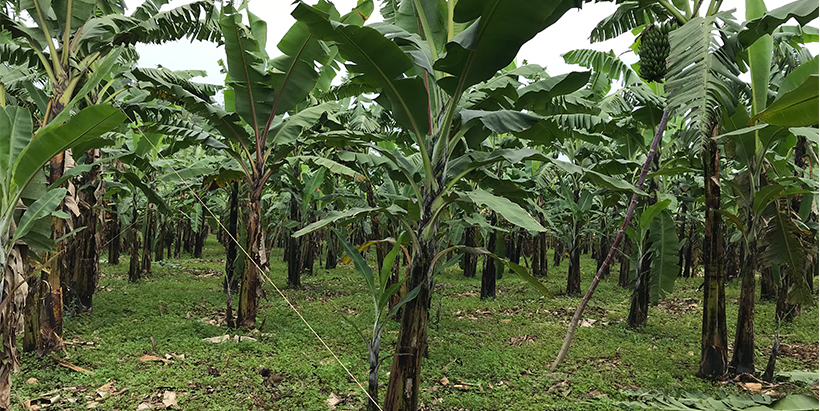
Banana sampling fields (Tanzania-Kilimanjaro region)
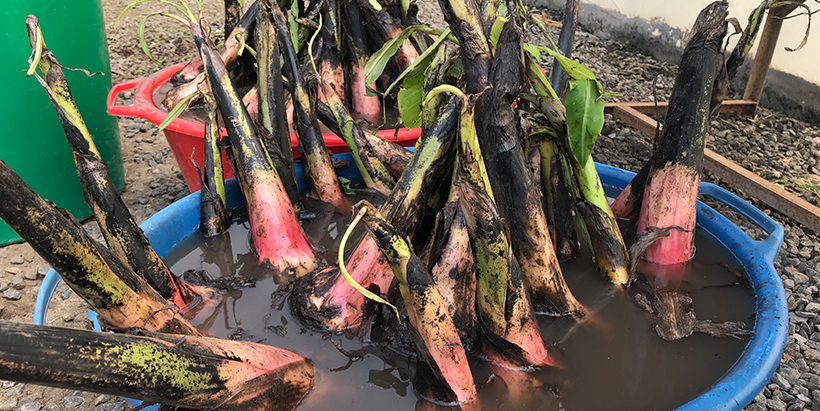
Treatment of banana sucker with endophytes (BCA’s).
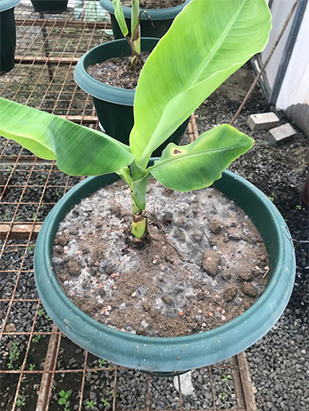
Fusarium infection.
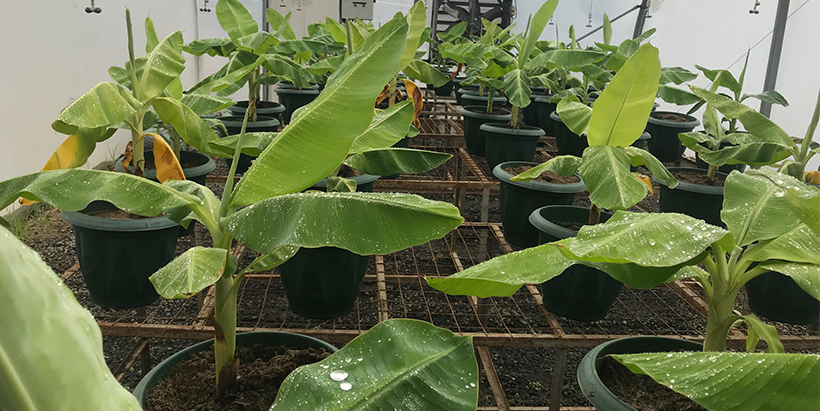
Screen house trial under misting systems.
Contributed by
Recent stories
No items found