
The Dreamers: Scaling seeds of success
January 20, 2020
Members of the Dreamers Group in Zambezia province, Northern Mozambique, were smiling all the way to the bank in the just ended farming season, 2019/2020. This year they generated more than 2,277,000 MZN (US$31,625) from the production and sale of soybean and common bean seed and grain and vegetables.
 The group, known as DG or just Dreamers for short, identified seed production as a very lucrative business. With support from the Improved Seeds for Better Agriculture project (SEMEAR) of Feed-the-Future Mozambique, they are now running a very successful venture on the production and commercialization of soybean and common bean certified seed.
The group ventured into the seed production business in the 2017/2018 cropping season by renting a farm in Murrimo, a community in Gurue District, Zambezia Province of Mozambique, to start seed production. SEMEAR trained the group on seed production and sold basic seed of soybean and common bean to them to start them off in certified seed production.
The group started with a 10-ha field—7 ha for soybean and 3 ha for common bean certified seed. From this, they harvested 8.7 tons of certified soybean and 2.4 tons of common bean seed. These corresponded to 1.25 t/ha and 0.8 t/ha for soybean and common bean, respectively. SEMEAR also arranged with the Seed Inspection Unit for field inspection and certification of DG’s seeds.
SEMEAR also supported DG in establishing demonstration fields/farmer field schools (FFS). Here, neighboring farmers learn best crop management practices, source quality seeds, and access affordable mechanization services to improve production and productivity to ensure food and nutrition security and generate income.
In the second year (2018/2019), DG extended their seed production by engaging five out-growers selected from well-skilled and knowledgeable farmers to produce seed with SEMEAR and DG’s technical support. They supplied them with the basic seed acquired from SEMEAR and provided technical assistance until field inspection and certification. The farmers took care of all crop management (weeding, pest control, harvesting, and bagging).
Through rigorous best crop management practices, DG and its out-growers produced 10.5 tons soybean and 8 tons common bean certified seeds, and 7.5 tons of soybean grain. DG bought the certified seeds from out-growers at grain market price plus an additional 10 meticais per kilogram (US$0.13) if the farmers honored all their commitments stated in the memorandum of understanding signed between the out-growers and DG.
“It was a very good year. We managed to reach yields of 1.5 t/ha soybean and 1 t/ha common bean with the conditions we have. If farmers get these results, we can succeed in the development of the agriculture sector,” said DG Leader Anacleto Saint Mart.
They sold the bulk of the seeds produced to Sociedade de Beneficiamento de Sementes (SBS), an agro-dealer in Gurue, the district capital, and Phoenix Seeds Ltd, a seed Company in Manica Province. The rest they sold to farmers in the community at half the seed companies’ price.
DG also supported seed out-growers to establish demonstration fields where farmers can easily see the performance of the varieties and technologies they are promoting. DG provides land preparation (plowing and disc harrowing) and planting services.
Formed in 2016 by ten young men, the DG has continued to expand its operations, hiring staff and acquiring more land and equipment with their earnings.
“We at DG dream to become a center of knowledge where farmers will learn and share their experiences to improve productivity and production. We are happy with the current yields we are obtaining on our farms and the out-growers’ fields,” said Saint Mart.
The group, known as DG or just Dreamers for short, identified seed production as a very lucrative business. With support from the Improved Seeds for Better Agriculture project (SEMEAR) of Feed-the-Future Mozambique, they are now running a very successful venture on the production and commercialization of soybean and common bean certified seed.
The group ventured into the seed production business in the 2017/2018 cropping season by renting a farm in Murrimo, a community in Gurue District, Zambezia Province of Mozambique, to start seed production. SEMEAR trained the group on seed production and sold basic seed of soybean and common bean to them to start them off in certified seed production.
The group started with a 10-ha field—7 ha for soybean and 3 ha for common bean certified seed. From this, they harvested 8.7 tons of certified soybean and 2.4 tons of common bean seed. These corresponded to 1.25 t/ha and 0.8 t/ha for soybean and common bean, respectively. SEMEAR also arranged with the Seed Inspection Unit for field inspection and certification of DG’s seeds.
SEMEAR also supported DG in establishing demonstration fields/farmer field schools (FFS). Here, neighboring farmers learn best crop management practices, source quality seeds, and access affordable mechanization services to improve production and productivity to ensure food and nutrition security and generate income.
In the second year (2018/2019), DG extended their seed production by engaging five out-growers selected from well-skilled and knowledgeable farmers to produce seed with SEMEAR and DG’s technical support. They supplied them with the basic seed acquired from SEMEAR and provided technical assistance until field inspection and certification. The farmers took care of all crop management (weeding, pest control, harvesting, and bagging).
Through rigorous best crop management practices, DG and its out-growers produced 10.5 tons soybean and 8 tons common bean certified seeds, and 7.5 tons of soybean grain. DG bought the certified seeds from out-growers at grain market price plus an additional 10 meticais per kilogram (US$0.13) if the farmers honored all their commitments stated in the memorandum of understanding signed between the out-growers and DG.
“It was a very good year. We managed to reach yields of 1.5 t/ha soybean and 1 t/ha common bean with the conditions we have. If farmers get these results, we can succeed in the development of the agriculture sector,” said DG Leader Anacleto Saint Mart.
They sold the bulk of the seeds produced to Sociedade de Beneficiamento de Sementes (SBS), an agro-dealer in Gurue, the district capital, and Phoenix Seeds Ltd, a seed Company in Manica Province. The rest they sold to farmers in the community at half the seed companies’ price.
DG also supported seed out-growers to establish demonstration fields where farmers can easily see the performance of the varieties and technologies they are promoting. DG provides land preparation (plowing and disc harrowing) and planting services.
Formed in 2016 by ten young men, the DG has continued to expand its operations, hiring staff and acquiring more land and equipment with their earnings.
“We at DG dream to become a center of knowledge where farmers will learn and share their experiences to improve productivity and production. We are happy with the current yields we are obtaining on our farms and the out-growers’ fields,” said Saint Mart.
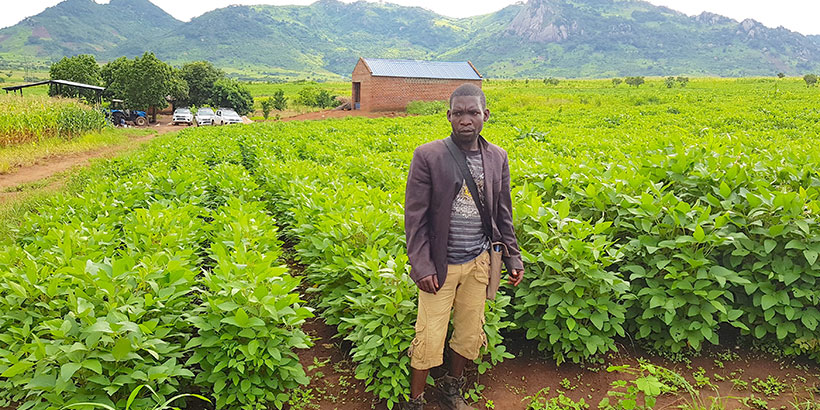
Lourindo Jacinto Abel, the DG farm manager at the soybean farm.
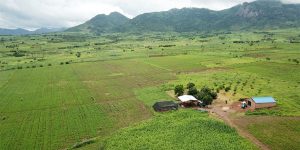 An overview of the DG’s farm.
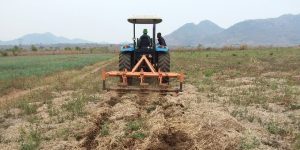 Ripping the farm for planting to ensure minimum soil disturbance as part of Conservation Agriculture.
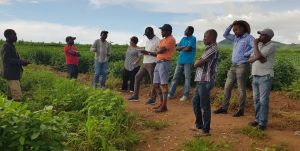 SEMEAR project donor and team visiting of the DG farm.
Contributed by
Recent stories
No items found