

IITA and the United Nations Children’s Fund (UNICEF) are exploring opportunities for stronger collaboration to address nutrition challenges in Nigeria through research, biofortification, food value chains, homestead production, and youth engagement in agribusiness.
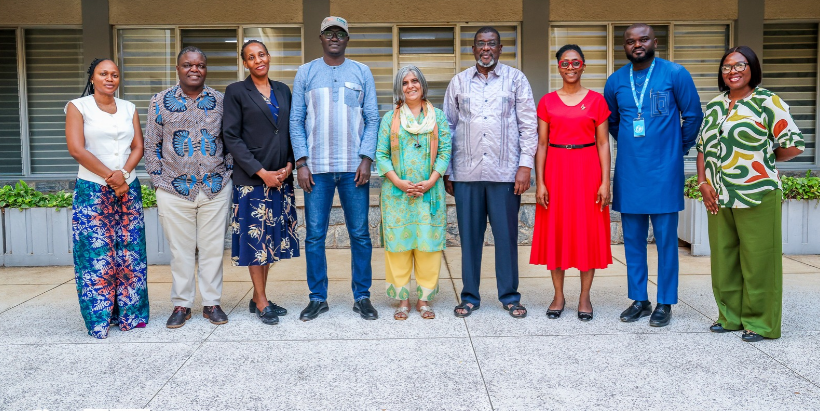
The discussions took place during a visit by a UNICEF delegation led by Nemat Hajeebhoy, Chief of Nutrition, Child Nutrition and Development, UNICEF Nigeria, to IITA’s headquarters in Ibadan on September 23. The visit provided an opportunity for both organizations to share their priorities and identify areas where their expertise and programs could complement each other.
Welcoming the delegation, IITA’s Deputy Director General for Partnerships for Delivery and Scaling, Tahirou Abdoulaye, highlighted the Institute’s longstanding commitment to developing and scaling agricultural innovations to address food insecurity, poverty, and emerging challenges across Africa. He noted that IITA’s work increasingly places strong emphasis on nutrition and climate change, while partnerships remain critical to ensuring that research innovations reach the people who need them.
Hajeebhoy said nutrition had become one of UNICEF Nigeria’s major program priorities, particularly as economic pressures continue to affect access to nutritious and diverse diets. She noted that addressing malnutrition requires interventions that extend beyond the health sector to include food systems, agriculture, social protection, livelihoods, and other areas.
She identified three major areas of interest for possible collaboration with IITA. The first is the promotion of homestead production, including gardening, poultry, and fish production, to improve household access to nutritious foods. The second is the wider dissemination of biofortified crops, while the third focuses on strengthening local food value chains and the availability of nutritious raw materials for food production.
Hajeebhoy noted that UNICEF has previously collaborated with IITA in Bauchi State on biofortified crops, including orange-fleshed sweet potato, and expressed interest in exploring ways to reach more households and help improve dietary diversity.
The discussions also examined opportunities to strengthen local supply chains for nutritious foods used in the prevention and treatment of malnutrition. Hajeebhoy highlighted the challenge of sourcing aflatoxin-free peanuts for the local production of ready-to-use therapeutic foods (RUTF), noting the need to develop reliable domestic supply chains that can meet quality and safety requirements.
She also expressed interest in exploring alternative locally available ingredients, including chickpeas and soy, for nutritious food products, emphasizing the importance of conducting value chain and cost analyses alongside acceptability studies to assess their potential viability in Nigeria.
The meeting further highlighted the importance of engaging young people in agriculture and agribusiness. UNICEF is currently developing its next program strategy, with a strong focus on the transition of young people from learning to earning. Hajeebhoy said UNICEF is interested in learning from IITA’s youth agribusiness program and exploring opportunities to equip young people with skills for employment and entrepreneurship.
Presenting IITA’s youth-focused interventions, the Institute’s youth agribusiness team explained that its programs support young people in establishing businesses, developing employability skills, and engaging in agricultural value chains. The programs also promote opportunities around enterprises such as vegetable production, poultry, and fish farming, which can contribute to household nutrition while generating income. Dr Abdoulaye added that the youth initiatives have expanded beyond Nigeria and are now being implemented in 19 African countries, with support from development and private-sector partners.
The discussion highlighted the shared interest of both organizations in linking agricultural research and innovation to practical solutions for nutrition, livelihoods, and youth employment challenges. The discussions also provided a platform to identify areas for further technical engagement, research, and potential joint initiatives aimed at strengthening Nigeria’s food and nutrition systems.
Both organizations expressed interest in continuing the conversation and exploring concrete opportunities for collaboration that can translate research and program innovations into improved nutrition outcomes and economic opportunities for communities, women, and young people.