
IITA NEWS

Unlocking the potential of Bambara groundnut for food security and climate resilience
November 10, 2025

A global research team co-led by the University of Cambridge’s Crop Science Centre (CSC) [https://www.cropsciencecentre.org] is unlocking the potential of Bambara groundnut in a pioneering project to combat food insecurity and climate change.

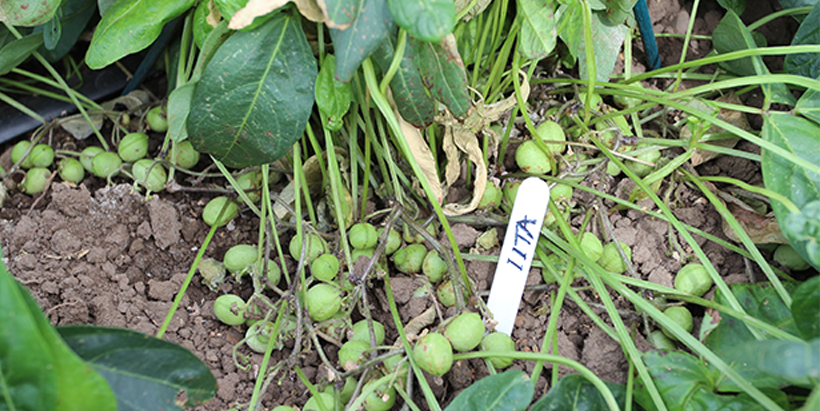
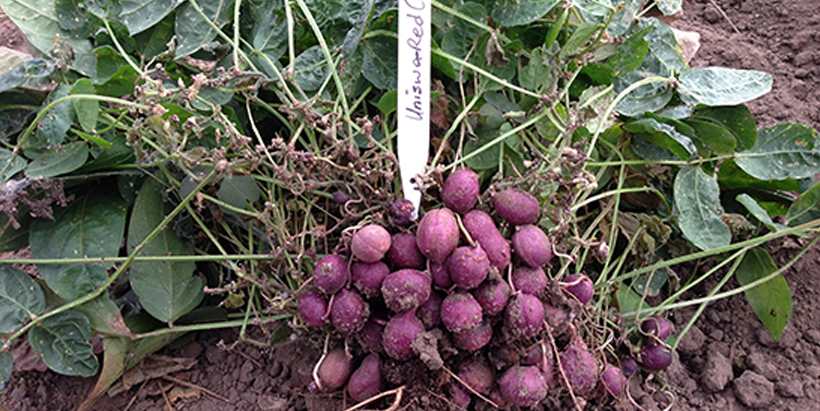
Bambara groundnut (Vigna subterranea) is a crop with huge potential to address global food and nutrition security challenges. It thrives in poor soils, supports soil health through nitrogen fixation, and provides a highly nutritious food source – especially valuable in areas affected by poverty, malnutrition, and water scarcity.

A major new UK-CGIAR Centre project [https://www.cabi.org/genetic-improvement-of-bambara-groundnut-for-future-nutrition-and-climate-resilience] led by Cambridge’s Crop Science Centre and the International Institute of Tropical Agriculture (IITA) [https://www.iita.org/] aims to create the genomic resources and tools to accelerate breeding innovation and develop new varieties of the crop that encourage its wider use.

“Bambara is a hardy climate resilient crop with significant nutritional and soil health improvement qualities,” said Professor Uta Paszkowski [https://www.cropsciencecentre.org/staff/uta-paszkowski/ / https://www.plantsci.cam.ac.uk/directory/uta-paszkowski], Acting Director of the Crop Science Centre and Cambridge lead for the project. “Despite being widely adopted and having many agricultural and dietary benefits, the plant remains underutilized due to yield instability, long cooking times and adaptation issues.”
“There is a real need to develop cultivars with improved genetic traits. This project aims to create the research platforms needed to facilitate this work,” she said.

“We are very excited that the Cambridge Crop Science Centre is the UK lead for this new UK-CGIAR centre,” said Dr Natasha Yelina, Head of the Crop Breeding Technologies group [https://www.cropsciencecentre.org/research/crop-breeding-technologies/ / https://www.plantsci.cam.ac.uk/research/groups/crop-breeding-technologies] at the Crop Science Centre and co-PI on the project.

“This fully aligns with the Crop Science Centre’s vision to improve crops for sustainability in Sub-Saharan Africa,” she said.

World-leading consortium

The project brings together a diverse and world-leading consortium of research institutions and development partners.

These include the International Crops Research Institute for the Semi-Arid Tropics (ICRISAT) [https://www.icrisat.org/], the Alliance Bioversity International and CIAT–Tanzania [https://alliancebioversityciat.org/], Niab [https://www.niab.com/], the University of Nottingham [https://www.nottingham.ac.uk/biosciences/people/rahul.bhosale], the Kirkhouse Trust [https://www.kirkhousetrust.org/], the University of KwaZulu-Natal in South Africa, and the CSIR–Crops Research Institute [https://cropsresearch.org/] in Ghana.

“It’s inspiring to be part of this amazing global alliance with such comprehensive expertise. I am honoured and humbled to be involved and am look forward to working together,” said Dr Yelina.
Dr Hapson Mushoriwa, Head of Breeding at IITA, said “The scientists working on this project have decades of experience in crop genetics and world leading expertise in fields such as legume breeding, crop transformation and gene editing in cereals. We want to take a complimentary approach to research, harnessing the diverse range of expertise and resources each of the partners bring to the consortium.”

The teams will be working in Africa, India and the UK, reflecting the project’s focus on addressing the needs of farmers in Bambara groundnut production areas in West, East and Southern Africa.

Field trials in Africa will be a key part of the project – making the most of the partners’ links with local farmers to develop varieties that perform well in local conditions and that local farmers will welcome.

Improving nutrition and sustainable food production

The work will advance both the genetic tools and the conventional and precision breeding capabilities necessary to accelerate the release of improved varieties of Bambara groundnut. This will help promote wider adoption of the crop by farmers in Africa and potentially other areas like India.

Developing enhanced varieties of the crop will not only aid the national agricultural priorities of the target countries but also contribute to the broader goals of improving nutrition and sustainable food production.

As a significant proportion of small holder farmers in Africa are women, improved varieties with more stable yields may provide farmers in Africa, especially the female ones, with greater economic stability.

Funding

The UK-CGIAR Centre is funded by the UK’s Foreign, Commonwealth and Development Office (FCDO) and the Biotechnology and Biological Sciences Research Council (BBSRC) [https://www.ukri.org/councils/bbsrc/].

The UK-CGIAR Centre’s Secretariat is hosted by CABI [https://www.cabi.org/about-cabi/], an international, intergovernmental, not-for-profit organisation that improves people’s lives worldwide by providing information and applying scientific expertise to solve problems in agriculture and the environment.

**

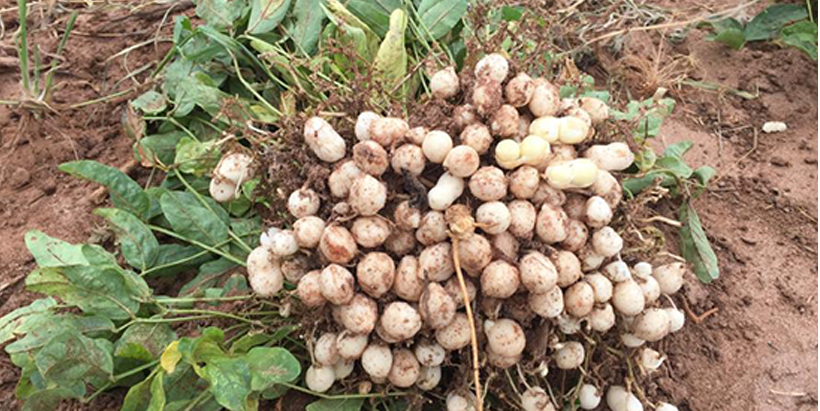
Image: Harvested Bambara groundnut plant with pods. Photo credit: Dr Aloyce Callist Kundy, Tanzania Agricultural Research Institute (TARI) Naliendele, Mtwara.

Read also:  Genetic improvement of Bambara groundnut (Vigna subterranea) for future nutrition and climate resilience https://www.cabi.org/genetic-improvement-of-bambara-groundnut-for-future-nutrition-and-climate-resilience/


Contributed by

Related news

No items found

Leave a Reply

Your email address will not be published. Required fields are marked *

Scroll to Top
Olaosebikan, Olamide

Olamide Deborah Nwanze is a Senior Research Associate specializing in gender mainstreaming research to inform participatory and inclusive breeding, variety development, and seed systems policies regarding root, tuber, and banana (RTB) crops in the International Institute of Tropical Agriculture Headquarters, Ibadan, Nigeria. She is a PhD candidate at the University of Ibadan and holds an MSc and B. Agric in Agricultural Extension and Rural Development. Olamide is a fellow of the African Women in Agricultural Research and Development – Gender Responsive Agricultural Systems Policy (AWARD-GRASP) and the Gender Responsive Researchers Equipped for Agricultural Transformation (GREAT). She seeks to apply her gender-mainstreaming learnings, gender-responsive research, and policy development, and review expertise to facilitate women, youth, children, and vulnerable social group’s access to and adoption of agricultural Innovations that guarantee food, nutrition, income, and livelihood security in Africa. Her current roles include mentoring research fellows, development of guides and training manuals, implementation and adaptation of gender frameworks and tools, value chain actors’ engagement as citizen science partners, policy review and redesign, data management, and analysis. Her current research explores mixed methods and participatory and interdisciplinary approaches to capture and highlight gender dynamics, needs, preferences, and challenges stakeholders face within the agricultural livelihood value chain to prioritize gender-inclusive strategies in breeding programs, policy design, and implementation.

At IITA, she contributes to the implementation of the CGIAR Accelerated Breeding Initiative and Genetic Innovation Programs; participatory and gender research within the NextGen CassavaHarvestPlusRTBFoods, and Tricot-ClimMob 1000Farms Projects; and gender knowledge communication via the G-LENS webinar series, video documentary, policy briefspublications, and blogs.


Recent publications

de Sousa, K., van Etten, J., Manners, R. Bello, A., Teeken, B., Olaosebikan, O., et al. 2024. The tricot approach: an agile framework for decentralized on-farm testing supported by citizen science. A retrospective. Agron. Sustain. Dev. 44, 8. https://doi.org/10.1007/s13593-023-00937-1

Madu, T., Onwuka, S., Nwafor, S., Onyemauwa, N., Ejechi, M., Ofoeze, M., Ukeje, B., Eluagu, C., Olaosebikan, O., Okoye, B., 2024. Gender-Inclusive Consumer Studies Improve Cassava Breeding in Nigeria in: Frontiers in Sociology, volume 9, number: 1224504, doi: 10.3389/fsoc.2024.1224504

Olaosebikan, O.; Bello, A.; Utoblo, O.; Okoye, B.; Olutegbe, N.; Garner, E.; Teeken, B.; Bryan, E.; Forsythe, L.; Cole, S.; Madu, T. 2023.  Stressors and Resilience within the Cassava Value Chain in Nigeria: Preferred Cassava Variety Traits and Response Strategies of Men and Women to Inform Breeding. Sustainability 15, 7837. https://doi.org/10.3390/su15107837

Okoye, B., Ofoeze, M., Ejechi, M., Onwuka, S., Nwafor, S., Onyemauwa, N., Ukeje, B., Eluagu, C., Obidiegwu, J.*, Olaosebikan, O., Madu, T.* 2023. Prioritizing preferred traits in the yam value chain in Nigeria: a gender situation analysis in: Frontiers in Sociology, volume 8, number: 1232626, pages 1 – 9, ISSN 2297-7775, 2023. https://www.frontiersin.org/articles/10.3389/fsoc.2023.1232626/full

Olaosebikan, O., Bello, A. A., de Sousa, K., Ndjouenkeu, R., Adesokan, M., Alamu, E. O., Agbona, A., van Etten, J., Kegah, F. N.*, Dufour, D., Bouniol, A., Teeken, B. 2023. Consumer acceptability of cassava gari-eba food products across cultural and environmental settings using the triadic comparison of technologies approach (tricot) in: Journal of the Science of Food and Agriculture,

Teeken, B., Olaosebikan, O., Bello, A. A., Madu, T.*, Cole, S. M. 2023. Qualitative assessment on the positionality and preferences of dyads in relation to cassava-related activities: working with tricot trial citizen scientists https://hdl.handle.net/10568/138326 Type: Manual

Bouniol, A., Ceballos, H., Bello, A. A., Teeken, B., Olaosebikan, O., Owoade, D., Agbona, A., Fotso Kuate, A., Madu, T.*, Okoye, B.*, Ofoeze, M.*, Nwafor, S.*, Onyemauwa, N.*, Adinsi, L.*, Forsythe, L., Dufour, D. 2023. Varietal impact on women’s labour, workload and related drudgery in processing root, tuber and banana crops: focus on cassava in sub-Saharan Africa in: Journal of the Science of Food and Agriculture, pages 1 – 25, ISSN 0022-5142,

Bello, A. A., Agbona, A., Olaosebikan, O., Edughaen, G., Dufour, D., Bouniol, A., Iluebbey, P., Ndjouenkeu, R.*, Rabbi, I. Y., Teeken, B. 2023. Genetic and environmental effects on processing productivity and food product yield: drudgery of women’s work in: Journal of the Science of Food and Agriculture, pages 1 – 32, ISSN 0022-5142, 5

Cavicchioli, M., Zimbiti, T., Teeken, B., Nwanze, D.O., Liani, M., Parkes, E. & Bello, A. 2023. IITA-Gender Responsive Breeding Training Report. Genetic Resources Center, IITA-HQ, Ibadan, 21-23 September, 2022. Ibadan, Nigeria: IITA, (34 p.).https://hdl.handle.net/10568/131368

Agbona, A. Peteti P., Teeken B., Olaosebikan O. Bello, A. A., Parkes, E., Rabbi, I. Y., Mueller, L., Egesi, C., Kulakow, P. 2022. Data Management in Multi-disciplinary African RTB Crop Breeding Programs. In: Williamson, H.F., Leonelli, S. (eds) Towards Responsible Plant Data Linkage: Data Challenges for Agricultural Research and Development. Springer, Cham. https://doi.org/10.1007/978-3-031-13276-6_5

Lora Forsythe, Pricilla Marimo, Sarah Mayanja, Olamide D. Olaosebikan, Esme Stuart, Bela Teeken, Benjamin Okoye, Tessy Madu, (2021). Cross-product Gender Analysis of RTBfoods Step 2 Gendered Food Mapping on RTB Products. Understanding the Drivers of Trait Preferences and the Development of Multi-user RTB Product Profiles, WP1. London, UK: RTBfoods Field Scientific Report, 30 p.

Teeken, B., Garner, E., Agbona, A., Balogun, I., Olaosebikan, O., Bello, A., Madu, T., Okoye, B., Egesi, C., Kulakow, P. and Tufan, H.A. 2021. Beyond “Women’s Traits”: Exploring How Gender, Social Difference, and Household Characteristics Influence Trait Preferences. Frontiers Sustainable Food Systems 5:740926. https://doi.org/10.3389/fsufs.2021.740926

Teeken, B., Agbona, A., Bello, A., Olaosebikan, O., Alamu, E., Adesokan, M., Awoyale, W., Madu, T., Okoye, B., Chijioke, U., Owoade, D., Okoro, M., Bouniol, A., Dufour, D., Hershey, C., Rabbi, I., Maziya‐Dixon, B., Egesi, C., Tufan, H. and Kulakow, P. (020. Understanding cassava varietal preferences through pairwise ranking of gari‐eba and fufu prepared by local farmer–processors. Int J Food Sci Technol. https://doi.org/10.1111/ijfs.14862

Bela Teeken, Olamide Olaosebikan, Ireti Balogun, Benjamin Okoye, Tessy Madu, Steven Cole, Abolore Bello, Elizabeth Parkes. (2020). Piloting the G+ customer and product profile tools for gender-responsive cassava breeding in Nigeria. Nigeria: International Institute of Tropical Agriculture (IITA). https://hdl.handle.net/20.500.11766/13000