
IITA NEWS

YAS holds Abuja conference as the Netherlands Embassy hails IITA over impact
January 12, 2026

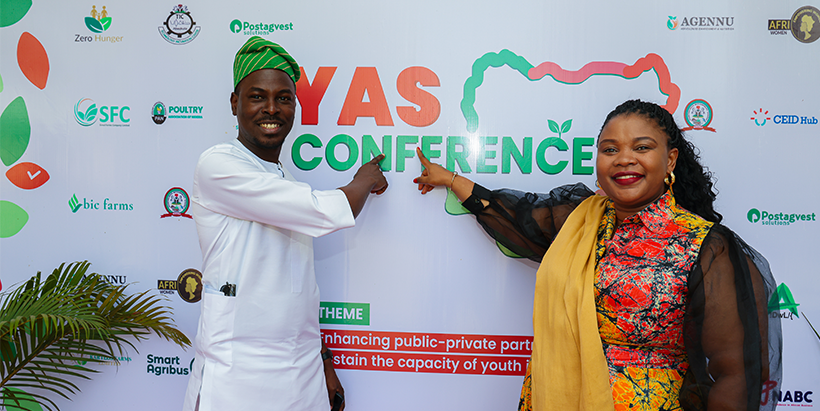
Policy Advisor, Food Security and Climate, Embassy of the Kingdom of the Netherlands in Nigeria, Foluso Adejoro; and the CEO, IITA Youth in Agribusiness Office, Aline Mugisho at the event.

The Embassy of the Kingdom of the Netherlands in Nigeria has reiterated its continued support for initiatives that place young people at the center of agricultural transformation in Nigeria.

The Policy Advisor for Food Security and Climate at the Embassy, Foluso Adejoro, stated this at the networking conference organized by the Dutch-funded Youth in Agribusiness: Enabling Scaling of Innovative Technologies for Sustainable Food Solutions, also known as the YAS Project, which was held recently.

 Divisional Head, MSME, South, Bank of Industry, Dr Kings Jack; YAS Project's Training Coordinator, Muniratu Jibrin; Manager, Strategic Advisory, Sahel Consulting, Hauwa Ali; Corporate Communications Manager, ThriveAgric, Temi Alabi; and Managing Director, AGRICS Limited, Dr Uche Obih, during the panel session.
Divisional Head, MSME, South, Bank of Industry, Dr Kings Jack; YAS Project’s Training Coordinator, Muniratu Jibrin; Manager, Strategic Advisory, Sahel Consulting, Hauwa Ali; Corporate Communications Manager, ThriveAgric, Temi Alabi; and Managing Director, AGRICS Limited, Dr Uche Obih, during the panel session.

He stated, “The YAS project is one that we are proud to support because we deeply believe in the power, creativity, and entrepreneurial spirit of Nigeria’s young people. Through our partnership with YAS and other initiatives, the Netherlands remains committed to ensuring that young people have the skills, network, and opportunities to thrive in the agribusiness sector.

“The theme of this conference perfectly reflects what we value: collaboration between governments, the private sector, and young innovators to unlock sustainable long-term results. We refer to it as the Dutch Diamond Approach. The Embassy congratulates IITACGIAR, BopInc, and all partners involved in this program. We celebrate the achievements of this project. When you hear that over 7,000 young agribusiness owners have been trained, they are real people. No fewer than 10,599 youths have been trained in all, and we are very proud to be a partner.”

Representative of the Nigerian Army Farms and Ranches Ltd, Major Y. U. Rabiu (2nd left); presenting an e-cheque to the winner of the business pitch competition, Azeezat Olatunji (2nd right).

In her remarks, YAS Team Lead and Chief Executive Officer, IITA Youth in Agribusiness Unit (IYA), Aline Mugisho, pointed out that in the last three years, when the project started, about 7,718 agribusinesses were accelerated into more sustainable businesses, adding that 2,147 incubators were introduced to agribusiness, while linkage with finance resulted in €49,821 loan accessed by participants.
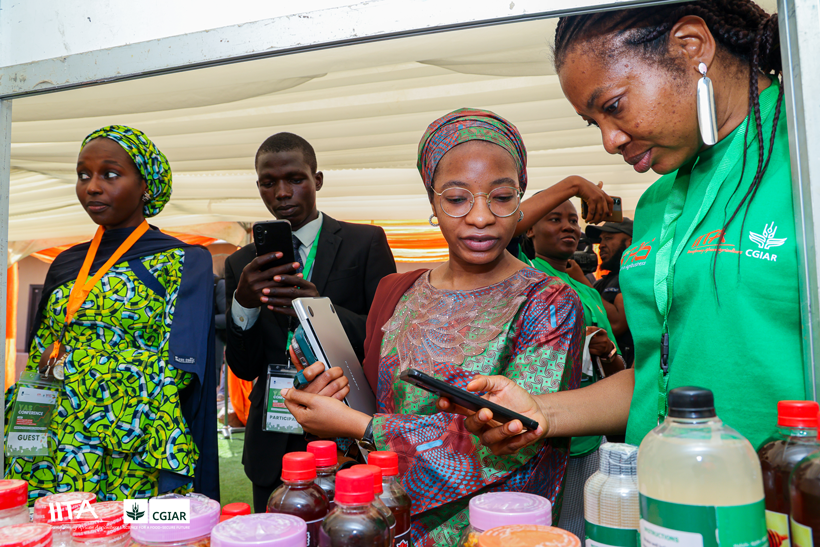
Product exhibition by some YAS participants.

“We are happy that those who got the loans have proven that they are credible. They repaid the money, and some of them have even taken it more than once. This means we need to challenge the stereotype and myth that young people run away when they get loans. We believe and emphasize that agribusiness is a profitable venture and the way forward in not only building a sustainable food system in Nigeria but also creating employment opportunities for young people through self-employment.

“We thank the Netherlands Government for the support. It is a huge privilege to have someone hold your hand, and still make their resources available to you, despite the challenging economic situation worldwide. We also thank our partners for being part of the YAS success story; they opened their businesses to train these young farmers and serve as their mentors.”
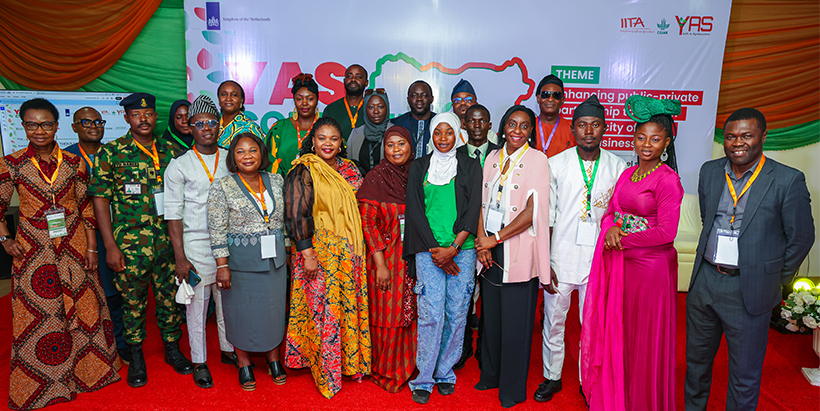
Participants during the seed exhibition tour.

The Head of IITA Abuja Station, Dr Beatrice Aighewi, said agriculture should not be reduced to production, noting that if Nigeria is to be a nation of well-nourished people, all value chains must be explored. She added, “As they say, youths are the leaders of tomorrow, and the training, support, and mentoring that our participants have gone through is one of the ways to prepare them for that leadership. Yes, our focus is on agriculture, but we know that agriculture is what really sustains all of us.”

During the panel session, Dr Kings Jack, the Divisional Head of MSME at the South Bank of Industry, encouraged young farmers to take advantage of the Rural Area Program on Investment for Development (RAPID) credit scheme application, which opens in December. He said the facility offers a five percent interest rate, and the application could be done online.

He added, “What we require of them is just a guarantor, and once the person can pay 60 per cent of that amount, the bank gives the remaining 40 per cent to the person as a grant. We have disbursed about N5bn, and about N150m of that sum was disbursed in the FCT alone.”

Additionally, Dr Uche Obih, Managing Director of AGRICS Limited, urged young agripreneurs to have a clear idea of what they want to achieve, to embrace capacity-building initiatives, and to channel their resources into building their equity. “Young people looking for credit facilities need to demonstrate verifiable dedication to the business, including their equity investment in the business,” he added.

Hauwa Ali, Manager of Strategic Advisory, Sahel Consulting, encouraged young farmers to embrace collaboration and join cooperatives, noting that it’s easier to access finance in clusters than as individuals.

Similarly, Temi Alabi, the Corporate Communications Manager at ThriveAgric, stated that the company believes in supporting participants with what they need to thrive, including the right varieties, fertilizers, and training tailored towards resilience and adaptability. “We give them seeds that can withstand climate shocks. We also train them on how to maintain soil health and link them to markets,” he added.

Other dignitaries present include the Assistant Director of the Federal Ministry of Youth Development, Olasimbo Akinrosotu, and representatives of partner organizations, such as Golden Finger Farms and Ranches and Nigerian Army Farms and Ranches Ltd.

Meanwhile, a major highlight was the business pitch competition for five project participants. After the competition, Azeezat Olatunji came first, Ezra Yohanna came second, and Aliyu Hamza came third. The winner would receive N500,000 worth of inputs, the second-place winner would receive N300,000 worth of inputs, while the third-place winner would receive N200,000 worth of inputs. In addition, the fourth-place winner, Akani Rofiat Ajike, and the fifth-place winner, Oladeji Miracle Elijah, would receive consolation prizes of N100,000 worth of inputs, respectively.

In an interesting twist of events, partners rose one after the other to announce additional rewards for the contestants.

The Chairman of GFFR, Major General Ezra Jakko (retd.), presented the three winners with N100,000 each, while he gave N50,000 to each of the fourth and fifth positions. Additionally, the Managing Director of AGRICS Limited, Dr Obih, promised to give the winner N100,000, the first runner-up N50,000, and the second runner-up N20,000.

Furthermore, Maryam Bello, the representative of Abuja Enterprise Agency, stated that the agency would provide all contestants with free advisory services. Meanwhile, Pelumi Aribisala, the representative of Cato Foods, promised Oladeji free mentoring for as long as necessary to help him start a profitable business. Also, another partner promised him an additional N20,000.

In a related development, Isah Bitrus, one of the participants who shared their success stories, also received cash gifts from partners. For instance, the representative of Thomas Honeycombs Ltd. gave him N100,000; Aribisala of Cato Foods promised him N20,000 in cash; while the Country Director of BopInc, Mercy Mayaki, promised him a cash gift of N20,000.

Contributed by Babatunde Ajaja


Contributed by

Related news

No items found

Leave a Reply

Your email address will not be published. Required fields are marked *

Scroll to Top
Olaosebikan, Olamide

Olamide Deborah Nwanze is a Senior Research Associate specializing in gender mainstreaming research to inform participatory and inclusive breeding, variety development, and seed systems policies regarding root, tuber, and banana (RTB) crops in the International Institute of Tropical Agriculture Headquarters, Ibadan, Nigeria. She is a PhD candidate at the University of Ibadan and holds an MSc and B. Agric in Agricultural Extension and Rural Development. Olamide is a fellow of the African Women in Agricultural Research and Development – Gender Responsive Agricultural Systems Policy (AWARD-GRASP) and the Gender Responsive Researchers Equipped for Agricultural Transformation (GREAT). She seeks to apply her gender-mainstreaming learnings, gender-responsive research, and policy development, and review expertise to facilitate women, youth, children, and vulnerable social group’s access to and adoption of agricultural Innovations that guarantee food, nutrition, income, and livelihood security in Africa. Her current roles include mentoring research fellows, development of guides and training manuals, implementation and adaptation of gender frameworks and tools, value chain actors’ engagement as citizen science partners, policy review and redesign, data management, and analysis. Her current research explores mixed methods and participatory and interdisciplinary approaches to capture and highlight gender dynamics, needs, preferences, and challenges stakeholders face within the agricultural livelihood value chain to prioritize gender-inclusive strategies in breeding programs, policy design, and implementation.

At IITA, she contributes to the implementation of the CGIAR Accelerated Breeding Initiative and Genetic Innovation Programs; participatory and gender research within the NextGen CassavaHarvestPlusRTBFoods, and Tricot-ClimMob 1000Farms Projects; and gender knowledge communication via the G-LENS webinar series, video documentary, policy briefspublications, and blogs.


Recent publications

de Sousa, K., van Etten, J., Manners, R. Bello, A., Teeken, B., Olaosebikan, O., et al. 2024. The tricot approach: an agile framework for decentralized on-farm testing supported by citizen science. A retrospective. Agron. Sustain. Dev. 44, 8. https://doi.org/10.1007/s13593-023-00937-1

Madu, T., Onwuka, S., Nwafor, S., Onyemauwa, N., Ejechi, M., Ofoeze, M., Ukeje, B., Eluagu, C., Olaosebikan, O., Okoye, B., 2024. Gender-Inclusive Consumer Studies Improve Cassava Breeding in Nigeria in: Frontiers in Sociology, volume 9, number: 1224504, doi: 10.3389/fsoc.2024.1224504

Olaosebikan, O.; Bello, A.; Utoblo, O.; Okoye, B.; Olutegbe, N.; Garner, E.; Teeken, B.; Bryan, E.; Forsythe, L.; Cole, S.; Madu, T. 2023.  Stressors and Resilience within the Cassava Value Chain in Nigeria: Preferred Cassava Variety Traits and Response Strategies of Men and Women to Inform Breeding. Sustainability 15, 7837. https://doi.org/10.3390/su15107837

Okoye, B., Ofoeze, M., Ejechi, M., Onwuka, S., Nwafor, S., Onyemauwa, N., Ukeje, B., Eluagu, C., Obidiegwu, J.*, Olaosebikan, O., Madu, T.* 2023. Prioritizing preferred traits in the yam value chain in Nigeria: a gender situation analysis in: Frontiers in Sociology, volume 8, number: 1232626, pages 1 – 9, ISSN 2297-7775, 2023. https://www.frontiersin.org/articles/10.3389/fsoc.2023.1232626/full

Olaosebikan, O., Bello, A. A., de Sousa, K., Ndjouenkeu, R., Adesokan, M., Alamu, E. O., Agbona, A., van Etten, J., Kegah, F. N.*, Dufour, D., Bouniol, A., Teeken, B. 2023. Consumer acceptability of cassava gari-eba food products across cultural and environmental settings using the triadic comparison of technologies approach (tricot) in: Journal of the Science of Food and Agriculture,

Teeken, B., Olaosebikan, O., Bello, A. A., Madu, T.*, Cole, S. M. 2023. Qualitative assessment on the positionality and preferences of dyads in relation to cassava-related activities: working with tricot trial citizen scientists https://hdl.handle.net/10568/138326 Type: Manual

Bouniol, A., Ceballos, H., Bello, A. A., Teeken, B., Olaosebikan, O., Owoade, D., Agbona, A., Fotso Kuate, A., Madu, T.*, Okoye, B.*, Ofoeze, M.*, Nwafor, S.*, Onyemauwa, N.*, Adinsi, L.*, Forsythe, L., Dufour, D. 2023. Varietal impact on women’s labour, workload and related drudgery in processing root, tuber and banana crops: focus on cassava in sub-Saharan Africa in: Journal of the Science of Food and Agriculture, pages 1 – 25, ISSN 0022-5142,

Bello, A. A., Agbona, A., Olaosebikan, O., Edughaen, G., Dufour, D., Bouniol, A., Iluebbey, P., Ndjouenkeu, R.*, Rabbi, I. Y., Teeken, B. 2023. Genetic and environmental effects on processing productivity and food product yield: drudgery of women’s work in: Journal of the Science of Food and Agriculture, pages 1 – 32, ISSN 0022-5142, 5

Cavicchioli, M., Zimbiti, T., Teeken, B., Nwanze, D.O., Liani, M., Parkes, E. & Bello, A. 2023. IITA-Gender Responsive Breeding Training Report. Genetic Resources Center, IITA-HQ, Ibadan, 21-23 September, 2022. Ibadan, Nigeria: IITA, (34 p.).https://hdl.handle.net/10568/131368

Agbona, A. Peteti P., Teeken B., Olaosebikan O. Bello, A. A., Parkes, E., Rabbi, I. Y., Mueller, L., Egesi, C., Kulakow, P. 2022. Data Management in Multi-disciplinary African RTB Crop Breeding Programs. In: Williamson, H.F., Leonelli, S. (eds) Towards Responsible Plant Data Linkage: Data Challenges for Agricultural Research and Development. Springer, Cham. https://doi.org/10.1007/978-3-031-13276-6_5

Lora Forsythe, Pricilla Marimo, Sarah Mayanja, Olamide D. Olaosebikan, Esme Stuart, Bela Teeken, Benjamin Okoye, Tessy Madu, (2021). Cross-product Gender Analysis of RTBfoods Step 2 Gendered Food Mapping on RTB Products. Understanding the Drivers of Trait Preferences and the Development of Multi-user RTB Product Profiles, WP1. London, UK: RTBfoods Field Scientific Report, 30 p.

Teeken, B., Garner, E., Agbona, A., Balogun, I., Olaosebikan, O., Bello, A., Madu, T., Okoye, B., Egesi, C., Kulakow, P. and Tufan, H.A. 2021. Beyond “Women’s Traits”: Exploring How Gender, Social Difference, and Household Characteristics Influence Trait Preferences. Frontiers Sustainable Food Systems 5:740926. https://doi.org/10.3389/fsufs.2021.740926

Teeken, B., Agbona, A., Bello, A., Olaosebikan, O., Alamu, E., Adesokan, M., Awoyale, W., Madu, T., Okoye, B., Chijioke, U., Owoade, D., Okoro, M., Bouniol, A., Dufour, D., Hershey, C., Rabbi, I., Maziya‐Dixon, B., Egesi, C., Tufan, H. and Kulakow, P. (020. Understanding cassava varietal preferences through pairwise ranking of gari‐eba and fufu prepared by local farmer–processors. Int J Food Sci Technol. https://doi.org/10.1111/ijfs.14862

Bela Teeken, Olamide Olaosebikan, Ireti Balogun, Benjamin Okoye, Tessy Madu, Steven Cole, Abolore Bello, Elizabeth Parkes. (2020). Piloting the G+ customer and product profile tools for gender-responsive cassava breeding in Nigeria. Nigeria: International Institute of Tropical Agriculture (IITA). https://hdl.handle.net/20.500.11766/13000