IITA NEWS

Yes! We are winning in the fight to reduce aflatoxin contamination in key staple crops in Africa
May 26, 2017

but… the fight is far from over, panel discussion concludes

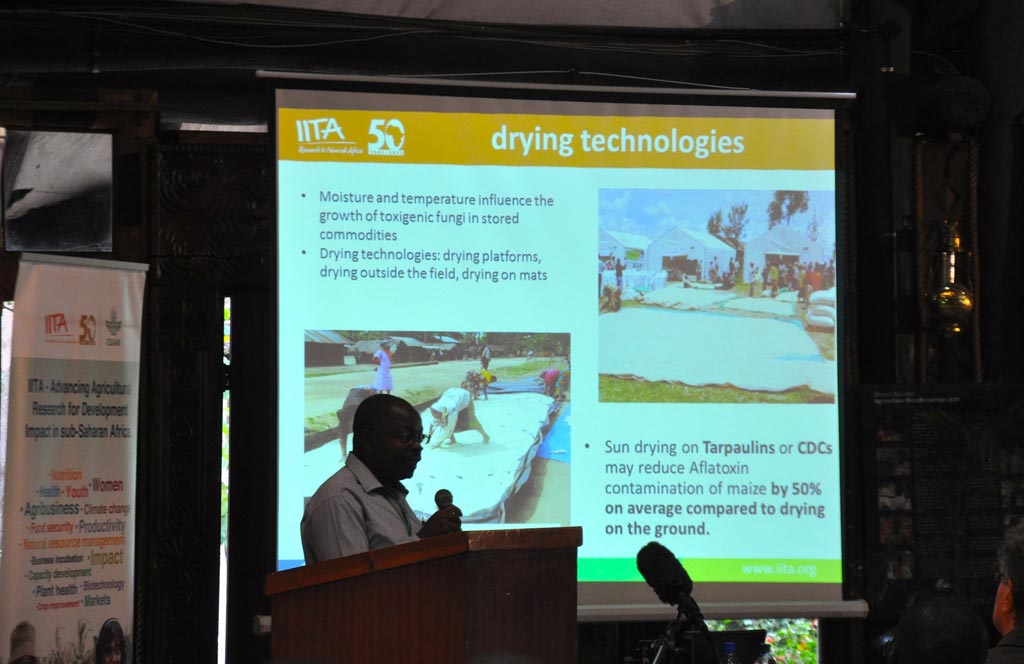
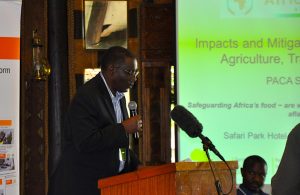
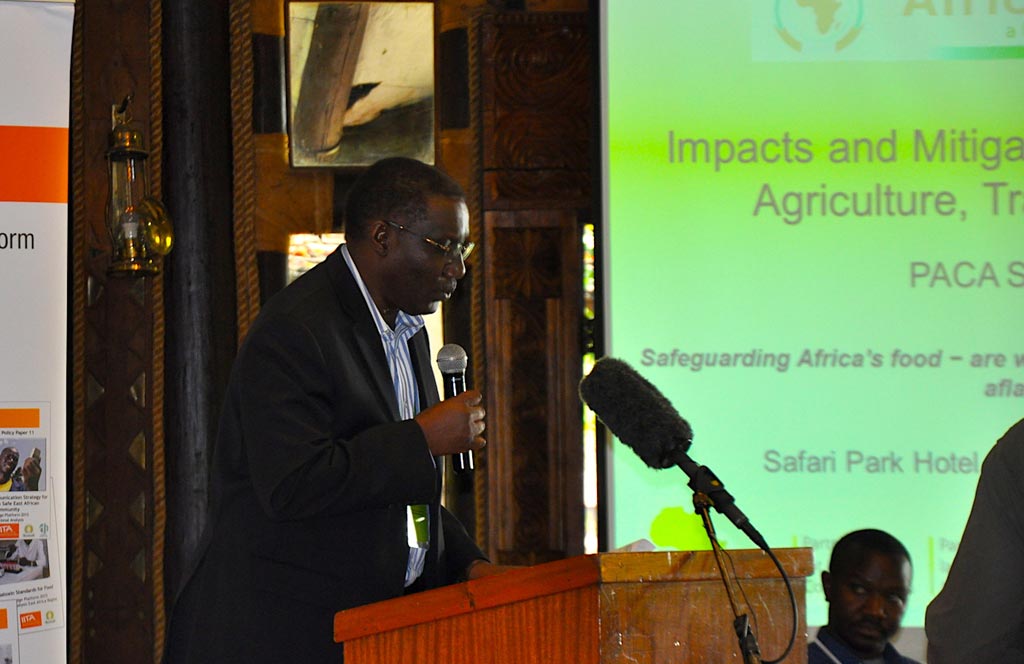
This was the general conclusion of a three-hour symposium organized by IITA and several other stakeholders to discuss the ongoing efforts and progress made to reduce aflatoxin contamination on key staple crops in Africa and how the various stakeholders can synergize and strengthen these efforts. This was held on 30 March at the first All Africa Postharvest Congress & Exhibition. The session titled “Are we winning or losing the fight against aflatoxins?” combined presentations by various partners on the ongoing initiatives to control aflatoxins and a panel discussion on the lessons learned and next steps in efforts to reduce aflatoxin contamination and its negative effects. It attracted over 200 participants.
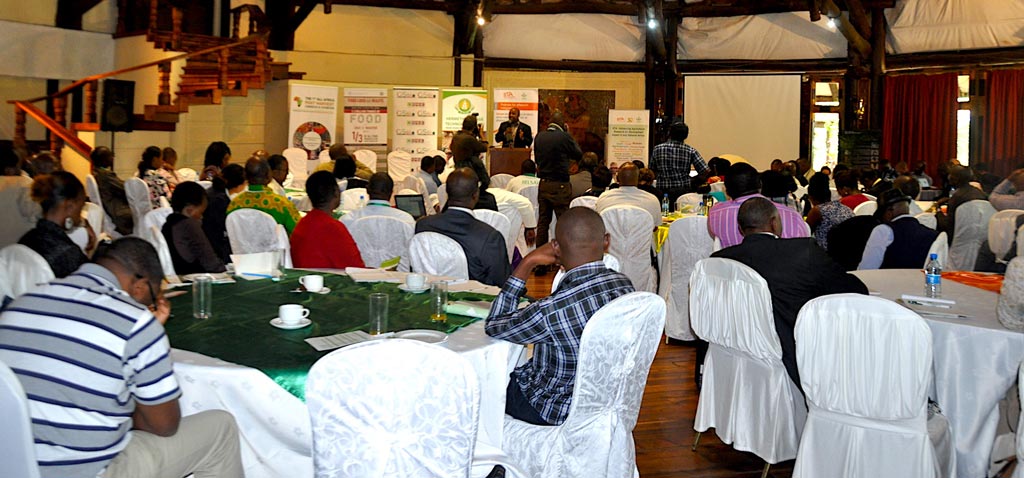
An over view of the well-attended parallel session with over 200 participants.

An over view of the well-attended parallel session with over 200 participants.

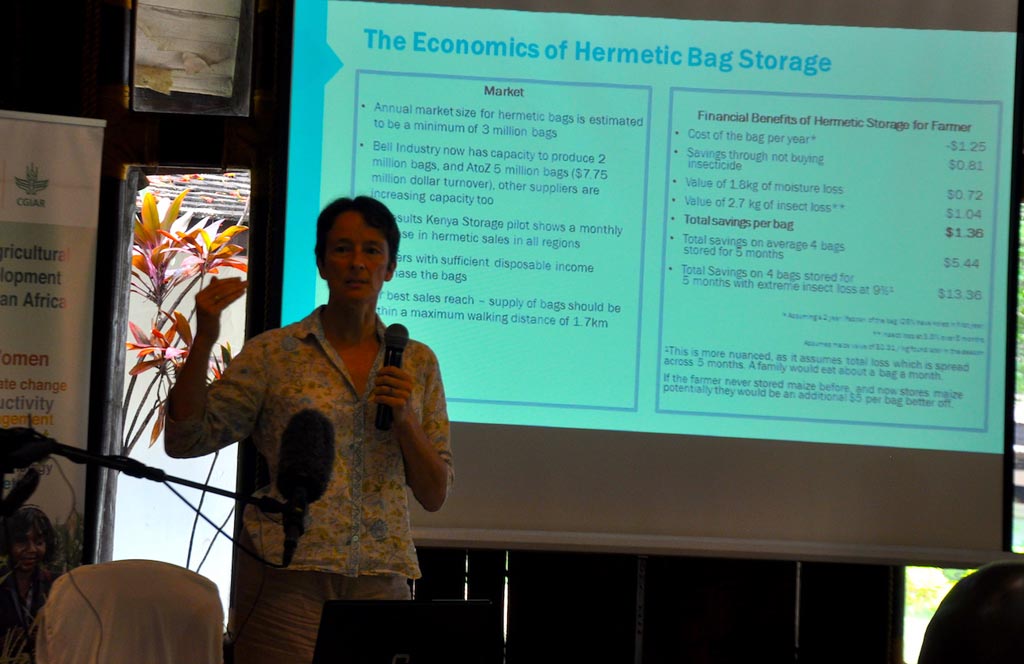
The session started with opening remarks from ATTC Managing Director, Abdou Konlambigue, who emphasized the urgent need to work together to reduce aflatoxin contamination in food and feed to safeguard the harvest, health, and incomes of people in Africa. He said the aflatoxin challenge was too big and complex for any single organization to solve alone hence the need for this symposium to learn from and join forces with other players in the continent. This was followed by a presentation by Liz Ogutu, Senior Officer for Strategy and Operations at the African Union’s Partnership for Aflatoxin Control in Africa (PACA). She highlighted the gravity of aflatoxin contamination problems as she shared the findings of studies that showed high levels of contamination in grains and milk in the market in many African countries and in the blood of children. She also outlined the activities of the pan-African initiative in promoting appropriate policies and technologies across the continent. Other speakers were George Mahuku, a plant pathologist at IITA, who presented on various ways to reduce aflatoxin contamination in staple crops and in particular on appropriate postharvest handling by smallholders. Vivian Hoffman from the International Food Policy Research Institute (IFPRI) presented on the challenges faced in promoting existing technologies for reducing aflatoxin contamination to smallholders. Hoffman pointed out that for farmers to adopt any technology, its economic benefits must be evident. Stanley Kimereh, a program officer with the United Nations Food and Agriculture Organization, spoke on lessons learned and the outcomes of their campaign to create awareness on aflatoxin mitigation in Kenya. The second part of the symposium presentations looked at efforts to scale up appropriate technologies to reduce aflatoxin contamination. Presentations were made by Sophie Walker from ACDI–VOCA; JB Cordaro from Mars Incorporated; Asenugu Idowu from Agribusiness Supplies Ltd, Nigeria; and Raphael Wanjogu, Chief Research Officer at the National Irrigation Board, Kenya. Idowu and Wanjogu shared on their successes in promoting and using Aflasafe―the safe biocontrol product for aflatoxin management developed by IITA and partners―in Nigeria and Kenya. According to Wanjogu, the technology had successfully reduced aflatoxin contamination in the major government irrigation schemes and the board will continue to use Aflasafe across all its major irrigation schemes. The session was facilitated by David Githang’a, a pediatrician and cardiologist and also a former president of the Pediatrics Association of Kenya. This was followed by a lively panel discussion on lessons learned and building consensus on the next steps in reducing aflatoxin contamination. The panelists included Chebii Kilel, Head of Food Crops Directorate, Agriculture, Fisheries and Food Authority, Kenya; Martha Byanyima, a lead expert on Sanitary and Phytosanitary measures; David Githang’a, a medical doctor; Kevin Manyara, Operations Manager, Cargill; and Delia Grace from the International Livestock Research Institute (ILRI) and flagship leader for the CGIAR Research Program on Agriculture Nutrition and Health. Some of the areas highlighted from the discussions were on the need for governments to harmonize policies on various aspects of aflatoxin control efforts including testing of the contaminant in grains such as maize, and standardization of testing protocols. There was an urgent call to create awareness and address the impact of aflatoxin on children which was irreversible and to support farmers to access proven technologies for reducing aflatoxins. The panel discussion was chaired by Gerald Makau Masila, the Executive Director, Eastern Africa Grain Council.

Contributed by

Related news

No items found

Leave a Reply

Your email address will not be published. Required fields are marked *

Scroll to Top
Olaosebikan, Olamide

Olamide Deborah Nwanze is a Senior Research Associate specializing in gender mainstreaming research to inform participatory and inclusive breeding, variety development, and seed systems policies regarding root, tuber, and banana (RTB) crops in the International Institute of Tropical Agriculture Headquarters, Ibadan, Nigeria. She is a PhD candidate at the University of Ibadan and holds an MSc and B. Agric in Agricultural Extension and Rural Development. Olamide is a fellow of the African Women in Agricultural Research and Development – Gender Responsive Agricultural Systems Policy (AWARD-GRASP) and the Gender Responsive Researchers Equipped for Agricultural Transformation (GREAT). She seeks to apply her gender-mainstreaming learnings, gender-responsive research, and policy development, and review expertise to facilitate women, youth, children, and vulnerable social group’s access to and adoption of agricultural Innovations that guarantee food, nutrition, income, and livelihood security in Africa. Her current roles include mentoring research fellows, development of guides and training manuals, implementation and adaptation of gender frameworks and tools, value chain actors’ engagement as citizen science partners, policy review and redesign, data management, and analysis. Her current research explores mixed methods and participatory and interdisciplinary approaches to capture and highlight gender dynamics, needs, preferences, and challenges stakeholders face within the agricultural livelihood value chain to prioritize gender-inclusive strategies in breeding programs, policy design, and implementation.

At IITA, she contributes to the implementation of the CGIAR Accelerated Breeding Initiative and Genetic Innovation Programs; participatory and gender research within the NextGen CassavaHarvestPlusRTBFoods, and Tricot-ClimMob 1000Farms Projects; and gender knowledge communication via the G-LENS webinar series, video documentary, policy briefspublications, and blogs.


Recent publications

de Sousa, K., van Etten, J., Manners, R. Bello, A., Teeken, B., Olaosebikan, O., et al. 2024. The tricot approach: an agile framework for decentralized on-farm testing supported by citizen science. A retrospective. Agron. Sustain. Dev. 44, 8. https://doi.org/10.1007/s13593-023-00937-1

Madu, T., Onwuka, S., Nwafor, S., Onyemauwa, N., Ejechi, M., Ofoeze, M., Ukeje, B., Eluagu, C., Olaosebikan, O., Okoye, B., 2024. Gender-Inclusive Consumer Studies Improve Cassava Breeding in Nigeria in: Frontiers in Sociology, volume 9, number: 1224504, doi: 10.3389/fsoc.2024.1224504

Olaosebikan, O.; Bello, A.; Utoblo, O.; Okoye, B.; Olutegbe, N.; Garner, E.; Teeken, B.; Bryan, E.; Forsythe, L.; Cole, S.; Madu, T. 2023.  Stressors and Resilience within the Cassava Value Chain in Nigeria: Preferred Cassava Variety Traits and Response Strategies of Men and Women to Inform Breeding. Sustainability 15, 7837. https://doi.org/10.3390/su15107837

Okoye, B., Ofoeze, M., Ejechi, M., Onwuka, S., Nwafor, S., Onyemauwa, N., Ukeje, B., Eluagu, C., Obidiegwu, J.*, Olaosebikan, O., Madu, T.* 2023. Prioritizing preferred traits in the yam value chain in Nigeria: a gender situation analysis in: Frontiers in Sociology, volume 8, number: 1232626, pages 1 – 9, ISSN 2297-7775, 2023. https://www.frontiersin.org/articles/10.3389/fsoc.2023.1232626/full

Olaosebikan, O., Bello, A. A., de Sousa, K., Ndjouenkeu, R., Adesokan, M., Alamu, E. O., Agbona, A., van Etten, J., Kegah, F. N.*, Dufour, D., Bouniol, A., Teeken, B. 2023. Consumer acceptability of cassava gari-eba food products across cultural and environmental settings using the triadic comparison of technologies approach (tricot) in: Journal of the Science of Food and Agriculture,

Teeken, B., Olaosebikan, O., Bello, A. A., Madu, T.*, Cole, S. M. 2023. Qualitative assessment on the positionality and preferences of dyads in relation to cassava-related activities: working with tricot trial citizen scientists https://hdl.handle.net/10568/138326 Type: Manual

Bouniol, A., Ceballos, H., Bello, A. A., Teeken, B., Olaosebikan, O., Owoade, D., Agbona, A., Fotso Kuate, A., Madu, T.*, Okoye, B.*, Ofoeze, M.*, Nwafor, S.*, Onyemauwa, N.*, Adinsi, L.*, Forsythe, L., Dufour, D. 2023. Varietal impact on women’s labour, workload and related drudgery in processing root, tuber and banana crops: focus on cassava in sub-Saharan Africa in: Journal of the Science of Food and Agriculture, pages 1 – 25, ISSN 0022-5142,

Bello, A. A., Agbona, A., Olaosebikan, O., Edughaen, G., Dufour, D., Bouniol, A., Iluebbey, P., Ndjouenkeu, R.*, Rabbi, I. Y., Teeken, B. 2023. Genetic and environmental effects on processing productivity and food product yield: drudgery of women’s work in: Journal of the Science of Food and Agriculture, pages 1 – 32, ISSN 0022-5142, 5

Cavicchioli, M., Zimbiti, T., Teeken, B., Nwanze, D.O., Liani, M., Parkes, E. & Bello, A. 2023. IITA-Gender Responsive Breeding Training Report. Genetic Resources Center, IITA-HQ, Ibadan, 21-23 September, 2022. Ibadan, Nigeria: IITA, (34 p.).https://hdl.handle.net/10568/131368

Agbona, A. Peteti P., Teeken B., Olaosebikan O. Bello, A. A., Parkes, E., Rabbi, I. Y., Mueller, L., Egesi, C., Kulakow, P. 2022. Data Management in Multi-disciplinary African RTB Crop Breeding Programs. In: Williamson, H.F., Leonelli, S. (eds) Towards Responsible Plant Data Linkage: Data Challenges for Agricultural Research and Development. Springer, Cham. https://doi.org/10.1007/978-3-031-13276-6_5

Lora Forsythe, Pricilla Marimo, Sarah Mayanja, Olamide D. Olaosebikan, Esme Stuart, Bela Teeken, Benjamin Okoye, Tessy Madu, (2021). Cross-product Gender Analysis of RTBfoods Step 2 Gendered Food Mapping on RTB Products. Understanding the Drivers of Trait Preferences and the Development of Multi-user RTB Product Profiles, WP1. London, UK: RTBfoods Field Scientific Report, 30 p.

Teeken, B., Garner, E., Agbona, A., Balogun, I., Olaosebikan, O., Bello, A., Madu, T., Okoye, B., Egesi, C., Kulakow, P. and Tufan, H.A. 2021. Beyond “Women’s Traits”: Exploring How Gender, Social Difference, and Household Characteristics Influence Trait Preferences. Frontiers Sustainable Food Systems 5:740926. https://doi.org/10.3389/fsufs.2021.740926

Teeken, B., Agbona, A., Bello, A., Olaosebikan, O., Alamu, E., Adesokan, M., Awoyale, W., Madu, T., Okoye, B., Chijioke, U., Owoade, D., Okoro, M., Bouniol, A., Dufour, D., Hershey, C., Rabbi, I., Maziya‐Dixon, B., Egesi, C., Tufan, H. and Kulakow, P. (020. Understanding cassava varietal preferences through pairwise ranking of gari‐eba and fufu prepared by local farmer–processors. Int J Food Sci Technol. https://doi.org/10.1111/ijfs.14862

Bela Teeken, Olamide Olaosebikan, Ireti Balogun, Benjamin Okoye, Tessy Madu, Steven Cole, Abolore Bello, Elizabeth Parkes. (2020). Piloting the G+ customer and product profile tools for gender-responsive cassava breeding in Nigeria. Nigeria: International Institute of Tropical Agriculture (IITA). https://hdl.handle.net/20.500.11766/13000