
Zambia traditional leader seeks IITA help to improve plight of people
March 4, 2017
The chief of an expansive district in the north of Zambia has sought the assistance of IITA to help improve the plight of his people through agriculture-based interventions. His Royal Highness Chief Kaputa (Chifumbe Chansa), traditional leader of Kaputa District in the Northern Province of Zambia, met with scientists and staff of IITA-Zambia led by David Chikoye, Regional Director for Southern Africa, on 23 February, to discuss how the Institute could help the people of Kaputa get the most of their crops―particularly cassava―to better their lives.
 Chief Kaputa is the first traditional leader or ruler to voluntarily seek the help of IITA in Zambia.
Chief Kaputa says that his district covers more than 100,000 hectares but with a population of only about 80,000. He added that the people are purely dependent on subsistence agriculture, mainly cassava but also maize, rice, and soybean with farms of less than 1 hectare each.
The chief, who was accompanied by his two sons, related that most of the development organizations and government agencies that they have approached directed them to IITA.
“IITA comes highly recommended by other agricultural R&D entities in Zambia, many of whom said that we meet with you especially with regard to cassava,” he emphasized.
“Our objective is simple: to help our people improve their incomes and livelihoods through the cassava value chain. I want to see my district transformed from subsistence agriculture into one that provides for both income and food security,” he added.
“It’s heartening when those who we are supposed help are the ones who come to us for such,” replied Chikoye. “It validates the value of what we do as a research institution. This occasion is made even more memorable as we are visited by a Chief and his sons,” he added.
In response to Chief Kaputa’s request, Chikoye promised for IITA to assist the district with the provision of planting materials of improved cassava varieties, as well as technical backstopping in terms of training on the cassava value chain, and the establishment of demonstration plots to showcase IITA-developed crop technologies within the locality.
“We would also like to help Kaputa youth with training in agribusiness and agripreneurship, and help them establish small income-generating projects under the IITA Youth Agripreneurship program,” Chikoye added.
On their part, Chief Kaputa agreed to IITA’s proposition to set aside 20 hectares of land within the district where the institute could set up technology demonstration areas and also serve as a hands-on training facility.
“I am sure that together, we will help ensure a brighter future for my people,” Chief Kaputa related.
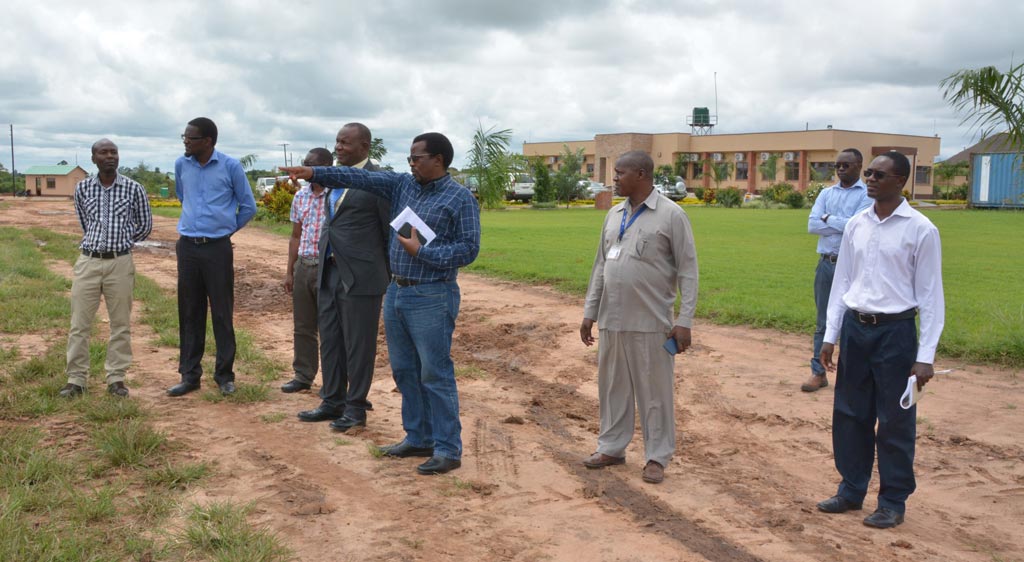
Chikoye and some IITA-Zambia staff also took Chief Kaputa and his sons around the SARAH campus to see the research facilities and have a feel of what could be in store for them under this partnership. The Chief was especially interested in the various improved cassava varieties and processing equipment being tested by IITA on-station.
Chief Kaputa is the first traditional leader or ruler to voluntarily seek the help of IITA in Zambia.
Chief Kaputa says that his district covers more than 100,000 hectares but with a population of only about 80,000. He added that the people are purely dependent on subsistence agriculture, mainly cassava but also maize, rice, and soybean with farms of less than 1 hectare each.
The chief, who was accompanied by his two sons, related that most of the development organizations and government agencies that they have approached directed them to IITA.
“IITA comes highly recommended by other agricultural R&D entities in Zambia, many of whom said that we meet with you especially with regard to cassava,” he emphasized.
“Our objective is simple: to help our people improve their incomes and livelihoods through the cassava value chain. I want to see my district transformed from subsistence agriculture into one that provides for both income and food security,” he added.
“It’s heartening when those who we are supposed help are the ones who come to us for such,” replied Chikoye. “It validates the value of what we do as a research institution. This occasion is made even more memorable as we are visited by a Chief and his sons,” he added.
In response to Chief Kaputa’s request, Chikoye promised for IITA to assist the district with the provision of planting materials of improved cassava varieties, as well as technical backstopping in terms of training on the cassava value chain, and the establishment of demonstration plots to showcase IITA-developed crop technologies within the locality.
“We would also like to help Kaputa youth with training in agribusiness and agripreneurship, and help them establish small income-generating projects under the IITA Youth Agripreneurship program,” Chikoye added.
On their part, Chief Kaputa agreed to IITA’s proposition to set aside 20 hectares of land within the district where the institute could set up technology demonstration areas and also serve as a hands-on training facility.
“I am sure that together, we will help ensure a brighter future for my people,” Chief Kaputa related.
Chikoye and some IITA-Zambia staff also took Chief Kaputa and his sons around the SARAH campus to see the research facilities and have a feel of what could be in store for them under this partnership. The Chief was especially interested in the various improved cassava varieties and processing equipment being tested by IITA on-station.
Chikoye explaining to Chief Kaputa (in a suit) about the different cassava varieties being tested at the IITA-SARAH campus.
Contributed by
Recent stories
No items found