
Science-based policies can unlock Africa’s access to genome-edited crop varieties
July 12, 2020
CGIAR-IITA head of plant biotechnology Leena Tripathi has made an impassioned plea for genome editing and its potential. She made the call in a recently published paper titled, CRISPR/Cas9-based genome editing of banana for disease resistance. Tripathi and her Kenya-based team are using gene editing to develop disease-resistant banana varieties.
“To boost the use of genome editing in crop improvement, we need to develop science-based guidelines, which will treat the GE varieties as similar to those generated through conventional breeding, particularly where no foreign gene is inserted,” said Tripathi. “It will enhance the adoption of disease-resistant GE varieties, hence contributing to food security, especially in Africa.”
 She also said that scientists should use newer tools in breeding or risk a food security crisis. Plant pests and diseases account for 20–40% of yield loss and have, in some instances, wiped out entire crop varieties. For example, fusarium wilt (Race1) wiped out Gros Michel (a dessert banana variety), which was replaced by Cavendish that now accounts for 90% of all banana exports.
In their journal article, the authors further state that the emergence of new threats to banana production, such as Tropical race 4 (TR4), creates an urgency to develop disease-resistant varieties using new breeding tools such as genome editing.
Bananas are affected by multiple pests and diseases that can co-exist. For example, nematodes, weevils, black sigatoka, and bacterial wilt, can all infect a banana field at the same time and are worsened by drought due to climate change. How then does a farmer deal with all problems?
Using pesticides is both costly and detrimental to human and environmental health. With advances in science, researchers have now opted for breeding disease-resistant varieties. According to Tripathi, “The traditional breeding of banana is challenging, particularly the introduction of multiple fungal, bacterial, and virus-resistant genes, at the same time into the crop as it may cause considerable yield reduction or intensify other undesirable traits because of genetic linkage.”
Genome-editing can complement conventional breeding by speeding up crop improvement process. As Tripathi explained in this video interview, newer breeding methods are precise, which avoids incorporating undesirable traits in the improved varieties. Conventionally bred banana varieties have struggled with consumer acceptability due to their altered taste. Genetic modification and CRISPR can address this longstanding challenge with their precise alteration capability.
She also said that scientists should use newer tools in breeding or risk a food security crisis. Plant pests and diseases account for 20–40% of yield loss and have, in some instances, wiped out entire crop varieties. For example, fusarium wilt (Race1) wiped out Gros Michel (a dessert banana variety), which was replaced by Cavendish that now accounts for 90% of all banana exports.
In their journal article, the authors further state that the emergence of new threats to banana production, such as Tropical race 4 (TR4), creates an urgency to develop disease-resistant varieties using new breeding tools such as genome editing.
Bananas are affected by multiple pests and diseases that can co-exist. For example, nematodes, weevils, black sigatoka, and bacterial wilt, can all infect a banana field at the same time and are worsened by drought due to climate change. How then does a farmer deal with all problems?
Using pesticides is both costly and detrimental to human and environmental health. With advances in science, researchers have now opted for breeding disease-resistant varieties. According to Tripathi, “The traditional breeding of banana is challenging, particularly the introduction of multiple fungal, bacterial, and virus-resistant genes, at the same time into the crop as it may cause considerable yield reduction or intensify other undesirable traits because of genetic linkage.”
Genome-editing can complement conventional breeding by speeding up crop improvement process. As Tripathi explained in this video interview, newer breeding methods are precise, which avoids incorporating undesirable traits in the improved varieties. Conventionally bred banana varieties have struggled with consumer acceptability due to their altered taste. Genetic modification and CRISPR can address this longstanding challenge with their precise alteration capability.
She also said that scientists should use newer tools in breeding or risk a food security crisis. Plant pests and diseases account for 20–40% of yield loss and have, in some instances, wiped out entire crop varieties. For example, fusarium wilt (Race1) wiped out Gros Michel (a dessert banana variety), which was replaced by Cavendish that now accounts for 90% of all banana exports.
In their journal article, the authors further state that the emergence of new threats to banana production, such as Tropical race 4 (TR4), creates an urgency to develop disease-resistant varieties using new breeding tools such as genome editing.
Bananas are affected by multiple pests and diseases that can co-exist. For example, nematodes, weevils, black sigatoka, and bacterial wilt, can all infect a banana field at the same time and are worsened by drought due to climate change. How then does a farmer deal with all problems?
Using pesticides is both costly and detrimental to human and environmental health. With advances in science, researchers have now opted for breeding disease-resistant varieties. According to Tripathi, “The traditional breeding of banana is challenging, particularly the introduction of multiple fungal, bacterial, and virus-resistant genes, at the same time into the crop as it may cause considerable yield reduction or intensify other undesirable traits because of genetic linkage.”
Genome-editing can complement conventional breeding by speeding up crop improvement process. As Tripathi explained in this video interview, newer breeding methods are precise, which avoids incorporating undesirable traits in the improved varieties. Conventionally bred banana varieties have struggled with consumer acceptability due to their altered taste. Genetic modification and CRISPR can address this longstanding challenge with their precise alteration capability.
Regulatory approaches for edited products
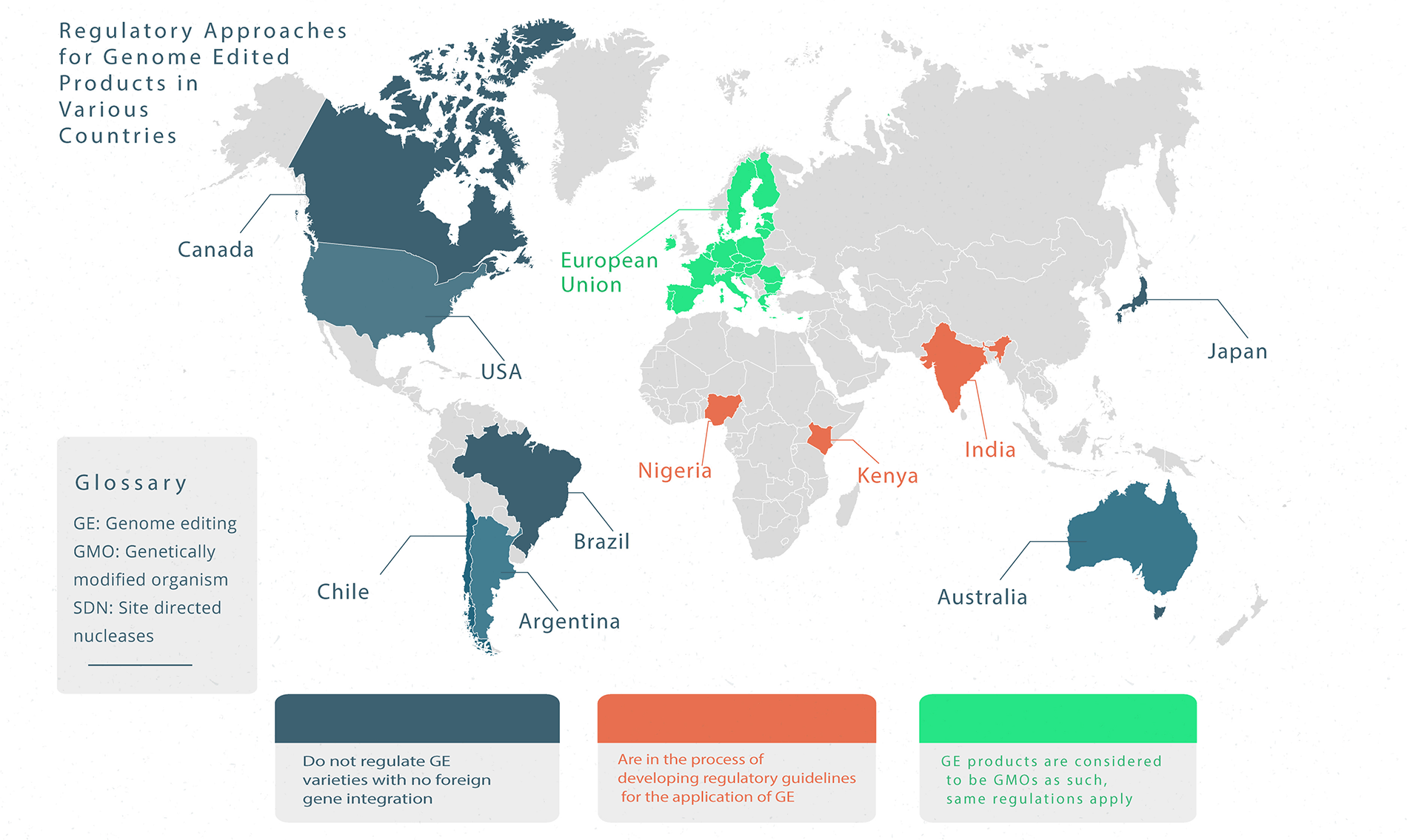
Genome editing has shown immense potential for crop improvement, but its regulation is still in the early stages, and countries have differences in the regulation of GE crop varieties. Genome editing technologies can create genotypic and phenotypic plant variations that are indistinguishable from those produced through natural means or conventional mutagenesis methods. Several countries such as Argentina, Australia, Brazil, Canada, Chile, Japan, and the USA do not regulate GE varieties with no foreign gene integration. Other countries like India, Kenya, and Nigeria are in the process of developing regulatory guidelines for the application of genome editing. Science-based regulatory guidelines will enhance the adoption of disease-resistant GE varieties, hence contributing to food security.Contributed by
Recent stories
No items found