
IITA NEWS

IITA and CIMMYT collaborate to enhance adoption of Conservation Agriculture in Southern Africa
September 19, 2020

Lilongwe, Malawi. The International Institute of Tropical Agriculture (IITA) and the International Maize and Wheat Improvement Center (CIMMYT) recently launched a project that aims to investigate the drivers and barriers to adoption of Conservation Agriculture (CA) in southern Africa and to develop strategies for achieving adoption and impact at scale.

The project, Understanding and Enhancing Adoption of Conservation Agriculture in Smallholder Farming Systems of Southern Africa (ACASA), will apply social and scaling science to understand the biophysical, socioeconomic, institutional, and policy drivers and barriers to the adoption of CA technologies and practices.
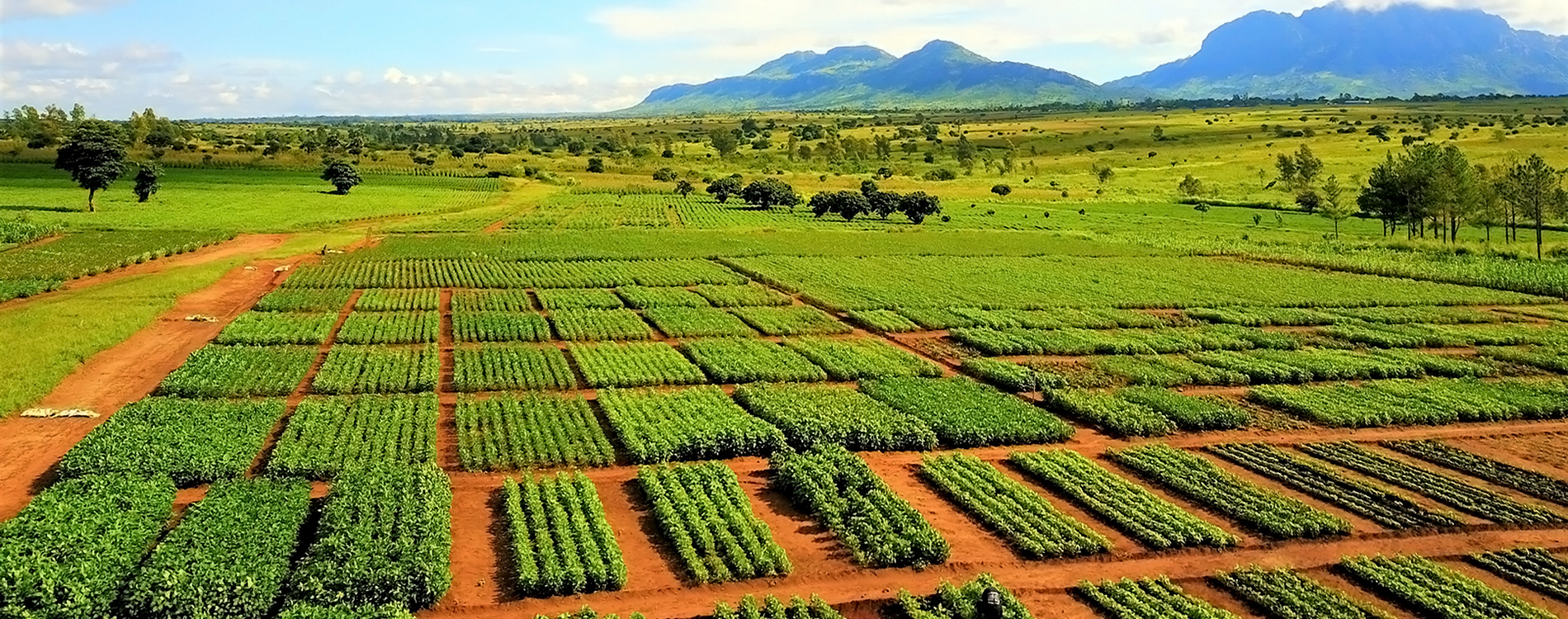
IITA and CIMMYT collaborate to enhance adoption of Conservation Agriculture in Southern Africa

ACASA is supported by the Norwegian Agency for Development Cooperation (Norad) and will be implemented in Malawi, Zambia, and Zimbabwe in collaboration with the CA stakeholders and farmers in the region.

The project was officially launched virtually on 16 September 2020 by the Zambia Minister of Agriculture, the Hon. Michael Katambo.  Hon Katambo noted it was a timely intervention as the livelihoods and food security of smallholder farmers in southern Africa are increasingly being threatened by climate change and variability that had led to a steady decline in the production of food staples and an increase in the number of food and nutrition insecure people over the last couple of years.

“It is now clear that current productivity and production levels cannot be expected to meet our requirements for food and nutrition security. Conservation Agriculture (CA) has a proven potential to increase and stabilize crop yields and to support sustainable and resilience production systems and rural livelihoods,” he said in a speech read on his behalf by Dr Moses Mwale, Director, Department of Agriculture at the Ministry.

CA, a farming system that promotes minimum soil disturbance, permanent soil cover, and diversification of plant species, can efficiently increase agricultural productivity while reducing land degradation and improving soil health for more productive, profitable, and sustainable farming.

Substantial on-farm experimental evidence has been generated on the agronomic and economic benefits of CA, first introduced in the 70s in south Africa. Consequently, a lot of investments have been made by the donor community and national governments to promote and scale CA technologies and practices among smallholder farmers in the region. Despite all these efforts, however, the adoption rate among smallholder farmers remains low.

“We should not let the low adoption of conservation agriculture discourage us. Let us use this opportunity to reflect and identify the missing link and come up with more sustainable solutions to the problem,” said the IITA Director for Southern Africa Dr David Chikoye, speaking at the launch.

“Although adoption of improved practices by most resource-poor farmers is primarily determined by the potential immediate benefits on crop yields, profits, risk, and livelihoods, there are a number of biophysical, socioeconomic, institutional, and policy factors that promote or hinder adoption of CA. The project, therefore, aims to identify the adoption drivers and barriers and develop pathways and strategies for inclusive scaling of CA practices,” added Dr Arega Alene, IITA Agricultural Economist based in Malawi, who leads the project at IITA.

Also speaking at the launch, Christian Thierfelder, Principal  Cropping Systems Agronomist at CIMMYT, highlighted some of the bottlenecks for CA adoption noting they were linked more to socioeconomic and cultural factors rather than biophysical.

“CA is a viable and proven climate smart farming system. Therefore future research efforts should go towards understanding farmers’ decision-making and behavioral change as well as profitability,” he said.

Other key partners include Food and Agriculture Organization of the United Nations (FAO), African Conservation Tillage Network (ACTN) and Centre for Coordination of Agricultural Research and Development for Southern Africa (CCARDESA).

The project launch was attended by policymakers, donors, and members of the national and regional CA taskforces, national and international research institutions, universities, international development institutions, private seed companies, non-governmental organizations, and farmer organizations.

Media contact:
Katherine Lopez, Head of Communication -IITA,  Email: k.lopez@cgiar.org
Genevieve Renard, Director of Communication – CIMMYT, Email: g.renard@cgiar.org

Project lead:
Arega Alene, IITA Agricultural Economist, Email: a.alene@cgiar.org

About IITA
The International Institute of Tropical Agriculture (IITA) is a not-for-profit institution that generates agricultural innovations to meet Africa’s most pressing challenges of hunger, malnutrition, poverty, and natural resource degradation. Working with various partners across sub-Saharan Africa, we improve livelihoods, enhance food and nutrition security, increase employment, and preserve natural resource integrity. IITA is a member of CGIAR, a global agriculture research partnership for a food-secure future.

About CIMMYT
The International Maize and What Improvement Center (CIMMYT) is the global leader in publicly-funded maize and wheat research and related farming systems. Headquartered near Mexico City, CIMMYT works with hundreds of partners throughout the developing world to sustainably increase the productivity of maize and wheat cropping systems, thus improving global food security and reducing poverty. CIMMYT is a member of the CGIAR System and leads the CGIAR programs on Maize and Wheat and the Excellence in Breeding Platform. The Center receives support from national governments, foundations, development banks and other public and private agencies. For more information visit www.cimmyt.org.


Contributed by

Related news

No items found

Leave a Reply

Your email address will not be published. Required fields are marked *

Scroll to Top
Olaosebikan, Olamide

Olamide Deborah Nwanze is a Senior Research Associate specializing in gender mainstreaming research to inform participatory and inclusive breeding, variety development, and seed systems policies regarding root, tuber, and banana (RTB) crops in the International Institute of Tropical Agriculture Headquarters, Ibadan, Nigeria. She is a PhD candidate at the University of Ibadan and holds an MSc and B. Agric in Agricultural Extension and Rural Development. Olamide is a fellow of the African Women in Agricultural Research and Development – Gender Responsive Agricultural Systems Policy (AWARD-GRASP) and the Gender Responsive Researchers Equipped for Agricultural Transformation (GREAT). She seeks to apply her gender-mainstreaming learnings, gender-responsive research, and policy development, and review expertise to facilitate women, youth, children, and vulnerable social group’s access to and adoption of agricultural Innovations that guarantee food, nutrition, income, and livelihood security in Africa. Her current roles include mentoring research fellows, development of guides and training manuals, implementation and adaptation of gender frameworks and tools, value chain actors’ engagement as citizen science partners, policy review and redesign, data management, and analysis. Her current research explores mixed methods and participatory and interdisciplinary approaches to capture and highlight gender dynamics, needs, preferences, and challenges stakeholders face within the agricultural livelihood value chain to prioritize gender-inclusive strategies in breeding programs, policy design, and implementation.

At IITA, she contributes to the implementation of the CGIAR Accelerated Breeding Initiative and Genetic Innovation Programs; participatory and gender research within the NextGen CassavaHarvestPlusRTBFoods, and Tricot-ClimMob 1000Farms Projects; and gender knowledge communication via the G-LENS webinar series, video documentary, policy briefspublications, and blogs.


Recent publications

de Sousa, K., van Etten, J., Manners, R. Bello, A., Teeken, B., Olaosebikan, O., et al. 2024. The tricot approach: an agile framework for decentralized on-farm testing supported by citizen science. A retrospective. Agron. Sustain. Dev. 44, 8. https://doi.org/10.1007/s13593-023-00937-1

Madu, T., Onwuka, S., Nwafor, S., Onyemauwa, N., Ejechi, M., Ofoeze, M., Ukeje, B., Eluagu, C., Olaosebikan, O., Okoye, B., 2024. Gender-Inclusive Consumer Studies Improve Cassava Breeding in Nigeria in: Frontiers in Sociology, volume 9, number: 1224504, doi: 10.3389/fsoc.2024.1224504

Olaosebikan, O.; Bello, A.; Utoblo, O.; Okoye, B.; Olutegbe, N.; Garner, E.; Teeken, B.; Bryan, E.; Forsythe, L.; Cole, S.; Madu, T. 2023.  Stressors and Resilience within the Cassava Value Chain in Nigeria: Preferred Cassava Variety Traits and Response Strategies of Men and Women to Inform Breeding. Sustainability 15, 7837. https://doi.org/10.3390/su15107837

Okoye, B., Ofoeze, M., Ejechi, M., Onwuka, S., Nwafor, S., Onyemauwa, N., Ukeje, B., Eluagu, C., Obidiegwu, J.*, Olaosebikan, O., Madu, T.* 2023. Prioritizing preferred traits in the yam value chain in Nigeria: a gender situation analysis in: Frontiers in Sociology, volume 8, number: 1232626, pages 1 – 9, ISSN 2297-7775, 2023. https://www.frontiersin.org/articles/10.3389/fsoc.2023.1232626/full

Olaosebikan, O., Bello, A. A., de Sousa, K., Ndjouenkeu, R., Adesokan, M., Alamu, E. O., Agbona, A., van Etten, J., Kegah, F. N.*, Dufour, D., Bouniol, A., Teeken, B. 2023. Consumer acceptability of cassava gari-eba food products across cultural and environmental settings using the triadic comparison of technologies approach (tricot) in: Journal of the Science of Food and Agriculture,

Teeken, B., Olaosebikan, O., Bello, A. A., Madu, T.*, Cole, S. M. 2023. Qualitative assessment on the positionality and preferences of dyads in relation to cassava-related activities: working with tricot trial citizen scientists https://hdl.handle.net/10568/138326 Type: Manual

Bouniol, A., Ceballos, H., Bello, A. A., Teeken, B., Olaosebikan, O., Owoade, D., Agbona, A., Fotso Kuate, A., Madu, T.*, Okoye, B.*, Ofoeze, M.*, Nwafor, S.*, Onyemauwa, N.*, Adinsi, L.*, Forsythe, L., Dufour, D. 2023. Varietal impact on women’s labour, workload and related drudgery in processing root, tuber and banana crops: focus on cassava in sub-Saharan Africa in: Journal of the Science of Food and Agriculture, pages 1 – 25, ISSN 0022-5142,

Bello, A. A., Agbona, A., Olaosebikan, O., Edughaen, G., Dufour, D., Bouniol, A., Iluebbey, P., Ndjouenkeu, R.*, Rabbi, I. Y., Teeken, B. 2023. Genetic and environmental effects on processing productivity and food product yield: drudgery of women’s work in: Journal of the Science of Food and Agriculture, pages 1 – 32, ISSN 0022-5142, 5

Cavicchioli, M., Zimbiti, T., Teeken, B., Nwanze, D.O., Liani, M., Parkes, E. & Bello, A. 2023. IITA-Gender Responsive Breeding Training Report. Genetic Resources Center, IITA-HQ, Ibadan, 21-23 September, 2022. Ibadan, Nigeria: IITA, (34 p.).https://hdl.handle.net/10568/131368

Agbona, A. Peteti P., Teeken B., Olaosebikan O. Bello, A. A., Parkes, E., Rabbi, I. Y., Mueller, L., Egesi, C., Kulakow, P. 2022. Data Management in Multi-disciplinary African RTB Crop Breeding Programs. In: Williamson, H.F., Leonelli, S. (eds) Towards Responsible Plant Data Linkage: Data Challenges for Agricultural Research and Development. Springer, Cham. https://doi.org/10.1007/978-3-031-13276-6_5

Lora Forsythe, Pricilla Marimo, Sarah Mayanja, Olamide D. Olaosebikan, Esme Stuart, Bela Teeken, Benjamin Okoye, Tessy Madu, (2021). Cross-product Gender Analysis of RTBfoods Step 2 Gendered Food Mapping on RTB Products. Understanding the Drivers of Trait Preferences and the Development of Multi-user RTB Product Profiles, WP1. London, UK: RTBfoods Field Scientific Report, 30 p.

Teeken, B., Garner, E., Agbona, A., Balogun, I., Olaosebikan, O., Bello, A., Madu, T., Okoye, B., Egesi, C., Kulakow, P. and Tufan, H.A. 2021. Beyond “Women’s Traits”: Exploring How Gender, Social Difference, and Household Characteristics Influence Trait Preferences. Frontiers Sustainable Food Systems 5:740926. https://doi.org/10.3389/fsufs.2021.740926

Teeken, B., Agbona, A., Bello, A., Olaosebikan, O., Alamu, E., Adesokan, M., Awoyale, W., Madu, T., Okoye, B., Chijioke, U., Owoade, D., Okoro, M., Bouniol, A., Dufour, D., Hershey, C., Rabbi, I., Maziya‐Dixon, B., Egesi, C., Tufan, H. and Kulakow, P. (020. Understanding cassava varietal preferences through pairwise ranking of gari‐eba and fufu prepared by local farmer–processors. Int J Food Sci Technol. https://doi.org/10.1111/ijfs.14862

Bela Teeken, Olamide Olaosebikan, Ireti Balogun, Benjamin Okoye, Tessy Madu, Steven Cole, Abolore Bello, Elizabeth Parkes. (2020). Piloting the G+ customer and product profile tools for gender-responsive cassava breeding in Nigeria. Nigeria: International Institute of Tropical Agriculture (IITA). https://hdl.handle.net/20.500.11766/13000