
IITA NEWS

Farmers empowered: Accra workshop tackles climate challenge with crop-climate modeling
March 8, 2024

In a week-long intensive workshop, researchers, agricultural stakeholders, and early-career scientists from across Africa, Asia, and Europe gathered in Accra, Ghana, to equip themselves with powerful tools for combating climate change’s impact on agriculture. Organized by the CGIAR Excellence in Agronomy Initiative and the International Water Management Institute (IWMI), West Africa, in collaboration with the Sustainable Intensification Mixed Farming System (SI-MFS), the London School of Hygiene and Tropical Medicine (LSHTM), and the University of KwaZulu-Natal, the workshop focused on utilizing crop models for integrated climate risk assessment and developing adaptation strategies.
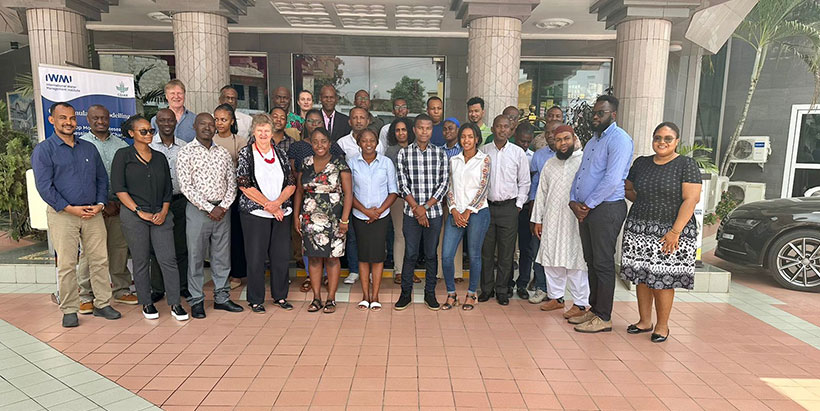
Participants of the climate change impact workshop.

With climate change disrupting weather patterns and jeopardizing food security, the workshop gave participants the knowledge and skills to leverage advanced crop models and climate data. These models act as digital simulations, allowing researchers to assess potential climate impact and develop tailored adaptation strategies for various scales, from individual fields to entire landscapes.

“The application of crop models is still a developing field, but it holds immense potential for empowering farmers,” explained Professor Tafadzwanashe Mabhaudhi, lead organizer from LSHTM. “By understanding the specific risks their crops face due to climate change, farmers can make informed decisions about planting dates, crop choices, and water management, ultimately increasing their resilience and ensuring better yields.”

The importance of the workshop was not confined to the academic realm; it held direct implications for farmers. The integration of crop models in climate risk assessment allowed for the development of practical advisories for farmers, aiding decisions on planting dates, crop choices, and cultivation practices. The workshop’s ultimate goal was to equip researchers with the tools to support farmers with timely, climate-smart information, fostering resilience and sustainable agricultural practices.

The workshop’s objectives were multifaceted, aiming to enhance conceptual and technical understanding, provide practical exercises, and improve the inter-comparability of crop-climate modeling. The focus areas included:

  • Applying crop models for climate risk impact assessment
  • Translating model outputs into adaptation strategies
  • Addressing challenges in integrated climate risk assessments
The workshop offered a comprehensive learning experience, including:
  • Interactive lectures and discussions led by crop modeling and climate change experts.
  • Hands-on practical exercises where participants applied their newfound knowledge to real-world scenarios.
  • Sharing of best practices and case studies from across the region.
  • Exploration of underutilized crops, identifying their potential for future food security in a changing climate.

“This workshop has been invaluable,” shared Siyabusa Mkuhlani, a data scientist and crop modeler from the Excellence in Agronomy Initiative. “I now have the skills and confidence to use crop models to support farmers in my region, helping them adapt to the challenges of climate change and secure their livelihoods.”

There is a need for ongoing research and development in refining crop models and making the information accessible to farmers. The transition from theory to practice, coupled with tailored advisories and climate change adaptation strategies, can bridge the gap between researchers and farmers, ensuring the practical application of crop modeling for food and nutrition security.

“Crop models are a game-changer, especially as we can’t measure everything happening in fields,” said Birhanu Zemadim Birhanu, the Deputy Country Representative and Senior Researcher—Water and Land Management Expert IWMI-Ghana, a participant and co-organizer in the recent crop modeling workshop in Accra, Ghana. “These models, when well-adapted, can guide us in making crucial decisions about resource use efficiency (water and nutrient use management), agronomic operations (planting dates, weeding, harvesting), and even anticipating potential pest and disease problems. This workshop is crucial for developing reliable models that use readily available data, ultimately helping us navigate the challenges of a changing climate.” The Accra workshop marked a significant step in equipping African researchers and stakeholders with the tools to address climate change’s impact on agriculture. By empowering farmers with data-driven insights and adaptation strategies, the workshop contributes to a more food-secure and resilient future for the continent. This workshop did not take place in isolation but formed part of a broader training program, building on the preceding workshop in Zimbabwe that introduced AquaCrop, DSSAT, and APSIM models. The objective was to deepen the understanding and interpretation of crop model outputs, aligning with the broader mission of the CGIAR Excellence in Agronomy Initiative and partners.

Contributed by Barbra Sehlule

Contributed by

Recent stories

No items found

Leave a Reply

Your email address will not be published. Required fields are marked *

Scroll to Top
Olaosebikan, Olamide

Olamide Deborah Nwanze is a Senior Research Associate specializing in gender mainstreaming research to inform participatory and inclusive breeding, variety development, and seed systems policies regarding root, tuber, and banana (RTB) crops in the International Institute of Tropical Agriculture Headquarters, Ibadan, Nigeria. She is a PhD candidate at the University of Ibadan and holds an MSc and B. Agric in Agricultural Extension and Rural Development. Olamide is a fellow of the African Women in Agricultural Research and Development – Gender Responsive Agricultural Systems Policy (AWARD-GRASP) and the Gender Responsive Researchers Equipped for Agricultural Transformation (GREAT). She seeks to apply her gender-mainstreaming learnings, gender-responsive research, and policy development, and review expertise to facilitate women, youth, children, and vulnerable social group’s access to and adoption of agricultural Innovations that guarantee food, nutrition, income, and livelihood security in Africa. Her current roles include mentoring research fellows, development of guides and training manuals, implementation and adaptation of gender frameworks and tools, value chain actors’ engagement as citizen science partners, policy review and redesign, data management, and analysis. Her current research explores mixed methods and participatory and interdisciplinary approaches to capture and highlight gender dynamics, needs, preferences, and challenges stakeholders face within the agricultural livelihood value chain to prioritize gender-inclusive strategies in breeding programs, policy design, and implementation.

At IITA, she contributes to the implementation of the CGIAR Accelerated Breeding Initiative and Genetic Innovation Programs; participatory and gender research within the NextGen CassavaHarvestPlusRTBFoods, and Tricot-ClimMob 1000Farms Projects; and gender knowledge communication via the G-LENS webinar series, video documentary, policy briefspublications, and blogs.


Recent publications

de Sousa, K., van Etten, J., Manners, R. Bello, A., Teeken, B., Olaosebikan, O., et al. 2024. The tricot approach: an agile framework for decentralized on-farm testing supported by citizen science. A retrospective. Agron. Sustain. Dev. 44, 8. https://doi.org/10.1007/s13593-023-00937-1

Madu, T., Onwuka, S., Nwafor, S., Onyemauwa, N., Ejechi, M., Ofoeze, M., Ukeje, B., Eluagu, C., Olaosebikan, O., Okoye, B., 2024. Gender-Inclusive Consumer Studies Improve Cassava Breeding in Nigeria in: Frontiers in Sociology, volume 9, number: 1224504, doi: 10.3389/fsoc.2024.1224504

Olaosebikan, O.; Bello, A.; Utoblo, O.; Okoye, B.; Olutegbe, N.; Garner, E.; Teeken, B.; Bryan, E.; Forsythe, L.; Cole, S.; Madu, T. 2023.  Stressors and Resilience within the Cassava Value Chain in Nigeria: Preferred Cassava Variety Traits and Response Strategies of Men and Women to Inform Breeding. Sustainability 15, 7837. https://doi.org/10.3390/su15107837

Okoye, B., Ofoeze, M., Ejechi, M., Onwuka, S., Nwafor, S., Onyemauwa, N., Ukeje, B., Eluagu, C., Obidiegwu, J.*, Olaosebikan, O., Madu, T.* 2023. Prioritizing preferred traits in the yam value chain in Nigeria: a gender situation analysis in: Frontiers in Sociology, volume 8, number: 1232626, pages 1 – 9, ISSN 2297-7775, 2023. https://www.frontiersin.org/articles/10.3389/fsoc.2023.1232626/full

Olaosebikan, O., Bello, A. A., de Sousa, K., Ndjouenkeu, R., Adesokan, M., Alamu, E. O., Agbona, A., van Etten, J., Kegah, F. N.*, Dufour, D., Bouniol, A., Teeken, B. 2023. Consumer acceptability of cassava gari-eba food products across cultural and environmental settings using the triadic comparison of technologies approach (tricot) in: Journal of the Science of Food and Agriculture,

Teeken, B., Olaosebikan, O., Bello, A. A., Madu, T.*, Cole, S. M. 2023. Qualitative assessment on the positionality and preferences of dyads in relation to cassava-related activities: working with tricot trial citizen scientists https://hdl.handle.net/10568/138326 Type: Manual

Bouniol, A., Ceballos, H., Bello, A. A., Teeken, B., Olaosebikan, O., Owoade, D., Agbona, A., Fotso Kuate, A., Madu, T.*, Okoye, B.*, Ofoeze, M.*, Nwafor, S.*, Onyemauwa, N.*, Adinsi, L.*, Forsythe, L., Dufour, D. 2023. Varietal impact on women’s labour, workload and related drudgery in processing root, tuber and banana crops: focus on cassava in sub-Saharan Africa in: Journal of the Science of Food and Agriculture, pages 1 – 25, ISSN 0022-5142,

Bello, A. A., Agbona, A., Olaosebikan, O., Edughaen, G., Dufour, D., Bouniol, A., Iluebbey, P., Ndjouenkeu, R.*, Rabbi, I. Y., Teeken, B. 2023. Genetic and environmental effects on processing productivity and food product yield: drudgery of women’s work in: Journal of the Science of Food and Agriculture, pages 1 – 32, ISSN 0022-5142, 5

Cavicchioli, M., Zimbiti, T., Teeken, B., Nwanze, D.O., Liani, M., Parkes, E. & Bello, A. 2023. IITA-Gender Responsive Breeding Training Report. Genetic Resources Center, IITA-HQ, Ibadan, 21-23 September, 2022. Ibadan, Nigeria: IITA, (34 p.).https://hdl.handle.net/10568/131368

Agbona, A. Peteti P., Teeken B., Olaosebikan O. Bello, A. A., Parkes, E., Rabbi, I. Y., Mueller, L., Egesi, C., Kulakow, P. 2022. Data Management in Multi-disciplinary African RTB Crop Breeding Programs. In: Williamson, H.F., Leonelli, S. (eds) Towards Responsible Plant Data Linkage: Data Challenges for Agricultural Research and Development. Springer, Cham. https://doi.org/10.1007/978-3-031-13276-6_5

Lora Forsythe, Pricilla Marimo, Sarah Mayanja, Olamide D. Olaosebikan, Esme Stuart, Bela Teeken, Benjamin Okoye, Tessy Madu, (2021). Cross-product Gender Analysis of RTBfoods Step 2 Gendered Food Mapping on RTB Products. Understanding the Drivers of Trait Preferences and the Development of Multi-user RTB Product Profiles, WP1. London, UK: RTBfoods Field Scientific Report, 30 p.

Teeken, B., Garner, E., Agbona, A., Balogun, I., Olaosebikan, O., Bello, A., Madu, T., Okoye, B., Egesi, C., Kulakow, P. and Tufan, H.A. 2021. Beyond “Women’s Traits”: Exploring How Gender, Social Difference, and Household Characteristics Influence Trait Preferences. Frontiers Sustainable Food Systems 5:740926. https://doi.org/10.3389/fsufs.2021.740926

Teeken, B., Agbona, A., Bello, A., Olaosebikan, O., Alamu, E., Adesokan, M., Awoyale, W., Madu, T., Okoye, B., Chijioke, U., Owoade, D., Okoro, M., Bouniol, A., Dufour, D., Hershey, C., Rabbi, I., Maziya‐Dixon, B., Egesi, C., Tufan, H. and Kulakow, P. (020. Understanding cassava varietal preferences through pairwise ranking of gari‐eba and fufu prepared by local farmer–processors. Int J Food Sci Technol. https://doi.org/10.1111/ijfs.14862

Bela Teeken, Olamide Olaosebikan, Ireti Balogun, Benjamin Okoye, Tessy Madu, Steven Cole, Abolore Bello, Elizabeth Parkes. (2020). Piloting the G+ customer and product profile tools for gender-responsive cassava breeding in Nigeria. Nigeria: International Institute of Tropical Agriculture (IITA). https://hdl.handle.net/20.500.11766/13000