
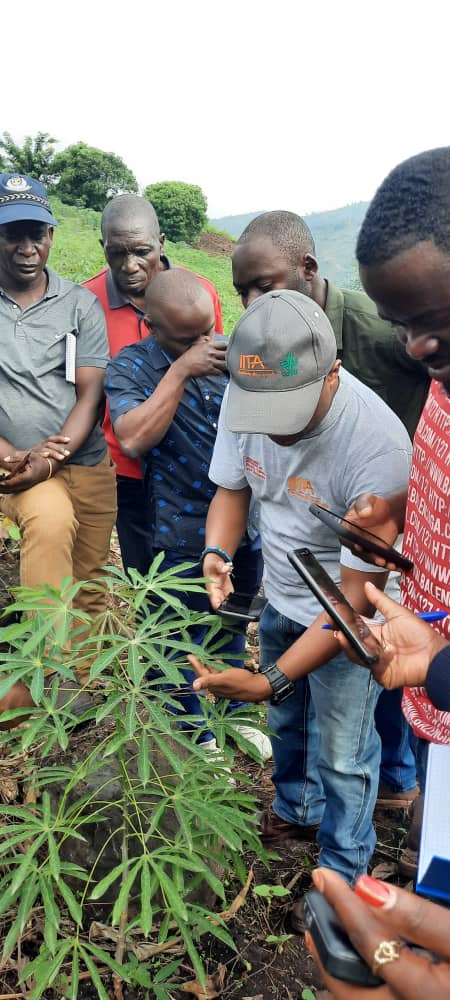
A three-day training workshop was held in Kamanyola, on the Ruzizi-South Kivu plain, for 15 agricultural inspectors from the Uvira and Fizi territories on the viral diseases that often attack cassava, a vital crop in most of the territories of South Kivu.
This training will enable them to acquire knowledge and skills in disease diagnosis through mobile applications, including the PlantVillage Nuru mobile application for comprehensive epidemiological surveillance, enabling the implementation of appropriate contingency measures for abundant and sustainable agricultural production in the province of South Kivu.
IITA researcher and virologist Clerisse Casinga explained how, after collection, the data is transferred directly to the servers installed at the Kalambo laboratory in the DRC, from Nigeria and the one installed in the United States of America via the smart phones given to them at the end of the training.
“IITA is implementing one of the largest agricultural recovery programs in the world, called the Agenda for Agricultural Transformation. With this in mind, we are here to train agricultural inspectors,” he explained.
Casinga continued, “We know that diseases hinder agricultural production. To get around this, we need to train inspectors in different areas. The aim is to train them in agricultural digitization and give them applications that will enable them to detect diseases in real time. The tools handed over are not for communication but rather for work. Still, within the digitalization framework, there is artificial intelligence that they will use to detect diseases.”
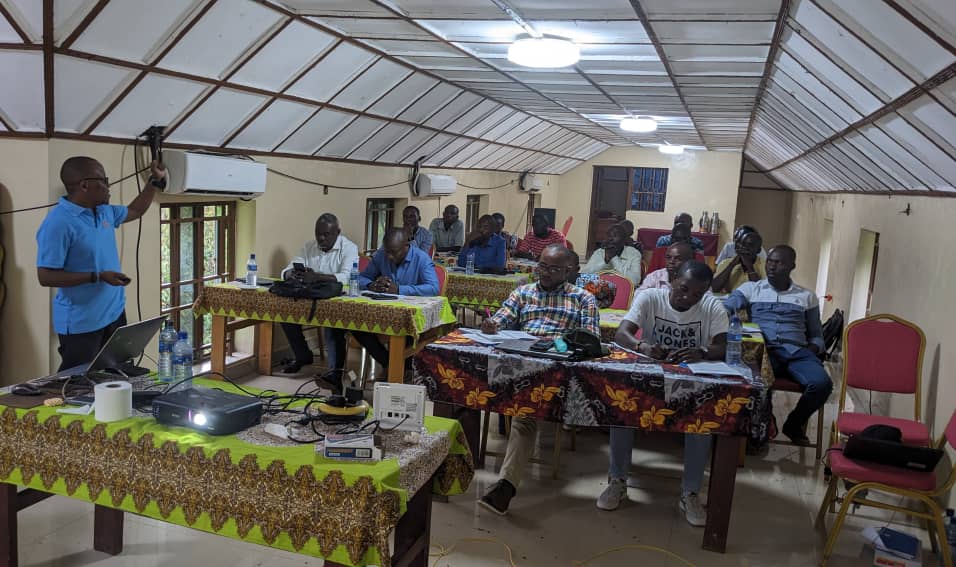
Among these viral diseases, Casinga cites mosaic and brown stripe. Other challenges at the root of low cassava production were mentioned; they include inadequate agricultural policy, the lack of innovative technology, the persistence of old agricultural technologies, insufficient budget allocations to agriculture, soil degradation, and the lack of up-to-date agronomic research.
The training was part of the Agenda for Agricultural Transformation in the DRC (ATA-RDC), led by IITA in collaboration with USAID Feed The Future and PlantVillage Nuru.
Contributed by Isabelle Buhoro
Contributed by
Recent stories