
In Nigeria, long before the dominance of maize and rice, farmers cultivated a range of indigenous crops uniquely adapted to local ecologies and nutritional needs. Among these are fonio–locally known as acha in some parts of Nigeria and the winged bean, two nutrient-rich but largely underutilized crops that once played important roles in traditional food systems. Today, they are increasingly being revisited, not only as relics of agricultural heritage but also as strategic crops for addressing contemporary challenges of malnutrition, food insecurity, and climate change.
Fonio, often described as Africa’s oldest cultivated cereal, has been grown for thousands of years in countries such as Nigeria, Senegal, and Mali. Despite its deep cultural roots, where it has featured in ceremonies and seasonal diets, fonio has remained marginalized in modern agriculture, categorized as an “underutilized crop.” Yet its resilience is remarkable: the crop thrives in poor soil, matures within weeks, and requires minimal agricultural inputs, making it especially valuable amid increasingly erratic rainfall and land degradation.
Complementing fonio is the winged bean (Psophocarpus tetragonolobus), a tropical legume sometimes referred to as a “one-species supermarket” because nearly every part of the plant is edible, from its leaves and pods to its seeds and tubers. Although it thrives in humid tropical environments similar to those found in southern Nigeria, the crop remains largely underutilized and confined to small-scale cultivation. This limited uptake contrasts sharply with its extraordinary nutritional potential.
Winged bean is particularly notable for its exceptionally high protein content, with seeds containing levels comparable to soybean, often between 30 and 40 percent. Unlike most legumes, it also produces protein-rich tubers, while its leaves provide additional amino acids and micronutrients, making it a rare crop capable of delivering diverse nutritional benefits from a single plant. Rich in minerals such as calcium, iron, and potassium, and containing beneficial fats and dietary fibre, the winged bean holds significant promise for improving dietary quality, particularly in regions where access to affordable protein is limited.
The renewed interest in these crops reflects a broader shift in thinking about food systems in Nigeria and across Africa. While major staples continue to dominate production and consumption, they do not always provide the nutrient diversity required for healthy diets. At the same time, reliance on a narrow range of crops increases vulnerability to climate shocks and market disruptions. Underutilized species like fonio and winged bean offer an alternative pathway, one that combines environmental resilience and nutritional adequacy.
For Nigeria, where malnutrition and micronutrient deficiencies persist alongside a growing population, integrating such crops into everyday diets could have far-reaching impacts. Fonio provides a climate-resilient carbohydrate base enriched with essential minerals, while winged bean contributes to high-quality plant protein and additional micronutrients. Together, they exemplify the potential of indigenous crops to support more balanced, sustainable, and locally adapted food systems.
As research increasingly turns attention to “underutilized foods” to address nutrition, amongst other issues, fonio and winged bean are emerging from the back burner. This signals not only a return to traditional knowledge, but also an opportunity to reimagine the future of food, where diversity, nutrition, and resilience are central to what ends up on the plates of millions.
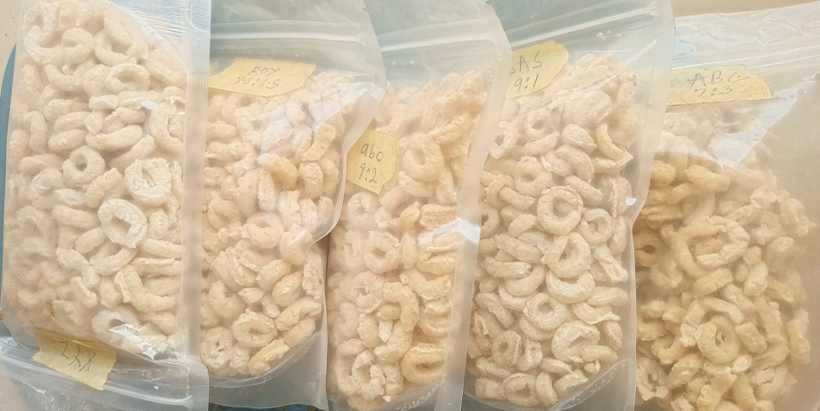
As part of efforts to tackle malnutrition, increase adoption of underutilized crops, and reduce dependence on imported wheat, researchers in Nigeria led by an IITA–CGIAR Researcher, Prof. Abdul-Rasaq Adebowale have developed a nutrient-rich puffed snack using a composite flour made from locally sourced fonio and winged bean seeds. The research study highlights how underutilized crops can be transformed into functional food products that improve diets while supporting local agrifood systems.
According to the study, research was conducted to address growing concerns over protein-energy malnutrition and micronutrient deficiencies in developing countries, where access to affordable, nutrient-dense foods remains limited. At the same time, the heavy reliance on wheat for confection production, despite its high cost and low local production, has continued to pose economic and food security challenges. The study explored a sustainable alternative using readily available yet often overlooked crops. With the introduction of composite flour derived from fonio and winged bean, which will serve as a substitute for wheat flour, end-users can access easily obtainable and inexpensive flour that is also practical and functional.
Using a structured formulation approach, the researchers produced composite flour blends from fonio and winged bean in varying proportions. These blends were processed into ready-to-eat puffed snacks through extrusion cooking, a high-temperature and short-time method known to improve food quality and shelf stability. The process also enhances digestibility and modifies the physical and nutritional characteristics of food products.
To determine the suitability of the flour blends, the study evaluated key functional properties such as water absorption, oil absorption, bulk density, swelling capacity, and solubility. These properties are essential in understanding how flour behaves during processing and how it influences the texture and quality of the final product.
In addition, pasting properties were analyzed to assess how the blends respond to heat and moisture during cooking. The developed snack demonstrated desirable qualities in terms of texture, stability, and nutrient composition, making it a viable alternative to conventional wheat-based products.
Study findings showed that incorporating winged bean flour significantly improved the nutritional quality of the snacks. The resulting products from an optimal blend of the flours (70:30 fonio:winged bean) contained higher levels of protein, dietary fiber, and essential minerals such as calcium, iron, and magnesium, offering a balance between functional performance and nutritional value. These nutrients are critical for growth, immune function, and overall health, particularly in populations at risk of undernutrition.
Assessing the presence of anti-nutritional factors, including phytates, tannins, and trypsin inhibitors, the study showed that while these compounds were present, their levels remained within safe consumption limits. Notably, the extrusion process helped reduce these components, thereby improving nutrient availability and product safety.
In a country like Nigeria, where malnutrition persists alongside rising food imports and increasing climate pressure, diversifying what is consumed is no longer optional. Underutilized crops offer a practical, locally grounded solution to these intersecting challenges.
By bringing crops such as fonio and winged bean back into mainstream production and consumption, Nigeria has an opportunity to strengthen nutrition from the ground up. These crops provide what many dominant staples lack: dense micronutrients, high-quality plant protein, and resilience to harsh growing conditions. They are well-suited to smallholder farmers, adaptable to local food cultures, and capable of contributing to healthier, more balanced diets without placing additional strain on land and water resources.
However, unlocking their full potential will require deliberate action. Increased research investment, improved seed systems, value addition, and greater visibility in public nutrition programs are critical steps. Equally important is changing perceptions, so that underutilized crops like fonio and winged bean are no longer seen as “poor people’s food,” but as smart, nutritious choices for a food-secure future.
As climate change, population growth, and nutritional deficiencies continue to reshape the global food landscape; solutions will not come solely from new technologies or imported staples. Many already exist in farmers’ fields and everyday kitchens. Fonio and winged bean remind us that the path to food security may lie, in part, in valuing and investing in the crops we have long overlooked, transforming underutilized resources into powerful tools for nourishment, resilience, and sustainable development.
Contributed by
Christabel Ediri and ‘Timilehin Osunde